If you’re looking for energy-efficient pool heaters, heat pumps and solar blankets are great options. Heat pumps, though pricier upfront, save money over time with their high efficiency and reliable performance, even in cooler weather. Solar blankets are affordable, easy to use, and rely on sunlight, making them perfect for sunny climates. Both can cut your energy costs and help the environment. Keep exploring to discover which choice suits your needs best.
Key Takeaways
- Heat pumps are more efficient and durable, providing reliable year-round heating despite higher initial costs.
- Solar blankets are cost-effective, eco-friendly, and easy to install, relying solely on sunlight for pool heating.
- Heat pumps offer consistent temperature control in various weather conditions, while solar blankets depend on sunny days.
- Installation complexity and costs differ: heat pumps require professional setup, whereas solar blankets are DIY-friendly.
- Both options help reduce energy consumption and operating costs, with suitability depending on climate, budget, and convenience needs.
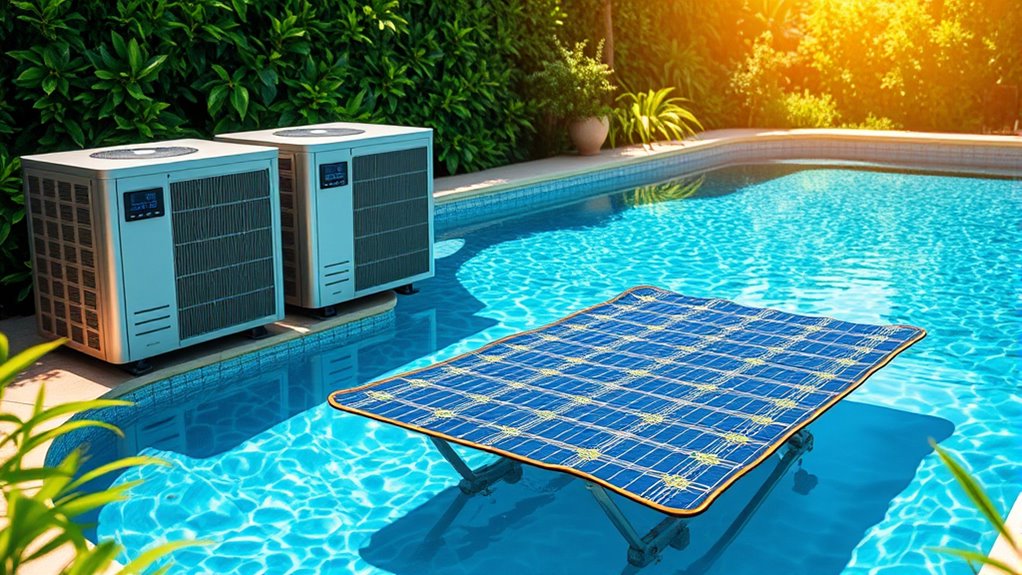
Are you looking to enjoy your pool year-round without skyrocketing energy bills? If so, exploring energy-efficient pool heaters like heat pumps and solar blankets can make a significant difference. These options not only help you extend your swimming season but also save you money over time. When comparing these solutions, a key factor is the cost comparison. Heat pumps tend to have a higher upfront price but are more efficient and cheaper to operate in the long run. Solar blankets, on the other hand, are very affordable initially and cost almost nothing to run once installed, making them a budget-friendly choice for many pool owners.
Understanding the installation process is essential when choosing between these options. Heat pumps require a more involved installation, often needing professional help to connect to your existing electrical system and ensure proper placement for ideal airflow. While the installation process might be more complex and slightly more expensive upfront, it pays off with consistent, efficient heating during cooler months. Solar blankets are much simpler to set up — you just need to unfold and place them across your pool surface after swimming. They don’t require any electrical connections, making installation quick and easy, usually doable as a DIY project or with minimal professional assistance.
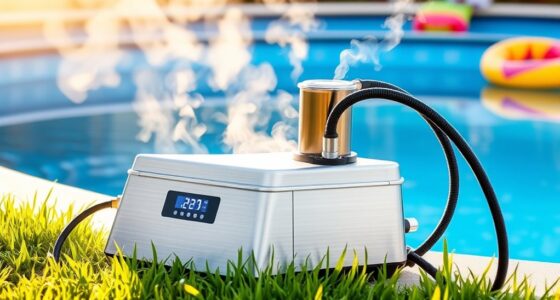
When considering the cost comparison, keep in mind that heat pumps have higher initial costs but tend to be more durable and capable of maintaining steady water temperatures. They work well in colder weather, providing reliable heating without excessive energy use. Solar blankets are almost free to operate, relying solely on sunlight to warm the water, which makes them especially appealing if you live in a sunny climate. They’re also portable and easy to remove or put on as needed, giving you flexibility and control over your pool’s temperature. Additionally, smart technology integration in some modern pool heating systems can further optimize energy use and help monitor your pool’s temperature remotely.
Both options contribute to energy savings, but their suitability depends on your specific needs and budget. If you prioritize long-term efficiency and consistent heating, investing in a heat pump might be the best choice despite the higher upfront cost. If you want an economical, eco-friendly way to retain heat and don’t mind occasional manual effort, solar blankets are excellent. Whichever you choose, understanding the cost comparison and installation process helps you make an informed decision that aligns with your budget and lifestyle. With the right energy-efficient heater, you can enjoy your pool comfortably all year round without the stress of high energy bills.
Frequently Asked Questions
How Do Heat Pumps Compare in Cost to Traditional Gas Heaters?
Heat pumps typically cost less upfront than traditional gas heaters, making them a more affordable option initially. Over time, you’ll notice significant energy savings because heat pumps use electricity efficiently to warm your pool, reducing ongoing expenses. The cost comparison favors heat pumps in the long run, especially with their lower operating costs and eco-friendly operation, helping you save money while keeping your pool comfortably heated.
What Maintenance Is Required for Solar Pool Blankets?
You should regularly inspect your solar pool blanket for tears or wear, ensuring its durability stays intact. Keep the maintenance checklist simple: remove debris, clean the blanket with a gentle brush, and store it properly during off-season. By doing this, you extend its lifespan, maintain its effectiveness, and protect your investment. Regular maintenance keeps your solar blanket performing well, saving you money and maximizing energy efficiency.
Can Heat Pumps Work Effectively in Cold Climates?
Heat pumps can work effectively in cold climates, but you need to contemplate climate conditions and equipment durability. In colder weather, their efficiency drops, so look for models designed for low temperatures. Proper insulation and protective covers help maintain performance. You might also need a backup heat source during extreme cold spells. By choosing a heat pump suited for your climate and maintaining it properly, you’ll maximize its effectiveness year-round.
How Long Do Solar Blankets Typically Last?
Solar blankets typically last around 4 to 8 years, depending on their quality and how well you maintain them. You can extend their longevity by regularly cleaning and avoiding sharp objects that might damage the blanket. Higher-quality blankets tend to have better durability and resist UV rays longer. Proper storage during the off-season also helps preserve their blanket durability, ensuring you get the most out of your investment.
Are There Any Safety Concerns With Using Heat Pumps or Solar Blankets?
You might think these tools are completely safe, but they come with some risks you shouldn’t ignore. With heat pumps, electrical safety is essential—faulty wiring could cause shocks or fires. Solar blankets, on the other hand, can trap chemicals or mold if not maintained properly. Always check for electrical issues and handle chemicals carefully to avoid exposure. When used correctly, however, they’re safe and eco-friendly ways to enjoy your pool.
Conclusion
Imagine stepping into your warm pool on a cool evening, the gentle hum of your energy-efficient heater quietly nurturing the inviting water. With a heat pump or solar blanket, you harness the sun’s gentle warmth or the quiet power of modern technology, transforming your backyard into a soothing oasis. These eco-friendly options not only save energy but also elevate your swimming experience, allowing you to unwind beneath a sky full of stars, knowing you’re making a smart, sustainable choice.