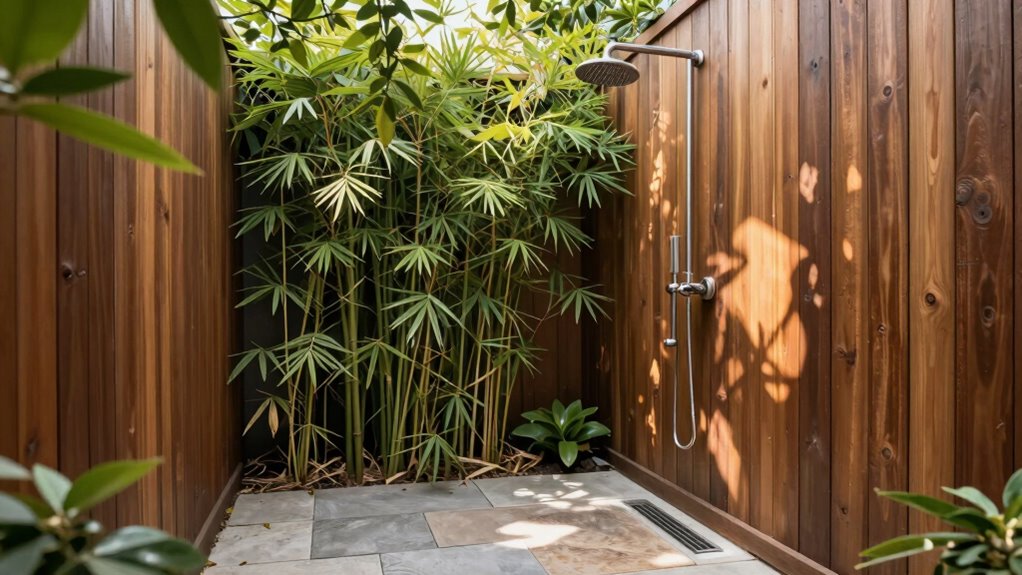
To set up an outdoor shower with proper drainage and privacy, choose a location with good natural screening and level ground, then build on weather-resistant materials like concrete or stone. Install drainage solutions such as gravel beds or channel drains to prevent pooling, ensuring a slight slope for water flow. Add natural or built barriers like shrubs or fences for privacy. Keep these elements well-maintained to keep your shower functional and discreet—discovering detailed tips can help you perfect the setup.

Get pool and patio gear delivered free with Prime
- Fast, free delivery on millions of items
- Prime Video, Amazon Music and more included
- Member-only deals all year
Key Takeaways
- Choose a private, well-drained location with stable foundation to ensure privacy and prevent water pooling.
- Incorporate proper drainage solutions like French drains, gravel beds, or channel drains with a slight slope for efficient water runoff.
- Use natural barriers, fences, or privacy screens combined with outdoor lighting for enhanced seclusion and ambiance.
- Select weather-resistant materials and eco-friendly drainage options to maximize durability and minimize environmental impact.
- Regularly inspect and maintain privacy barriers and drainage systems to ensure long-term functionality and safety.
As an affiliate, we earn on qualifying purchases.
How to Choose the Best Location and Foundation for Your Outdoor Shower
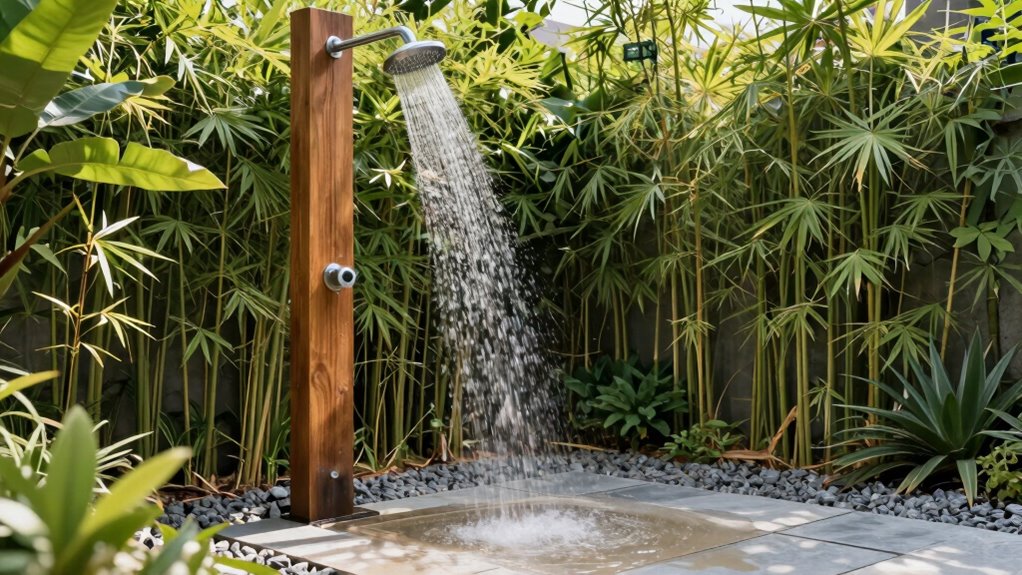
Choosing the right location and foundation for your outdoor shower is essential to guarantee durability and convenience. Start by considering material selection; opt for sturdy, weather-resistant materials like concrete, stone, or pressure-treated wood that can withstand the elements. Think about aesthetic considerations as well—select a spot that complements your outdoor space and offers privacy. Place your shower where it’s easily accessible yet discreet enough for comfort. Ensure the ground is level and stable to support the foundation, preventing shifting or cracking over time. Avoid areas prone to flooding or excessive shade, which can cause mold or mildew buildup. Proper placement and a solid foundation will make your outdoor shower durable, functional, and visually appealing. Additionally, paying attention to drainage and ventilation can help prevent water pooling and reduce moisture-related issues. Considering environmental considerations such as minimizing impact on surrounding nature can further enhance the sustainability of your setup. To ensure long-term stability, evaluate the local climate to select materials and placement that resist weather-related wear. Incorporating proper drainage techniques can also help maintain the longevity and cleanliness of your outdoor shower area. Moreover, adding shade solutions can protect the shower from direct sunlight, extending its lifespan and comfort during use.
Designing Your Outdoor Shower for Drainage and Privacy
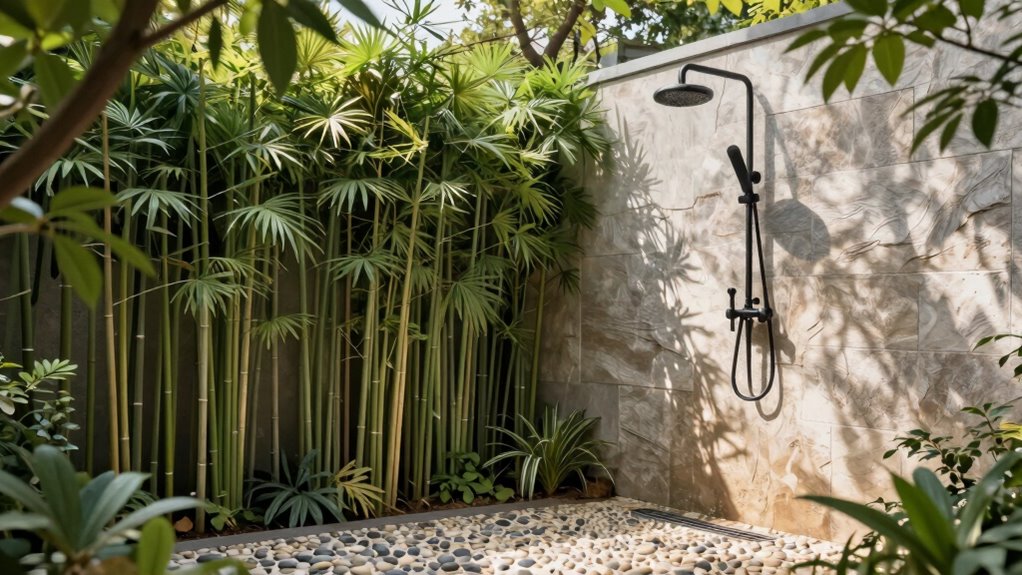
To guarantee your outdoor shower works smoothly, you need effective drainage solutions that prevent water buildup. Additionally, creating natural privacy barriers helps keep your space secluded and comfortable. By focusing on these design elements, you’ll enjoy a functional and private outdoor shower area. Incorporating sustainable water management practices can also enhance the efficiency and environmental friendliness of your setup, such as using permeable materials or rainwater harvesting systems that support eco-friendly water reuse. Implementing proper grading ensures water flows away efficiently, reducing the risk of pooling or erosion.
Effective Drainage Solutions
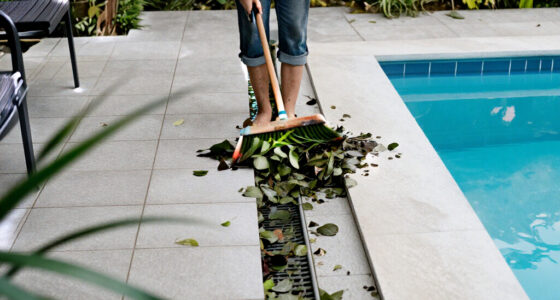
Have you considered how proper drainage can make or break your outdoor shower experience? Effective drainage solutions guarantee water flows away quickly, preventing puddles and mud that can disrupt your garden decor. A well-designed drainage system minimizes water waste, supporting water conservation efforts. You might choose a French drain or gravel bed to divert water efficiently, or install a permeable concrete slab that allows water to seep into the ground naturally. Additionally, positioning the shower at a slight incline helps water drain smoothly. Proper drainage planning is essential to ensure long-term durability and prevent erosion around your outdoor shower. Incorporating permeable materials into your design can further enhance water absorption and reduce runoff. Using appropriate slope techniques ensures that water flows effectively toward drainage points, preventing pooling and potential damage. Furthermore, considering soil type can influence the effectiveness of your drainage setup, ensuring water is absorbed or diverted appropriately. Proper water management also involves maintaining your drainage systems regularly to prevent blockages and ensure continuous flow. By planning these drainage features, you protect your outdoor space from erosion and maintain a tidy, inviting environment. Good drainage not only enhances functionality but also preserves the beauty of your garden decor for years to come.
Creating Natural Privacy Barriers
Creating natural privacy barriers is essential for enjoying your outdoor shower without feeling exposed. You can achieve this by integrating elements into your garden landscaping that shield your space. Consider planting tall shrubs or trees strategically around your shower area to block views. Using outdoor lighting thoughtfully can enhance privacy at night by highlighting these barriers while keeping the shower hidden. Here are some ideas to get started:
- Plant fast-growing hedges or bamboo for instant screening
- Incorporate pergolas or trellises with climbing plants for a decorative touch
- Use decorative screens or natural stone walls to add privacy and style
- Install outdoor lighting to create a sense of enclosure after dark
- Creating visual barriers in your outdoor space can reinforce your privacy features and make the area more inviting. Incorporating proper drainage solutions is also crucial to prevent water pooling and maintain a clean, dry environment around your shower area. Additionally, designing for natural light can enhance the overall ambiance and comfort of your outdoor retreat. To ensure safety and comfort, consider household products that are resistant to outdoor elements and easy to maintain.
Drainage Solutions for Outdoor Showers: What You Need to Know

Choosing the right drainage system is key to keeping your outdoor shower area functional and clean. You should consider different drainage types and their benefits, along with designing the proper slope for efficient water flow. Proper drainage design ensures that water is effectively diverted away, preventing pooling and potential damage. Additionally, selecting sustainable drainage solutions can help minimize environmental impact and reduce long-term maintenance. Incorporating eco-friendly materials into your drainage setup can further enhance sustainability and durability. Don’t forget to think about environmental factors to make sure your setup stays eco-friendly and compliant. Incorporating sustainable drainage solutions can also help protect your local environment and reduce maintenance efforts.
Drainage Types and Benefits
Selecting the right drainage system is essential for preventing water buildup and protecting your outdoor shower area. Different drainage types offer various benefits, depending on your space and needs. Here are four options to contemplate:
- French Drains – Highly effective for drainage efficiency, they direct water away from the shower area using gravel-filled trenches.
- Permeable Pavers – Allow water to seep through, reducing runoff and combining style with functionality.
- Channel Drains – Installed along the shower base, they efficiently collect and direct water flow, ideal for flat surfaces.
- Dry Wells – Absorb excess water underground, minimizing surface pooling and protecting your landscape.
Choosing the right type depends on your site conditions and installation techniques, ensuring ideal drainage performance and durability.
Proper Slope Design
Have you considered how the proper slope of your outdoor shower floor can make all the difference in effective drainage? To achieve this, you need to focus on your slope calculation to guarantee water flows smoothly toward the drain. The drainage angle should typically be around 1/4 inch per foot (about 2%) to prevent standing water and pooling. Proper slope design minimizes water buildup, reduces slipping hazards, and keeps your shower area dry and safe. Use a level or a laser tool to verify the slope during construction, adjusting as needed. Remember, a well-calculated slope directs water efficiently, ensuring quick drainage and maintaining your outdoor shower’s functionality and safety. Don’t underestimate the importance of a correct drainage angle in your setup.
Environmental Considerations
Proper slope design is essential for effective drainage, but considering the environmental impact of your outdoor shower setup is equally important. You should evaluate recycling considerations to guarantee wastewater doesn’t harm local ecosystems. Protect wildlife by choosing eco-friendly drainage solutions that minimize habitat disruption. Here are key points to keep in mind:
- Use biodegradable or environmentally safe cleaning products.
- Opt for drainage systems that filter water before it reaches natural soil.
- Avoid directing wastewater toward storm drains or water bodies.
- Regularly inspect and maintain drainage to prevent leaks or blockages that could impact wildlife.
Privacy Ideas: Fences, Screens, and Natural Barriers
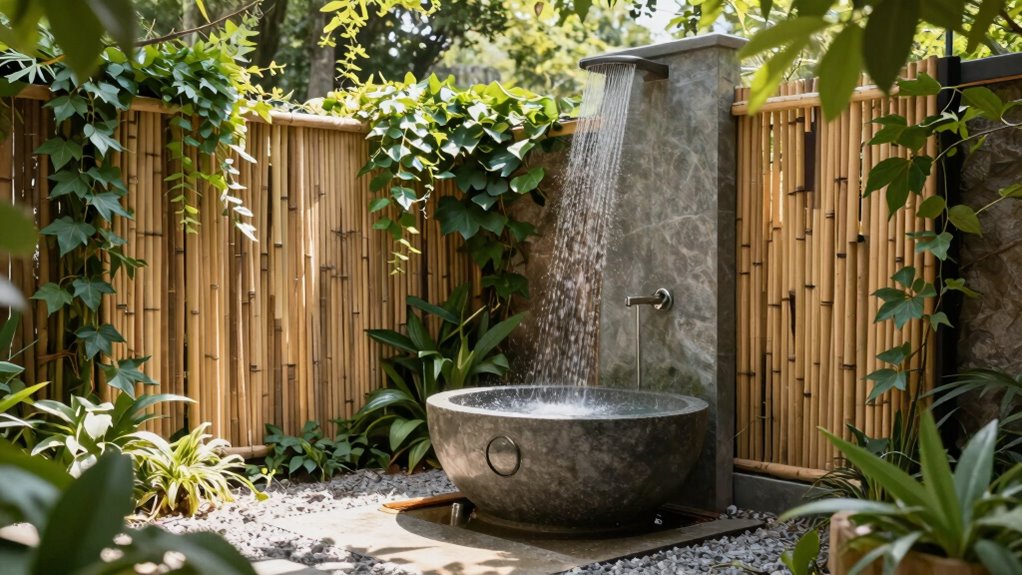
Creating privacy for your outdoor shower doesn’t have to be complicated; clever use of fences, screens, or natural barriers can transform your space into a secluded retreat. Fence materials vary from wood for a classic look to vinyl or metal for durability and low maintenance. Privacy screens made of bamboo, fabric, or composite materials offer flexible, stylish options that can be easily moved or adjusted. Natural barriers such as tall shrubs, hedges, or trees add privacy while blending seamlessly with your landscape. Combining these elements creates a layered barrier that enhances seclusion and aesthetic appeal. Remember to consider the height and density of your chosen materials to ensure complete privacy without sacrificing airflow or natural light.
How to Install Your Outdoor Shower Step by Step

Installing your outdoor shower can be straightforward if you follow a clear step-by-step process. First, choose a location with access to water and proper drainage. Next, install your water supply line, connecting it securely to your water source. Then, mount your shower fixtures at a comfortable height, ensuring they are level and secure. Finally, connect the fixtures to the water line, adjusting the water temperature controls for easy access. Make sure to test the water temperature and flow, checking for leaks or issues. Use appropriate tools and materials to guarantee durability. Keep in mind that proper placement of fixtures and reliable connections will provide a comfortable, functional outdoor shower experience.
Tips for Maintaining Your Outdoor Shower’s Privacy and Drainage Performance
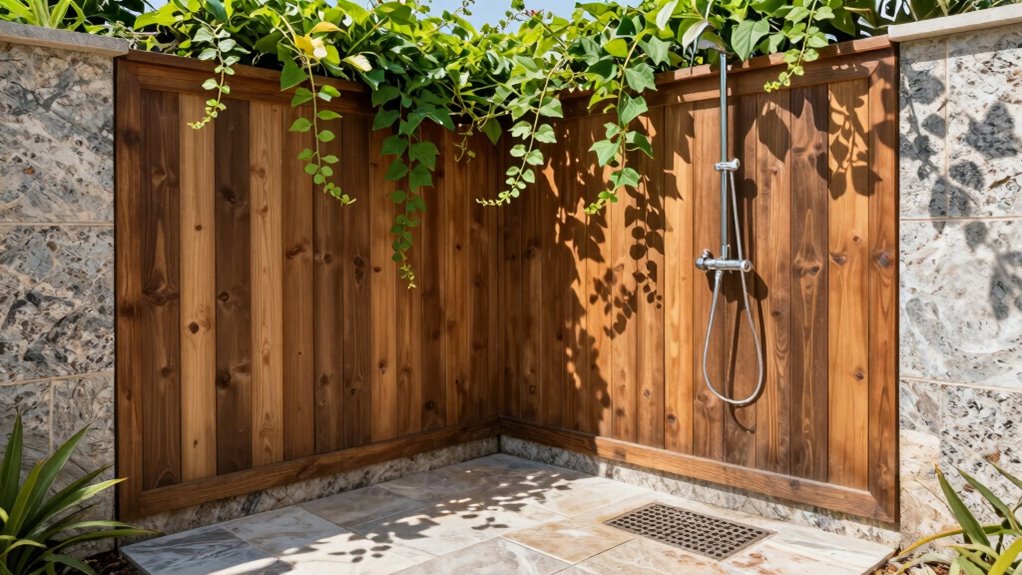
To keep your outdoor shower private and functioning well, you need to regularly check and maintain its privacy features and drainage system. Start by inspecting your privacy screens for damage or wear, and clean them to prevent buildup that could compromise privacy. Trim nearby vegetation that might peek over screens or create gaps. For drainage maintenance, clear out any debris or blockages in the drain to prevent water pooling or flooding. Regularly check the slope of your shower area to ensure water flows away properly. Use a hose or brush to rinse the drainage system and remove dirt or grime. Keeping these elements in top shape ensures your outdoor shower remains private, comfortable, and free of drainage issues.
Frequently Asked Questions
How Can I Prevent Outdoor Shower Odors From Lingering?
To prevent outdoor shower odors from lingering, you should improve your drainage solutions and use odor control products. Make sure your drain is efficient and directs water away from the shower area to prevent stagnation. Regularly clean the drain and surrounding surfaces, and consider using natural odor absorbers like baking soda or specialized deodorizing sprays. Proper ventilation also helps, so install a fan or leave the area open for airflow.
What Materials Are Best for Outdoor Shower Flooring?
Imagine stepping onto a surface that stays pristine despite exposure to water and weather. For your outdoor shower, opt for durable materials like textured concrete, natural stone, or composite decking—ideal for shower footing. These waterproof surfaces resist moisture and prevent slipping, ensuring safety and longevity. Don’t settle for less—choose materials that withstand the elements, maintain their appearance, and keep your outdoor shower functional and inviting for years to come.
Can I Install a Hot Water System Outdoors?
Yes, you can install a hot water system outdoors. Consider solar heating options to make it energy-efficient and eco-friendly. To guarantee privacy, add sturdy privacy screens around your outdoor shower area. Make sure your system is weatherproof and properly insulated to withstand outdoor conditions. With the right setup, you’ll enjoy hot showers outside while maintaining privacy and minimizing energy costs.
How Do I Protect Outdoor Plumbing From Freezing?
To safeguard outdoor plumbing from freezing, you should winterize your pipes with insulation. Use pipe wrapping or foam insulation sleeves to keep the water lines warm. Additionally, consider installing heat tape for extra protection during severe cold snaps. Make sure to drain any outdoor hoses and shut off the water supply to prevent damage. These steps help prevent freezing and ensure your outdoor plumbing stays functional throughout winter.
What Permits or Codes Are Needed for Outdoor Showers?
Ever wondered if you need permits for your outdoor shower? Typically, you do, as building codes and permit requirements vary by location. Check with your local building department to see if you need a permit or specific codes to make sure your setup complies with safety and zoning laws. Failing to do so could lead to fines or needing to redo your project, so it’s best to verify before starting.
Conclusion
Now that you’ve mastered the art of outdoor shower setup, you’re basically a backyard spa wizard—complete with secret drainage spells and privacy shields. Imagine your neighbors peeking only to be greeted by a fortress of fences and natural barriers, while your drainage system whispers, “I’ve got this.” With these tips, your outdoor shower will be so perfect, even the rain will envy your privacy and style. Happy splashing—privacy and proper drainage guaranteed!
Fall Picks
fall essentials
As an affiliate, we earn on qualifying purchases.