Believing that quiet pumps are always better can lead you to choose equipment based solely on noise levels, which isn’t accurate. Quiet doesn’t always mean reliable, efficient, or easy to install. In fact, focusing only on silence can cause you to overlook important factors like capacity, durability, and setup challenges. To make smarter choices, you need to understand the full picture. Keep exploring to discover how to avoid this common mistake and pick the right pump for your needs.
Key Takeaways
- Assuming quiet pumps are inherently more reliable ignores performance, durability, and suitability for specific applications.
- Overemphasizing noise reduction can lead to choosing pumps that compromise on flow capacity and energy efficiency.
- Complex installation requirements for quiet pumps may cause setup issues and higher costs, undermining long-term reliability.
- Environmental factors can alter perceived noise levels, making real-world testing essential before selection.
- Focusing solely on noise can distract from critical performance factors like flow rate, durability, and operational needs.

Many people assume that quiet pumps are inherently better or more dependable than louder alternatives, but this isn’t always the case. While lower noise levels can be appealing, they don’t automatically mean you’re getting a better or more durable piece of equipment. In fact, some quieter pumps may come with hidden drawbacks, especially when it comes to installation challenges and long-term performance. It’s easy to get caught up in the appeal of a silent operation, but you need to look beyond the noise level to understand what you’re really purchasing.
Quiet pumps aren’t always more reliable; consider installation and long-term performance beyond just noise levels.
Quiet pumps often require more careful installation, which can be a significant challenge. Many models designed for silent operation rely on intricate components or specialized mounting to minimize vibrations and sound. This means their installation process can be more complex, requiring additional time, tools, or professional expertise. If you’re not prepared for these challenges, you might end up with a setup that’s unstable or prone to issues down the line. Sometimes, the effort to achieve quieter operation can lead to compromises elsewhere—like reduced ease of maintenance or increased risk of misalignment, which can negatively impact the pump’s lifespan.
Furthermore, focusing solely on noise levels can distract you from other critical factors such as flow capacity, energy efficiency, and durability. A quieter pump isn’t necessarily more efficient or longer-lasting. In fact, some of the most reliable and robust pumps produce a noticeable amount of noise because they are built for heavy-duty use. When choosing a pump, you should consider your specific needs first—whether you require high flow rates, energy savings, or ease of installation—and then evaluate noise levels as a secondary factor. Understanding the trade-offs is essential for making an informed decision. Additionally, the installation complexity of quiet pumps can sometimes lead to increased costs or delays, which should be factored into your overall planning.
It’s also worth noting that a pump’s noise level can vary depending on its environment. Sound can be absorbed or amplified by surrounding structures, making a seemingly quiet pump noisy in certain settings or vice versa. Don’t assume a pump will stay quiet just because it’s marketed as such. Instead, listen to demonstrations or reviews that detail real-world noise performance. Remember, a loud pump isn’t necessarily a sign of poor quality; it might just be a sign of a different design approach that prioritizes reliability over silence. Moreover, environmental factors can significantly influence how noise is perceived, so testing in real-world conditions is often the best approach. Recognizing that sound absorption can vary depending on surroundings helps in setting realistic expectations for noise performance.
Ultimately, bypassing the “quiet pump” myth means understanding that noise levels are just one piece of the puzzle. You should weigh installation challenges, operational needs, and long-term reliability alongside noise reduction. Making an informed choice means looking past the allure of silence and focusing on what your specific application truly requires. Considering the overall performance is essential when selecting equipment to ensure it meets your needs both now and in the future.
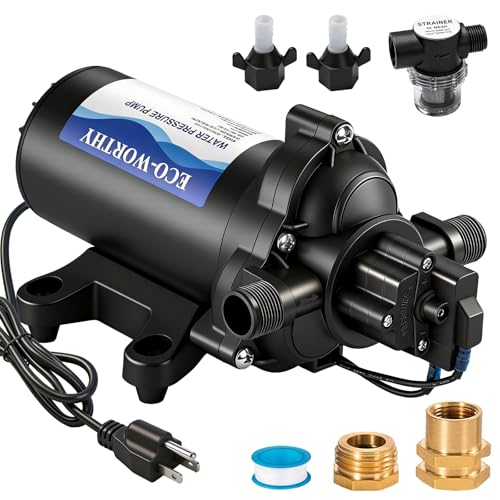
ECO-WORTHY 33-Series Industrial Water Pressure Pump 110V AC 4.0GPM 50PSI RV Fresh Water Diaphragm Pump include Garden Hose Adapters for Irrigation Marine Boat Sprinkler Faucet
- Flow Capacity: 4.0 GPM at 50 PSI
- Power Supply: 110V AC, no marine battery needed
- Smart Pressure Switch: Auto on/off, adjustable 45-70 PSI
As an affiliate, we earn on qualifying purchases.
As an affiliate, we earn on qualifying purchases.
Frequently Asked Questions
Are Quiet Pumps Always More Energy-Efficient?
Quiet pumps aren’t always more energy-efficient. While noise reduction is appealing, it often involves additional features that can consume more power. Energy savings depend on the pump’s design, motor efficiency, and how well it matches your needs. Instead of focusing solely on noise reduction, you should compare energy ratings and performance specs to find a pump that offers both quiet operation and peak energy efficiency for your specific application.
How Do Noise Levels Affect Pump Lifespan?
Noise levels are like ripples on a pond—small at first, but they can grow and cause more damage over time. Higher noise often means increased vibration impact, which can wear down components faster. Acoustic dampening helps reduce these vibrations, protecting your pump’s lifespan. When noise is minimized, the pump experiences less stress, leading to longer durability and fewer repairs. Keep noise control in check to extend your pump’s life.
What Maintenance Is Needed for Quieter Pumps?
To keep your quieter pump running smoothly, focus on vibration reduction and lubrication maintenance. Regularly inspect for loose parts or misalignments that could increase vibrations, and tighten or adjust as needed. Additionally, keep the pump properly lubricated, following manufacturer guidelines, to reduce wear and noise. Scheduling routine maintenance guarantees the pump stays quiet, efficient, and extends its lifespan, preventing costly repairs and downtime.
Do Quiet Pumps Cost More Upfront?
You might find that quiet pumps often come with a higher initial investment. While the cost comparison shows they tend to be pricier upfront, their noise reduction benefits can be worth the extra expense. These pumps often incorporate advanced technology, which drives up the price. However, consider the long-term savings from less maintenance and energy efficiency, making the initial cost worthwhile for a quieter, more reliable operation.
Can Quiet Pumps Handle High-Pressure Applications?
Yes, quiet pumps can handle high-pressure applications, thanks to advanced pump design focused on noise reduction. Manufacturers incorporate better seals, vibration dampening, and efficient motor configurations to maintain performance under high pressure while minimizing noise. However, you should verify specific pump models’ pressure ratings and noise reduction features. Properly selected, a quiet pump can deliver high-pressure performance without the loud operation typically associated with traditional pumps.
Conclusion
Don’t fall for the quiet pump myth—it’s the Trojan horse of equipment errors. Believing silence equals efficiency can turn your setup into a ticking time bomb, ready to explode into costly repairs or catastrophic failures. You might think you’re avoiding noise, but in reality, you’re inviting disaster disguised as tranquility. Make informed choices based on performance, not silence. Otherwise, you’ll be stuck in a never-ending nightmare of repairs, all because you bought into a myth that’s as dangerous as it is false.