
Saltwater pools put extra stress on your pump through increased corrosion and mineral buildup that many owners don’t expect. Salt and minerals circulate continuously, which can damage metal parts like impellers and shafts, leading to corrosion, leaks, and motor failure. Buildup inside the pump can clog filters and reduce efficiency. Proper maintenance and choosing equipment designed for saltwater help manage these issues. Keep going to discover how to protect your pump and extend its lifespan effectively.

Get pool and patio gear delivered free with Prime
- Fast, free delivery on millions of items
- Prime Video, Amazon Music and more included
- Member-only deals all year
Key Takeaways
- Saltwater generates chlorine and minerals that increase pump workload and cause persistent corrosion of metal components.
- Corrosion from salt can lead to pitting, leaks, and motor failure if not regularly inspected and addressed.
- Salt buildup inside the pump can clog filters, reduce efficiency, and accelerate wear and tear.
- Using corrosion-resistant equipment and maintaining proper water chemistry helps minimize salt-related stress.
- Regular cleaning, flushing, and inspections are essential to prevent damage and extend pump lifespan in saltwater pools.

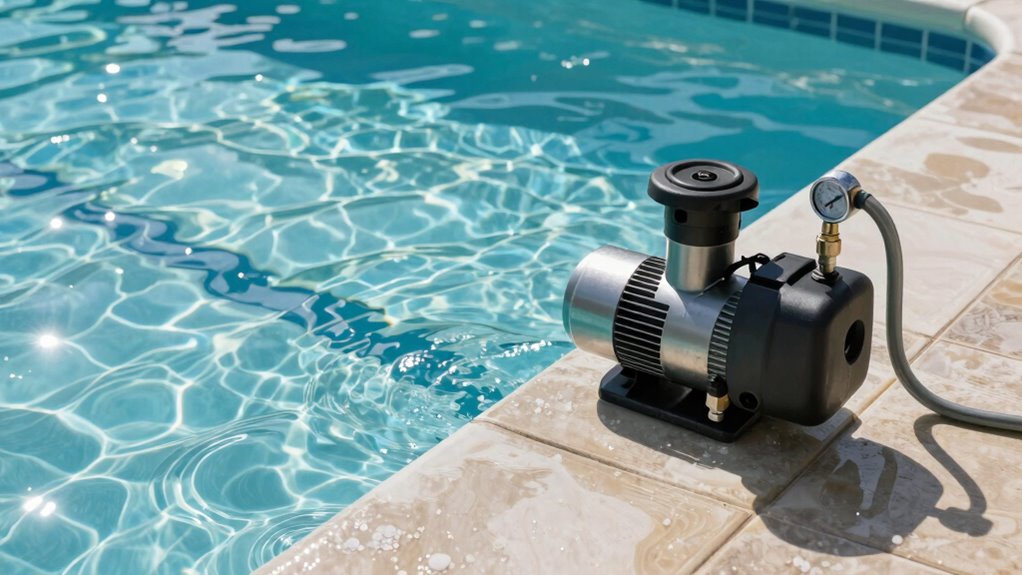
Saltwater pools are often seen as a more comfortable and low-maintenance alternative to traditional chlorine pools, but they can also put additional stress on your pump. Unlike chlorinated pools, saltwater pools generate chlorine through a salt-chlorine generator, which means your pump has to work harder to circulate water that contains salt and other dissolved minerals. This added workload can lead to corrosion issues, especially over time, which may compromise the integrity of your pump components. You might notice that your pump wears out faster or needs more frequent repairs, reducing its overall lifespan.
Saltwater pools can increase pump wear due to added salt and mineral circulation, leading to corrosion and reduced lifespan.
Corrosion is one of the primary concerns when it comes to saltwater pools. Salt, being a corrosive element, can attack metal parts within your pump, including impellers, motor shafts, and fittings. This process is often slow but persistent, leading to pitting and deterioration of critical components. If you don’t address corrosion issues early, it can cause leaks, motor failure, or even complete pump breakdowns. To mitigate this, you should regularly inspect your pump for signs of corrosion and consider using corrosion-resistant materials or protective coatings. Proper maintenance, such as flushing the pump with fresh water after heavy use or storm events, can help prolong its lifespan. Additionally, maintaining proper salt levels is crucial to prevent excessive buildup that can accelerate corrosion and damage your equipment more rapidly. Ensuring your pool’s water chemistry remains balanced also helps reduce the risk of corrosion-related issues affecting your pump’s longevity. Being aware of biodiversity impacts related to saltwater systems can further help in understanding the importance of diligent maintenance. Regular monitoring of water chemistry and mineral buildup can also help prevent potential damage caused by salt deposits inside the pump.
The increased salinity in saltwater pools also impacts the pump’s longevity. Salt particles can settle and cause buildup inside the pump, clogging filters and reducing efficiency. Over time, this buildup can strain the motor, making it run harder and longer than it should. This extra strain accelerates wear and tear, which might shorten the lifespan of your pump if left unchecked. Installing a high-quality, corrosion-resistant pump designed specifically for saltwater applications can help reduce these issues. Additionally, maintaining proper salt levels is vital; excessive salt can intensify corrosion and damage your equipment more rapidly. Regularly cleaning your pump and filtration system can also help prevent salt buildup, ensuring your pump operates smoothly for longer periods.
In essence, while saltwater pools offer benefits like softer water and fewer chemical odors, they demand more diligent maintenance of your pump. Recognizing the potential for corrosion issues and understanding how salt can impact pump lifespan helps you take proactive steps. By choosing the right equipment and staying vigilant with regular inspections and cleanings, you can minimize stress on your pump. This guarantees your system remains efficient and extends its service life, allowing you to enjoy your saltwater pool without unexpected breakdowns or costly repairs.
As an affiliate, we earn on qualifying purchases.
Frequently Asked Questions
How Often Should Saltwater Pool Pumps Be Serviced?
You should service your saltwater pool pump at least once a year to guarantee proper functioning. Regular maintenance helps with corrosion prevention and keeps electrical safety in check. Check for corrosion on connections and components, and clean or replace parts as needed. Additionally, inspect the electrical connections for signs of wear. Regular servicing will prolong your pump’s life, prevent costly repairs, and keep your pool running smoothly.
Can Saltwater Pools Damage Standard Pool Filters?
Imagine your pool filter as a shield, but saltwater can wear it down like rust on armor. Yes, saltwater pools can damage standard pool filters through corrosion issues and chlorine buildup. Over time, the salty environment accelerates corrosion, leading to leaks or failure. Regular maintenance helps, but be prepared for potential filter replacements sooner than with freshwater pools. Stay vigilant, and your filter will keep your pool sparkling.
What Maintenance Changes Are Needed for Saltwater Pump Longevity?
To guarantee your saltwater pump lasts, focus on corrosion prevention and pump material compatibility. Regularly inspect and clean the pump, and use corrosion-resistant parts designed for saltwater. Consider applying a protective coating where needed, and always follow manufacturer guidelines for maintenance. Rinse the pump with fresh water after heavy use, and schedule periodic professional checks. These steps will help extend your pump’s lifespan and keep your saltwater pool running smoothly.
Do Salt Levels Affect Pump Lifespan?
Yes, salt levels do affect your pump’s lifespan. Higher salt levels can lead to corrosion concerns, especially if the salt isn’t properly regulated. Maintaining the correct salt level through regular salt level regulation helps minimize corrosion risks and extends your pump’s longevity. Keep an eye on salt levels, and make sure your pool’s salt concentration stays within recommended ranges to avoid unnecessary wear and tear on your pump.
Are Special Pumps Required for Saltwater Pools?
Yes, you need special pumps for saltwater pools. These pumps are designed to handle higher salt concentrations, which can cause corrosion issues in standard pumps. Using a pump specifically rated for saltwater reduces the risk of corrosion and extends its lifespan. Always check the salt tolerance of the pump and verify it’s compatible with your pool’s salt levels to prevent damage and maintain efficient operation.
Conclusion
You should be aware that saltwater pools can put extra stress on your pump, especially if you don’t monitor the salt levels or maintain proper filtration. For example, Jane’s pool pump failed sooner than expected because she ignored salt buildup, which corroded the components. Regularly testing salt levels and cleaning your equipment can help prevent costly repairs. Stay vigilant, and your pump will run smoothly, keeping your pool sparkling all season long.
Halloween Picks
halloween
As an affiliate, we earn on qualifying purchases.