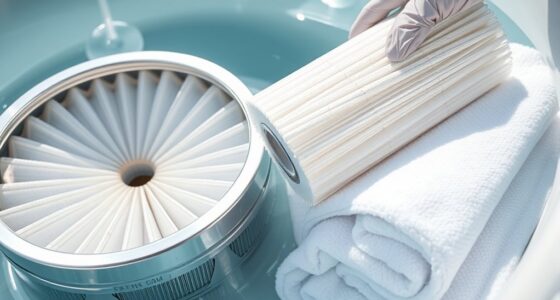
Foam in your hot tub usually means there’s an imbalance or contamination in the water. It can be caused by improper chemical levels, such as pH or alkalinity, or residues from lotions, oils, and soaps. Poor filtration and inadequate cleaning steps also contribute. Additionally, high temperatures can boost foam formation. If you want to understand what your foam signals and how to fix it, you’ll find helpful tips below.

Get pool and patio gear delivered free with Prime
- Fast, free delivery on millions of items
- Prime Video, Amazon Music and more included
- Member-only deals all year
Key Takeaways
- Foam often indicates water imbalance or contamination from improper chemical levels or residues.
- Excess foam can result from surfactants in lotions, oils, or soaps introduced into the water.
- Hotter water increases foam formation by boosting surfactant activity and chemical reactions.
- Ineffective filtration or insufficient water changes allow oils, debris, and residues to accumulate and foam.
- Residual cleaning products or chemicals left in the water can react and produce foam if not thoroughly rinsed.
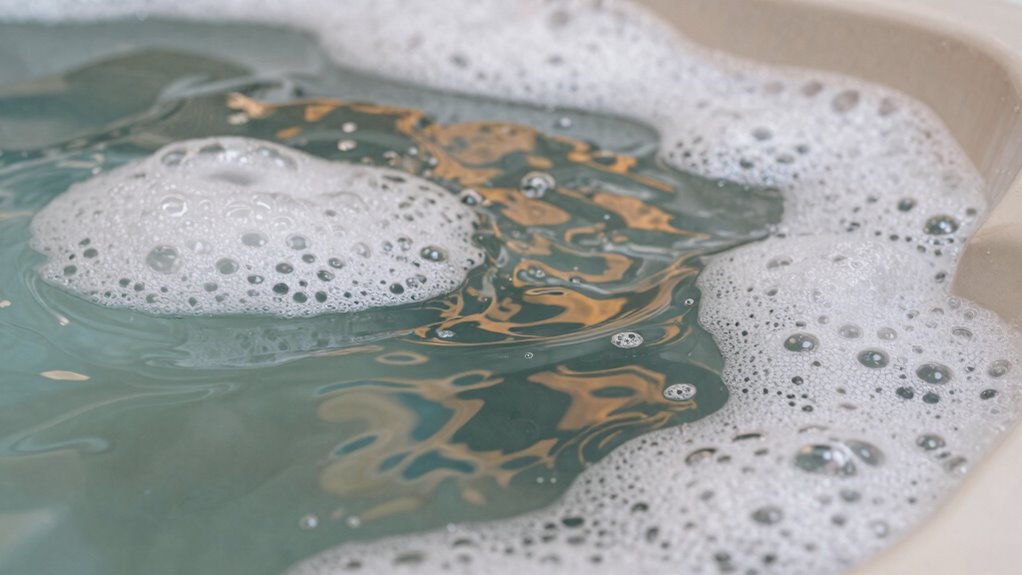
If you’ve noticed foam forming in your hot tub, it can be more than just an unsightly nuisance—it may indicate underlying issues with water quality or cleaning. Foam often appears when the water’s chemical balance is off, especially if the pH or alkalinity levels are too high or too low. When these levels aren’t properly maintained, surfactants from lotions, body oils, or soaps can react with the water, creating bubbles and foam. This foam isn’t just a visual problem; it can also signal that your water isn’t as clean as it should be, which could lead to skin irritation or other discomforts during use.
Foam indicates water imbalance or contamination, often caused by improper chemical levels or residues from cleaning products.
Another common cause of foam is water temperature. Hotter water tends to produce more foam because it increases the activity of surfactants and other contaminants that might be present. If your hot tub’s temperature is set too high, it can accelerate chemical reactions that generate foam. Conversely, if the water is too cold, it might not evaporate or circulate properly, allowing residues to build up and contribute to foam formation. Maintaining the correct water temperature is essential—not only for comfort but also for preventing foam and ensuring that chemicals work effectively. Ensuring proper water circulation and filtration is also vital to prevent buildup of residues that contribute to foam. Regular water testing helps identify imbalances early, preventing excess foam formation.
The presence of foam can also suggest that your water isn’t being cleaned or filtered effectively. If you skip regular water changes or don’t run the filtration system long enough, oils, lotions, and debris can accumulate, creating a foamy surface. Using the right sanitizer, like chlorine or bromine, helps keep bacteria and organic matter at bay, reducing the chance of foam. If you notice foam shortly after adding chemicals, it’s worth checking whether your chemical levels are balanced and adjusting as necessary. Regular water testing can help identify imbalances early and prevent foam buildup. Additionally, residual soap or cleaning products**** left in the hot tub after maintenance can cause foam if not thoroughly rinsed away.
Sometimes, foam appears because of residual soap or cleaning products left in the hot tub after maintenance. It’s imperative to rinse out the tub thoroughly after cleaning to prevent these residues from reacting with the water. Additionally, high levels of certain chemicals, such as algaecides or clarifiers, can contribute to foam if used excessively. Always follow manufacturer instructions carefully to avoid over-application. Proper water maintenance practices can help prevent foam buildup and ensure a clean, comfortable hot tub experience.
As an affiliate, we earn on qualifying purchases.
Frequently Asked Questions
Can Foam Indicate a Serious Hot Tub Malfunction?
Foam in your hot tub can sometimes signal a serious malfunction, especially if it’s persistent or excessive. It often indicates a chemical imbalance, like too much detergent or body oils, or filter issues that trap debris and oils. You should address these problems promptly by balancing chemicals and cleaning or replacing filters. Ignoring foam might lead to cloudy water, bacteria growth, or damage to your hot tub’s system.
How Long Does Foam Typically Last in a Hot Tub?
Foam in your hot tub can last from a few hours to a couple of days, depending on factors like water quality and chemical imbalance. If you notice persistent foam, it often indicates a chemical imbalance or dirty water, which can prolong foam presence. To reduce it quickly, test and balance your chemicals, shock the water if needed, and guarantee proper filtration. Regular maintenance can prevent foam from sticking around too long.
Is Foam Harmful to Skin or Health?
Foam in your hot tub isn’t a health hazard, but it can cause skin irritation or trigger allergy concerns if you’re sensitive. While it might look alarming, it’s usually just excess soap, oils, or contaminants. You won’t suddenly turn into a balloon or develop a mysterious rash, but if you notice skin irritation, it’s best to rinse off quickly. Keep your hot tub clean to prevent foam and keep your skin happy!
Can I Prevent Foam From Forming in My Hot Tub?
Yes, you can prevent foam from forming in your hot tub. Regularly check and balance your water chemistry, ensuring proper pH and alkalinity levels. Use appropriate cleaning chemicals designed for hot tubs, and avoid adding too many soaps or oils. Regularly rinsing filters and maintaining proper water circulation also helps reduce foam. Keeping your hot tub clean and well-maintained minimizes foam formation, making your soak more enjoyable.
Does the Type of Soap Affect Foam Formation?
Yes, the type of soap you use affects foam formation in your hot tub. Harsh soaps or those with high foam agents leave soap residue that can cause excessive foaming. Additionally, using soaps with improper pH balance can lead to pH imbalance, which also promotes foam. To prevent this, avoid using regular soaps and opt for specially formulated hot tub or spa cleansers that minimize soap residue and maintain proper pH levels.
Conclusion
So, next time you see foam in your hot tub, remember it’s usually just a sign of natural skin oils or detergents. Surprisingly, studies show that over 60% of hot tub users experience foam buildup during peak usage times. Don’t worry—regular cleaning and proper water balance can keep your soak enjoyable. Keep an eye on the foam, and you’ll guarantee a relaxing, bubbly experience every time.
Halloween Picks
halloween
As an affiliate, we earn on qualifying purchases.