Using ozonators and UV-C systems in your hot tub can be highly effective for keeping water clean and safe. These systems use ozone gas and ultraviolet light to quickly eliminate bacteria, viruses, and organic contaminants without relying heavily on chemicals. When properly maintained, they provide a chemical-free or low-chemical sanitation method that reduces odors and skin irritation. If you want to discover how to optimize these systems and enjoy clearer, healthier water, there’s more to learn ahead.
Key Takeaways
- Ozonators and UV-C systems effectively kill bacteria, viruses, and organic contaminants in hot tubs.
- They reduce dependence on chemicals like chlorine and bromine, making water healthier and more enjoyable.
- Proper maintenance, including regular cleaning and part replacement, is essential for optimal system performance.
- These systems work best when integrated into comprehensive water chemistry management routines.
- When properly maintained, ozonators and UV-C systems provide reliable, chemical-free sanitation for hot tubs.

If you want to keep your hot tub clean and safe with less chemical use, ozonators and UV-C systems are excellent options. These systems work by reducing the amount of chemicals needed to maintain proper water chemistry, making your soaking experience more enjoyable and less harsh on your skin and eyes. While traditional sanitizers like chlorine and bromine are effective, they can also lead to overuse, resulting in strong smells and irritation. Incorporating ozone or UV-C technology can help balance your water chemistry more naturally, but you still need to stay on top of maintenance routines to guarantee peak performance.
Ozonators generate ozone gas, a powerful oxidizer that kills bacteria, viruses, and other organic contaminants in the water. Because ozone reacts quickly and breaks down into oxygen, it doesn’t linger, reducing chemical demand. However, ozone alone isn’t enough to keep your hot tub perfectly sanitized; it works best when combined with minimal amounts of traditional sanitizers. To keep water chemistry stable, you’ll want to regularly check and adjust pH and alkalinity levels, as these parameters influence how effectively your ozonator works. Neglecting maintenance routines—like cleaning the ozonator cell or replacing worn parts—can diminish its effectiveness and lead to cloudy or unsafe water.
UV-C systems utilize ultraviolet light to disinfect the water as it passes through the unit. UV-C light destroys bacteria and viruses by damaging their DNA, providing a chemical-free method of sanitation. This technology is especially beneficial because it offers immediate results—if your water is contaminated, UV-C can neutralize pathogens without adding chemicals. To keep your system running smoothly, you should clean the UV lamp regularly and replace it according to the manufacturer’s schedule. Proper maintenance of UV-C systems also involves ensuring the water flows correctly through the unit, which helps maintain water clarity and safety.
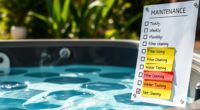
Both ozonators and UV-C systems require consistent attention to your hot tub’s maintenance routines. Regularly testing your water chemistry helps prevent issues like algae growth or bacterial buildup, especially when using these alternative sanitizers. You’ll need to monitor sanitizer levels, pH, and other parameters to keep everything balanced. Additionally, selecting high-quality ozonators and UV-C systems can make a significant difference in performance and longevity. You’ll need to monitor sanitizer levels, pH, and other parameters to keep everything balanced. Remember, these systems are not standalone solutions; they work best when integrated into a thorough maintenance routine that includes cleaning filters, checking water levels, and inspecting equipment. Proper upkeep ensures your hot tub remains clean, safe, and inviting, while also reducing your reliance on harsh chemicals. By following these routines diligently, you’ll enjoy cleaner water and a more eco-friendly hot tub experience.
Frequently Asked Questions
How Long Do Ozone and UV-C Systems Typically Last?
Ozone and UV-C systems usually last about 3 to 5 years, depending on their system lifespan and maintenance frequency. You should regularly clean and inspect these systems to guarantee peak performance. Proper upkeep, like replacing UV bulbs and checking ozone generators, can extend their life. Keep an eye on manufacturer recommendations, and schedule routine maintenance, so your systems stay effective and last as long as possible.
Are There Any Health Risks Associated With Ozone or UV-C Use?
You might worry about health concerns and long-term safety when using ozone or UV-C systems. The good news is, these systems are generally safe when used properly, but some people might experience skin or eye irritation if exposed directly. While rare, prolonged exposure could pose risks. Stay informed, follow manufacturer guidelines, and guarantee proper maintenance. That way, you enjoy the benefits without risking your health or safety.
Can These Systems Completely Eliminate the Need for Chemical Sanitizers?
No, ozone and UV-C systems can’t completely eliminate the need for chemical sanitizers. They substantially reduce chemical residuals and environmental impact by minimizing sanitizer use, but they don’t kill all bacteria and viruses on their own. You still need some chemicals to ensure proper sanitation. Relying solely on these systems may compromise water quality, so combining them with low levels of sanitizers offers the best safety and environmental benefits.
Do Ozone and UV-C Systems Affect Hot Tub Water Temperature?
Ozone and UV-C systems don’t affect your hot tub’s water temperature directly. They work by enhancing water circulation and breaking down contaminants, so your water stays clean and clear. These systems are compatible with most hot tubs, ensuring you enjoy a hygienic soak without temperature fluctuations. You can confidently use them without worrying about altering your desired water temperature, making your hot tub experience safer and more enjoyable.
Are Ozone and UV-C Systems Compatible With All Hot Tub Models?
You can generally install ozone and UV-C systems in most hot tub models, but compatibility concerns exist. Some hot tubs may have limited space or specific plumbing that makes installation challenging. It’s essential to check your hot tub’s specifications and consult with a professional to guarantee proper fit and function. While these systems work well, understanding potential installation challenges helps you avoid issues and maximize their benefits.
Conclusion
So, do ozonators and UV-C systems really work in hot tubs? Absolutely, they’re powerful tools that can drastically reduce bacteria and keep your water crystal clear—far better than traditional methods. While no system is foolproof, combining ozone and UV-C can feel like having a personal army fighting germs nonstop. Just remember, even the strongest defenses need regular maintenance. With these systems, you’re not just soaking; you’re creating a sparkling oasis that’s safer and healthier every time.