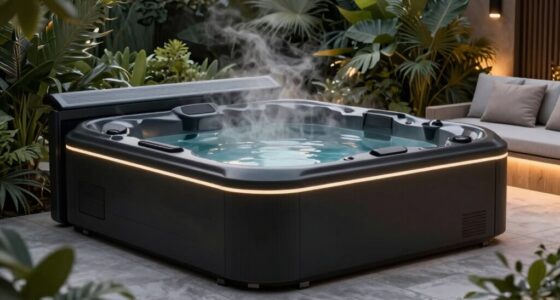
To cut hot tub costs without losing comfort, start by using well-insulated covers and proper insulation techniques to retain heat efficiently. Consider integrating solar or heat pump systems to lower energy use, and set your heater to run only when needed with smart controls or timers. Lowering water temperature slightly, like from 104°F to 102°F, can also help save energy. Keep up with regular maintenance to guarantee everything runs smoothly. Explore more tips to maximize savings and stay comfortable.

Get pool and patio gear delivered free — and shop member deals
- Fast, free delivery on millions of items
- Access to Prime Big Deal Days deals on October 6–7
- Prime Video, Amazon Music and more included
Key Takeaways
- Use well-insulated covers and proper insulation techniques to retain heat and reduce energy loss.
- Lower the water temperature slightly to save energy without compromising comfort.
- Incorporate solar heating and heat pumps to supplement or replace traditional electric heaters cost-effectively.
- Utilize smart controls and timers to run heaters only when necessary, avoiding unnecessary energy consumption.
- Regularly maintain heating equipment and covers to ensure peak efficiency and prevent costly breakdowns.
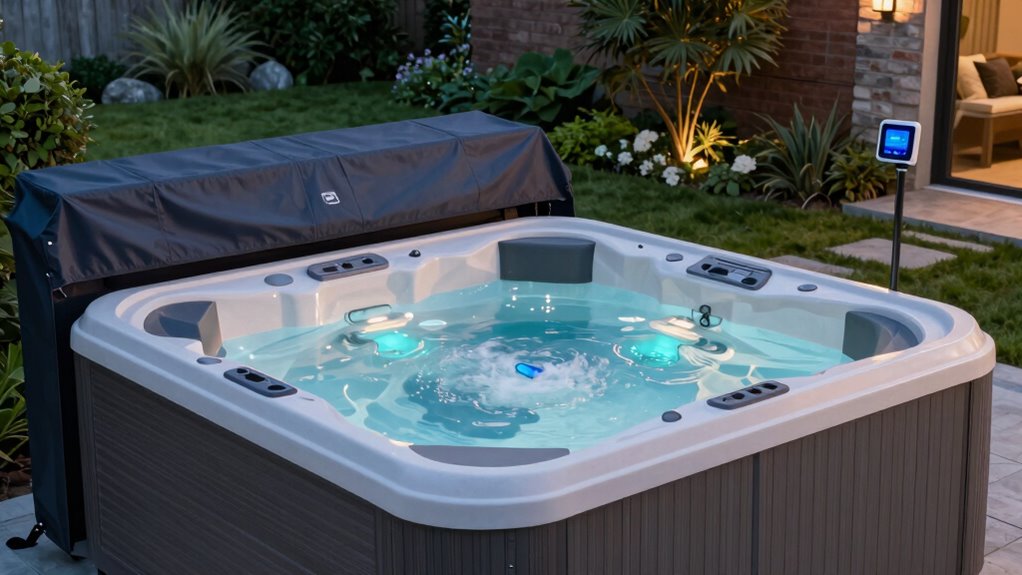
Maintaining a hot tub can be costly, but there are practical ways to cut down on your operating expenses. One of the simplest steps you can take is investing in energy-efficient covers. These covers help retain heat more effectively, reducing the amount of energy needed to keep the water warm. When your hot tub isn’t in use, make sure the cover is securely in place, especially during colder months. This prevents heat loss and minimizes the workload on your heater, which directly lowers your energy bills. Additionally, look for covers with good insulation properties—thicker, well-insulated covers make a noticeable difference in maintaining water temperature.
Invest in well-insulated covers to retain heat and reduce energy costs.
Beyond covers, exploring alternative heating methods can also lead to significant savings. Instead of relying solely on traditional electric heaters, consider integrating solar heating options. Solar panels designed for hot tub heating can harness free sunlight to warm your water during the day, cutting down on electricity costs. You might also explore heat pumps, which are more energy-efficient than standard electric heaters. Heat pumps extract heat from the air outside and transfer it to your hot tub water, working efficiently even in cooler weather. By combining these alternative methods with your existing heater, you can maintain a comfortable temperature while using less electricity. Incorporating energy-efficient technologies can further optimize your hot tub’s performance and reduce costs. Additionally, optimizing your hot tub’s thermal efficiency ensures maximum heat retention and energy savings. Using smart controls or timers can also help regulate energy use more precisely, ensuring the heater runs only when necessary. Employing proper insulation techniques can also prevent unnecessary heat loss and boost overall efficiency.
Another way to reduce costs is by managing your hot tub’s temperature wisely. Keeping the water at a slightly lower, but still comfortable, temperature can save energy. For example, lowering your hot tub’s temperature from 104°F to 102°F can reduce energy consumption without sacrificing comfort. Also, consider setting your heater to turn on only when needed—using timers or programmable controls ensures the heater isn’t running unnecessarily when you’re not using the hot tub. This approach prevents wasteful energy use and prolongs the lifespan of your heating system. Proper hot tub insulation is also essential for maintaining heat and reducing energy loss, especially during the colder months. Regularly checking and maintaining your heating equipment ensures it operates at peak efficiency and prevents costly breakdowns.
As an affiliate, we earn on qualifying purchases.
Frequently Asked Questions
What Are the Best Temperature Settings for Energy Savings?
You should set your hot tub temperature between 100-102°F for energy savings. Keep the water at this level to balance comfort and efficiency. Use energy-efficient filtration to reduce heating costs and ensure clean water. Additionally, always use a suitable cover when not in use to retain heat and minimize energy loss. These steps help save money while maintaining a comfortable hot tub experience.
How Often Should I Perform Hot Tub Maintenance?
You should perform hot tub maintenance at least once a week to keep it pristine and prevent costly repairs. During this routine, focus on chemical balancing to keep the water safe and inviting, and don’t forget filter cleaning — neglect it, and your hot tub could turn into a swamp! Regular maintenance guarantees you enjoy perfect, bubbly relaxation without surprise breakdowns or unpleasant odors.
Can Solar Covers Really Reduce Heating Costs?
Yes, solar covers can considerably reduce heating costs. They enhance solar efficiency by trapping heat and minimizing heat loss, keeping your hot tub warmer longer. Choose a cover with good cover durability to withstand weather elements and frequent use. Properly fitted, solar covers help lower energy bills without sacrificing comfort, making them an eco-friendly and cost-effective option for maintaining your hot tub’s temperature.
What Are the Most Energy-Efficient Hot Tub Models?
You get what you pay for, especially with hot tubs. The most energy-efficient models feature advanced hot tub technology like insulated shells, energy-saving pumps, and programmable controls. Look for models with high R-value insulation and covers that lock in heat. These energy-efficient features help you enjoy comfort without skyrocketing costs. Picking a hot tub designed with modern technology guarantees lower energy bills and more relaxation for your budget.
How Does Insulation Impact Operating Costs?
Insulation efficiency directly impacts your hot tub’s operating costs by retaining heat better, so you use less energy. Opting for cost-effective insulation, like high-quality foam or thermal blankets, helps keep the water warm without increasing expenses. Proper insulation minimizes heat loss, meaning your heater works less often and saves you money. Investing in good insulation is a simple, effective way to lower energy bills while maintaining your hot tub’s comfort.
Conclusion
By making smart changes, you’re not just saving money—you’re tending the heart of your oasis. Think of your hot tub as a living thing, requiring gentle care and mindful attention to thrive. When you reduce operating costs, you’re nurturing its warmth without draining its spirit. Keep the balance, and your sanctuary remains a place of comfort and peace—an enduring symbol of your mindful stewardship and well-deserved relaxation.
Evergreen bestsellers Picks
bestsellers
As an affiliate, we earn on qualifying purchases.