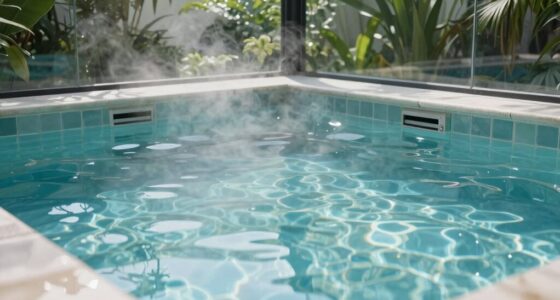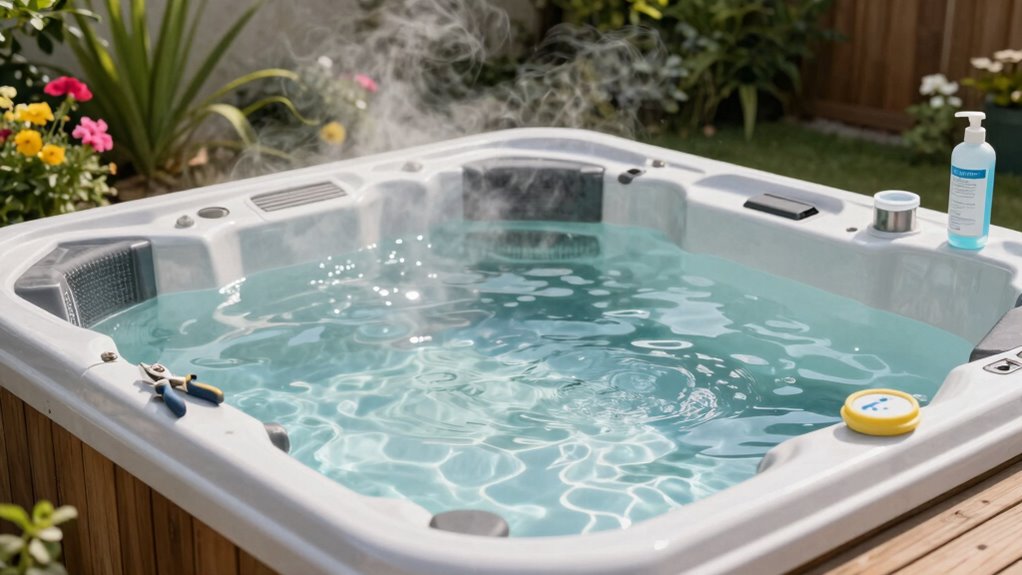

To reset a neglected hot tub without panic, start by draining all the old water and thoroughly cleaning the shell with a gentle cleaner. Remove and rinse the filter, replacing it if damaged. Refill with fresh water and balance the chemicals, keeping pH, alkalinity, and sanitizer levels in check. Run the jets to distribute chemicals evenly and check water clarity. With this step-by-step approach, you’ll restore your hot tub’s comfort and safety—more tips follow to make the process easier.

Get pool and patio gear delivered free with Prime
- Fast, free delivery on millions of items
- Prime Video, Amazon Music and more included
- Member-only deals all year
Key Takeaways
- Drain and thoroughly clean the hot tub shell and filter to remove buildup and debris.
- Inspect and replace any damaged filters for optimal water quality.
- Refill with fresh water and carefully balance pH and alkalinity levels.
- Add sanitizer and run jets for 12-24 hours to circulate and disinfect the water.
- Perform final checks on water clarity, odor, and chemical levels before use.
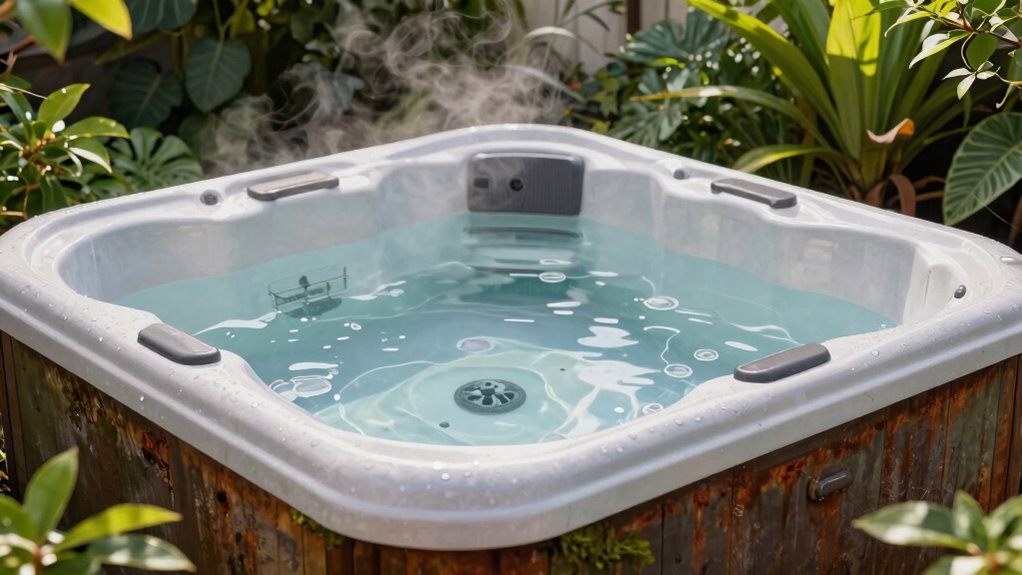
If your hot tub has been neglected for a while, it’s essential to give it a thorough reset before enjoying it again. Over time, neglect can lead to issues like imbalanced chemicals, dirty filters, and cloudy water. To start fresh, you need to focus on restoring the chemical balance and performing proper filter maintenance. These steps ensure your hot tub is clean, safe, and inviting once more.
Begin by draining the old water completely. Once emptied, clean the shell thoroughly with a non-abrasive cleaner to remove any buildup or residue. While the tub is empty, inspect the filter. A dirty or clogged filter can hinder water circulation and compromise water quality. Remove the filter and rinse it thoroughly with a garden hose, making sure to clear out debris and dirt. For stubborn grime, soak the filter in a filter cleaning solution for a few hours, then rinse again. If the filter appears damaged or excessively worn, replace it to ensure optimal filtration moving forward. Regular filter maintenance is crucial to prevent future problems and keep your hot tub running smoothly. Incorporating filter cleaning solutions into your routine can help extend the lifespan of your filters and improve water quality.
Refilling your hot tub with fresh water is the next step. Once filled, it’s time to balance the chemicals. Start by testing the water’s pH, alkalinity, and sanitizer levels using test strips or a testing kit. The ideal pH is between 7.2 and 7.6, and alkalinity should be around 80-120 ppm. Adjust these levels using pH increaser or decreaser, and alkalinity increaser as needed. Maintaining proper chemical balance not only keeps the water comfortable but also prevents corrosion or scale buildup on your hot tub’s components. Regularly checking water chemistry is an important part of hot tub water chemistry management. Proper water chemistry ensures the longevity of your hot tub and the safety of its users.
Next, add the appropriate sanitizer, like chlorine or bromine, to disinfect the water. Follow the manufacturer’s instructions carefully to reach the recommended residual levels. Run the jets to circulate the chemicals evenly, and allow the system to operate for at least 12-24 hours. During this time, keep testing the water and adjusting chemicals as necessary to maintain proper levels. Proper water circulation is vital to ensure even distribution of chemicals and prevent bacteria growth. Ensuring adequate circulation can also help prevent bacterial growth, which is especially important after a neglected period.
Once your water is balanced and the filter is clean, check for clarity and odor. If everything looks good, you’re ready to enjoy your hot tub again. Regular filter maintenance and consistent chemical checks will help prevent future neglect from turning your hot tub into a problematic mess. Remember, a little routine upkeep goes a long way in keeping your hot tub inviting and safe for relaxing dips. By taking these steps, you’ll reset your hot tub efficiently and confidently, without panic or stress. Proper hot tub maintenance is key to ensuring a safe and enjoyable experience every time.
As an affiliate, we earn on qualifying purchases.
Frequently Asked Questions
How Often Should I Perform a Hot Tub Reset?
You should perform a hot tub reset every 3 to 6 months, depending on usage. Regular resets help maintain proper water chemistry and guarantee equipment functions correctly. If you notice cloudy water, strong odors, or inconsistent heater performance, it’s time for a reset. Consistent resets and proper equipment maintenance prevent buildup of contaminants, keeping your hot tub safe and enjoyable. Staying on top of these routines prolongs your hot tub’s lifespan.
Can I Use Household Chemicals to Reset My Hot Tub?
Using household chemicals to reset your hot tub isn’t recommended, as over 80% of spa users underestimate chemical safety risks. Household cleaners can disrupt water filtration and damage your hot tub’s components. Instead, stick to spa-specific products designed for hot tubs. Proper water treatment guarantees safe, clean water, preventing long-term issues. Always follow manufacturer instructions for chemical use, and avoid mixing household chemicals to keep your hot tub safe and functional.
What Are Signs My Hot Tub Needs a Reset?
You’ll know your hot tub needs a reset when you notice cloudy or discolored water, strong odors, or if the water’s pH and sanitizer levels are off. Regular spa maintenance helps keep water chemistry balanced, preventing issues. If your water isn’t clear despite filtering, or if you experience skin irritation or equipment problems, it’s time for a reset. Addressing these signs guarantees your hot tub stays clean, safe, and enjoyable.
Is It Safe to Reset a Hot Tub Alone?
Absolutely, it’s safe to reset a hot tub alone if you follow proper safety steps. Think of it as your own personal quest—just like a hero with a maintenance checklist in hand. Make sure you handle chemicals carefully, adhering to chemical safety guidelines. Turn off power before any work, and double-check that all equipment is off. If you’re comfortable with basic maintenance, resetting solo is doable, but don’t hesitate to ask for help if unsure.
How Long Does a Typical Hot Tub Reset Take?
A typical hot tub reset takes about 30 minutes to an hour, depending on water chemistry and equipment condition. You’ll spend this time balancing chemicals and cleaning filters, which are essential parts of equipment maintenance. During the reset, you might need to drain and refill the hot tub, then re-test the water. Staying patient and methodical guarantees a safe, effective reset, restoring your hot tub’s peak performance.
Conclusion
Think of your hot tub as a garden that’s been left untended; with a little effort, you can restore its sparkle. Resetting a neglected hot tub might seem intimidating at first, but it’s just like giving it a fresh start—removing the weeds and planting new seeds. With patience and the right steps, you’ll have it bubbling happily again. Before long, you’ll be soaking in your rejuvenated oasis, proud of turning neglect into a sparkling retreat.
Halloween Picks
halloween
As an affiliate, we earn on qualifying purchases.