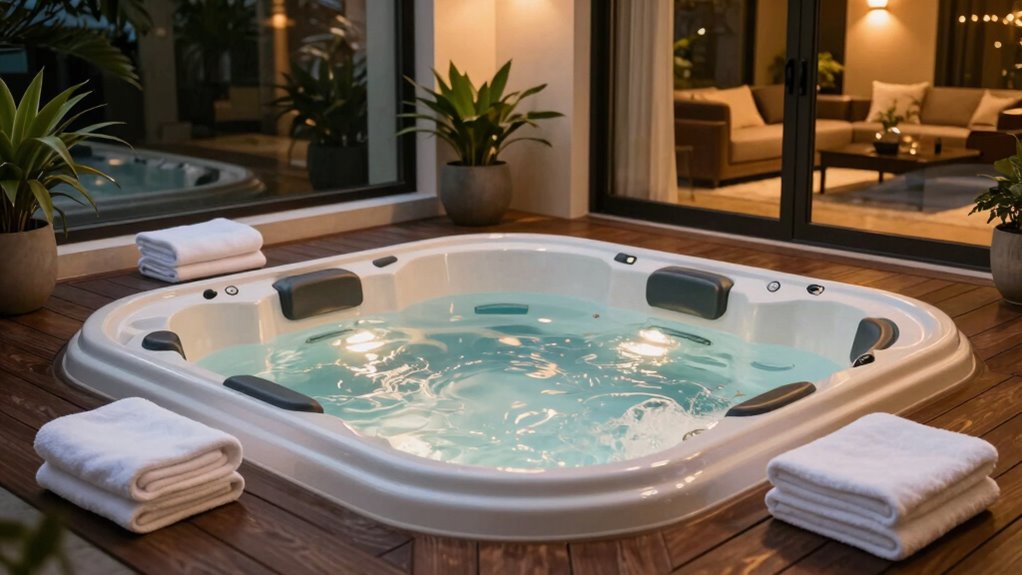

Before setting up a hot tub indoors, make certain your space has good ventilation to control moisture, preventing mold and damage. Check your home’s structural capacity to support the weight, and plan for moisture management with fans or dehumidifiers. Keep electrical safety in mind by working with licensed electricians and using GFCI outlets. Proper installation and ongoing maintenance are essential for safety and performance. If you continue, you’ll discover more key tips to make your indoor hot tub both safe and enjoyable.

Get pool and patio gear delivered free with Prime
- Fast, free delivery on millions of items
- Prime Video, Amazon Music and more included
- Member-only deals all year
Key Takeaways
- Ensure your home’s structure can support the hot tub’s weight and moisture-related risks.
- Install proper ventilation, such as exhaust fans or dehumidifiers, to prevent mold and damage.
- Use dedicated, GFCI-protected electrical circuits installed by licensed electricians for safety.
- Maintain good indoor air quality and control odors with adequate airflow and moisture management.
- Follow local electrical codes and safety guidelines for installation, wiring, and ongoing maintenance.
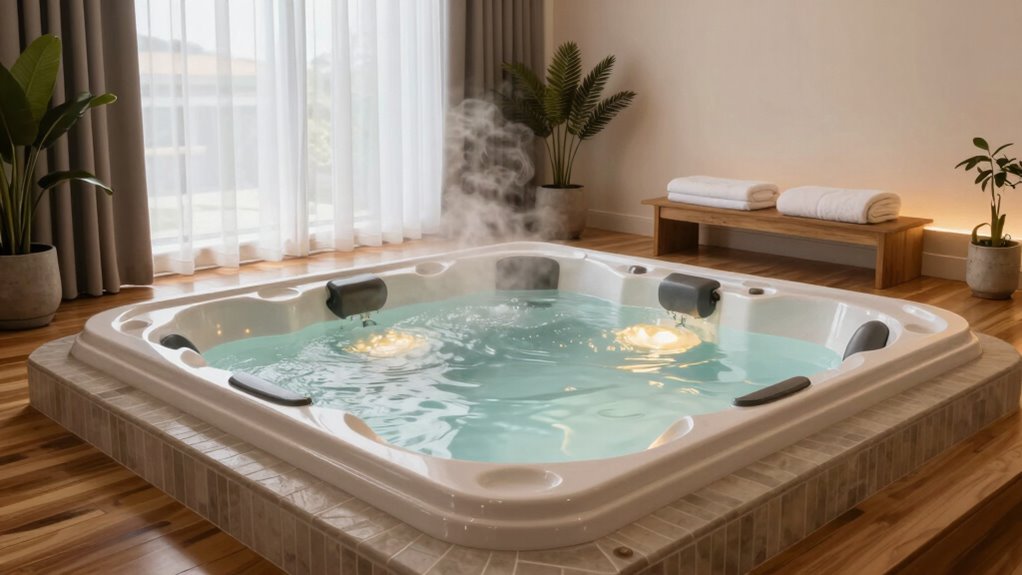
Have you ever wondered if you can enjoy a relaxing hot tub experience right inside your home? While it’s tempting to set up a hot tub indoors for convenience and comfort, there are essential factors you need to think about before making that leap. First, you must understand the ventilation requirements. Hot tubs generate a lot of moisture and humidity, which, if not properly ventilated, can lead to mold, mildew, and structural damage over time. Making sure your space has adequate ventilation isn’t just about comfort—it’s about safeguarding your home’s integrity. You’ll need a ventilation system that can handle the moisture load, like an exhaust fan or a dehumidifier designed for high humidity environments. Proper airflow helps remove excess moisture and prevents condensation, protecting walls, ceilings, and other building materials from deterioration. To ensure safety and longevity, it’s also important to consider the home’s structural capacity to support the weight of the hot tub and the ongoing moisture levels. Additionally, understanding the ventilation requirements can help you plan for effective moisture control, which is crucial for indoor installations. Adequate ventilation can also improve indoor air quality and prevent musty odors from developing over time. Proper air circulation is essential to maintain a healthy indoor environment around your hot tub. Incorporating moisture management strategies can further enhance the durability and safety of your indoor setup.
Another essential aspect is electrical safety. Hot tubs require a dedicated electrical circuit, and the wiring must adhere strictly to local electrical codes. You’ll need to work with a licensed electrician to install GFCI (Ground Fault Circuit Interrupter) outlets and ensure all wiring is properly insulated and grounded. Electrical safety isn’t just a formality; it’s a life-saving measure. Water and electricity are a dangerous combination, so proper installation prevents potential shocks, short circuits, or fires. When setting up indoors, pay special attention to the location of power sources, ensuring they are protected from water splashes and humidity. Regular inspections and upgrades may be necessary to maintain safety standards over time.
As an affiliate, we earn on qualifying purchases.
Frequently Asked Questions
What Are the Indoor Humidity Management Requirements for a Hot Tub?
You need effective ventilation strategies and humidity control systems to manage indoor humidity from your hot tub. Proper ventilation helps prevent moisture buildup, mold, and damage to your space. Use exhaust fans or dehumidifiers designed for high humidity areas to keep moisture levels in check. Regularly monitor humidity levels with a hygrometer, aiming to keep them below 50%. This approach guarantees a safe, comfortable indoor environment while protecting your home.
How Does Indoor Hot Tub Installation Affect Indoor Air Quality?
Indoor hot tub installation can impact your air quality by increasing humidity and releasing chemicals. To combat this, you need proper ventilation requirements to prevent mold and odors, and effective air filtration to remove airborne particles and bacteria. Regularly ventilate the space, use high-quality filters, and maintain the hot tub properly to guarantee healthy air quality, keeping your indoor environment safe and comfortable.
Are There Specific Electrical Codes for Indoor Hot Tub Setups?
Think of electrical safety as the backbone supporting your hot tub oasis. You’re required to follow specific wiring regulations and electrical codes for indoor setups. These codes guarantee safe installation, preventing potential hazards like electrical shocks or fires. Always consult local electrical codes and hire a licensed electrician to handle the wiring. Ignoring these rules can turn your relaxing haven into a dangerous trap, so prioritize compliance to keep safety front and center.
What Are the Long-Term Maintenance Considerations Indoors?
You need to regularly check the hot tub’s filters and water chemistry to guarantee energy efficiency and safety precautions are maintained. Regularly clean the filters, replace water as needed, and monitor pH levels to prevent mold and bacteria growth. Keep the area well-ventilated to avoid moisture buildup, and inspect electrical connections periodically. Proper maintenance keeps your indoor hot tub safe, energy-efficient, and enjoyable for years to come.
How Can I Prevent Mold and Mildew Around the Hot Tub Area?
To prevent mold and mildew around your indoor hot tub, prioritize proper ventilation strategies. Use exhaust fans or open windows to reduce humidity levels, especially after use. Regularly wipe down surfaces with mold-preventive cleaners, and guarantee the area stays dry. Maintaining good airflow and moisture control are key for mold prevention. These steps help keep your hot tub area fresh, safe, and mold-free over time.
Conclusion
Setting up a hot tub indoors can transform your space into a personal sanctuary, but it’s a journey worth thoughtful planning. Remember, it’s not just about relaxation—it’s about creating a safe, inviting environment where comfort and caution dance together. Like a carefully tuned instrument, your indoor hot tub should harmonize with your home’s rhythm. Embrace the process, and you’ll find that the warmth of your spa becomes a reflection of the warmth within you.
Fall Picks
fall essentials
As an affiliate, we earn on qualifying purchases.