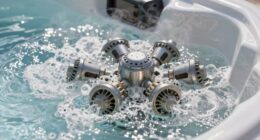
Ozone and UV systems sanitize your spa water by destroying bacteria, viruses, and organic contaminants without relying solely on harsh chemicals. They improve water clarity, reduce odors, and cut down on chemical use, making your spa safer and easier to maintain. However, they don’t provide residual disinfection, so you’ll still need some sanitizer. To get the most out of these systems and understand their limitations, keep exploring the details below.
Key Takeaways
- Ozone and UV systems effectively destroy bacteria, viruses, and organic contaminants, improving water clarity and quality.
- They do not provide residual disinfection, so chemicals like chlorine are still needed for ongoing sanitation.
- UV light disrupts microorganism DNA, while ozone rapidly oxidizes organic matter, both enhancing water safety without heavy chemical use.
- These systems help reduce chemical reliance, odors, and algae growth but have limited coverage against resistant microbes.
- Regular maintenance and complementary treatments are necessary to ensure comprehensive water sanitation and safety.
How Do Ozone and UV Systems Sanitize Spa Water?
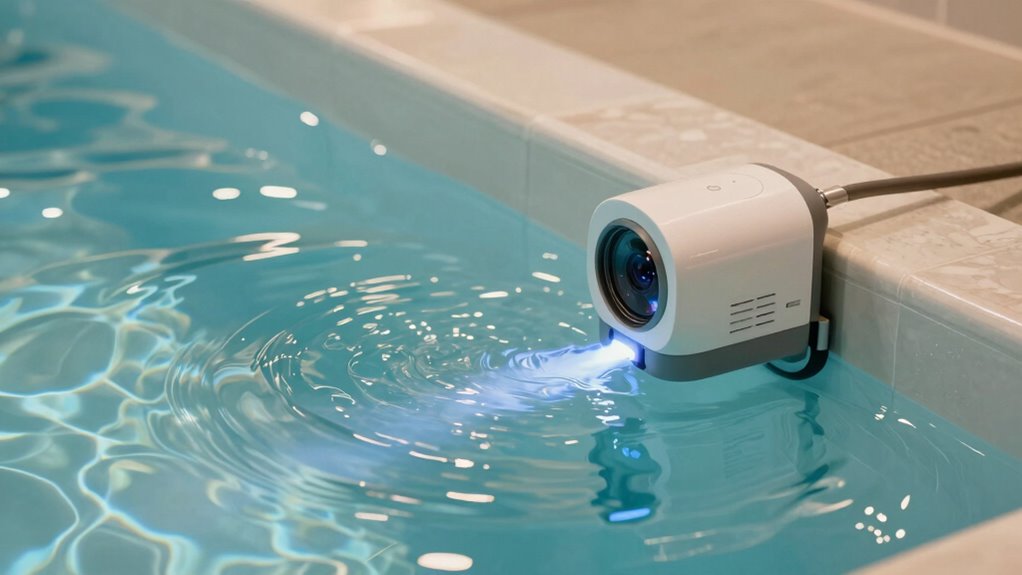
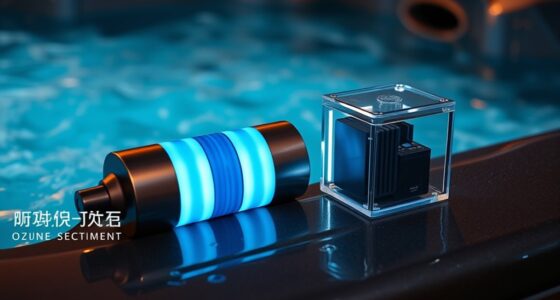
Ozone and UV systems effectively sanitize spa water by destroying bacteria, viruses, and other contaminants without relying heavily on chemical disinfectants. As water circulates through your spa, these systems work behind the scenes to keep it clean and safe. Ozone gets generated within the spa and rapidly oxidizes organic matter, breaking down contaminants quickly. UV light, on the other hand, passes through the water, disrupting the DNA of microorganisms and rendering them harmless. While these systems enhance sanitation, you can also enjoy spa aromatherapy to create a relaxing atmosphere. Proper water circulation ensures that ozone and UV treatments reach all areas of your spa, maintaining consistent water quality and reducing the need for harsh chemicals. This combination keeps your spa water fresh and inviting. Additionally, understanding the role of contrast ratio can help you better evaluate the clarity and visual appeal of your spa water and lighting conditions. Recognizing how water clarity metrics influence visual perception can help maintain an inviting spa environment.
What Are the Benefits of Using Ozone and UV in Your Spa?
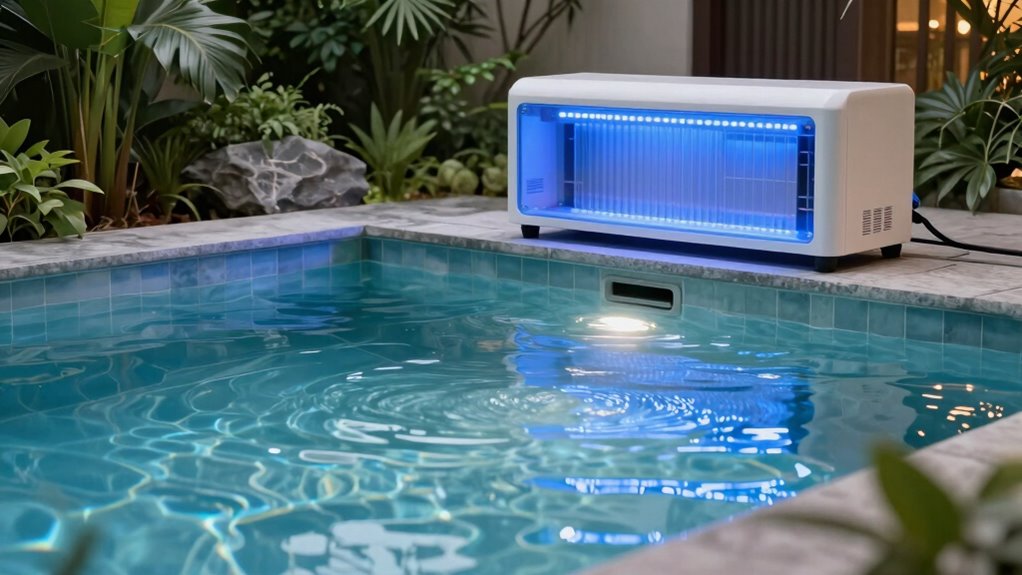
Using ozone and UV systems in your spa offers several key benefits, starting with improved water quality. These systems reduce chemical use, making your spa experience healthier and more eco-friendly. Cleaner water enhances spa relaxation and allows you to fully enjoy hydrotherapy benefits without concerns about harsh chemicals. Plus, ozone and UV treatments help prevent algae growth and cloudy water, keeping your spa inviting. Here’s a quick overview:
| Benefit | Description | Impact |
|---|---|---|
| Better Water Clarity | Eliminates particles for clearer water | Improved relaxation |
| Reduced Chemical Use | Less reliance on traditional sanitizers | Safer, gentler water |
| Enhanced Hydrotherapy | Cleaner water boosts hydrotherapy effects | More effective treatments |
| Longer Water Quality | Prolongs water freshness and cleanliness | Less maintenance |
In addition, ozone and UV systems contribute to water sanitation by actively neutralizing bacteria and viruses, ensuring a safer spa environment. These systems also help reduce chemical residues, making the water safer for sensitive skin. Incorporating these systems can further enhance overall spa safety and promote a healthier experience. Additionally, these systems support compliance with regulatory standards, ensuring your spa remains within safety guidelines and adheres to quality assurance protocols. These benefits make your spa more enjoyable and healthier.
Can Ozone and UV Replace Traditional Spa Chemicals?
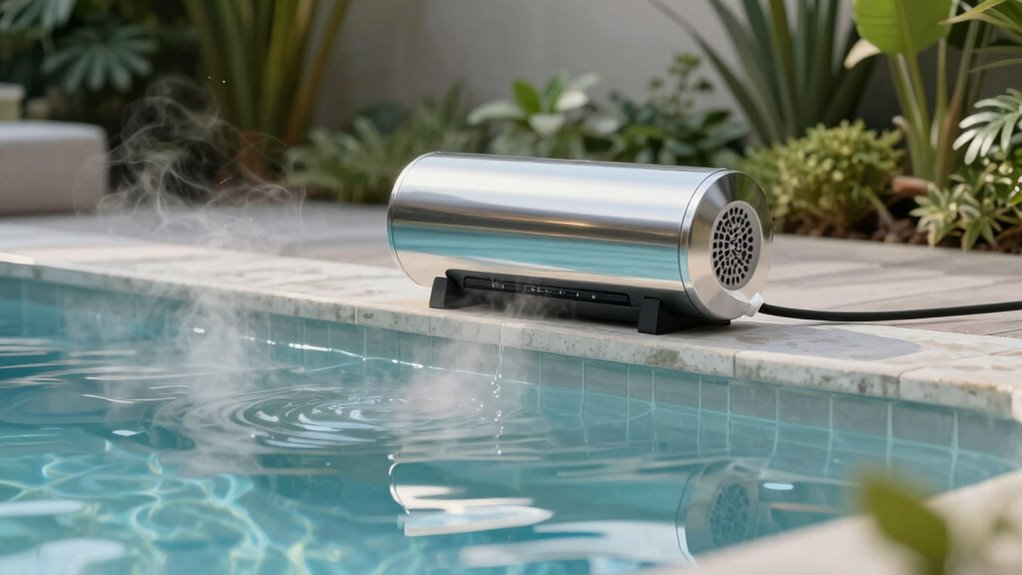
You might wonder if ozone and UV can fully replace traditional spa chemicals. They’re effective at sanitization, but you’ll need to contemplate how they impact maintenance and overall costs. Additionally, understanding the Free Floating nature of these technologies can help you assess their long-term viability. For example, their reliance on specialized equipment means ongoing expenses and technical knowledge are necessary for proper operation. Moreover, the chemical-free aspect may influence your overall spa maintenance routine and water quality management. Let’s explore whether they can truly stand in for the chemicals you’ve been using.
Effectiveness in Sanitization
While ozone and UV systems are effective at reducing certain contaminants, they often cannot fully replace traditional spa chemicals for thorough sanitization. Ozone and UV help control bacteria and algae, but they don’t provide a residual disinfectant to keep water safe between treatments. This means you still need chemicals like chlorine or bromine to maintain consistent sanitation. Additionally, spa aromatherapy and water mineralization can enhance your experience but don’t substitute for proper disinfection. Relying solely on ozone and UV might leave your water vulnerable to bacteria buildup. To ensure safe, clean water, combine these systems with regular chemical treatments. Proper air quality management and humidity control also help maintain a healthier spa environment. This balanced approach maximizes the benefits of ozone and UV while keeping your spa hygienic and inviting.
Maintenance and Cost
Many spa owners wonder if ozone and UV systems can fully replace traditional chemicals, but in regard to maintenance and long-term costs, they often fall short. While these systems are praised for their energy efficiency, they still require regular upkeep, such as replacing UV bulbs or ozone generators. Over time, this maintenance can add up, making them less cost-effective than expected. Additionally, although ozone and UV have a lower environmental impact compared to chemical sanitizers, they don’t eliminate the need for some chemical use, which can impact your overall expenses. Proper maintenance guarantees ideal performance and safety, but it’s important to weigh these ongoing costs against the benefits. Ultimately, traditional chemicals still play a vital role in keeping your spa clean and balanced.
What Are the Limitations and Risks of Relying on Ozone and UV Alone?
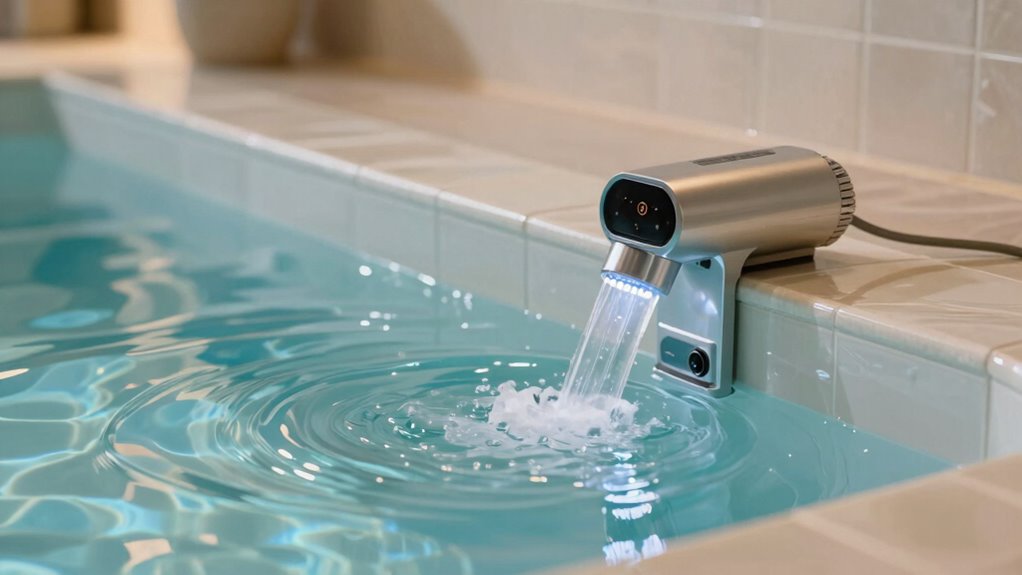
Relying solely on ozone and UV can leave gaps in your spa’s cleanliness, especially since they don’t cover all types of microbes. Without chemical sanitizers, you might miss bacteria or viruses that can still pose health risks. Plus, ozone and UV can produce chemical byproducts that could affect water quality and safety. Additionally, these methods may not be as effective against certain pathogens without proper maintenance and supplementary treatments, highlighting the importance of comprehensive sanitation approaches. Vetted – Berkley Vallone
Limited Microbial Coverage
Ozone and UV treatment systems are effective at destroying many bacteria and viruses, but they don’t provide complete microbial coverage on their own. This is due to microbial limitations and coverage gaps that can leave some pathogens untouched. You might assume your spa is fully sanitized, but certain microbes can survive or bypass these systems.
- Some bacteria and viruses are resistant to ozone and UV
- Microorganisms hiding in biofilms or crevices
- UV light only treats surfaces directly exposed
- Ozone’s reach is limited to the water it contacts
Because of these coverage gaps, relying solely on ozone and UV can leave your spa vulnerable to microbial growth. Combining these treatments with other sanitation methods ensures a safer, more comprehensive approach.
No Chemical Sanitizers
While ozone and UV systems are effective at reducing many microbes, they can’t fully sanitize your spa without the help of chemical sanitizers. Relying solely on these methods often falls short in maintaining water clarity, as they don’t provide ongoing disinfection. Without chemical sanitizers, bacteria and algae can still grow, leading to cloudy water and potential health risks. Your user preferences also play a role; some spa users prefer crystal-clear water and a sanitized environment, which ozone and UV alone might not guarantee. To ensure your spa stays clean, safe, and visually appealing, it’s essential to supplement ozone and UV with appropriate chemical sanitizers. This combined approach offers more consistent water quality and peace of mind during every soak. Proper home safety measures help prevent accidents and ensure a safe environment for all users. Additionally, understanding the limitations of ozone and UV can help you make informed decisions about your spa’s sanitation system.
Potential Chemical Byproducts
Although ozone and UV systems can effectively kill many microbes, depending solely on them poses certain risks. They may produce chemical residues that linger in your spa water, potentially causing skin irritation or health concerns. Additionally, these chemical byproducts can have an environmental impact when released into wastewater or the environment. Relying solely on ozone and UV doesn’t eliminate all contaminants, requiring supplementary sanitation methods.
- Chemical residues from byproducts may accumulate over time
- Some byproducts could be harmful to sensitive skin or eyes
- Environmental impact from released byproducts can affect local ecosystems
- Incomplete disinfection increases the risk of microbial growth if not combined with other sanitizers
How to Maintain and Monitor Your Ozone and UV Spa Systems
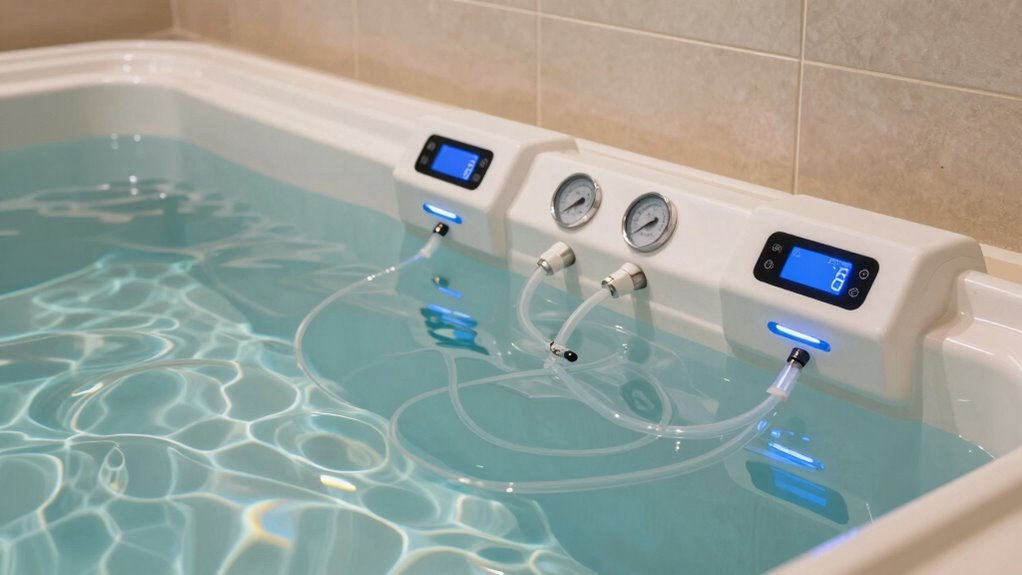
Regularly maintaining and monitoring your ozone and UV spa systems is essential to guarantee they operate efficiently and keep your water clean. Consistent checks ensure the systems produce the right amount of sanitizer without compromising spa aesthetics or user comfort. Clean the ozone generator and UV bulbs as recommended to prevent buildup that can reduce effectiveness. Test water quality frequently to verify proper oxidation and disinfection levels. Replace UV bulbs and ozone cells according to the manufacturer’s schedule to sustain maximum performance. Keep an eye on system indicators and listen for unusual noises. Proper maintenance helps your spa look inviting and ensures a comfortable experience, free from unpleasant odors or cloudy water caused by system inefficiencies. Staying proactive preserves water clarity, safety, and your overall spa enjoyment. Additionally, understanding the right maintenance practices can significantly extend the lifespan of your ozone and UV systems. Regularly inspecting system components and following recommended cleaning routines will help prevent costly repairs and downtime. Paying attention to filter performance can also improve overall system efficiency and water quality. Incorporating proper water chemistry checks further enhances system performance and water clarity.
How Do Ozone and UV Treatments Affect Water Quality and Odor?
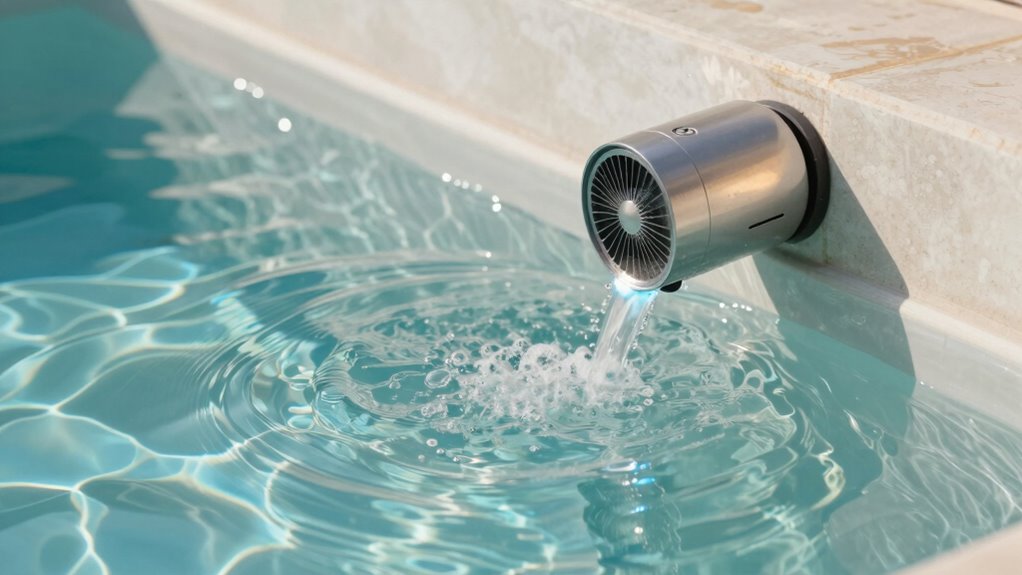
Ozone and UV treatments substantially improve water quality by rapidly destroying bacteria, viruses, and organic contaminants. This results in clearer water and a more inviting spa experience. By reducing contaminants, these systems help maintain better spa aesthetics and minimize chemical usage. You’ll notice fresher, cleaner water that smells better and feels more comfortable. Additionally, ozone and UV treatments help prevent foul odors caused by bacteria and organic build-up. They also reduce the need for harsh chemicals, making your spa safer and easier to maintain. Proper system design ensures these treatments work efficiently and effectively for your spa. Incorporating minimalist principles into your spa maintenance can further enhance its simplicity and ease of care. Understanding market trends in spa technology can help you select the most effective and energy-efficient treatment systems and optimize system integration for better performance. Considering system efficiency can further reduce operational costs and improve overall water quality.
Are Ozone and UV Spa Systems a Cost-Effective Investment?
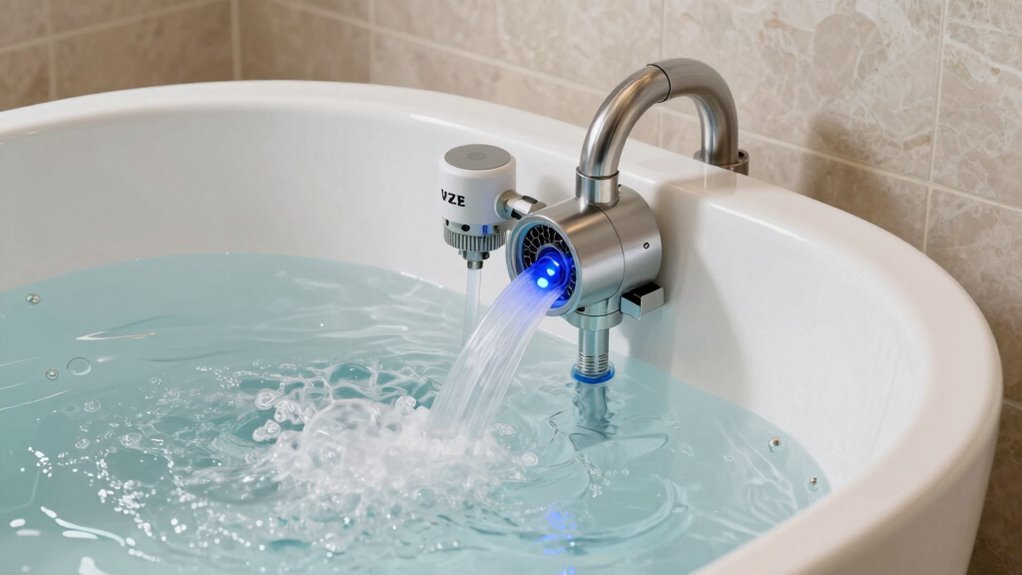
Investing in ozone and UV spa systems can be a smart choice when considering long-term costs and maintenance. When doing a cost comparison, you’ll find that upfront expenses for installation considerations may be higher than traditional chlorine or bromine systems. However, these systems often reduce the need for chemical purchases over time, saving you money. Additionally, ozone and UV systems require less frequent chemical handling, lowering ongoing maintenance costs. While the initial investment might seem significant, the savings on chemicals and reduced maintenance can make them more economical in the long run. Consider your budget, willingness to invest upfront, and the benefits of lower chemical use when evaluating whether ozone and UV systems are right for your spa.
What Factors Should You Consider Before Choosing Ozone and UV for Your Spa?
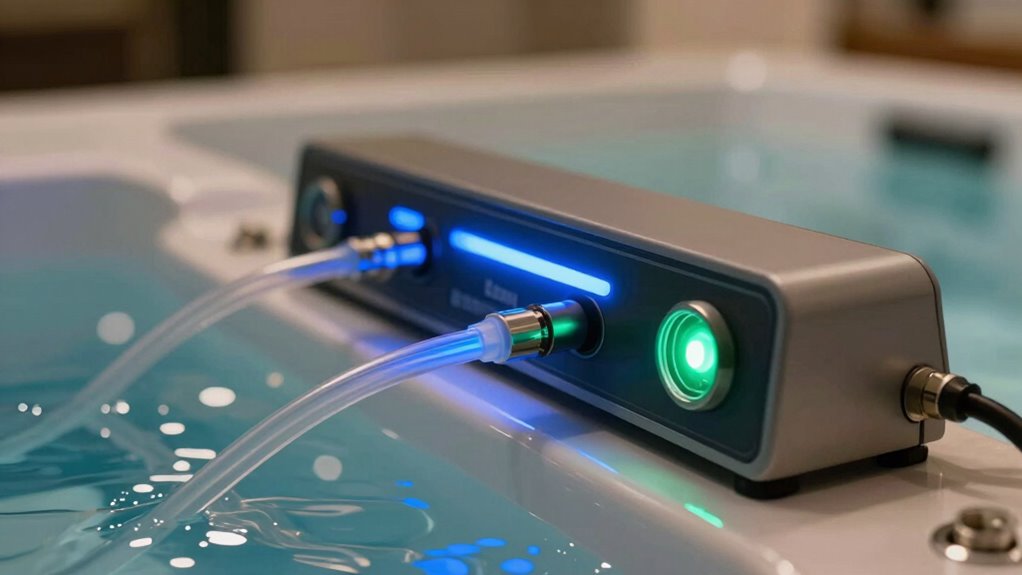
Before choosing ozone and UV systems for your spa, it’s important to assess your specific needs and circumstances. Consider how these systems impact the environment and prioritize user safety. Factors to evaluate include:
- The environmental impact of installation and operation
- The level of sanitation required for your spa
- Safety measures to protect users from UV exposure
- Compatibility with your existing filtration and chemical routines
Understanding these factors helps you select the right system that balances sanitation efficiency with sustainability. Guaranteeing user safety is vital, especially with UV systems that can pose risks if improperly installed. Likewise, considering the environmental impact ensures your spa use remains eco-friendly and sustainable over time. Making an informed decision now saves you future hassle and enhances your spa experience.
Frequently Asked Questions
How Long Do Ozone and UV Systems Typically Last Before Needing Replacement?
Your ozone and UV systems typically last about 3 to 5 years before needing replacement. The system lifespan depends on usage and maintenance, so keep an eye on performance and signs of wear. Replacement timing is vital for maximum spa sanitation. Regularly check your system, and if you notice a drop in effectiveness or unusual noises, it’s time to plan for replacement to guarantee your spa stays clean and safe.
Do Ozone and UV Systems Require Specialized Installation or Setup?
Think of installing ozone and UV systems like fitting a key to a lock; they need precise alignment. You’ll want to contemplate installation considerations carefully and verify system compatibility with your spa. While some setups are straightforward, others require specialized knowledge to prevent leaks or inefficiencies. It’s best to consult professionals who understand these systems for a seamless fit, ensuring your spa’s health and longevity.
Are There Any Health Concerns Associated With Ozone and UV Spa Treatments?
You might wonder about health safety with ozone and UV spa treatments. Generally, these systems are safe when properly maintained, but skin exposure to UV light can cause irritation or burns if not used correctly. *Make certain* the spa’s UV and ozone systems are well-installed and follow safety guidelines to minimize risks. Always avoid direct skin contact with UV light and consult professionals if you’re concerned about health safety.
Can Ozone and UV Systems Be Used Together or Independently?
You can use ozone and UV systems together or independently, depending on your spa’s needs. Check system compatibility first, ensuring both units work seamlessly without interfering. Using them together enhances water quality, but it may require more maintenance. If you opt for separate systems, maintenance is simpler but might be less effective. Decide based on your desired water clarity, budget, and how much upkeep you’re willing to handle.
How Do Climate and Water Quality Affect Ozone and UV System Performance?
Climate and water quality directly impact your ozone and UV system performance. Higher water temperatures can reduce ozone effectiveness, while minerals like iron or calcium can clog or diminish UV light efficiency. To keep your system working at its best, regularly test and balance your water’s mineral levels, and maintain appropriate water temperature. Doing so ensures your ozone and UV treatments effectively sanitize your spa, providing you with clean, safe water.
Conclusion
While ozone and UV systems are great for enhancing your spa’s water quality, they shouldn’t replace traditional chemicals entirely. Relying solely on them might leave your water vulnerable to bacteria or algae. By combining these technologies with proper maintenance and minimal chemical use, you can enjoy a safe, clean, and odor-free spa experience. Don’t let concerns about complexity hold you back—proper setup makes it easy to reap their benefits without hassle.