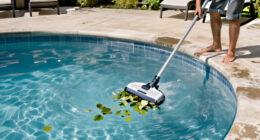
Hot tub water goes bad faster than pool water because its high temperature speeds up chemical breakdown and microbial growth. Warm water causes sanitizers like chlorine or bromine to dissipate quickly, making it harder to keep water clean. Plus, frequent use introduces contaminants like sweat and lotions, which worsen water quality. Managing these issues requires diligent maintenance and testing. Keep going to discover more about how to keep your hot tub water safe and clear longer.

Get pool and patio gear delivered free with Prime
- Fast, free delivery on millions of items
- Prime Video, Amazon Music and more included
- Member-only deals all year
Key Takeaways
- Higher temperatures in hot tubs accelerate chemical breakdown, reducing sanitizer effectiveness and promoting microbial growth.
- Frequent use introduces contaminants like sweat and oils, which degrade water quality faster in hot tubs.
- Hot water speeds up chemical reactions, causing sanitizers to dissipate quicker than in pools.
- Smaller volume and less dilution in hot tubs make contaminants more concentrated and water deteriorate faster.
- Continuous filtration and chemical adjustments are essential to prevent water from becoming cloudy or foul-smelling.
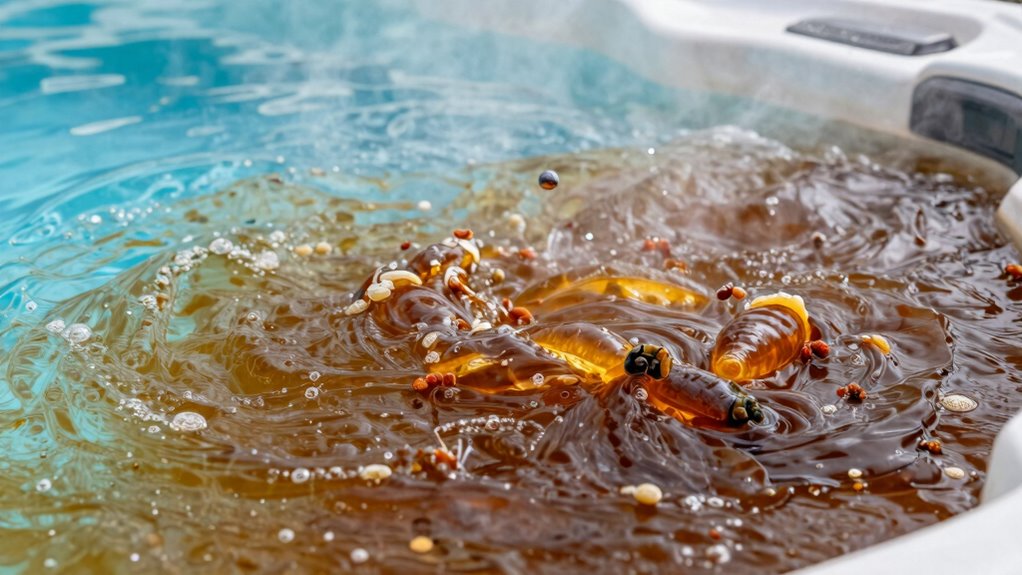
Hot tub water tends to go bad faster than pool water because of the different conditions in which they operate. One key factor is the chemical balance. In a hot tub, the chemicals you add—like chlorine or bromine—break down more quickly due to the high temperatures. This rapid breakdown means bacteria and algae can develop faster if the chemical levels aren’t constantly monitored and adjusted. Maintaining proper chemical balance is vital; if the pH gets too low or high, or if sanitizer levels drop, water quality declines swiftly. Unlike pools, which often have larger volumes and more stable chemical conditions, hot tubs are smaller and more sensitive to chemical fluctuations. You need to keep a close eye on pH and sanitizer levels, testing the water frequently to prevent microbial growth and cloudy water. Frequent testing is essential because even small changes in chemical levels can have a significant impact on water quality.
Hot tub water deteriorates faster due to high temperatures and chemical fluctuations, requiring frequent testing and adjustments.
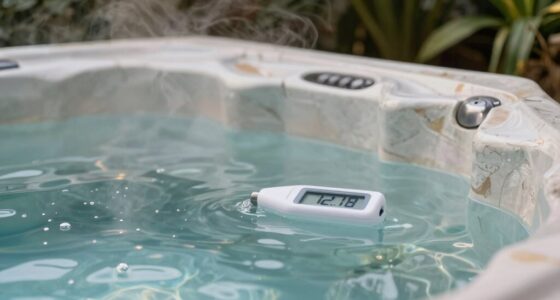
Temperature regulation is another essential factor. Hot tubs operate at temperatures typically between 100 and 104 degrees Fahrenheit. This high heat creates an environment where bacteria, fungi, and other microorganisms reproduce rapidly, making the water more prone to contamination. The heat also accelerates chemical reactions, causing sanitizers to dissipate faster and reducing their effectiveness. As a result, the water becomes less safe and more likely to develop unpleasant odors or discoloration if not treated promptly. Pool water, on the other hand, usually stays at lower temperatures, which slows microbial growth and chemical deterioration. This means you have more time to manage water quality in a pool before it becomes a health issue or looks unappealing. Additionally, proper ventilation can help in reducing chemical fumes and maintaining a safe environment around the hot tub, especially in indoor settings. Proper ventilation is especially important when hot tubs are located indoors to prevent the buildup of harmful fumes.
Since hot tubs are used much more frequently and by multiple people, the water quality can degrade quickly if you don’t maintain it diligently. Sweat, oils, lotions, and other contaminants are introduced with each use, further complicating the task of keeping the water clean. The high temperature amplifies the impact of these contaminants, making it essential to run the filtration system often and add chemicals regularly. If you neglect these steps, bacteria can multiply rapidly, leading to murky or foul-smelling water. Pool water, with its larger volume and cooler temperature, dilutes contaminants more effectively, providing a longer window before water quality deteriorates. Additionally, chemical reactions occurring in hot water speed up the breakdown of sanitizers, which further emphasizes the importance of frequent testing and maintenance. Neglecting proper maintenance can lead to uncomfortable or unsafe conditions for users, making diligent care indispensable. This ongoing maintenance is crucial for ensuring a safe and enjoyable hot tub experience.
As an affiliate, we earn on qualifying purchases.
Frequently Asked Questions
How Often Should I Change Hot Tub Water Entirely?
You should change your hot tub water entirely every 3 to 4 months to maintain proper chemical balance and water quality. Regular water filtration helps remove debris and bacteria, but over time, the chemical balance can become difficult to maintain. Frequent testing and adjusting chemicals keep the water clean. When the water becomes cloudy, has a strong odor, or isn’t responsive to chemicals, it’s time for a full water change.
Does Using a Cover Extend Hot Tub Water Lifespan?
Yes, using a cover extends your hot tub water’s lifespan. Cover protection helps reduce evaporation loss, which can concentrate contaminants and accelerate water deterioration. It also keeps debris out, maintaining cleaner water longer. Regularly using a cover minimizes chemical use and water changes, saving you time and money. Make sure your cover is secure and in good condition to maximize these benefits and keep your hot tub water fresh for longer.
Can Specific Water Additives Delay Water Degradation?
Yes, specific water additives can delay water degradation by addressing chemical imbalances and reducing water aeration. Using stabilizers or pH balancers helps maintain ideal chemical levels, preventing bacteria and algae growth. Antioxidants or clarifiers can also improve water clarity. By keeping the chemical balance steady and minimizing aeration, these additives slow down the deterioration process, helping your hot tub water stay cleaner and fresher longer.
Is It Safer to Use Bottled or Tap Water in a Hot Tub?
Think of your hot tub as a delicate garden. Using bottled water is like watering it with pure rain, free from minerals and impurities, helping water stay fresh longer. Tap water, with its mineral content, can clog filters and promote bacteria growth, making water degrade faster. For safety and longevity, opt for bottled water, ensuring proper water filtration and a cleaner, healthier hot tub experience.
How Does the Number of Users Affect Water Quality?
The more users you have in your hot tub, the faster the water quality declines. Increased use introduces bacteria and sweat, which can cause chemical imbalance and promote bacterial growth. This makes it essential to test and adjust chemicals regularly, especially after multiple users. Proper sanitation and filtration help keep the water safe, but more users mean you’ll need to be more vigilant to prevent issues like skin irritation or infections.
Conclusion
So, next time you notice your hot tub water turning cloudy or funky faster than your pool, remember it’s all about the environment and usage. For example, imagine a family using their hot tub daily for quick relaxation—this frequent use introduces more contaminants, speeding up water degradation. Keep up with regular testing, water treatment, and maintenance, and you’ll enjoy fresh, inviting water longer. Proper care truly makes all the difference in extending your hot tub’s clarity and comfort.
Evergreen bestsellers Picks
bestsellers
As an affiliate, we earn on qualifying purchases.