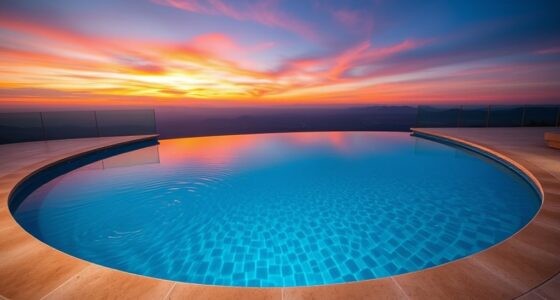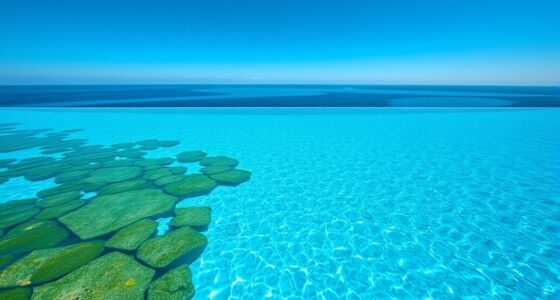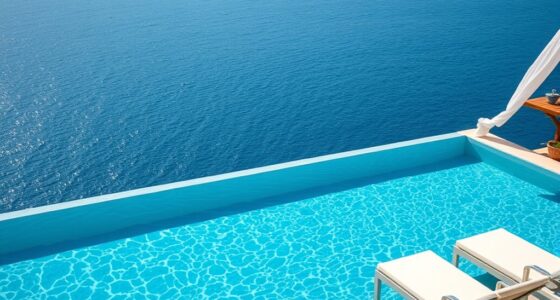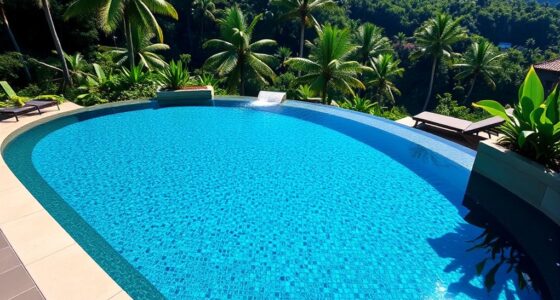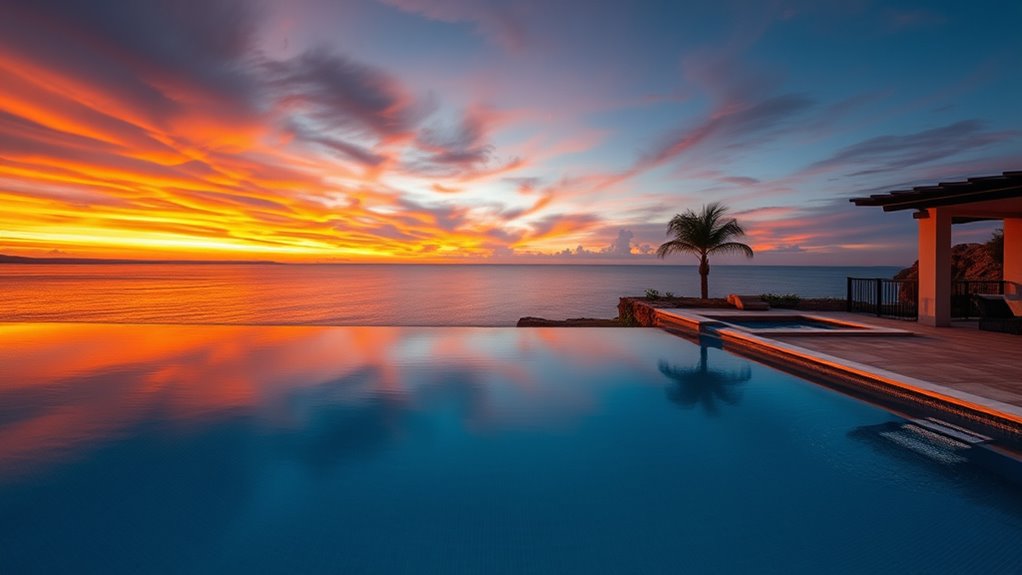

Infinity pools are the most striking but also the most expensive, with intricate engineering and higher maintenance. Zero-edge pools are sleek and simpler to care for, typically costing less but still offering a stunning look. Negative-edge pools strike a balance, combining visual appeal with easier upkeep. Your choice depends on your budget, maintenance willingness, and aesthetic desires. Keep exploring to discover more about the features and costs of each style.
Key Takeaways
- Infinity pools are the most expensive and complex to construct, offering a seamless visual edge at a higher cost.
- Zero-edge pools are generally less costly and easier to maintain, featuring a crisp, clean water boundary.
- Negative-edge pools are mid-range in cost, with flexible design options and moderate maintenance requirements.
- Infinity pools require diligent upkeep due to advanced filtration and debris collection systems.
- The choice depends on budget, aesthetic preference, and willingness for ongoing maintenance, with infinity pools prioritized for luxury appeal.

When choosing a luxurious pool design, understanding the differences between infinity pools, zero-edge pools, and negative-edge pools can help you make an informed decision. One of the first factors to consider is the cost considerations involved. Infinity pools tend to be the most expensive option, primarily because of their complex construction and advanced filtration systems. They require precise engineering to create the seamless visual effect, which involves additional labor and specialized materials. Zero-edge pools, while still luxurious, generally cost less than infinity pools but can vary widely depending on size and materials. They also demand high-quality construction to achieve the clean, crisp edge that defines their look. Negative-edge pools often fall somewhere in between in terms of cost, but installation can become pricey if you opt for advanced features or specific materials. It’s essential to budget not only for initial construction but also for ongoing maintenance, which varies among these designs.
Maintenance requirements are another critical aspect that can influence your choice. Infinity pools, with their complex systems, often require more diligent upkeep. The open edge design means debris can more easily fall into the overflow zone, demanding frequent cleaning. Additionally, the advanced pumps and filtration systems need regular inspection and servicing to guarantee ideal performance. Zero-edge pools may have simpler maintenance routines, but since they rely on precise water levels to maintain the clean edge, you’ll need to monitor water levels consistently. This can involve additional topping up, especially in windy or hot climates where evaporation is higher. Negative-edge pools, depending on their configuration, may be easier to maintain than infinity pools but could still require special attention to ensure the water flows correctly and the edges stay clear of debris.
Your choice should also consider how much time and effort you’re willing to dedicate to upkeep. Infinity pools, with their sophisticated design features, demand more frequent maintenance and higher costs over time. Zero-edge pools, while sleek and easier to manage, still require regular cleaning and water level management. Negative-edge pools, especially simpler versions, might be the most manageable, but they still need routine checks to keep the edges clean and the water circulating properly. Ultimately, balancing your aesthetic desires with practical considerations like budget and maintenance commitments will help you select the perfect pool design that complements your lifestyle and enhances your property’s luxury.
Frequently Asked Questions
Which Pool Type Is Easiest to Maintain?
You’ll find that Zero-Edge Pools are the easiest to maintain because they typically have simpler designs with fewer crevices and features. Their chemical requirements are also straightforward, making chemical balancing less complex. Infinity and Negative-Edge Pools may require more maintenance due to their advanced engineering, water features, and larger surface areas. Overall, choosing a Zero-Edge Pool minimizes your maintenance complexity, saving you time and effort.
Are Negative-Edge Pools More Energy-Efficient?
Negative-edge pools are generally more energy-efficient because they use less water and require fewer pumps for water circulation. Their design minimizes water loss and reduces energy consumption related to water filtration and circulation. By conserving water and using less energy, negative-edge pools help you save on utility bills and promote water conservation, making them an eco-friendly choice for homeowners looking to reduce their environmental impact.
Can These Pools Be Installed Indoors?
Yes, you can install these pools indoors, but it requires significant structural modifications. You’ll need to reinforce the floor to support the weight of the water and pool structure, guarantee proper waterproofing, and install efficient ventilation systems to manage humidity. Indoor installation offers a stunning aesthetic, but it’s essential to work with professionals to address these structural and environmental considerations for a safe, functional pool.
What Are the Safety Considerations for Each Pool Type?
Imagine walking along a cliff’s edge—your safety depends on sturdy railings. For all pool types, pool safety is essential; sturdy railings and barriers prevent falls, especially near the water’s edge. Infinity, zero-edge, and negative-edge pools require specific railing requirements to guarantee safety. Be mindful of slip hazards and proper lighting. Always follow local building codes and consult professionals to make your pool both stunning and secure.
How Do Cost and Installation Timelines Compare?
You’ll find that zero-edge pools generally cost less and have shorter installation timelines compared to infinity and negative-edge pools. Infinity pools tend to be more expensive due to their complex design and structural requirements, which also extend installation timeframes. Negative-edge pools fall somewhere in between, with moderate costs and installation durations. Overall, your choice depends on your budget and how quickly you want your stunning pool to be ready for use.
Conclusion
Choosing between infinity, zero-edge, and negative-edge pools depends on your style and site. Imagine you build an infinity pool overlooking a beautiful valley—every swim feels like blending into the landscape. For a sleek, modern look, zero-edge pools are perfect. If you want a dramatic visual with water spilling over all sides, negative-edge pools shine. Whichever you pick, your dream pool can transform your space into a stunning retreat you’ll enjoy for years.