To enjoy an infinity pool in a cold climate, you should implement effective heating and winterization strategies. Use a reliable heater to keep the water warm, and insulate the pool shell, plumbing, and equipment to minimize heat loss and prevent freezing. Cover the pool during winter months with specialized covers and protect electrical systems with waterproof enclosures. Proper maintenance is key, and there’s more to contemplate for ensuring safety and performance throughout winter.
Key Takeaways
- Use heated infinity pools with thermal insulation to maintain warmth during cold seasons.
- Insulate pool shells and plumbing lines to prevent heat loss and freezing damage.
- Implement winter covers and protective barriers to shield the pool from snow, ice, and debris.
- Ensure reliable backup power systems for continuous heating and safety during power outages.
- Regularly inspect and winterize equipment, including pumps and filters, to ensure safe operation in freezing temperatures.
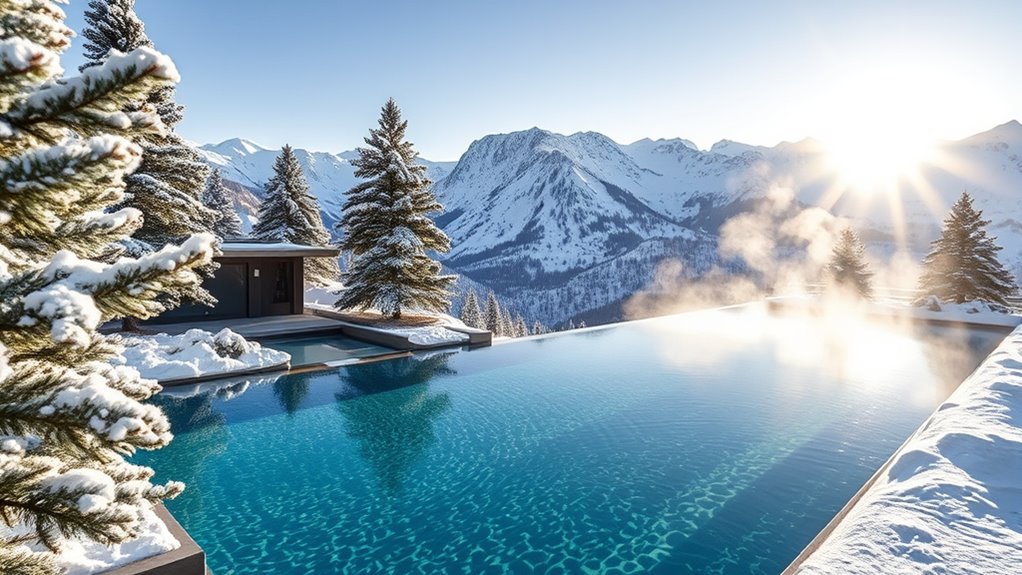
Infinity pools in cold climates offer a breathtaking experience that combines luxury with the stunning beauty of winter landscapes. When you immerse yourself in a heated infinity pool surrounded by snow-covered scenery, it creates a surreal contrast that’s both soothing and awe-inspiring. But maintaining such a pool in freezing temperatures requires careful planning, especially when it comes to heating and winterization. You need to guarantee that your pool stays warm and safe throughout the winter months, which involves a focus on thermal insulation and safety measures. Proper thermal insulation keeps the heat inside the pool, reducing energy costs and preventing heat loss. You might choose insulating materials for the pool’s shell, such as foam boards or specialized blankets, to trap heat effectively. Additionally, insulating the plumbing lines prevents freezing and potential damage, assuring your pool remains functional even during the coldest days.
Safety measures are equally critical when operating an infinity pool in winter. Cold climates pose unique risks, like slipping on icy surfaces or accidental overexposure to cold water. Installing non-slip materials around the pool deck can considerably reduce the risk of slips and falls. It’s also wise to incorporate robust safety barriers or fencing, especially if your pool is accessible from outdoor walkways. Emergency safety equipment, including waterproof heaters and quick-access rescue tools, should be kept nearby in case of emergencies. You’ll want to confirm that all electrical components are protected with waterproof enclosures and that your heating system employs safety shut-offs to prevent overheating or electrical malfunctions. Maintaining clear signage about cold water risks is a smart move, especially if you have guests or family using the pool. Additionally, understanding reliable backup power options can ensure that your heating and safety systems remain operational during power outages, which is crucial in cold climates.
To further enhance safety and efficiency, you might consider automated systems that monitor water temperature and chemical levels. These systems can alert you when adjustments are needed, helping you maintain ideal conditions without constant manual checks. During winter, regular inspections of the pool cover, insulation, and heating equipment are essential to identify and address any issues early. Proper winterization also involves draining and winter-proofing equipment that isn’t designed to withstand freezing temperatures, such as pumps and filters, or using specialized winter covers that help retain heat while shielding the pool from snow and ice.
Frequently Asked Questions
What Are the Environmental Impacts of Heating Infinity Pools in Cold Climates?
Heating infinity pools in cold climates can impact the environment by increasing energy consumption, which may lead to higher greenhouse gas emissions. You might also cause chemical runoff if pool chemicals aren’t managed properly, harming local ecosystems. Additionally, the noise pollution from heating equipment can disturb nearby wildlife and residents. By adopting eco-friendly heating systems and careful chemical use, you can minimize these environmental impacts.
How Do Maintenance Costs Vary for Heated Infinity Pools During Winter?
During winter, your heated infinity pool’s maintenance costs increase mainly due to pool cover costs and chemical treatment expenses. You’ll spend more on insulating covers to prevent heat loss and keep debris out, which adds to your costs. Additionally, chemical treatments become more frequent to balance cold water chemistry, leading to higher expenses. Regularly maintaining these elements helps you manage costs while keeping your pool ready for winter enjoyment.
Are There Eco-Friendly Heating Options for Cold Climate Infinity Pools?
Yes, you can choose eco-friendly heating options like solar panels and geothermal heating for your cold climate infinity pool. Solar panels harness sunlight to generate energy, reducing your carbon footprint and energy costs. Geothermal heating taps into the earth’s natural warmth, providing efficient, sustainable heat even during winter. Both options are environmentally friendly, saving you money while keeping your pool warm and enjoyable year-round.
Can Solar Energy Effectively Power Infinity Pool Heating in Cold Regions?
Yes, solar energy can effectively power infinity pool heating in cold regions if you optimize solar efficiency and use a high-quality pool cover. The cover traps heat and reduces energy loss, making the system more effective. Pairing solar panels with proper insulation allows you to maximize heat retention, even in colder weather. With these measures, you can enjoy a warm, eco-friendly infinity pool year-round in cold climates.
How Do Insulation Methods Differ for Outdoor Versus Indoor Infinity Pools in Winter?
Imagine wrapping your pool in a cozy blanket—outdoor pools require more robust thermal insulation and wind barriers to retain heat and block cold drafts. Indoor pools, however, benefit from existing building insulation, making winterization simpler. You’ll focus on sealing gaps and maintaining humidity. For outdoor pools, prioritize wind barriers and extra insulation layers, while indoor pools mainly need insulation enhancements around the pool area itself.
Conclusion
So, you’ve braved the icy challenge of infinity pools in cold climates—what’s the verdict? With clever heating, winterization, and a dash of stubbornness, you can enjoy that seamless water edge year-round. Who needs tropical temps when you’ve got ingenuity and a splash of frostbite? Embrace the chill, defy the odds, and turn your winter wonderland into a luxurious, perpetual splash zone. After all, why settle for ordinary when you can have infinity in the ice?