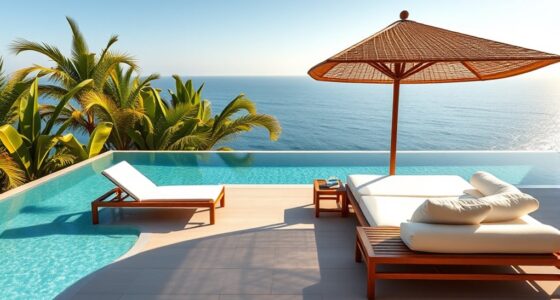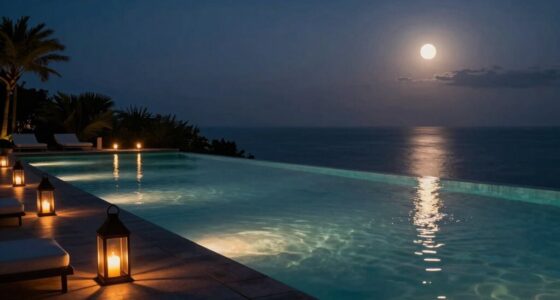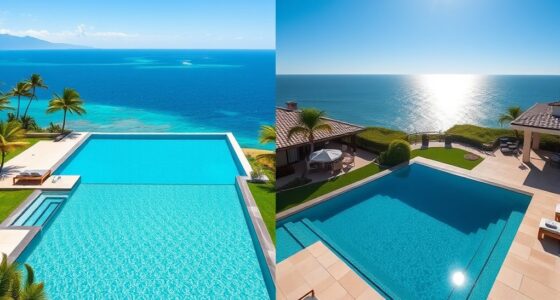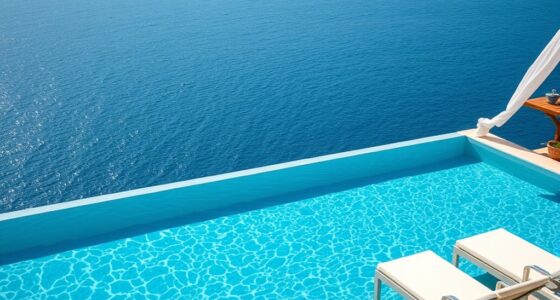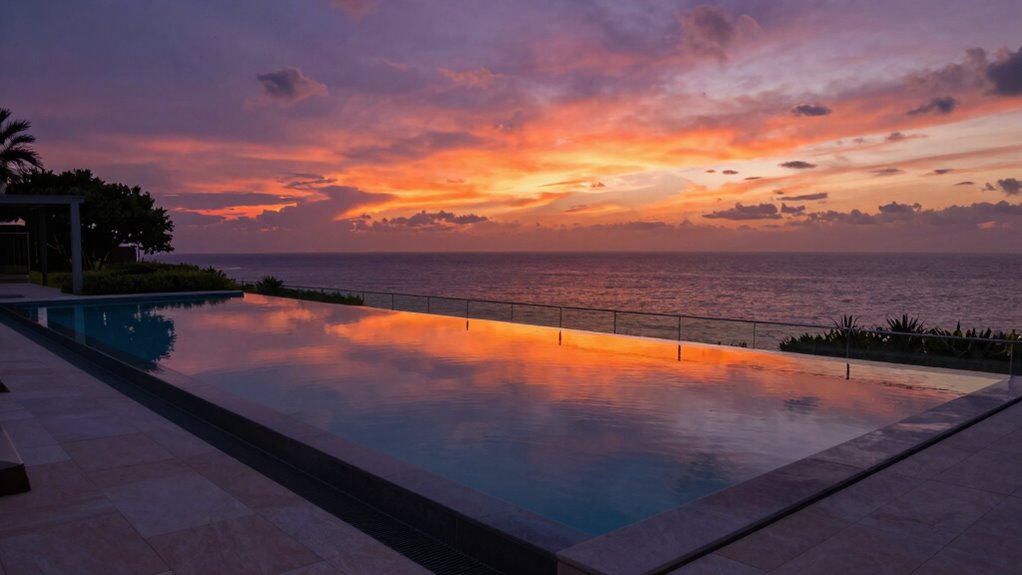

To know if your site is right for a vanishing edge pool, assess the terrain’s slope and water flow to guarantee seamless circulation. Check soil stability and conduct a geotechnical assessment to prevent erosion and support the structure. Consider environmental factors like trees, debris, and rainfall, which can impact water movement and maintenance. Make certain there’s enough space for equipment and safety. If your site passes these checks, you’ll be on the right track for a stunning vanishing edge—continue to find out more.

Get pool and patio gear delivered free with Prime
- Fast, free delivery on millions of items
- Prime Video, Amazon Music and more included
- Member-only deals all year
Key Takeaways
- Assess the landscape slope and water flow to ensure proper drainage toward the catch basin.
- Conduct a geotechnical assessment to verify soil stability and support for cantilevered edges.
- Check for obstacles like trees and debris that could clog filtration or disrupt circulation.
- Ensure sufficient space for equipment, safety barriers, and maintenance access.
- Evaluate climate and weather conditions to confirm durability and proper water management.
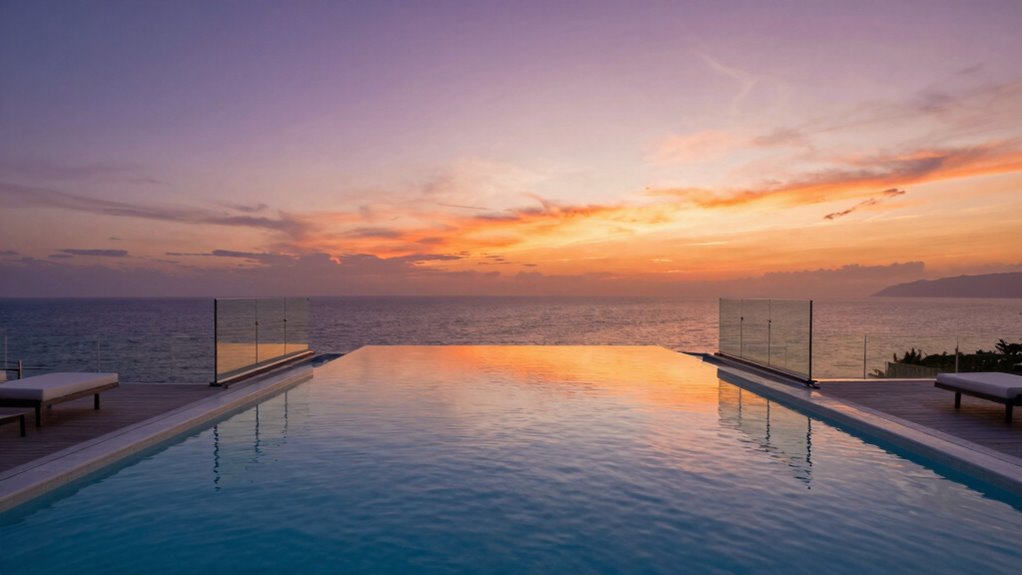
Deciding whether your site is suitable for a vanishing edge pool requires careful assessment of the landscape and surrounding environment. This type of pool creates a stunning visual effect, but it’s not just about aesthetics; it demands specific site conditions to function properly. One of the most important factors to consider is water flow. Since vanishing edge pools rely on precise water movement to maintain the illusion of the water disappearing over the edge, your site must allow for seamless circulation. You’ll need a natural or engineered slope that directs water toward the catch basin, ensuring a consistent, controlled flow. If the terrain is uneven or flat without proper grading, maintaining the water level and flow becomes tricky, risking overflow or dry spots along the edge.
Assess your landscape’s slope and water flow to ensure a seamless, controlled edge for your vanishing pool.
Structural support plays a critical role in determining if your site can handle the demands of a vanishing edge pool. These pools require a reinforced foundation because the edges are often cantilevered and exposed to external forces. If your land is prone to shifting soil, erosion, or has a weak subsoil structure, it might compromise the integrity of the pool’s edge. Before installation, a thorough geotechnical assessment is essential to evaluate whether your site can support the necessary structural support. You’ll also need to consider access for construction equipment and the ability to incorporate additional support systems such as retaining walls or underpinning if needed. Additionally, understanding the topography of the site helps in planning for proper water flow and structural support, ensuring the pool functions as intended. Proper site evaluation can identify potential issues early, saving time and costs during construction. Conducting a detailed soil analysis can further help determine the stability and suitability of the terrain for supporting the pool’s structure.
Another aspect to evaluate is the surrounding environment and how it influences both water flow and structural stability. Trees, plants, or debris near the pool can disrupt water circulation, clog the filtration system, or introduce organic matter that affects water quality. Heavy rainfall or runoff from nearby slopes can cause fluctuations in water levels, making it more challenging to maintain the seamless edge. Climate factors, like strong winds or freeze-thaw cycles, also impact the durability and maintenance of the pool. Ensuring proper drainage around the site is vital to prevent water from pooling or eroding the foundation. Proper drainage planning can help mitigate these issues and maintain the pool’s visual appeal. Additionally, understanding the topography of the site helps in planning for proper water flow and structural support, ensuring the pool functions as intended.
In addition, accessibility matters. You need enough space for equipment, maintenance, and safety barriers. If your site is cramped or obstructed, installing a vanishing edge pool could become impractical or unsafe. Overall, evaluating water flow, structural support, environmental conditions, and accessibility will help determine if your site is truly suitable for this luxurious design. Only when these elements align can you confidently move forward, knowing your pool will be both stunning and structurally sound.
Products Worth Considering

eufy Security Essential 7-Piece Alarm System with HomeBase Mini

eufy Security eufyCam C37 4-Camera Kit with 360° Pan, Tilt, and Auto Tracking

Philips Hue Play Floor Lamp, RGBWWIC LED, 53 Inch, Black
As an affiliate, we earn on qualifying purchases.
Frequently Asked Questions
What Are the Cost Differences for Vanishing Edge Pools?
Vanishing edge pools generally cost more than traditional pools due to specialized materials and water circulation systems. You’ll need high-quality pool materials that guarantee durability and seamless edges, plus advanced water circulation to maintain the illusion. Expect to pay a premium for these features, often ranging from 20% to 50% more than standard pools. The extra investment guarantees a stunning, functional vanishing edge, but it’s essential to budget for both materials and ongoing maintenance.
How Long Does Installation Typically Take?
Installation typically takes around two to three weeks. For example, if you’re installing a vanishing edge pool with custom lighting and optimized water circulation, the process involves site prep, constructing the edge, and integrating lighting systems. Proper water circulation is essential for maintaining water quality and preventing stagnation. During this time, your contractor will guarantee the pool’s edge, lighting, and circulation systems are seamlessly integrated for a stunning, functional feature.
Are There Special Maintenance Requirements?
Yes, maintaining a vanishing edge pool requires some special attention. You should regularly check pool lighting to guarantee it’s functioning safely and effectively, especially since the edge creates unique visual effects at night. Water circulation is essential too; it prevents debris buildup and maintains water quality. Regularly inspecting and cleaning the catch basin and ensuring proper pump operation help keep your vanishing edge pool in top condition.
Can a Vanishing Edge Be Added to an Existing Pool?
Yes, you can add a vanishing edge to an existing pool, but it requires careful design considerations. You’ll need to evaluate water circulation to make certain of proper flow and avoid issues like splashing or overflow. Consulting with a professional helps determine if your current pool structure can accommodate the edge and what modifications are necessary. Proper planning guarantees a seamless integration that enhances your pool’s aesthetic and functionality.
What Safety Features Are Recommended for Vanishing Edges?
Imagine a delicate balance on a cliff’s edge—you need safeguards in place. For vanishing edges, install safety barriers to prevent accidental falls and guarantee they’re sturdy and transparent for unobstructed views. Emergency alarms are essential, alerting you instantly if someone approaches the edge dangerously. These features work together, creating a secure environment so you can enjoy the stunning design without worry.
Conclusion
Ultimately, deciding if your site is right for a vanishing edge is like choosing the perfect canvas for a masterpiece—it has to complement and enhance your vision. If your landscape offers a seamless view and the space can support the design, then you’re ready to create a stunning illusion of endlessness. Trust your instincts, and remember that the right site transforms a simple pool into a portal, inviting you to step beyond the ordinary into a world of limitless beauty.