
TL;DR

Get pool and patio gear delivered free — and shop member deals
- Fast, free delivery on millions of items
- Access to Prime Big Deal Days deals on October 6–7
- Prime Video, Amazon Music and more included
Laidback Gardener’s October 1 Halloween special describes jelly fungi that can appear on dead wood around Quebec homes and change markedly with damp and dry weather. It profiles orange witch’s butter, black jelly roll and yellow brain, while explaining that “jelly fungi” is a descriptive label, not one close-knit group. The report says the fungi described are harmless to touch, but it does not provide a formal identification or foraging guide.
Laidback Gardener published a Halloween special on October 1 describing three kinds of jelly fungi that may appear on dead wood around Quebec homes. The report explains that the fungi can swell into shiny, gelatinous growths in damp weather and shrink into less noticeable crusts or films when conditions are dry, giving readers a seasonal guide to organisms they might otherwise mistake for something unfamiliar.
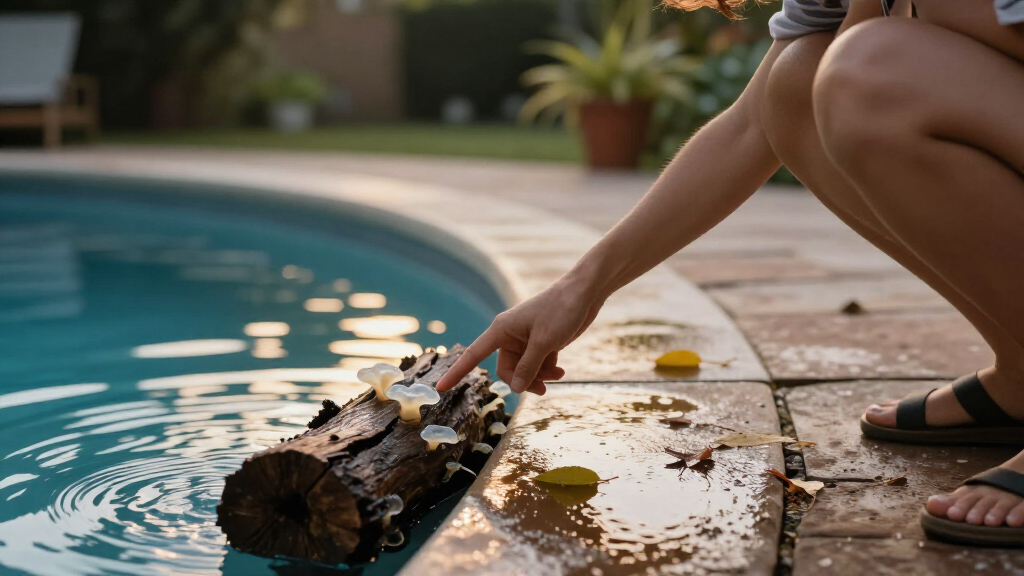
The report profiles orange witch’s butter (Dacrymyces chrysospermus), which can grow on dead conifer wood, including old fences and posts. It says the fungus may look like a small orange patch in dry conditions, then become a swollen, shiny mass after wet weather. Black jelly roll (Exidia glandulosa) grows on dead hardwood branches, where damp conditions bring out shiny black blobs; as it dries, it contracts into a crust-like form.
The third example, yellow brain (Tremella mesenterica), forms a folded golden-yellow mass. The report says it does not feed directly on the wood where it appears, but instead parasitizes other fungi living inside it. Together, the examples show that a similar gelatinous appearance does not mean the fungi are close relatives: “jelly fungi” is a descriptive label, not a single taxonomic group.
The article calls the fungi it discusses harmless to touch and uses a lightly oiled party balloon as a comparison for their slippery, elastic feel. It also describes reviviscence: some fungi shrivel during dry spells and swell again after rain. The report is a Halloween-themed identification introduction, not a recommendation to eat wild fungi; its author says even species described as edible would not be welcome at their table.
Why These Garden Fungi Reappear
The report offers a practical way to understand a conspicuous but easily overlooked change in the fall garden: a dark or orange growth on old wood may become much more visible after rain, then seem to vanish as the weather dries. The moisture-linked shift helps explain why homeowners may encounter the same growth in very different forms across a few days.
Its distinction between appearance and classification also matters. “Jelly fungi” describes texture, not a close family relationship, and the article’s three examples differ in colour, substrate and feeding strategy. That is useful context for readers who might otherwise assume every gelatinous patch is the same organism. The report does not establish the identity of any specimen a reader finds, so photographs or descriptions alone should not be treated as a definitive identification.
As an affiliate, we earn on qualifying purchases.
Three Fungi on Dead Wood
The October feature is part of Laidback Gardener’s annual Halloween-themed garden series. Its author frames the subject playfully while saying the material is intended to be scientifically rigorous. The focus is on familiar yard settings in Quebec rather than a broad catalogue of fungal species.
The report’s three examples grow in association with dead wood, but not all in the same way. Orange witch’s butter is associated with dead conifer wood, black jelly roll with dead hardwood branches, and yellow brain with other fungi inside wood. The article uses these contrasts to explain why the common label should not be mistaken for a taxonomic grouping.
It also links appearance to weather. In dry conditions, the fungi described may contract and become harder to spot; moisture can make them swell and look more gelatinous. The report calls this process reviviscence, and says that in some species carbohydrates, including polysaccharides, make up more than 80% of dry weight. That figure is presented for some species, not as a measurement for every fungus discussed.
““‘Jelly fungi’ aren’t actually a single group.””
— Laidback Gardener
Limits of the Garden Identification
The feature names three fungi but does not provide a diagnostic key, expert review of reader-submitted specimens or guidance for confirming identification. A fungus’s colour and texture alone may not establish its species, and the article’s examples should not be used as a stand-alone field guide. Its statement that the featured fungi are harmless to touch does not identify an unknown growth a reader may find.
The report also does not say how common each species is across Quebec, give survey data, or specify how quickly every kind responds to rain. The carbohydrates figure applies to some species and is not broken down for the three examples. The article does not offer a full explanation of the biological mechanism behind reviviscence in each fungus.
What Readers Can Watch For
For readers checking old wood in their yards, the feature suggests that wet weather may make jelly-like growths easier to notice, while a dry spell can leave them contracted and inconspicuous. The article does not announce a follow-up study or further reporting milestone; it is a seasonal feature rather than a developing investigation.
Anyone seeking to identify a particular specimen would need more than this overview, including reliable local identification resources or qualified expert advice. Readers should not infer that an unknown fungus is edible or safe to handle simply because it resembles one of the examples. The report’s next step for readers is observation: note the wood it grows on and how its appearance changes with moisture, while treating identification as unresolved unless independently confirmed.
Key Questions
What does “jelly fungi” mean?
It is a descriptive label for fungi with soft, gelatinous textures, not the name of one closely related group. The report says this trait evolved independently among fungi.
Which jelly fungi does the report describe?
It profiles orange witch’s butter, black jelly roll and yellow brain, with scientific names given for each in the feature.
Why do jelly fungi look different after rain?
The report says some species shrink in dry conditions and swell when damp, a change it calls reviviscence. It does not give a species-by-species response time.
Are the fungi safe to eat?
The feature is not a foraging guide. Although its author says some jelly fungi may be labelled edible, readers should not eat a wild fungus based on this article or appearance alone; identification has not been confirmed for any specimen a reader might find.
Source: rss
Fall Picks
fall essentials
As an affiliate, we earn on qualifying purchases.