TL;DR

Get pool and patio gear delivered free with Prime
- Fast, free delivery on millions of items
- Prime Video, Amazon Music and more included
- Member-only deals all year
A Gardening Know How guide details how gardeners can propagate herb cuttings in plain water this fall, highlighting mint as the easiest option alongside other kitchen favorites. The method requires only sharp snips, clean glass jars, and fresh water, letting growers keep fresh herbs indoors through winter.
A new seasonal guide from Gardening Know How outlines how gardeners can rescue their outdoor herbs before the first hard frost by rooting stem cuttings in nothing more than plain tap water and glass jars. The report names mint as the easiest herb for beginners — the author describes it as “virtually indestructible” and able to root in days — along with other kitchen herbs suited to fall propagation on a windowsill.
According to the guide, early fall is an ideal window for taking herb cuttings because plants are still filled with active growth hormones and their soft green stems have not yet hardened off for winter. The author recommends selecting softwood tip cuttings — tender, bright green side shoots near the top that flex easily — rather than rigid base stems, which root far more slowly in water.
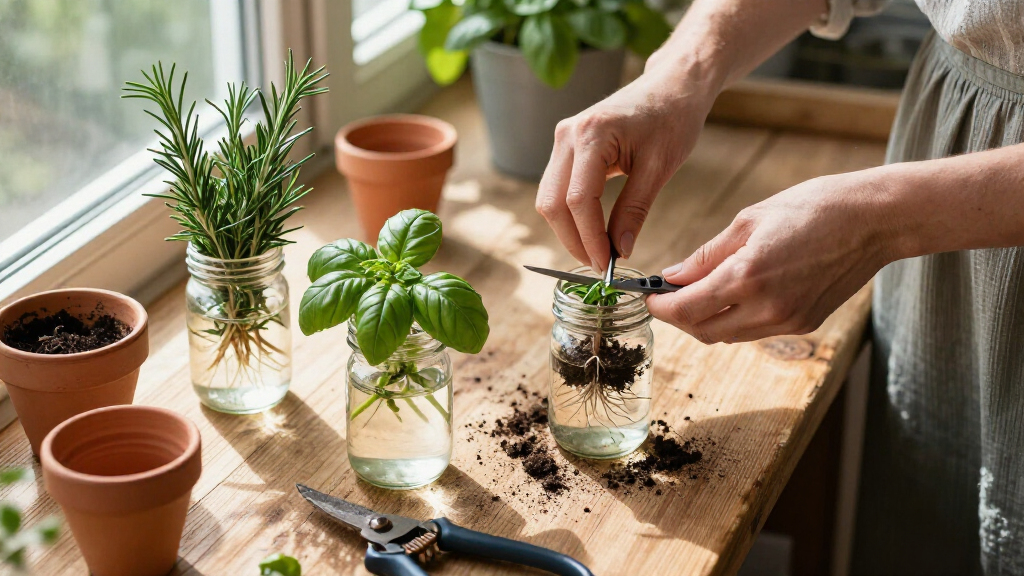
The method itself is simple and low-cost. Cuttings should be snipped with razor-sharp, clean blades just below a leaf node, where the guide says root-building cells are concentrated. All foliage must be stripped from the bottom two inches (5 cm) so no leaves sit below the waterline — submerged foliage, along with dull blades, is identified as a common cause of failed attempts. Water should be replaced every few days to keep it clean, and the author suggests a single drop of liquid kelp fertilizer can help stimulate root development.
Mint tops the list for beginners. The author recounts rooting a sprig taken home after a night out in a repurposed water mister, which produced a long white root within roughly a week. Spearmint, peppermint, and specialty varieties such as chocolate or apple mint all develop what the guide calls adventitious water roots readily. For mint, the guide recommends 4–6 inch (10–15 cm) stems with foliage stripped from the bottom half, placed in tall, narrow-necked jars to keep the top-heavy stems upright. Any flower spikes should be removed so the plant’s energy goes into roots rather than blooming.
Why Windowsill Propagation Matters Now
The guide’s core message is seasonal urgency: hard frost will kill tender outdoor herbs, and water propagation offers a nearly free way to preserve garden-grown flavor through winter. For the price of a few cuttings and clean jars, gardeners can maintain a supply of fresh culinary herbs indoors rather than letting the season’s growth go to waste.
It also lowers the barrier for inexperienced growers. Because water propagation lets you watch root growth in real time through clear glass, the guide positions it as a forgiving, low-maintenance entry point for anyone intimidated by other propagation methods.
Why Water Propagation Sometimes Fails
The guide directly addresses a common frustration: cuttings that turn into what the author calls a “murky jar of stumps.” According to the report, failures usually trace back to small oversights — leaves left submerged underwater, dirty or dull cutting blades, or stems chosen from hardened growth rather than soft tips.
The author’s recommended practice is to disinfect scissors with isopropyl alcohol or diluted neem before and after use, cut cleanly below a node, and keep the water fresh. These hygiene steps, rather than any special equipment, are presented as the difference between success and rot.
“In fall, water propagation is your secret weapon: a way of bulking up your homegrown edibles, teasing more growing potential out of the year on the cheap.”
— Gardening Know How guide author
From Rooted Cutting to Kitchen Harvest
Gardeners who act in early fall, while stems are still soft and actively growing, have the best chance of success before dormancy sets in. Once cuttings show white water roots, the typical next step is moving them to soil or potting them on for a windowsill harvest through the new year. Readers in frost-prone areas should take cuttings before the first hard freeze to have viable stems to work with.
Key Questions
Why is fall a good time to root herb cuttings in water?
According to the guide, early fall stems are still soft, packed with growth hormones, and full of seasonal vigor before winter dormancy, making them quick to root compared to hardened-off growth.
Which herb is easiest for beginners?
The guide names mint as the most reliable choice, rooting in days across varieties like spearmint, peppermint, and chocolate mint.
Why do herb cuttings rot in water?
The most common causes cited are leaves left below the waterline, dull or dirty blades, and poor stem selection. Strip lower foliage and use sharp, disinfected snips.
How long should mint cuttings be?
The guide recommends 4–6 inch (10–15 cm) stems with foliage stripped from the bottom half, held upright in a tall, narrow-necked jar.
Should I add anything to the water?
Plain tap water changed every few days is sufficient; the author says a single drop of liquid kelp fertilizer can help stimulate faster root development.
Source: rss
Halloween Picks
halloween
As an affiliate, we earn on qualifying purchases.