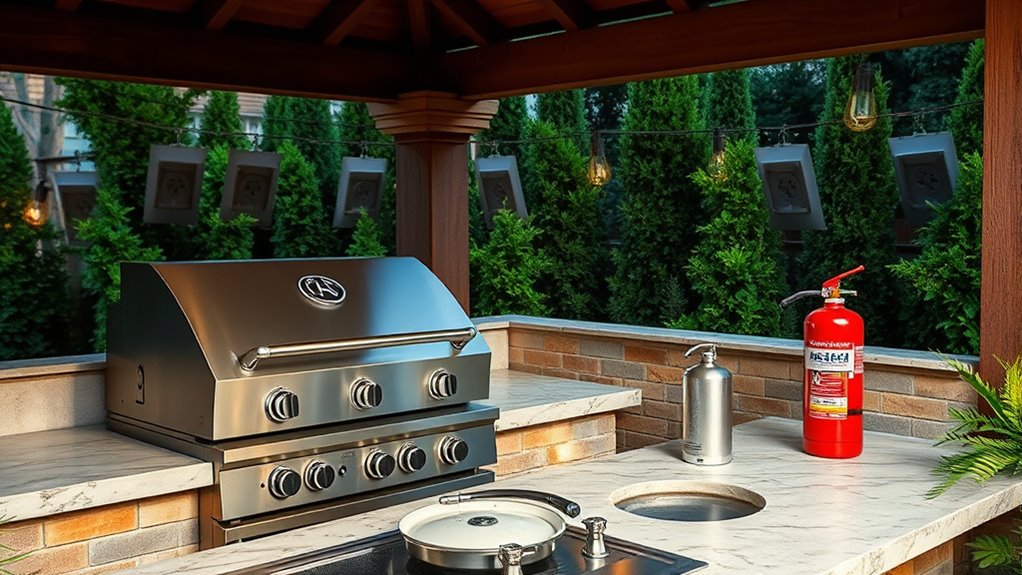

To guarantee your outdoor kitchen is safe, regularly check gas lines for leaks or corrosion, turn off the gas when not in use, and keep grills well-maintained. Use weatherproof outlets, avoid overloading circuits, and keep electrical cords away from water and heat. Maintain a fire extinguisher nearby, never leave grills unattended, and clear combustible materials from the area. For more detailed safety tips, you’ll find helpful guidance on how to prevent hazards and protect your family.
Key Takeaways
- Regularly inspect gas lines for leaks or corrosion and call professionals for repairs.
- Install weatherproof, grounded outlets and avoid overloading circuits to ensure electrical safety.
- Keep fire extinguishers rated for grease fires nearby and never leave grills unattended.
- Maintain proper grill cleaning, storage, and keep combustible materials away from heat sources.
- Design the outdoor kitchen with safety in mind, ensuring proper setup and easy access to safety equipment.
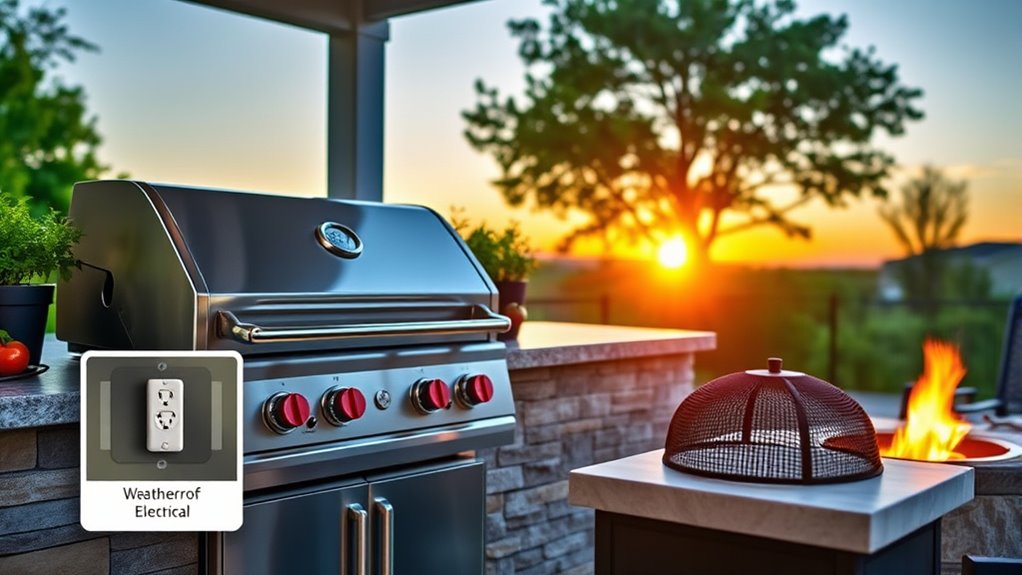
Creating an outdoor kitchen can be a great way to enjoy cooking and entertaining outside, but safety should always come first. When designing your space, you need to pay close attention to gas, electrical, and fire safety to prevent accidents. A key part of this is ensuring proper grill maintenance. Regularly cleaning your grill helps prevent grease buildup, which is a common fire hazard. Scrub the grates after each use and check for any leaks or corrosion in the gas lines. If you notice anything unusual, don’t hesitate to call a professional for repairs. Proper grill maintenance not only prolongs the life of your equipment but also keeps you safe during every cookout.
Equally important is how you store your utensils. Keep your grilling tools organized and in a designated area away from the flames and heat sources. Sharp knives and skewers should be stored safely to avoid injuries. Use a sturdy, closed container or a dedicated utensil drawer to prevent accidents and keep everything clean. When you’re ready to cook, always make sure your utensils are within easy reach but not cluttering the workspace, which could lead to spills or accidental contact with hot surfaces.
Electrical safety is another critical aspect. If you install outdoor outlets, ensure they’re weatherproof and grounded properly. Avoid overloading circuits, and keep electrical cords away from water and hot surfaces. When using electrical appliances outdoors, inspect cords and plugs for signs of damage before plugging in. Never force a connection or use damaged equipment, as this could cause short circuits or fires. Also, keep extension cords away from areas where they might be tripped over or come into contact with water.
Fire safety in your outdoor kitchen involves more than just preventing flare-ups. Always have a fire extinguisher nearby, specifically one rated for grease fires. Never leave a lit grill unattended, and ensure the area around the grill is clear of combustible materials like paper, cloth, or dry leaves. When you’re finished cooking, double-check that all burners and the gas supply are turned off properly. If you’re using a wood-burning fire feature or a chiminea, keep it at a safe distance from your house, furniture, and overhanging trees.
Frequently Asked Questions
How Often Should Outdoor Gas Lines Be Inspected?
You should inspect your outdoor gas lines at least once a year to guarantee safe operation. Regular gas line maintenance helps prevent leaks and potential fire hazards. Always follow fire safety protocols by checking for cracks, corrosion, or loose fittings during inspections. If you notice any issues or smell gas, turn off the supply immediately and contact a professional. Consistent inspections keep your outdoor kitchen safe and enjoyable.
What Are the Signs of Electrical Issues in Outdoor Kitchens?
You’ll notice electrical issues in your outdoor kitchen if electrical wiring feels hot or looks frayed, which signals damage. Frequent circuit overloads can cause breakers to trip, indicating overloaded circuits. Flickering or dimming lights also point to wiring problems. Pay attention to sparks or burning smells around outlets or appliances. Address these signs promptly to prevent electrical fires or damage, ensuring your outdoor kitchen remains safe and functional.
Can Outdoor Fire Pits Be Safely Integrated With Kitchen Areas?
You can safely integrate outdoor fire pits with kitchen areas if you carefully consider fire pit placement and materials. Position the fire pit away from structures, overhanging trees, and combustible materials. Use fire-resistant materials like stone or metal for durability and safety. Confirm proper clearance and install a protective barrier if needed. Regularly check and maintain your fire pit to prevent accidents, keeping your outdoor kitchen both functional and safe.
What Safety Measures Are Recommended for Outdoor Propane Storage?
Think of propane storage as guarding a treasure—keep it safe. You should store propane tanks outdoors in a well-ventilated, upright position, away from heat sources and direct sunlight. Use approved containers, check for leaks regularly, and never store near open flames or electrical appliances. Follow fire safety guidelines to prevent accidents. Remember, proper propane storage is your shield against potential hazards, ensuring a safe outdoor cooking experience.
Are There Specific Codes for Outdoor Kitchen Fire Safety?
Yes, there are specific fire safety regulations and outdoor kitchen codes you should follow. You must guarantee proper clearance from flammable materials, install fire extinguishers nearby, and use fire-resistant materials for countertops and cabinetry. Local building codes often require ventilation and proper electrical wiring. Always check with your local authorities to comply with these outdoor kitchen codes, and regularly inspect your setup to prevent fire hazards and ensure safety.
Conclusion
By staying vigilant about gas, electrical, and fire safety, you can enjoy your outdoor kitchen worry-free. Regular inspections, proper maintenance, and knowing what precautions to take make all the difference. After all, isn’t your outdoor space meant to be a safe, relaxing haven? With a little effort, you’ll keep your gatherings fun and safe for everyone. So, why not take those extra steps today and guarantee your outdoor kitchen remains a secure spot for all your culinary adventures?