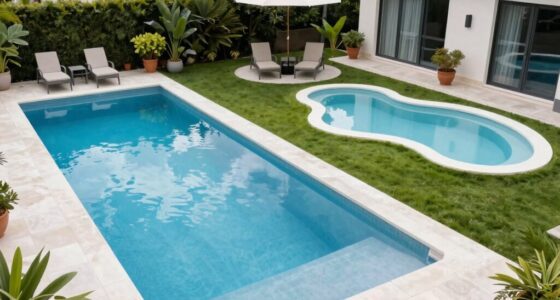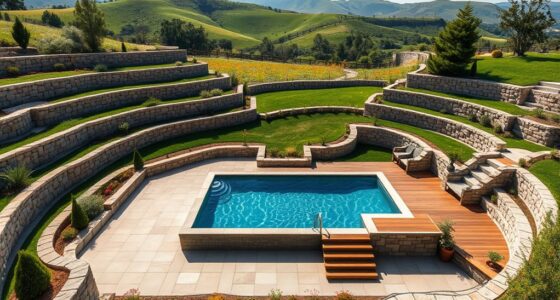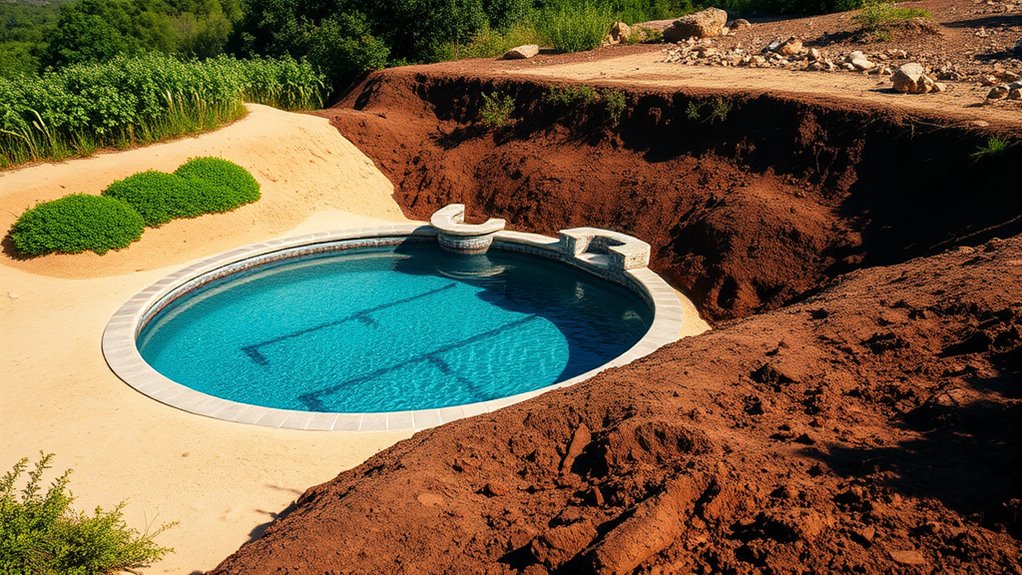

Considering soil and site conditions is vital for your pool’s design and long-term safety. Soft, unstable, or clay-heavy soils can cause settling, cracking, or shifting, which might require soil stabilization or different foundation options. Proper drainage and slope assessments help prevent water damage and hydrostatic pressure. By evaluating these factors early, you guarantee your pool remains durable and safe. Keep exploring to discover how specific site conditions can influence your pool’s construction and performance.

Get pool and patio gear delivered free — and shop member deals
- Fast, free delivery on millions of items
- Access to Prime Big Deal Days deals on October 6–7
- Prime Video, Amazon Music and more included
Key Takeaways
- Soil composition and stability influence foundation type, affecting pool durability and potential for settling or cracking.
- Conducting soil tests determines load-bearing capacity, guiding appropriate construction methods and material selection.
- Proper site evaluation includes assessing drainage patterns to prevent water pooling and erosion around the pool.
- Unstable or high water table soils may require foundation reinforcement or alternative pool designs.
- Managing site drainage and runoff is essential to protect the pool structure and ensure long-term performance.

Choosing the right site for your pool begins with understanding the soil and site conditions. This initial step is vital because the soil’s properties directly influence how your pool will be constructed and how it will perform over time. One of the most important factors to evaluate is soil stability. You want a site with soil that can support the weight and pressure of the pool without shifting or sinking. Soft, loose, or clay-heavy soils can cause significant problems, leading to settling or cracking that could require costly repairs later. Conducting a soil test helps you determine its composition and load-bearing capacity, giving you the information needed to decide whether the site is suitable or if you need to improve the soil before proceeding. The stability of the soil also impacts the design of your pool’s foundation, whether it’s a concrete deck or a vinyl liner, because a stable foundation ensures longevity and safety. Additionally, understanding the soil’s load-bearing capacity can help you choose the most appropriate construction methods and materials for your pool. Drainage management is another essential aspect tied to soil and site conditions. You need to evaluate how water naturally moves across the site, as poor drainage can lead to numerous issues. Excess water pooling around the pool area can cause erosion, undermine the foundation, or create hydrostatic pressure that pushes water into the pool shell, leading to leaks or structural damage. Proper drainage management involves evaluating slope and runoff patterns and implementing measures like grading, installing drainage pipes, or adding gravel beds to divert water away from the pool. If the site tends to hold water or has high water tables, you might need to consider additional waterproofing or a different pool type altogether. Addressing drainage early in the planning process helps prevent future problems and guarantees your pool remains safe and functional during heavy rains or seasonal changes.
soil stabilization for pool construction
As an affiliate, we earn on qualifying purchases.
As an affiliate, we earn on qualifying purchases.
Frequently Asked Questions
How Do Soil Types Affect Pool Foundation Choices?
You need to choose foundation options based on soil stability. For stable soil, a concrete slab or beam-and-block foundation works well, providing solid support. If your soil is unstable or expansive, you might consider deep foundations like piles or pier-and-beam systems to prevent shifting or cracking. Understanding your soil type helps guarantee your pool remains secure and long-lasting, avoiding costly repairs down the line.
What Are the Signs of Unstable Soil During Construction?
Signs of unstable soil during construction include shifting, sagging, or sinking surfaces, which can be subtle or sudden. You’ll notice cracking, unevenness, or erosion around the site. It’s vital to conduct soil testing early to identify instability. Proper erosion control measures help prevent further damage. If you see these signs, address them promptly to guarantee a solid foundation and avoid costly repairs later.
Can Site Conditions Influence Pool Safety Features?
Yes, site conditions influence your pool’s safety features. Unstable soil may cause shifting, affecting pool fencing stability and height, so you need sturdy, well-anchored barriers. Additionally, surface conditions impact slip resistance around your pool area, reducing accidents. You should assess soil stability and surface quality early, ensuring your safety features are effective and durable, ultimately protecting everyone using your pool.
How Does Climate Impact Pool Design Considerations?
Climate dramatically shapes your pool design, making it more than just a backyard feature. You’ll need to account for the chaos of climate change and seasonal variations that can cause extreme heat, cold, or storms. These elements influence your choice of materials, heating systems, and safety features, ensuring your pool withstands unpredictable weather. Ignoring these factors could turn your oasis into a nightmare, so plan smartly for climate’s wild ride.
Are There Specific Regulations Based on Soil Conditions?
Yes, soil conditions influence regulations you must adhere to. You should conduct soil testing to assess stability and composition before building. Regulatory standards often specify requirements based on soil type, such as ensuring proper foundation support or addressing potential shifting issues. By testing your site’s soil, you ensure your pool design complies with local codes, preventing future problems and ensuring safety. Always check with your local authorities for specific standards applicable to your location.
Conclusion
Remember, a wise man once said, “A stitch in time saves nine.” By carefully evaluating your soil and site conditions before building your pool, you prevent future headaches and costly repairs. Taking the time now to understand the land beneath you ensures a smoother installation and a safer, more durable pool. Don’t rush the process—good things come to those who prepare. So, invest in proper planning today for a worry-free swimming experience tomorrow.
Fall Picks
fall essentials
As an affiliate, we earn on qualifying purchases.