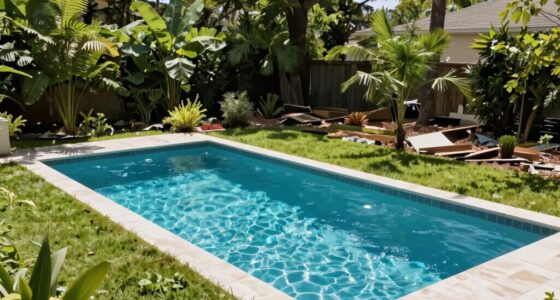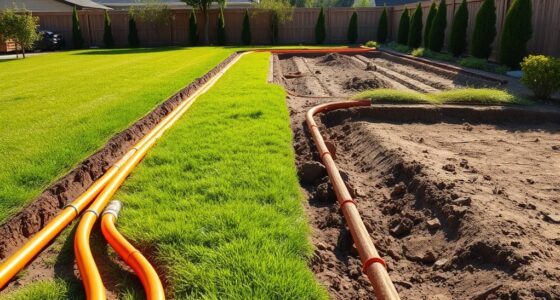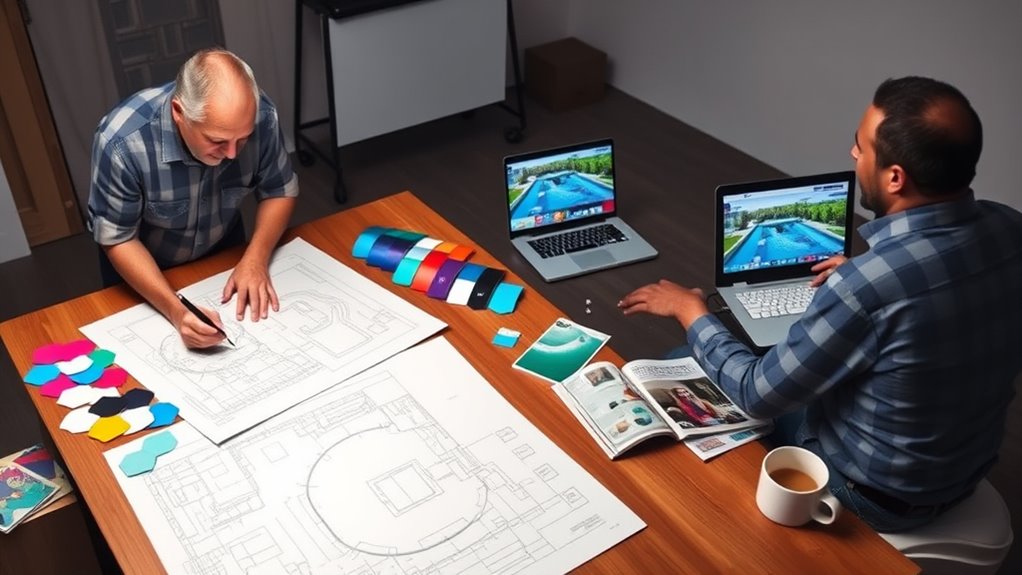

Deciding between working with a pool designer or DIY planning depends on your budget, experience, and goals. A professional designer offers expertise, guarantees safety compliance, and saves time, but it comes with higher costs. DIY allows full control and can cut expenses upfront, yet it requires significant effort and risks mistakes. If you want a polished result and peace of mind, a designer might be best; otherwise, you can explore your options further to find what works for you.
Key Takeaways
- Professional designers provide expertise, ensure safety compliance, and handle permits, reducing risks and potential costly mistakes.
- DIY planning offers more control and customization but may lack access to professional resources and industry experience.
- Working with a designer typically involves higher upfront costs but can save money long-term by avoiding errors and rework.
- DIY projects require significant time and effort, with increased risks of miscalculations and delays.
- The choice depends on budget, available skills, project complexity, and desired level of involvement and customization.
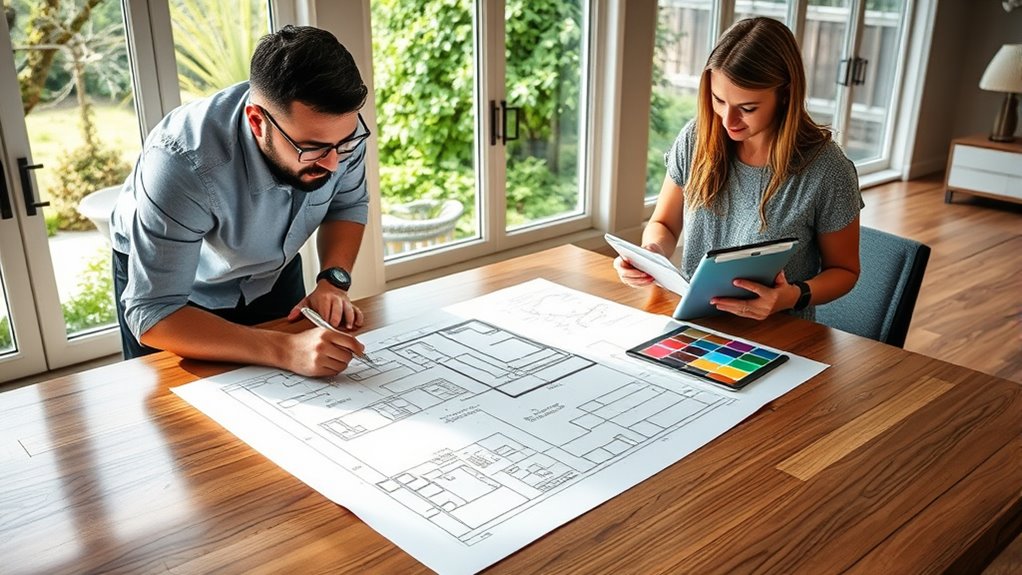
Deciding between hiring a professional pool designer or planning your own backyard oasis can substantially impact your project’s success and your overall satisfaction. When you work with a pool designer, you benefit from their expertise and industry experience, but you should also consider the cost considerations involved. Professional designers often charge for their services, which can include initial consultations, detailed plans, and ongoing project management. While this might seem like a significant upfront expense, it can save you money in the long run by avoiding costly mistakes, such as poor site planning or selecting incompatible materials. On the other hand, planning your own pool can eliminate those service fees, making it more affordable initially. However, DIY planning often involves hidden costs—unexpected delays, additional materials, or rework—that can add up quickly.
When you choose to collaborate creatively with a professional, you’re tapping into a wealth of knowledge that can help shape your vision into a practical, aesthetically pleasing design. A skilled pool designer can help you navigate complex zoning laws, permits, and safety regulations, which might be overwhelming to handle on your own. They also help you optimize your space, ensuring that the design fits your lifestyle and complements your landscape. This creative collaboration often results in a more cohesive and innovative backyard oasis. Additionally, working with a professional can provide peace of mind, knowing that your project adheres to all relevant building codes and safety standards, which is crucial for long-term durability and compliance.
If you decide to go the DIY route, you’ll enjoy more control over the design process and the opportunity to customize every detail yourself. You might find it rewarding to research different pool styles, materials, and features, but keep in mind that your success depends on your technical knowledge and project management skills. Without professional guidance, you risk miscalculations that could lead to structural issues or increased costs down the line. Plus, you might not have access to the same resources or discounts that a professional supplier or contractor can offer.
Ultimately, your decision hinges on how much time, effort, and risk you’re willing to assume. Working with a pool designer involves an investment, but it often results in a more polished, efficient project that aligns with your vision. DIY planning can be more cost-effective upfront but may require a steep learning curve and extra effort. Weighing these factors carefully will help you decide which approach suits your budget, skills, and desired outcome.
As an affiliate, we earn on qualifying purchases.
Frequently Asked Questions
What Are the Hidden Costs of Hiring a Pool Designer?
When you hire a pool designer, watch out for hidden costs like costly overruns that can blow your budget. They might also influence your contractor selection, leading to higher prices or less transparency. Sometimes, designers add extra fees for revisions or project management. So, while it seems straightforward, be prepared for unexpected expenses that could increase your overall pool project costs beyond initial estimates.
How Long Does a Professional Pool Design Typically Take?
A professional pool design usually takes about 4 to 8 weeks, depending on complexity. During the design process, your designer will collaborate with you, refine ideas, and create detailed plans. They’ll provide a timeline estimation upfront, so you know what to expect. Factors like permits, site conditions, and revisions can affect the timeline, but generally, a clear schedule helps you stay on track and plan your project accordingly.
Can I Modify My DIY Pool Plan Later Easily?
You can modify your DIY pool plan later, but be aware of some modification challenges. Flexibility options exist, like adjusting layout or features, but major changes might require reworking permits or construction steps, which can be time-consuming and costly. To minimize future difficulties, plan thoroughly now and consider any potential modifications beforehand. This way, you balance initial planning with the flexibility you might need later, avoiding unnecessary setbacks.
What Permits Are Needed for Professional-Designed Pools?
Imagine your pool as a VIP guest—it needs a special permit pass to enter the neighborhood party. You’ll need to navigate the permit process, which includes pool zoning regulations. A professional designer typically handles these permits for you, ensuring your luxurious splash doesn’t get shut down. If you DIY, you’ll have to master the paperwork maze yourself, making sure every blueprint complies with local pool zoning laws before diving in.
How Do I Ensure My DIY Pool Plan Meets Safety Standards?
To guarantee your DIY pool plan meets safety standards, you should research local building codes and pool safety regulations thoroughly. Use reputable resources and guidelines from organizations like the CPSC. Avoid common DIY pitfalls, such as neglecting proper fencing, proper drainage, and electrical safety. Consider consulting a professional for a safety review before starting construction. Staying informed and cautious helps you create a safe, compliant pool that protects everyone who uses it.
Conclusion
In the end, whether you choose a pool designer or go the DIY route, remember that your dream oasis is within reach. Think of it like assembling a spaceship—help from a pro ensures everything fits perfectly, saving you from a modern-day Pandora’s box of headaches. Trust your gut, weigh your skills, and don’t forget, even in a world of tech, some things are better left to the experts. plunge in with confidence!