
TL;DR

Get pool and patio gear delivered free with Prime
- Fast, free delivery on millions of items
- Prime Video, Amazon Music and more included
- Member-only deals all year
Neighbours can complain about security lights that shine into homes or repeatedly disturb them, but a complaint alone does not establish a legal nuisance or require removal. A legal assessment depends on the scale and pattern of the interference, the setting and other circumstances; adjusting the light may resolve the dispute.
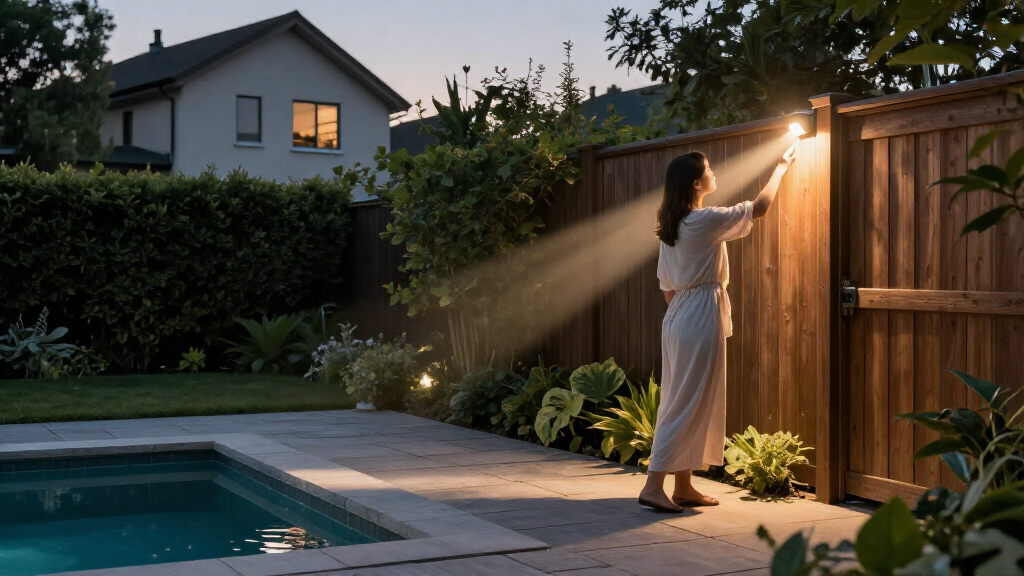
Neighbours can complain about security lights that shine into their homes or repeatedly switch on at night, but that does not automatically mean the lights break the law or have to be removed, according to an Ideal Home report citing a property litigation lawyer and lighting specialists. Whether the issue becomes a legal nuisance depends on the degree and pattern of disturbance, as well as the surrounding setting.
The report says there is no single brightness or operating-time rule that applies to every security light. Relevant considerations include how bright the light is, how long it remains on, how often it is triggered and the time of day. The impact may also be judged differently in a built-up area and in the countryside.
Mustafa Sidki, a property litigation partner at Thackray Williams, told Ideal Home that a legal issue arises only when the interference is substantial and exceeds the ordinary give-and-take expected between neighbours. That means irritation alone is not enough to establish a legal nuisance, and a complaint does not by itself show that a light is unlawful.
Lighting expert Jack Tolley-Smyth of 4lite suggested 800 to 1,500 lumens as a starting point for many small to medium gardens, with a motion sensor covering only the approach within the property boundary, often about five to eight metres. He also advised starting with a timer of around one minute, then adjusting it to suit the area. These are practical suggestions from the expert quoted in the report, not legal limits.
When Lighting Becomes a Neighbour Dispute
The distinction between a complaint and a legal nuisance matters to both property owners and neighbours. A light may serve a legitimate security purpose, but its owner may still need to address how it affects nearby homes if the interference is substantial. Conversely, a neighbour’s objection does not automatically give them the right to have the light taken down.
Repeated illumination through a bedroom window, or a sensor that activates throughout the night, can affect sleep and create ongoing friction. Resolving the problem early can avoid a dispute escalating. The report recommends an informal conversation before considering legal routes, with simple changes such as redirecting the beam or narrowing the sensor’s range often available.
Products Worth Considering

Philips Hue Festavia Outdoor Globe String Lights, 8 Bulbs, 22 ft

Shark Rotator Lift-Away Upright Vacuum with DuoClean PowerFins, Wine Purple, LA702

eufy Security E30 4K Indoor Pan and Tilt Camera, 2-Pack
As an affiliate, we earn on qualifying purchases.
How Nuisance Is Judged
The Ideal Home report frames security lighting as a feature that can deter intruders and help residents move safely around their property, while also potentially affecting neighbouring homes. The legal question is not simply whether a light is present, but whether its effects are substantial and objectively unreasonable in the circumstances.
Sidki said the light’s security purpose and the order in which neighbours installed their lights are relevant but not decisive. A genuine security need may count in the owner’s favour, but it is not a complete defence. Likewise, a resident is not automatically barred from raising a concern because they moved in after the light was installed. The supplied report does not set out a specific court case or a universal legal test beyond the lawyer’s explanation.
“A security light becomes a legal issue, rather than a mere annoyance, only where the interference is substantial and, judged objectively, goes beyond ordinary give-and-take between neighbours.”
— Mustafa Sidki, property litigation partner at Thackray Williams, quoted by Ideal Home
No Universal Brightness Limit
The report gives no fixed legal threshold for brightness, sensor distance or how long a security light may remain on. It also does not describe the facts of a particular neighbour dispute, a formal complaint, court proceedings or an authority’s decision. Whether a specific light amounts to a nuisance would depend on evidence about its effects and the circumstances, rather than on the suggested settings alone.
The supplied material does not include the full account of all possible remedies or the steps that apply in every jurisdiction. Readers facing a serious dispute should not treat general advice in a home-and-garden report as a determination of their individual legal position.
Practical Steps Before Escalation
The first step recommended in the report is an informal conversation between neighbours. If a light is causing a problem, the owner can check whether the beam can be angled down and away from windows, reduce the motion sensor’s direction or range, shorten the timer, or lower the brightness. These adjustments may preserve useful lighting while reducing spill onto neighbouring property.
If the disturbance continues, neighbours may need to discuss the issue again and seek advice suited to their location and circumstances. The report does not identify a specific next legal milestone or say that any formal action is under way. Whether changes settle the matter, or whether a complaint could meet the legal threshold for nuisance, remains dependent on the particular facts.
Key Questions
Can I complain about my neighbour’s security light?
Yes. The report says neighbours can raise concerns if a light affects their property, for example by shining through windows or switching on repeatedly at night. A complaint alone does not establish that the light is unlawful.
Does a complaint mean the light has to be removed?
No. The report says a complaint does not automatically mean the light must be taken down. The impact and circumstances matter, and adjusting its direction, sensor range, brightness or timer may address the problem.
Is there a legal limit for brightness or timer length?
The supplied report identifies no universal legal limit for either. Its suggested settings are practical guidance from a lighting expert, not legal standards.
Does it matter who installed their lights first?
According to property litigation partner Mustafa Sidki, installation order is relevant but not decisive. Having the light first does not automatically defeat a complaint, and moving in later does not automatically prevent a neighbour from raising one.
What should I do if a security light is disturbing me?
The report recommends starting with a calm conversation. The light owner could angle it away from windows, limit where the motion sensor detects movement, shorten its operating time or reduce its brightness.
Source: idealhome.co.uk