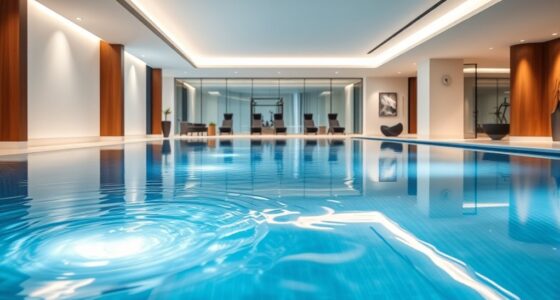
To create the best home layout for an indoor endless pool, you should focus on blending style with practicality. Position it near main living areas for easy access, but keep it away from bedrooms to control humidity and noise. Guarantee safety with non-slip flooring, barriers, and accessible emergency features. Incorporate large windows or glass walls for natural light while balancing privacy. Thoughtful design and professional guidance can help you develop a space that’s both beautiful and functional—continue to explore for more tips.

Get pool and patio gear delivered free with Prime
- Fast, free delivery on millions of items
- Prime Video, Amazon Music and more included
- Member-only deals all year
Key Takeaways
- Position the pool near main living areas for easy access and integration with indoor spaces.
- Incorporate large windows or glass walls to enhance natural light and create an open, inviting atmosphere.
- Ensure safety features like non-slip flooring, barriers, and accessible emergency shut-offs are integrated into the layout.
- Maintain proper ventilation and humidity control to prevent mold and ensure air quality.
- Allocate sufficient space for movement, maintenance, and privacy, including dedicated changing areas or locker rooms.

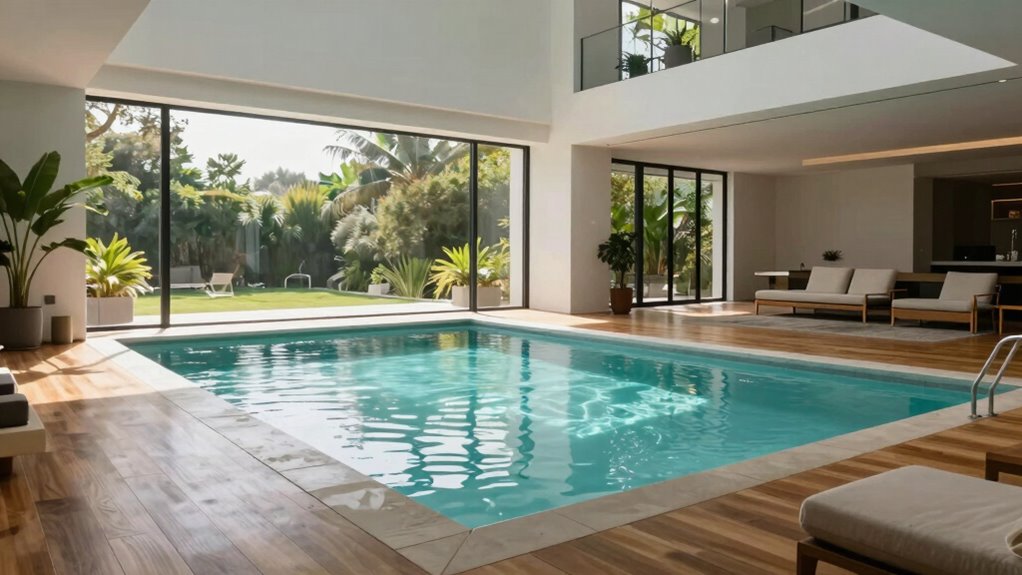
Creating an indoor pool is an exciting way to enjoy swimming year-round, but designing the right home layout is vital for seamless integration and ideal functionality. When planning your space, you want to prioritize both the exterior design and safety features to guarantee your pool complements your home and provides a secure environment. Your home’s exterior design should blend aesthetics with practicality, so consider how the indoor pool’s location influences the overall look of your house. Large windows or glass walls can offer natural light and an open feel, but you need to balance this with privacy and weather considerations. Incorporating exterior design elements like stylish sliding doors or custom facades can create a seamless flow from indoor to outdoor spaces, making the pool feel like an extension of your home.
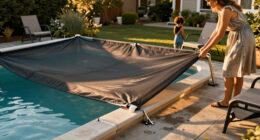
Safety features are equally important and should be integrated into your home layout from the start. An effective layout minimizes hazards by positioning the pool in a space that’s easily accessible yet secure. Installing non-slip flooring around the pool area prevents accidents, while proper lighting ensures visibility at all times. Consider designing an entry point with safety gates or barriers that are child-proof, especially if you have young children or guests. You also want to include easily accessible emergency shut-off switches and ensure that electrical components are waterproof and up to code. Ventilation is another safety aspect; an indoor pool generates humidity, so integrating a robust ventilation system helps prevent mold and maintains air quality, protecting your family’s health. Additionally, understanding the importance of indoor pool safety, including proper humidity control and electrical safety measures, is crucial for long-term enjoyment. Proper planning of safety features can significantly reduce risks and enhance peace of mind.
The placement of your indoor pool within your home should also reflect practical considerations. Locate it near the main living areas for convenience, but avoid placing it directly next to bedrooms or workspaces where humidity and noise could cause discomfort. Adequate space around the pool is essential for safe movement, cleaning, and maintenance. You might also want to design a dedicated changing area or locker room adjacent to the pool to keep the space organized and private. When considering the overall layout, think about how the pool’s design and safety features work together to create a harmonious environment that’s both beautiful and secure. It’s also beneficial to consult with professionals who specialize in indoor pool layouts to optimize your design for safety and aesthetics.
indoor endless pool safety barriers
As an affiliate, we earn on qualifying purchases.
As an affiliate, we earn on qualifying purchases.
Frequently Asked Questions
What Is the Average Cost to Install an Indoor Pool?
You can expect the average cost to install an indoor pool to range from $30,000 to $100,000, depending on size and features. To optimize your investment, consider outdoor landscaping that complements your pool area and enhances privacy. Focus on energy efficiency by choosing eco-friendly equipment and insulation, which can lower ongoing costs. Proper planning guarantees your indoor pool becomes a beautiful, functional addition to your home.
How Much Space Is Needed for a Standard Indoor Pool?
You’ll need about 12 to 15 feet in width and 24 to 40 feet in length for a standard indoor pool. Imagine a space large enough for the pool, pool lighting, and easy access around it. You’ll also want room to maintain water temperature comfortably. This setup guarantees you can enjoy a relaxing swim while easily managing lighting and temperature controls without feeling cramped.
Are There Specific Design Themes That Complement Indoor Pools?
Yes, certain design themes enhance indoor pools by promoting aesthetic integration and creating a harmonious environment. Modern, minimalist styles with clean lines and neutral tones work well, emphasizing simplicity and elegance. Natural themes with stone, wood, and lush greenery foster a relaxing atmosphere and blend seamlessly with the pool area. Coastal or tropical themes can also complement indoor pools, adding a revitalizing vibe and creating a cohesive, inviting space.
What Are the Maintenance Requirements for Indoor Pools?
You need to stay on top of pool cleaning and chemical balancing to keep your indoor pool pristine. Regularly skim debris, vacuum the floor, and clean filters to prevent buildup. Consistently test and adjust the chemicals to maintain proper pH and sanitizer levels, ensuring safe, clear water. By dedicating time to these tasks, you’ll enjoy a beautiful, healthy pool that remains inviting and trouble-free year-round.
How Can Noise Be Minimized in Indoor Pool Areas?
To minimize noise in your indoor pool area, start with soundproofing techniques like adding acoustic treatments such as foam panels or bass traps on walls and ceilings. Use rugs or mats on the floor to absorb sound, and install soft furnishings to reduce echo. Ensuring proper ventilation systems are quiet also helps keep noise levels down. These measures create a peaceful environment, making your indoor pool experience more relaxing.
Conclusion
Incorporating an indoor endless pool into your home creates a luxurious, convenient retreat. While some worry about space or cost, the benefits—year-round access, privacy, and added home value—outweigh the initial investment. With thoughtful planning, you’ll enjoy endless swimming without ever leaving your house. Don’t let concerns hold you back; a well-designed layout guarantees your indoor pool enhances your lifestyle for years to come, making every swim truly effortless.
Fall Picks
fall essentials
As an affiliate, we earn on qualifying purchases.