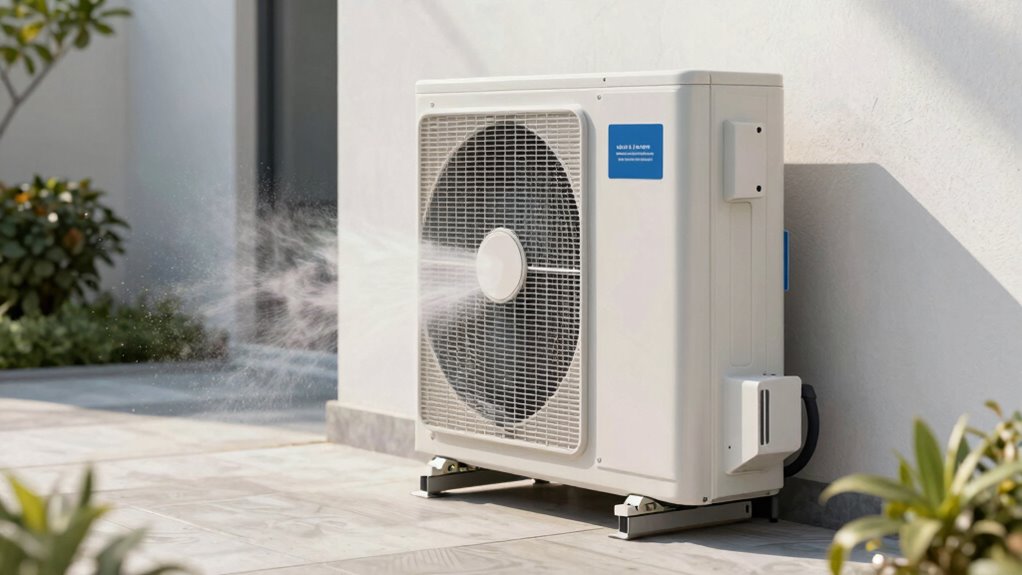

Proper airflow placement is essential for your heat pump’s efficiency and lifespan, but many people ignore this rule. Blocking vents with furniture, shrubs, or debris restricts airflow, causing the system to work harder and wear out faster. Installing the unit in a shaded, level spot with enough clearance helps it operate smoothly. If you keep airflow in mind, your system will run more efficiently and last longer. Keep going to find out how to get it just right.
Get ready for Prime Big Deal Days — try Prime free
Exclusive member deals on October 6–7, plus fast free delivery. Cancel anytime.
As an affiliate, we earn on qualifying purchases.
Key Takeaways
- Proper airflow clearance of 24-36 inches around the heat pump is essential for optimal performance and efficiency.
- Blocking airflow with objects or landscaping like shrubs and fences restricts air movement, reducing system effectiveness.
- Installing the unit at the correct height and level prevents airflow obstructions and uneven temperature distribution.
- Obstructed airflow causes increased energy consumption, system strain, and faster component wear.
- Regularly inspecting and clearing obstructions ensures sustained airflow, efficiency, and system longevity.
As an affiliate, we earn on qualifying purchases.
Why Proper Airflow Placement Is Critical for Heat Pump Efficiency

Proper airflow placement is essential because it directly affects how well your heat pump can transfer heat. When airflow dynamics are optimized through precise placement, your system operates more efficiently, saving you energy and reducing costs. Incorrect placement can disrupt the airflow, causing the heat pump to work harder and less effectively. Placement accuracy ensures that air circulates smoothly around the unit, preventing obstructions and allowing the system to perform at its best. Poor airflow can lead to uneven heating or cooling and increased wear on components. By paying close attention to airflow dynamics during installation, you guarantee your heat pump functions at its best, providing reliable comfort and energy savings over time. Proper placement is a simple yet vital step in maximizing your heat pump’s efficiency.
Common Mistakes Homeowners Make When Installing Heat Pumps

One common mistake homeowners make is blocking airflow paths with shrubs, furniture, or other objects, which diminishes your heat pump’s efficiency. Another error is installing the unit at the wrong height, either too low or too high, which can affect airflow and performance. Paying attention to proper placement helps ensure your heat pump works effectively and lasts longer. Additionally, understanding the style options available can help you select the best setup for your space and improve overall functionality. Proper installation techniques are also essential for optimal performance and energy savings. Being aware of airflow guidelines can prevent common placement mistakes and enhance your system’s longevity. Ensuring correct airflow patterns, including airflow direction, can significantly improve your heat pump’s operation and efficiency over time.
Obstructed Airflow Paths
Obstructed airflow paths are a common mistake homeowners make when installing heat pumps, and they can markedly reduce system efficiency. Duct restrictions and airflow blockages hinder the smooth movement of air, causing your heat pump to work harder and consume more energy. When vents are blocked by furniture, curtains, or debris, airflow becomes limited, leading to uneven heating or cooling. Similarly, tight or kinked ductwork creates resistance, decreasing airflow and increasing strain on the system. Properly clearing and maintaining unobstructed pathways ensures your heat pump operates at peak efficiency. Avoid covering vents or placing objects near the unit, and inspect ductwork regularly for restrictions or damage. Ensuring proper ventilation not only improves airflow but also contributes to healthier indoor air quality. Regular airflow maintenance helps prevent buildup of dust and debris that can impede system performance. Maintaining airflow pathways free of obstructions is essential for optimal system performance. Additionally, airflow efficiency can be improved by scheduling professional inspections to identify hidden issues. Keeping airflow clear is essential for comfortable indoor temperatures and energy savings. Regularly checking for potential airflow obstructions can prevent costly repairs and extend the lifespan of your heat pump.
Incorrect Placement Height
Installing a heat pump at the wrong height can substantially reduce its effectiveness and lifespan. If you place it too high or too low, airflow obstruction may occur, limiting proper air circulation. Ideally, the unit should be installed at a height where airflow is unobstructed and consistent. Too high, and the unit might struggle to draw in enough air; too low, and debris or snow can block airflow, causing strain. Incorrect placement height can lead to inefficient heating or cooling, increased energy costs, and faster wear and tear. Always follow manufacturer guidelines for suitable placement height, ensuring there’s enough clearance around the unit. Proper height not only maximizes airflow but also helps prevent airflow obstruction, keeping your heat pump running smoothly longer. Understanding airflow principles is essential for optimal heat pump placement, and considering airflow dynamics during installation can significantly improve overall performance. Additionally, ensuring proper airflow patterns helps maintain consistent temperature control and energy efficiency. Recognizing the importance of proper placement height is crucial for achieving optimal performance and longevity.
How to Identify the Ideal Location for Your Heat Pump
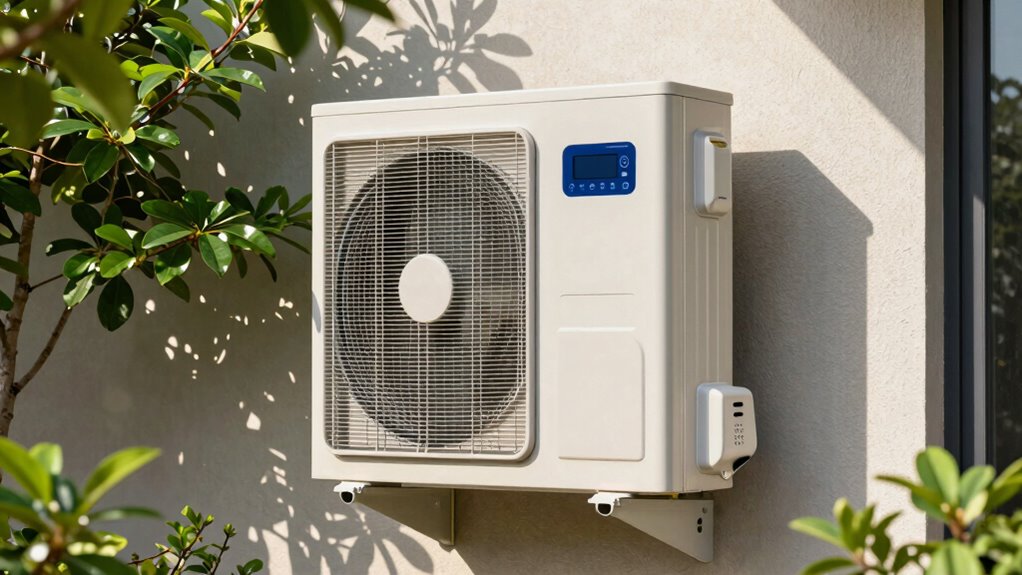
Choosing the right location for your heat pump is essential to guarantee efficient operation and ideal comfort. Start by considering installation challenges—pick a spot that’s accessible for maintenance and fits your home’s layout. Avoid placing it where noise might be disruptive or where airflow could be obstructed. Aesthetic considerations matter too; select a location that blends with your outdoor space without compromising appearance. Look for a level, shaded area that’s away from direct sunlight, debris, and pathways. Keep in mind, the ideal site should minimize long duct runs and avoid tight corners. Proper airflow is crucial for optimal performance and energy efficiency. Additionally, understanding the air movement dynamics can help prevent common placement mistakes that reduce efficiency. When planning placement, consulting local building codes can help you avoid potential compliance issues. Considering proper ventilation is also key to preventing moisture buildup and maintaining indoor air quality. Positioning your heat pump in a location with adequate air circulation can further enhance its effectiveness. By balancing these factors, you ensure your heat pump runs smoothly, lasts longer, and maintains your home’s comfort without sacrificing curb appeal.
The Role of Clear Space and Obstructions in Airflow Performance

Clear space around your heat pump is crucial because it directly affects airflow and overall efficiency. Obstructions can block airflow, causing your system to work harder and reducing its lifespan. To follow proper placement guidelines, keep these in mind:
- Leave at least 2-3 feet of open space on all sides to prevent airflow obstructions.
- Avoid placing the unit near shrubs, fences, or walls that can block air intake or exhaust.
- Ensure nothing is directly above the unit that could restrict vertical airflow.
- Keep pathways clear around the heat pump for maintenance and airflow consistency.
- Incorporating proper airflow management can enhance the heat pump’s performance and longevity. Additionally, regular system inspections can help identify potential obstructions early and maintain optimal airflow.
Ignoring these guidelines can lead to poor performance, higher energy bills, and potential damage. Proper placement guarantees ideal airflow and system longevity.
How Incorrect Placement Can Reduce Your System’s Lifespan

If your heat pump is placed improperly, airflow can become obstructed, causing it to work harder than necessary. This inefficiency increases strain on the system, leading to faster wear and potential breakdowns. Over time, poor placement can markedly shorten your system’s lifespan.
Obstructed Airflow Risks
Incorrect placement of your heat pump can lead to obstructed airflow, which substantially hampers its efficiency and longevity. When airflow obstructions occur, your system works harder, increasing wear and shortening lifespan. Poor placement height or nearby objects blocking vents can cause this. Imagine these common issues:
- Overgrown shrubs or bushes blocking the air intake or exhaust.
- Low placement near fences or walls, restricting airflow.
- Items placed directly on or too close to the unit.
- Trees or branches hanging over the system, causing debris buildup.
These obstructions reduce airflow, forcing your heat pump to overexert, risking damage and decreasing performance. Ensuring proper placement height and clear surroundings is critical to prevent airflow obstructions and maintain your system’s health.
Poor Placement Efficiency
Poor placement of your heat pump can considerably shorten its lifespan by causing unnecessary strain and wear on its components. When installed improperly, airflow may be restricted or inconsistent, forcing the system to work harder to maintain comfort. This inefficiency leads to increased energy use and quicker component degradation. While DIY troubleshooting might help identify some issues, correct placement is vital to avoiding frequent problems. Additionally, aesthetic considerations often take a backseat, but poor placement can make the unit an eyesore or awkwardly positioned. Over time, these factors reduce system efficiency and longevity, resulting in costly repairs or replacements. Proper placement ensures smooth airflow, less strain, and better overall performance, ultimately extending your heat pump’s lifespan and saving you money in the long run.
Increased System Strain
When your heat pump is placed improperly, it often has to work harder than necessary, which puts extra stress on its components. This increased system strain shortens its lifespan and reduces efficiency. Poor airflow enhancement caused by incorrect placement forces the system to run longer to reach desired temperatures. Imagine:
- Blocked vents causing restricted airflow.
- Obstructions near the outdoor unit limiting heat exchange.
- Placement in shaded or turbulent areas increasing workload.
- Improper clearance violating placement guidelines.
These issues make the system cycle more frequently, wear out parts faster, and increase energy bills. Following proper placement guidelines ensures ideal airflow, reduces strain, and helps your heat pump operate smoothly for years. Proper placement is essential for longevity and reliable performance.
Tips for Ensuring Proper Airflow During Heat Pump Installation

Ensuring proper airflow is essential for your heat pump to operate efficiently and reliably. To avoid zoning challenges and noise issues, position your unit where airflow isn’t obstructed by nearby objects or structures. Maintain clear space around the unit—ideally 2-3 feet—to promote ideal circulation. Use the table below to plan placement strategies:
| Consideration | Tip |
|---|---|
| Zoning challenges | Avoid placing units near barriers or walls that disrupt airflow. |
| Noise considerations | Select a location away from bedrooms or quiet zones to minimize disturbance. |
| Obstructions | Keep shrubs, debris, and furniture clear of the unit. |
| Elevation | Install on a stable, level surface to prevent airflow disruptions. |
Following these tips ensures efficient airflow and reduces operational issues.
Signs Your Heat Pump Is Struggling Due to Poor Airflow Placement
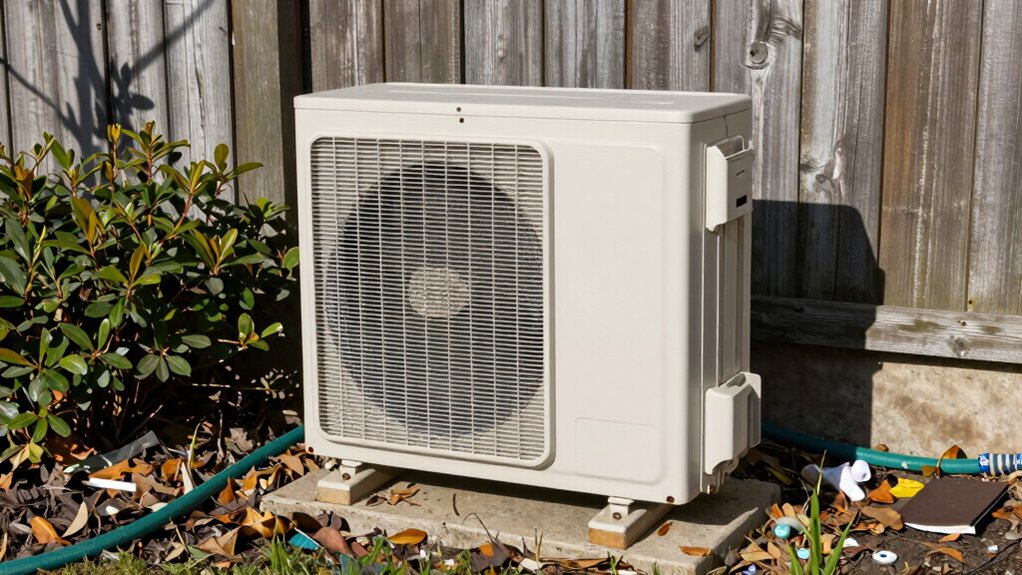
If your heat pump is struggling to heat or cool effectively, it might be due to poor airflow caused by improper placement. You may notice:
- Uneven temperatures across rooms, indicating disrupted airflow sensors.
- Increased energy bills, as the duct design forces the system to work harder.
- Excessive noise or vibrations, hinting at airflow obstructions or imbalance.
- Frequent system cycling or short runtimes, showing airflow issues limiting performance.
These signs suggest airflow isn’t reaching your heat pump properly. Poor duct design or placement can cause airflow restrictions, reducing efficiency. If airflow sensors detect inconsistent airflow, your system may misfire or shut down prematurely. Addressing placement issues ensures your heat pump operates smoothly and efficiently.
Indoor and Outdoor Placement: What You Need to Know
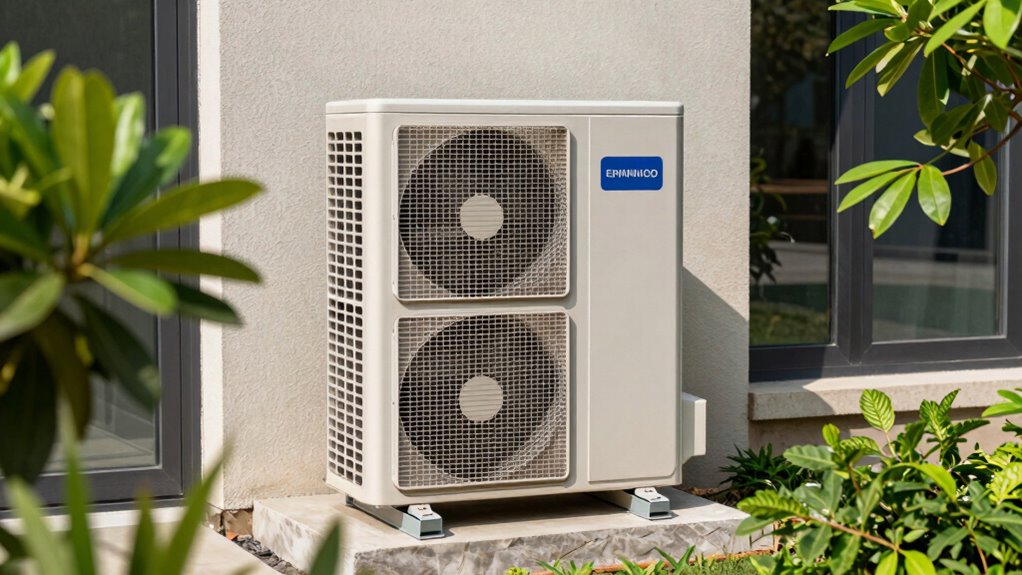
Proper placement of your heat pump is key to its performance. You need to guarantee good indoor airflow paths and maintain outdoor clearance to prevent obstructions. By focusing on these factors, you’ll maximize efficiency and keep your system running smoothly.
Optimal Indoor Airflow Paths
To achieve ideal indoor airflow, the placement of your heat pump is essential. Proper placement ensures efficient airflow patterns that distribute heat evenly and prevent dead zones. Consider these placement strategies:
- Position the unit centrally to maximize airflow coverage.
- Avoid placing it near obstructions like furniture or curtains that block airflow.
- Keep the vents clear of clutter to maintain unobstructed airflow paths.
- Install the unit where air can circulate freely without creating drafts or cold spots.
Outdoor Clearance Requirements
Ensuring adequate clearance around your heat pump is essential for peak performance and longevity. You should keep at least 24 to 36 inches of space around the unit, free from garden landscaping and outdoor decor that could block airflow. Avoid placing the heat pump directly behind outdoor furniture or dense shrubbery, which can restrict ventilation and cause overheating. Clear space allows for proper heat exchange and reduces strain on the system. When planning your outdoor decor, consider how elements like sculptures or planters might encroach on the required clearance zone. Proper outdoor clearance not only improves efficiency but also helps prevent debris buildup and potential damage, ensuring your heat pump operates smoothly year-round.
Placement for Efficiency
Selecting the right placement for your heat pump is crucial for maximizing efficiency both indoors and outdoors. Proper placement ensures ideal airflow, supports sustainable design, and minimizes noise. Outdoors, avoid placing it near windows or vents to prevent airflow obstructions. Indoors, position it in a central, unobstructed spot for even heat distribution. Keep these in mind:
- Place outdoor units on level ground, away from direct sunlight and high-traffic areas.
- Position indoor units in a space with good air circulation, away from noise-sensitive rooms.
- Ensure outdoor units are shielded from prevailing winds to improve airflow.
- Use barriers or landscaping for noise reduction and to promote sustainable design by reducing noise pollution.
Smart placement helps your heat pump run efficiently while maintaining a quieter environment.
How Following the Airflow Rule Saves You Money on Energy Bills

Following the airflow rule can substantially reduce your energy bills by making your heat pump operate more efficiently. When the airflow is optimized, your system doesn’t have to work as hard to heat or cool your space, leading to significant energy savings. Proper airflow ensures even temperature distribution, reducing strain on the unit and preventing unnecessary cycles. This efficiency translates directly into cost reduction, as your heat pump consumes less electricity over time. Additionally, maintaining good airflow reduces wear and tear, extending the lifespan of your system and avoiding costly repairs. By following this simple rule, you can enjoy lower monthly bills, improve comfort, and maximize the performance of your heat pump, all while saving money in the long run.
Expert Advice: Ensuring Proper Heat Pump Placement for Long-Term Comfort

Proper placement of your heat pump is essential for maintaining long-term comfort and efficiency. To guarantee optimal performance, consider these expert tips:
- Position it where airflow isn’t obstructed, avoiding nearby walls or furniture.
- Choose a location that balances accessibility for diy installation with minimal impact on your home’s aesthetic.
- Keep it away from direct sunlight or heat sources to prevent overheating.
- Place it where noise won’t disturb your family or neighbors.
Frequently Asked Questions
How Often Should I Inspect My Heat Pump’s Airflow for Optimal Performance?
You should inspect your heat pump’s airflow at least once a month to guarantee it’s clear of obstructions. Regular inspections help prevent airflow obstructions that can reduce efficiency. Follow a maintenance schedule that includes checking filters, vents, and outdoor units. Keeping airflow unobstructed not only boosts performance but also extends your heat pump’s lifespan. Don’t skip these routine checks—they’re essential for peak operation and energy savings.
Can Outdoor Weather Conditions Affect Heat Pump Airflow Placement?
Outdoor weather conditions can definitely influence your heat pump’s airflow placement. Think of outdoor obstructions like wind influence and debris that can block or redirect airflow, making your system work harder. When wind hits a poorly placed unit, it’s like trying to hear a whisper in a storm—your heat pump struggles to perform efficiently. Regularly check and clear obstructions to keep airflow smooth, regardless of the weather outside.
What Are the Specific Airflow Clearance Measurements Recommended by Manufacturers?
You should follow your manufacturer’s recommended clearance measurements to avoid airflow restrictions. Typically, they suggest at least 12 to 24 inches of clearance on the sides and 48 inches above the outdoor unit. These measurements ensure proper airflow, improve efficiency, and prevent overheating. Always check your specific model’s manual, as improper clearance can substantially impact your heat pump’s performance and lifespan.
How Does Airflow Placement Impact Noise Levels of My Heat Pump?
Think of your heat pump as a symphony; proper airflow placement is the conductor. When airflow is optimized, noise mitigation improves, and your unit runs quieter. Poor placement causes turbulence, amplifying noise and disrupting harmony. To keep the melody smooth, guarantee unobstructed airflow around the unit, following manufacturer guidelines. This way, you minimize noise levels and achieve efficient operation, letting your heat pump perform its best without unwanted disturbance.
Are There Seasonal Adjustments Needed for Airflow in Different Climates?
Yes, you’ll need seasonal adjustments for airflow depending on your climate. In colder months, you might want to reduce airflow to prevent heat loss, while in warmer seasons, increasing airflow can improve cooling efficiency. Adjusting for seasonal airflow guarantees your heat pump operates at its best year-round. Make sure to follow climate adjustments based on your specific environment, and consult a professional if you’re unsure how to make these modifications safely.
Conclusion
Missing the airflow rule could mean your heat pump works harder than it should, quietly draining your energy and shortening its lifespan. Imagine a gust of air blocked by a stubborn obstacle, forcing your system to strain. But with the right placement, you’ll release seamless comfort and savings you never saw coming. Don’t let poor airflow be the silent killer of your home’s cozy warmth—act now before it’s too late.
Fall yard work Picks
leaf blowers
As an affiliate, we earn on qualifying purchases.