
When designing plantings around your pool, focus on creating a safe, attractive environment by choosing low-maintenance, drought-tolerant plants like succulents and grasses. Position taller trees for privacy and shade, but avoid plants that shed leaves into the water. Use planters and raised beds to define zones and add visual interest. Incorporate proper lighting and electrical safety measures to enhance the ambiance while ensuring safety. Exploring these tips further will help you craft a harmonious, functional backyard retreat.
Key Takeaways
- Select low-maintenance, drought-tolerant plants to minimize debris and reduce water needs around the pool area.
- Position taller plants and trees strategically for natural shade, privacy, and visual interest without obstructing pathways.
- Use planters and raised beds to define zones, add color, and create a structured, cohesive landscape design.
- Incorporate lighting to highlight plantings, enhance ambiance, and improve safety after sunset.
- Ensure plant choices and placement do not shed leaves or debris into the pool, maintaining water cleanliness and safety.
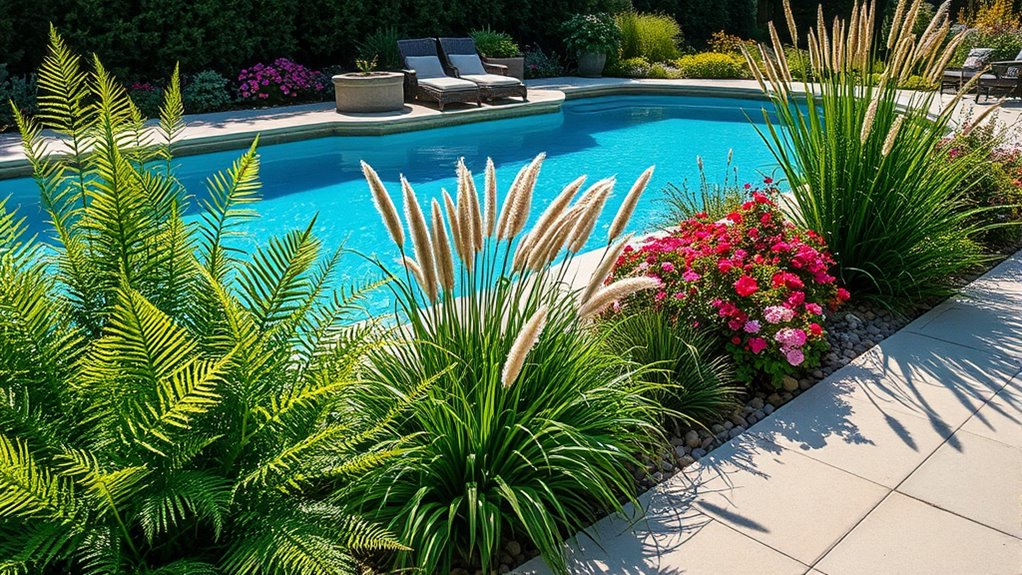
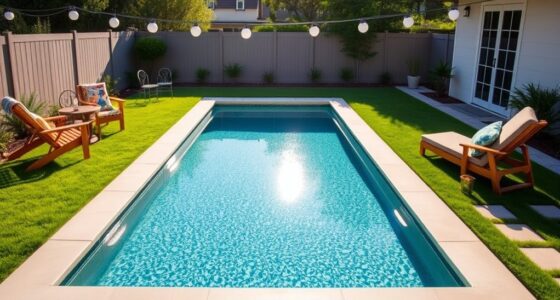
Creating a beautiful and functional landscape around your pool starts with thoughtful planning. One of the first steps is to consider how you’ll incorporate poolside lighting. Proper lighting not only enhances safety after sunset but also creates a warm, inviting atmosphere. Think about installing subtle LED lights along the pool’s perimeter to illuminate the water without overwhelming the space. You can also add pathway lights to guide guests safely from the patio to the yard or seating areas. Using different layers of lighting, such as spotlights to highlight trees or feature plants, adds depth and visual interest. When planning your lighting, aim for a balance that keeps the area well-lit but not overly bright, preserving that relaxing ambiance you want around your pool.
Enhance your pool area with layered lighting and strategic placement for safety and ambiance.
Next, focus on outdoor furniture placement. The way you arrange your furniture can make your pool area both more functional and more inviting. Position loungers and chairs where they don’t block walkways or access points, and think about shading options like umbrellas or pergolas to shield you from the sun during hot days. Place seating close enough to the pool for easy access, but leave enough space to move comfortably around. Consider creating separate zones—perhaps a dining area with a table and chairs for meals or a cozy corner with a sofa for relaxing with friends. Proper furniture placement encourages conversation and makes it easier to enjoy your outdoor space without feeling cramped or cluttered.
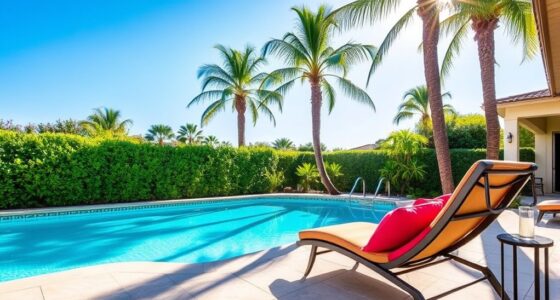
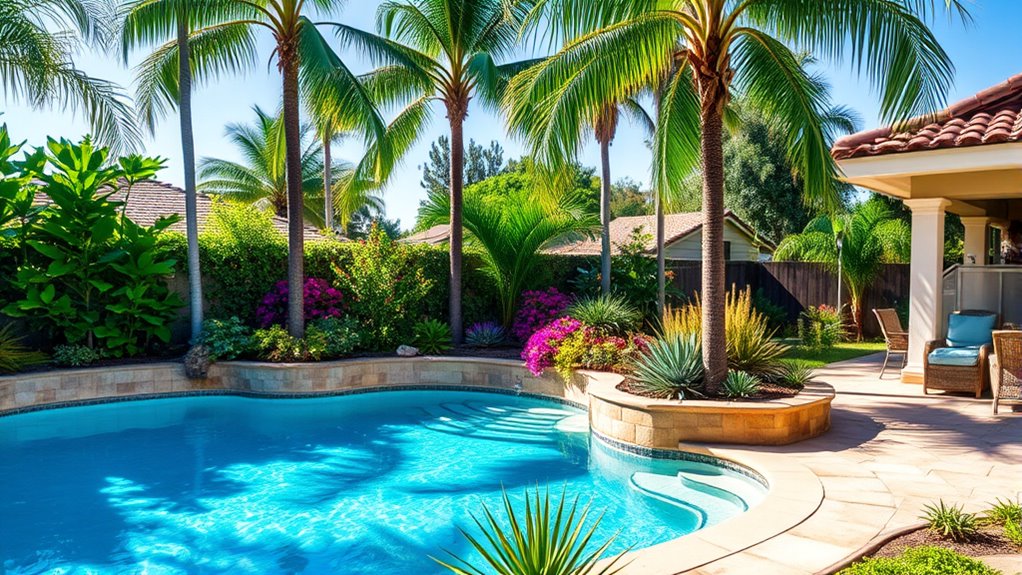
When integrating plants into your pool landscape, choose varieties that complement your lighting and furniture setup. Low-maintenance, drought-tolerant plants like succulents or ornamental grasses work well because they require less watering and pruning. Position taller plants or trees strategically to provide natural shade and privacy without blocking views or sunlight needed for your pool. Be mindful of plant placement around the pool edge to prevent leaves and debris from falling into the water, which could lead to maintenance issues. Incorporate planters and raised beds to define different zones and add visual appeal. The key is to create a harmonious balance where plants enhance your outdoor environment without overwhelming it.
Additionally, considering the safety of electrical devices around your pool area is crucial to ensure a secure environment. Designing your landscape with proper lighting and electrical installations helps prevent accidents and maintains safety standards. Ultimately, designing your pool landscape involves blending lighting, furniture, and plantings into a cohesive space. Thoughtful planning ensures your outdoor area is safe, functional, and visually stunning. By paying attention to how each element works together—such as positioning poolside lighting to highlight your lush plantings and arranging outdoor furniture for comfort—you craft a backyard retreat that invites relaxation and enjoyment. Every detail, from the glow of lighting to the placement of furniture and greenery, contributes to a landscape that feels both natural and thoughtfully curated.
As an affiliate, we earn on qualifying purchases.
Frequently Asked Questions
How Do I Prevent Pool Water From Damaging Nearby Plants?
To prevent pool water from damaging nearby plants, you should manage pool water runoff carefully. Install barriers or raised beds to direct runoff away from your plants. Choose plants with high water resistance that can tolerate occasional splashes and humidity. Regularly maintain your pool’s water pH and chemical levels, reducing harsh effects. These steps help safeguard your plants and ensure a healthy, attractive landscape around your pool area.
What Are the Best Low-Maintenance Plants for Pool Landscaping?
Imagine your poolside paradise thriving with minimal effort. You should choose drought-tolerant shrubs like lavender or succulents, which need little water or maintenance. Incorporate flowering groundcovers such as creeping thyme or sedum to add color and texture without fuss. These plants not only look beautiful but also withstand the sun and drought, making your landscaping low-maintenance and resilient—perfect for a relaxed, stunning poolside retreat.
Can I Incorporate Edible Plants Around My Pool Area?
Yes, you can incorporate an edible garden around your pool, making it both functional and attractive. Plant fruit-bearing shrubs like blueberries or raspberries for easy access, and add herbs such as mint or basil in containers. These plants thrive nearby with proper care and can enhance your outdoor space. Just make certain they’re placed where they won’t interfere with pool safety or maintenance, creating a lush, edible oasis.
How Do I Choose Plants That Suit My Climate and Soil Type?
Choosing plants for your pool area is like finding the perfect puzzle piece. You’ll want to select native species and drought-tolerant plants that thrive in your climate and soil type. Start by researching native plants, which are adapted to your environment, and consider drought-tolerant options to reduce water use. Test your soil’s pH and drainage, then select plants that match these conditions for a sustainable, lush landscape.
What Safety Considerations Should I Keep in Mind When Landscaping Near a Pool?
You should prioritize safety by ensuring pool lighting is adequate to prevent accidents after dark, and avoid placing plants that can drop leaves or create slippery surfaces. Use privacy screens strategically to shield the pool area without obstructing visibility. Keep pathways clear, and choose non-toxic, non-sticky plants to minimize hazards. Regularly inspect your landscaping for potential safety issues, creating a secure environment for everyone enjoying the pool.
Conclusion
By thoughtfully integrating your plantings around the pool, you create a beautiful, inviting oasis that enhances your outdoor experience. With careful planning and selection, you’ll enjoy a seamless blend of function and aesthetics. Isn’t the true beauty of your backyard found not just in the pool itself, but in the lush, vibrant surroundings you craft? Embrace these design ideas and turn your outdoor space into a personal paradise you’ll love every day.