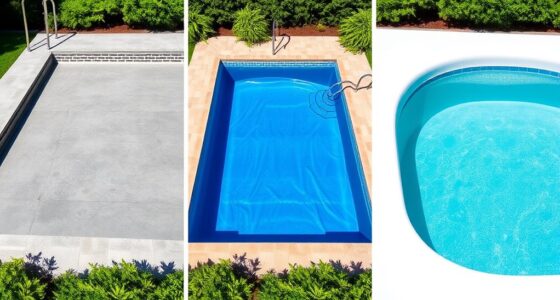

To choose the right pool shape for how you actually live, consider your outdoor activities, space, and style preferences. If you love hosting large gatherings, a freeform or expansive rectangular pool works best. For relaxation and small yards, go for compact geometric shapes. Think about safety features and maintenance — shapes with clear sightlines and easy cleaning help. Your ideal pool shape balances function, safety, and aesthetic fit. Keep exploring for more tailored tips to shape your perfect backyard retreat.
Open a free Amazon Business account
Business pricing, bulk buying and tax-exempt orders.
As an affiliate, we earn on qualifying purchases.
Key Takeaways
- Assess your space size and usage needs; large gatherings benefit from freeform or rectangular shapes, while small yards suit compact designs.
- Match the pool shape with your outdoor environment and landscaping style for a cohesive, natural look.
- Prioritize safety by choosing shapes with clear sightlines, avoiding tight corners, and incorporating safety features like shallow ledges.
- Consider maintenance and cleaning ease; natural shapes may promote biodiversity, while geometric shapes can simplify upkeep.
- Balance aesthetic preferences with safety requirements to ensure the pool enhances your lifestyle and backyard functionality.
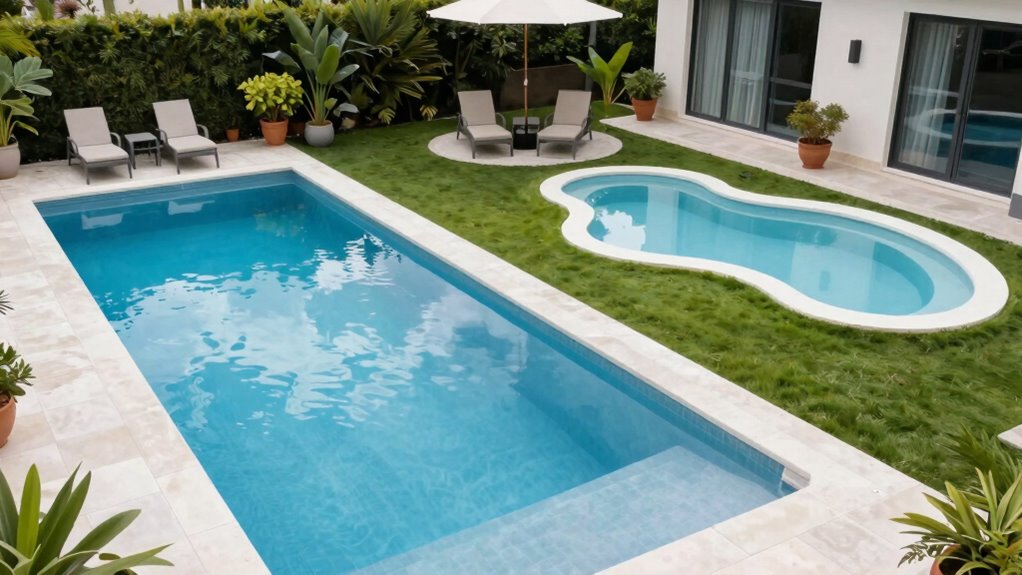
Selecting the right pool shape is an essential step in creating your perfect backyard oasis. The shape you choose impacts how you use the space daily, how it blends with your landscaping, and how safe it feels for everyone. Think about your lifestyle and how you envision your pool becoming part of your outdoor environment. If you love hosting large gatherings, a freeform or expansive rectangular pool might suit your needs, allowing plenty of room for swimming and socializing. Conversely, if your yard is smaller or you want more of a relaxing retreat, a compact, geometric shape may fit better, making efficient use of limited space.
Choosing the right pool shape enhances safety, aesthetics, and how well it fits your lifestyle and landscape.
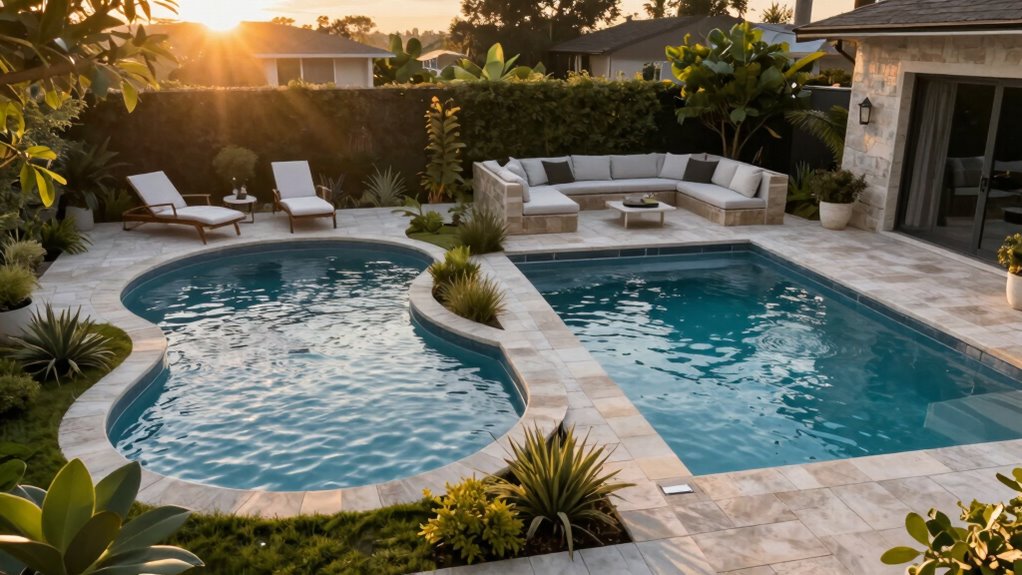
Beyond aesthetics, consider how the pool shape interacts with your landscaping. A curved, freeform pool can flow seamlessly with natural elements like trees, gardens, and existing terrain, creating a harmonious look. It allows you to incorporate built-in planters or waterfall features that enhance the natural vibe. On the other hand, geometric shapes like rectangles or squares lend themselves to modern, minimalist landscaping styles, giving your yard a sleek, orderly appearance. The shape should complement your existing landscape design, making the entire backyard feel cohesive rather than disjointed. Additionally, think about the environmental impact of your pool choice, as a shape that integrates well with natural features can help promote biodiversity.
Safety considerations are equally essential when choosing your pool shape. A more traditional rectangular pool offers straight lines and clear sightlines, making it easier to supervise children or guests while swimming. Round or freeform pools, while visually appealing, can sometimes create blind spots where supervision becomes trickier. You also want to think about the depth and how the shape influences safety features like fencing, non-slip surfaces, or shallow lounging areas. Avoid shapes that create tight corners or awkward angles, which can be difficult to supervise or maintain. Incorporating shallow ledges or benches within the shape can provide safe zones for children or elderly family members, making the pool more inclusive and user-friendly. In addition, choosing a shape that allows for safe barrier placement can significantly improve overall safety and compliance with local regulations. Considering the pool size and layout can also help reduce maintenance costs and effort over time.
In addition, consider how the pool shape impacts safety considerations like slip-resistant surfaces and barriers. A shape with a lot of sharp corners might require extra attention to fencing and slip-resistant deck material to prevent accidents. You might also want to explore pool safety standards to ensure your design complies with local regulations. When planning your pool, think about the maintenance requirements associated with different shapes, as some designs may be more challenging to clean or service than others. Thinking about how the pool’s design will integrate with safety features without compromising your aesthetic goals can help create a balanced and secure environment. Ultimately, choosing a shape that fits your lifestyle means balancing visual appeal, landscaping integration, and safety. When you carefully consider how you’ll use the pool and how it fits within your yard, your choice will feel natural and functional, making your backyard a true extension of your home.
As an affiliate, we earn on qualifying purchases.
Frequently Asked Questions
Can I Customize a Pool Shape Beyond Standard Options?
Yes, you can customize a pool shape beyond standard options to match your unique style and needs. Custom designs enhance your pool’s aesthetics and offer greater design flexibility, allowing you to create a truly personalized outdoor space. Work with a professional pool designer who can incorporate your ideas, blending creativity and functionality. Custom shapes can complement your landscape and reflect your personality, making your pool a standout feature in your yard.
How Does Pool Shape Affect Maintenance Requirements?
Think of your pool as a garden; its shape influences how easily you keep it lush. A simple, round or rectangular pool usually means less pool cleaning and straightforward maintenance, while complex shapes with curves and corners can trap debris, increasing upkeep. The more intricate the shape, the more you’ll need to pay attention to cleaning schedules and equipment, making maintenance a bit more of a dance to keep it sparkling.
Are There Specific Pool Shapes Better for Small Yards?
If you have a small yard, opt for a compact pool shape like a plunge or kidney pool. These shapes maximize space and integrate well with your landscaping, creating a seamless look. They also enhance the aesthetic appeal without overwhelming your outdoor area. By choosing a shape that fits your yard’s dimensions, you’ll enjoy a functional, attractive pool that complements your landscape and makes the most of limited space.
How Does Pool Shape Influence Safety Features?
Choosing a pool shape influences safety features by enhancing pool aesthetics and ensuring proper water circulation. A well-designed shape minimizes sharp edges and blind spots, reducing accident risks. For instance, freeform pools often lack corners where debris can gather, while rectangular pools facilitate better water flow, improving filtration and safety. You should consider these factors, as an optimized shape helps create a safer, more enjoyable swimming environment tailored to your lifestyle.
Can I Change My Pool’s Shape After Installation?
Yes, you can change your pool’s shape after installation, but it involves significant work like draining the water, demolishing the existing structure, and reshaping the pool. During this process, you can enhance your pool with new features like lighting and water features to match your new design. Keep in mind, consulting a professional guarantees the modifications are safe and effective, so your updated pool aligns with your lifestyle and aesthetic preferences.
Conclusion
Choosing the right pool shape is like finding the perfect pair of shoes—it should fit your lifestyle comfortably and suit your space. Consider how you’ll use your pool, your yard’s layout, and your aesthetic preferences. When you pick the shape that matches your needs, swimming and relaxing become seamless, just like slipping into your favorite pair of shoes. Make your choice thoughtfully, and you’ll enjoy your pool for years to come.
Fall yard work Picks
leaf blowers
As an affiliate, we earn on qualifying purchases.