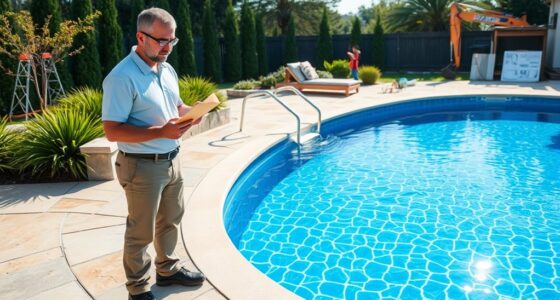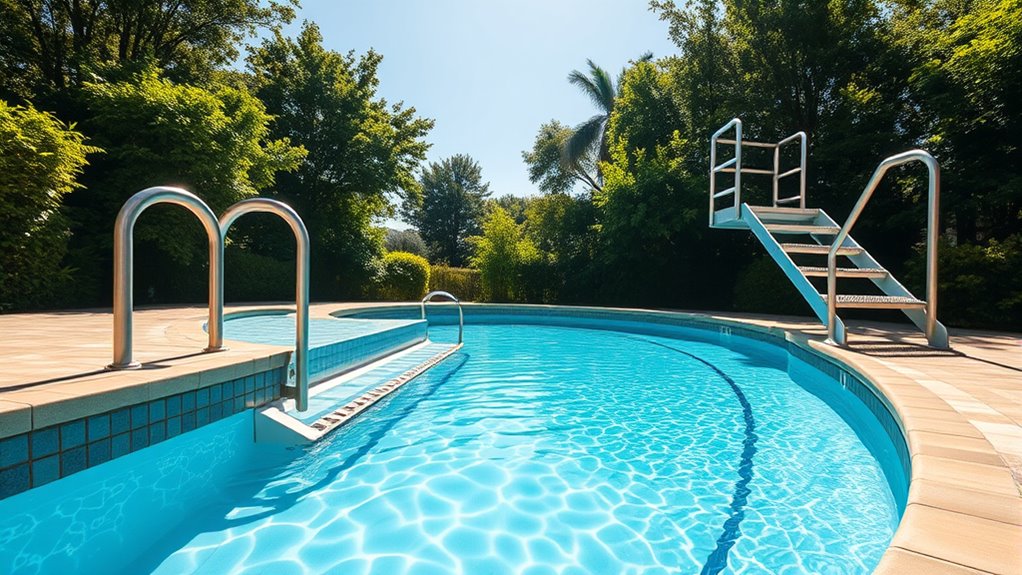

When considering accessibility for outdoor pools, you should include a variety of entry options like ramps, zero-entry designs, and accessible steps. Make certain ramps have a gentle 1:12 slope with handrails for safety, while zero-entry pools provide a natural, barrier-free entry. Properly designed steps with handrails are also important for those who prefer them. Focusing on slip-resistant surfaces and legal standards helps create a safe, inclusive environment for everyone. Exploring these features further will give you helpful insights.

Get pool and patio gear delivered free — and shop member deals
- Fast, free delivery on millions of items
- Access to Prime Big Deal Days deals on October 6–7
- Prime Video, Amazon Music and more included
Key Takeaways
- Incorporate ramps with a 1:12 slope and handrails to ensure safe, accessible entry for all users.
- Consider zero-entry pools to provide a gentle, step-free entry that accommodates diverse mobility needs.
- Ensure compliance with legal standards like ADA by including accessible features such as lifts or ramps.
- Use slip-resistant surfaces on ramps, stairs, and pool edges to enhance safety for everyone.
- Assess community-specific needs to design inclusive, safe, and welcoming pool entry options.

Accessibility is a vital aspect of designing inclusive outdoor and recreational spaces, ensuring that everyone can enjoy pools and other amenities without barriers. When it comes to entry points, incorporating adaptive design principles is essential. You need to think beyond traditional steps and consider alternatives that accommodate individuals with mobility challenges. Ramps, for example, are a crucial feature because they provide a smooth, gentle incline that allows wheelchair users and those with limited mobility to access the pool area comfortably. Properly designed ramps should meet specific slope requirements—generally a 1:12 ratio—to guarantee safety and ease of use. Including handrails on both sides of ramps enhances stability and support, making the transition safer for all users.
Legal requirements also play a significant role in shaping accessible pool design. Many jurisdictions have established regulations, such as the Americans with Disabilities Act (ADA), that mandate accessible features in public pools and recreational areas. These laws specify the minimum standards for ramps, zero-entry pools, and other features to promote inclusivity. For example, ADA guidelines often require that pools have at least one accessible means of entry, which can be a ramp, lift, or zero-entry design. Meeting these legal standards isn’t just about compliance; it’s about creating a welcoming environment for everyone, regardless of physical ability. Ignoring or neglecting these requirements can lead to legal repercussions and limit accessibility for many potential users.
In addition to ramps, zero-entry pools have gained popularity because they naturally eliminate the need for stairs or lifts, making entry effortless for everyone. These pools feature a gradual slope that mimics the natural shoreline, allowing users to walk into the water without steps or raised edges. Zero-entry pools are especially beneficial for children, the elderly, and people with disabilities, as they remove physical barriers without requiring additional equipment. When designing these pools, you should guarantee the slope is consistent and gentle enough to meet safety standards, and consider installing handrails at strategic points for extra support. Furthermore, incorporating safety features like slip-resistant surfaces can help prevent accidents and ensure a secure environment for all users.
Ultimately, designing accessible pools involves a thoughtful blend of adaptive design and adherence to legal requirements. You should evaluate the specific needs of your community and incorporate features that promote independence and safety for all users. By prioritizing accessibility, you foster an inclusive environment where everyone can enjoy the benefits of outdoor recreation, regardless of physical ability. Whether it’s through well-designed ramps, zero-entry features, or compliant installation of lifts, your efforts help create spaces that are welcoming, safe, and accessible for everyone.
As an affiliate, we earn on qualifying purchases.
Frequently Asked Questions
How Do I Choose the Best Accessibility Option for My Needs?
You should evaluate your specific needs and preferences when choosing the best accessibility option. Consider your mobility level, safety, and ease of use. Look at your pool’s design to see which features—steps, ramps, or zero-entry—fit best. Prioritize safety considerations to prevent accidents. Visiting a pool with different options can help you determine what’s most comfortable and practical, ensuring you select an accessible feature that enhances safety and enjoyment.
Are There Specific Regulations Governing Pool Accessibility Features?
Think of pool accessibility regulations as a guiding lighthouse. Yes, there are specific rules like ADA compliance and safety standards that you must follow. These regulations ensure everyone can enjoy the water safely and comfortably. You’re responsible for making sure features like ramps, zero-entry pools, and safety measures meet these standards. By adhering to these regulations, you create an inclusive, safe environment where everyone feels welcome to plunge in.
What Maintenance Is Required for Ramps and Zero-Entry Pools?
You need to regularly inspect the pool surface around ramps and zero-entry areas for cracks, algae, or debris that can compromise safety. Keep the ramp’s integrity by checking for loose or damaged handrails and ensuring the surface remains slip-resistant. Regular cleaning and prompt repairs maintain accessibility features, preventing accidents. Additionally, conduct routine checks to confirm that all components are secure, and address any wear or damage immediately to keep users safe.
Can Portable Ramps Be Used Temporarily in Existing Pools?
A stitch in time saves nine, and yes, you can use removable ramps as temporary installations in existing pools. They’re designed for quick setup and takedown, making them ideal for short-term needs. Verify the portable ramps meet safety standards and are securely anchored to prevent accidents. Using removable ramps allows you to enhance accessibility without permanent modifications, providing flexibility while maintaining safety and convenience for all users.
What Funding or Grants Are Available for Making Pools Accessible?
You can explore various grant programs and funding sources to make your pool accessible. Local government agencies, non-profit organizations, and disability advocacy groups often offer grants specifically for accessibility improvements. Additionally, federal programs like the ADA Accessibility Fund and community development grants may provide financial assistance. Check with your state or municipality for regional funding options, and consider applying for multiple grants to cover costs for ramps, zero-entry pools, or other accessibility features.
Conclusion
Think of accessibility features like a sturdy bridge connecting everyone to the joys of water and activity. Just as a bridge invites travelers across safely and effortlessly, steps, ramps, and zero-entry pools welcome all, regardless of ability. When you prioritize these features, you’re building a path that unites and lifts everyone, turning obstacles into open gateways. Embrace these solutions, and you’ll create a space where everyone can swim, play, and enjoy life’s pool of possibilities.
Halloween Picks
halloween
As an affiliate, we earn on qualifying purchases.