
Most poolside buying mistakes happen because you skip real-life testing. When you don’t try out equipment like filters, pumps, or accessories in your actual pool conditions, you risk choosing items that don’t meet your needs. This can lead to poor performance, high costs, or quick failures. Taking time to test products first helps you verify they work well in your environment. Keep going, and you’ll discover how to avoid these common pitfalls and make smarter choices.
Key Takeaways
- Owners may purchase mismatched equipment by not testing products in their actual pool conditions.
- Skipping real-world testing can lead to choosing products that don’t perform well over time.
- Without testing, owners might overlook compatibility with pool size, shape, or debris levels.
- Neglecting actual testing can result in costly returns or replacements later.
- Impulse buys without real-life trial often cause dissatisfaction and inefficient pool operation.
Nothing ruins a relaxing day by the pool faster than making costly buying mistakes. When you’re shopping for pool equipment, accessories, or upgrades, it’s tempting to focus on features or prices, but skipping the real-life test can lead to problems down the line. Many pool owners fall into the trap of making decisions based solely on online reviews or flashy displays, without considering how the items perform in their specific environment. That’s why testing pool products in real-world conditions is essential. It helps you determine if a filter, pump, or cleaning device matches your pool’s size, shape, and usage.
Test pool products in real conditions to ensure they meet your specific needs and avoid costly mistakes.
One of the most common mistakes is neglecting to implement proper pool maintenance tips before making upgrades or replacements. For example, if your pool’s water chemistry isn’t balanced, even the best equipment won’t operate efficiently. Testing your water regularly and understanding your pool’s unique needs can save you money and frustration. It also allows you to select seasonal pool upgrades that genuinely enhance your experience. Instead of impulsively buying new features, you’ll be able to identify what truly benefits your pool during different seasons—whether it’s a solar cover to retain heat or a more powerful pump to handle increased debris in fall.
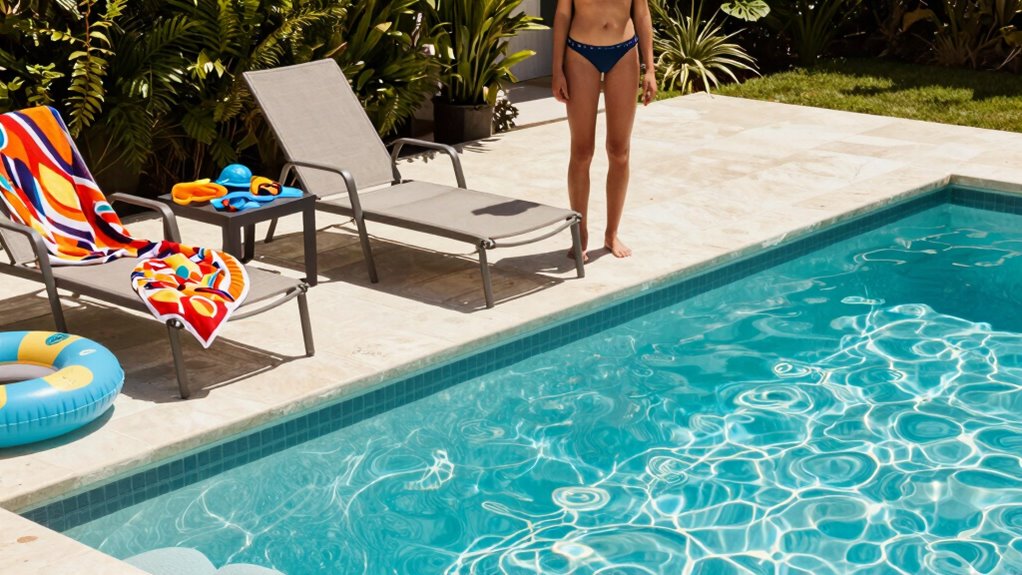
Another mistake owners make is failing to test equipment in actual conditions. For example, purchasing a robotic cleaner based on its specs alone might seem like a smart move, but if you don’t see how it handles your pool’s layout or debris load, you may end up with a device that doesn’t meet your needs. Similarly, trying out different pool accessories—like loungers, umbrellas, or lighting—before buying ensures they’re comfortable, durable, and suited for your space. It’s worth spending time in your pool area to see how items interact with your environment, especially during different seasons, to avoid costly returns or replacements. Additionally, understanding real-life testing techniques can help you make more informed choices that last. Conducting environmental impact assessments when testing products can also help you select options that are more sustainable and eco-friendly. Moreover, considering biodiversity-friendly products and practices when selecting pool accessories can also contribute to a healthier surrounding environment. Remember, testing in actual conditions provides the most accurate insight into how well a product will perform over time and under varying circumstances.
Ultimately, the key to avoiding poolside buying mistakes is to test everything in real life. Don’t rely solely on advertisements or online descriptions. Take the time to evaluate how products perform in your pool’s specific conditions, and don’t forget to follow pool maintenance tips that keep your water clear and balanced. Seasonal pool upgrades should be planned thoughtfully, using real-world testing to guide your choices. When you do this, you’ll make smarter investments that keep your pool inviting and trouble-free all year round.
As an affiliate, we earn on qualifying purchases.
Frequently Asked Questions
How Long Should I Test Pool Equipment Before Buying?
You should test pool equipment for at least a week, ensuring it operates reliably during different conditions. During this time, observe how well it handles pool maintenance tasks like filtration and circulation. This testing period helps you assess equipment durability and performance before buying, preventing future issues. By thoroughly testing, you get a clear picture of how the equipment will perform long-term, saving you time and money.
What Are Signs of Hidden Pool Equipment Issues?
You can spot hidden pool equipment issues by paying attention to signs like inconsistent water clarity or unexpected increases in chemical use. Conduct a thorough pool cover inspection to check for debris or damage that could signal underlying problems. Also, assess filter performance—if it’s struggling to clear the water or makes unusual noises, it might be a sign of hidden issues needing professional attention before buying.
Is It Necessary to Test Pool Chemicals During a Demo?
Testing pool chemicals during a demo is like checking the weather before sailing—crucial for safety and success. You should regularly test for pool chemical stability, especially during demos, to guarantee water balance and clarity. Testing frequency depends on usage and weather changes, but doing it during a demo helps you see how well the chemicals hold up in real-life conditions. It’s an essential step to avoid future issues.
How Do I Evaluate Pool Safety Features Effectively?
To evaluate pool safety features effectively, inspect equipment for durability and ease of use, ensuring they meet safety standards. Test safety devices like alarms, covers, and fences in real-life scenarios to verify their reliability. Check for proper installation and maintenance requirements. Prioritize features that prevent accidents, such as anti-slip surfaces and secure barriers, and confirm safety alerts are functional. This hands-on approach helps you identify potential issues before making a purchase.
What Should I Check for During a Real-Life Pool Test?
During a real-life pool test, you should jump in and check if the pool’s water circulation is flawless, ensuring no dead spots that could stagnate and ruin your pool’s health. Feel the equipment’s durability by turning on filters, pumps, and skimmers—listen for strange noises and observe for leaks. Inspect pool maintenance routines, ensuring filters are easy to clean, and verify the system keeps water crystal clear without constant repairs.
Conclusion
Skipping the real-life test before buying your pool accessories might seem harmless, but it’s a mistake that could cost you big time. Think about it—how often do we assume things will work perfectly without trying them out first? Testing in real life reveals hidden issues and saves you from costly regrets. Trust me, taking that extra step now will pay off in comfort, safety, and peace of mind when you’re poolside.