
To keep your saltwater above-ground pool safe and easy to maintain, you need smarter equipment pairing from the start. Choose a salt chlorine generator suited to your pool size, and use reliable chemical monitoring tools to maintain proper pH and sanitizer levels. Regularly inspect and clean your equipment, and opt for systems that automate chemical adjustments. Investing in the right setup early on guarantees balanced water and long-lasting performance—if you continue exploring, you’ll discover how to optimize your pool experience even further.
Key Takeaways
- Select equipment designed specifically for above-ground pools to ensure proper capacity and compatibility from the start.
- Prioritize salt chlorine generators with advanced monitoring features for accurate salt and chlorine levels.
- Use automated chemical feeders to maintain balanced pH, alkalinity, and sanitizer levels consistently.
- Regularly inspect and clean salt cells and filtration systems to prevent buildup and ensure optimal performance.
- Choose user-friendly controls and smart systems that simplify maintenance and help detect issues early.
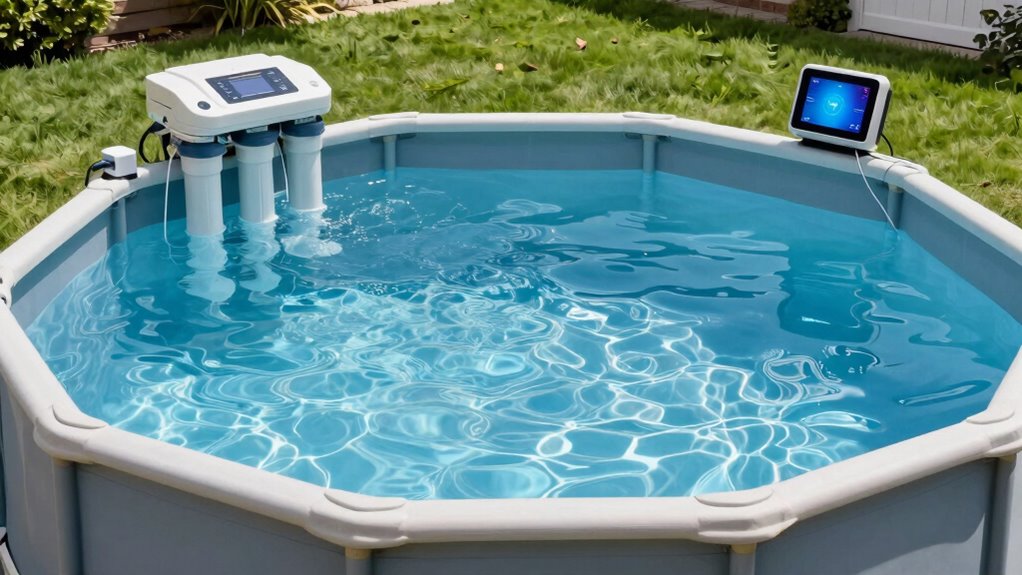
Saltwater above-ground pools are gaining popularity for their softer feel and lower chemical needs, but they also demand smarter equipment choices to keep the water balanced and safe. When you’re setting up your pool, choosing the right equipment from day one is essential. Proper equipment ensures you maintain a stable chemical balance, which helps prevent algae growth, cloudy water, and equipment corrosion. It also simplifies maintenance, saving you time and effort over the swimming season. Additionally, selecting equipment with precise salt level monitoring**** helps maintain optimal salt concentrations, which is vital for consistent chlorine production.
Smart equipment choices from the start keep saltwater pools safe, balanced, and easy to maintain.
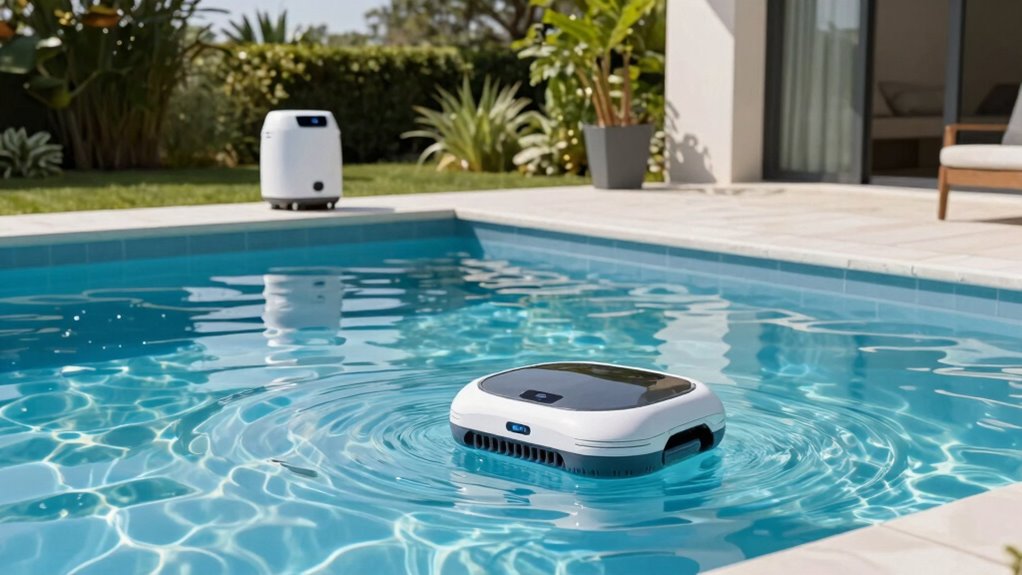
To keep your saltwater pool in top condition, you need a reliable salt chlorine generator. This piece of equipment produces chlorine directly from salt, maintaining consistent sanitation levels. When selecting a generator, focus on capacity and compatibility with your pool size. An undersized generator will struggle to keep up with demand, leading to imbalanced water chemistry. Conversely, a generator that’s too large can produce excess chlorine, which might irritate your skin and eyes or damage pool components. Proper sizing, combined with accurate salt level monitoring, ensures your water remains clean and comfortable. Regularly updating your equipment with advanced monitoring systems can help detect issues early and optimize performance.
Monitoring and adjusting chemical levels regularly is essential. Your equipment should include easy-to-read test kits or digital testers, so you can quickly check pH, alkalinity, and sanitizer levels. Maintaining the correct chemical balance prevents issues like scaling or corrosion that can damage your pool equipment. Automated systems that integrate pH balancing and chlorine levels can make this process more straightforward. These systems automatically dispense chemicals as needed, reducing manual testing and guesswork. This automation not only improves water quality but also prolongs the lifespan of your pool’s equipment.
Cleaning and maintenance are also critical. Your pool’s salt cell, the core component of your generator, needs regular inspection and cleaning to prevent calcium build-up, which can hinder its efficiency. Investing in equipment with easy access for maintenance saves you time and hassle. Additionally, a good filtration system is essential for removing debris and keeping water clear. Make sure your filter is rated appropriately for your pool size and features user-friendly controls for routine backwashing or cartridge replacement.
In essence, from the moment you install your saltwater above-ground pool, you should prioritize equipment that supports ideal chemical balance and simplifies maintenance. This approach not only keeps your water inviting and safe but also extends the life of your pool components. Smarter equipment choices from the start help you enjoy a hassle-free swimming experience, so you can focus on relaxing and having fun rather than troubleshooting water quality issues.
saltwater above-ground pool salt chlorine generator
As an affiliate, we earn on qualifying purchases.
As an affiliate, we earn on qualifying purchases.
Frequently Asked Questions
How Often Should Salt Levels Be Tested in Above-Ground Pools?
You should test your salt levels at least once a week to guarantee proper salt level maintenance. Regular water testing frequency helps you catch any imbalances early, preventing damage to your pool equipment and ensuring comfortable, clean water. If you notice a change in water clarity or feel that the water is not as sparkling, increase testing frequency to twice a week. Consistent testing keeps your saltwater pool in peak condition.
Can Standard Pool Pumps Handle Saltwater Above-Ground Pools?
Standard pool pumps can handle saltwater above-ground pools, but they may not be the best choice for long-term pool maintenance. Saltwater can cause corrosion and reduce equipment durability over time. To guarantee your pool stays in top shape, consider upgrading to equipment designed specifically for saltwater. This way, you’ll enjoy easier maintenance, improved longevity, and better overall pool performance. Always check manufacturer recommendations before making any equipment changes.
What Are Signs of Equipment Corrosion in Saltwater Pools?
Think of your saltwater pool as a warrior battling corrosion—signs like rust-colored stains, leaking, or unusual noises indicate equipment deterioration. Corrosion indicators often show up as greenish or white deposits on pumps or filters. Keep a close eye on fittings and connections; if you notice pitting or corrosion, it’s time to inspect further. Addressing these early signs helps prevent costly repairs and keeps your pool running smoothly.
Are There Specific Filters Recommended for Saltwater Above-Ground Pools?
For saltwater above-ground pools, you should choose filters designed specifically for saltwater filtration. Look for models with corrosion-resistant materials, like high-quality plastics or stainless steel, to guarantee pool equipment durability. A saltwater-compatible sand or cartridge filter helps maintain clean water without corroding components. Investing in these recommended filters from the start ensures your pool stays clear, and your equipment lasts longer, saving you money and hassle over time.
How Does Climate Affect Saltwater Pool Equipment Longevity?
Climate plays a vital role in your saltwater pool equipment‘s longevity. In humid or coastal areas, corrosion resistance becomes essential, so choose equipment designed for climate adaptation. Hot, sunny climates may cause parts to wear faster, requiring more frequent maintenance. By selecting corrosion-resistant materials and equipment suited for your environment, you’ll extend your pool’s lifespan and guarantee reliable performance, regardless of weather conditions.
Conclusion
To keep your saltwater above-ground pool thriving, choosing smarter equipment from day one is essential. Imagine installing a compatible salt chlorinator and a high-quality pump designed for saltwater systems—your pool stays cleaner, your equipment lasts longer, and maintenance becomes simpler. Take Sarah’s backyard, for example—she upgraded her system, and now her pool sparkles without constant worries. Investing in the right gear from the start makes all the difference, letting you enjoy your pool hassle-free for years to come.