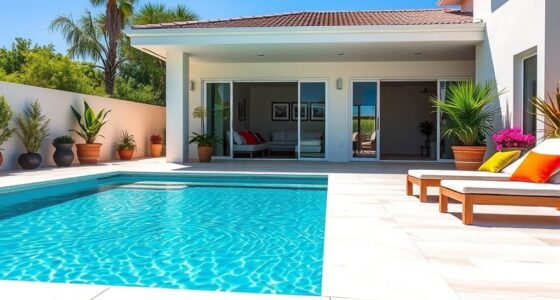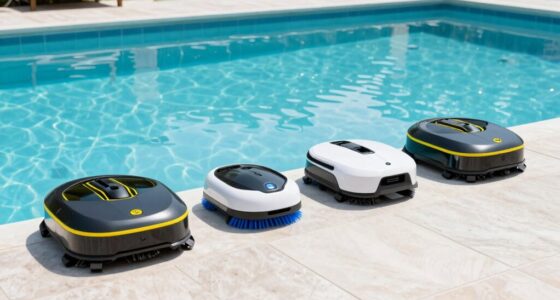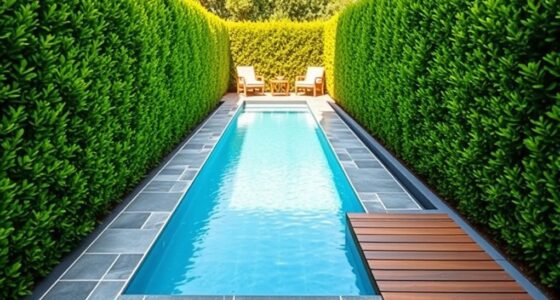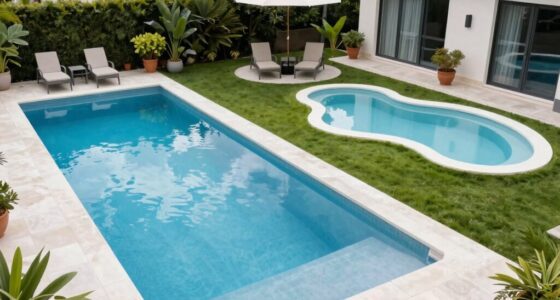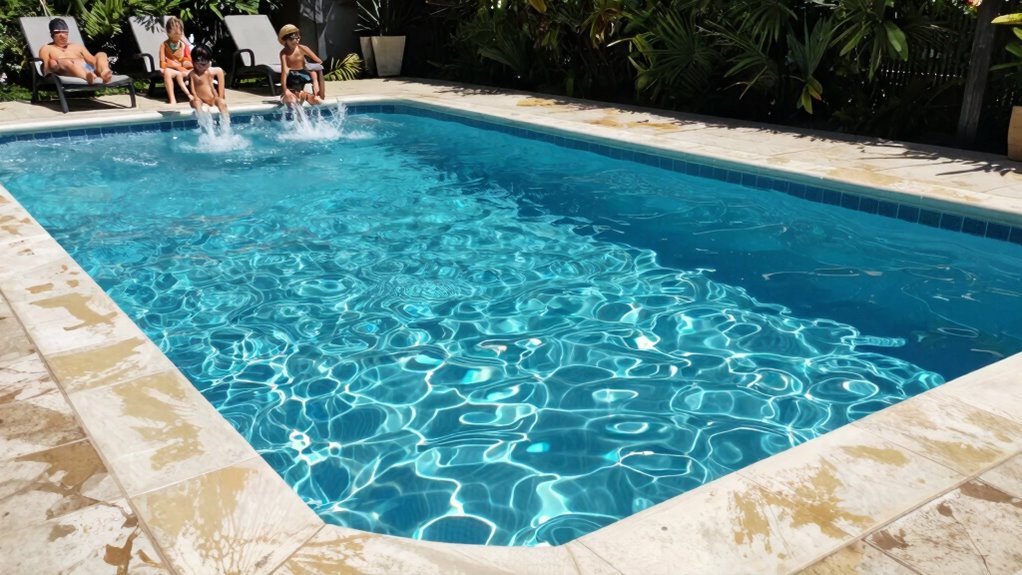

When choosing pool depth, focus on how you’ll actually use it. If you want to relax and supervise kids, a shallow pool is safer and easier to manage. For diving or serious swimming, opt for a deeper design that meets safety standards. Avoid getting caught up in visuals or advertisements—think about what fits your household’s needs and swimmer experience. Keep exploring to find tips that help match your pool depth to your lifestyle.

Get pool and patio gear delivered free with Prime
- Fast, free delivery on millions of items
- Prime Video, Amazon Music and more included
- Member-only deals all year
Key Takeaways
- Prioritize safety and supervision needs, especially for children or inexperienced swimmers, when choosing pool depth.
- Match pool depth to intended activities, such as shallow for lounging and deep for diving or advanced swimming.
- Consider maintenance and operational costs, which increase with deeper pools due to higher water volume and complexity.
- Ensure proper safety features and signage in deep pools to prevent injuries during activities like diving.
- Balance visual appeal with practical usability, avoiding unrealistic expectations set by advertising or design images.
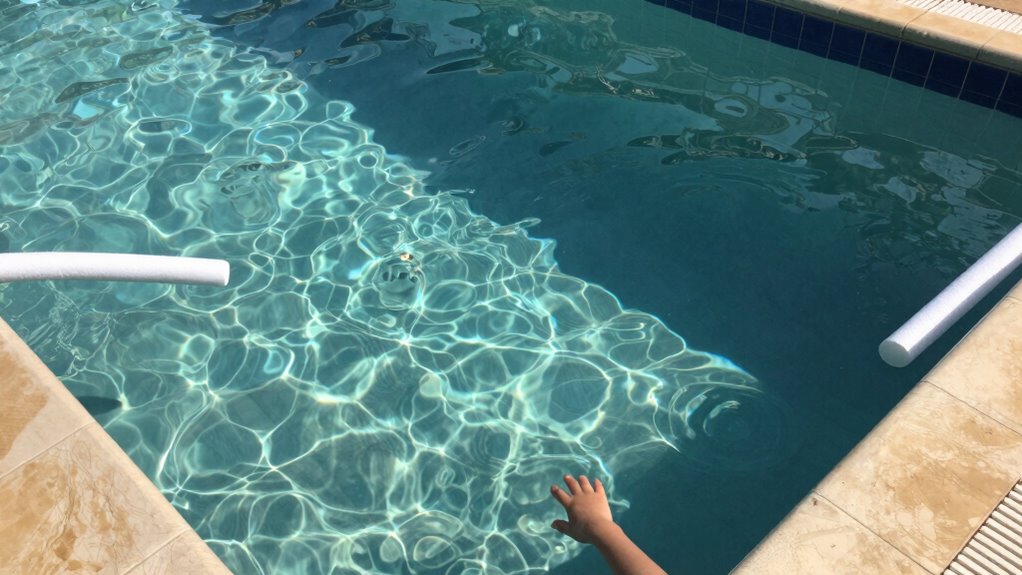
When choosing a pool, the depth often becomes a key consideration, but what you see in advertisements or fantasy scenarios doesn’t always match real-world use. While a deep pool might look impressive and offer the allure of diving or swimming against strong currents, it’s essential to think practically about how you’ll actually use the space. Deep pools can be exciting, but they also come with safety precautions you need to respect. If you have children or inexperienced swimmers, a shallow design might be safer and easier to supervise. Safety should always be your top priority, so consider your household’s needs and the age of swimmers before opting for maximum depth.
Beyond safety, maintenance considerations play a crucial role in your decision. Deeper pools often require more effort to keep clean because debris tends to settle at the bottom, making it more challenging to maintain water clarity. The increased volume of water in a deep pool also means higher costs for chemicals, filtration, and heating. If your goal is to enjoy your pool without the constant worry about upkeep, a shallower model could be more manageable. Remember that the more complex the structure, the more prone it is to issues like algae buildup or uneven heating, which can add to your maintenance workload. Additionally, water circulation becomes more complex in deeper pools, influencing both cleanliness and energy efficiency. Proper water circulation systems are essential for maintaining water quality, especially in larger or deeper pools. It’s also important to consider pool design features that can help manage circulation and reduce maintenance efforts.
Deeper pools require more cleaning, higher chemical costs, and tend to have maintenance challenges like algae and uneven heating.
When thinking about pool depth, you should also consider your primary activities. If you plan to lounge, socialize, or do water aerobics, a shallow or medium-depth pool might serve you better. On the other hand, if you’re an experienced diver or want a space for serious swimming workouts, a deeper pool could be worth the extra effort. Just keep in mind that diving safety precautions become crucial in deeper pools—making sure there’s enough clearance to avoid injuries and installing proper signage. Additionally, understanding pool safety standards can help ensure your pool is safe for all users. Taking these standards into account can help you avoid hazards and create a safer environment for everyone.
It’s tempting to dream about a luxurious, diving-friendly pool, but the reality is that practicality often trumps fantasy. Think about how often you’ll use the pool, who will be using it, and what kind of maintenance you’re willing to handle. Balance your desire for depth with safety precautions and maintenance considerations. A well-chosen depth enhances your swimming experience without turning your backyard into a safety hazard or a never-ending chore. Your ideal pool should match your lifestyle, ensuring safety, ease of upkeep, and maximum enjoyment.
shallow swimming pool for families
As an affiliate, we earn on qualifying purchases.
As an affiliate, we earn on qualifying purchases.
Frequently Asked Questions
How Does Pool Depth Affect Water Circulation and Filtration Efficiency?
Pool depth directly impacts water flow and filtration efficiency. Deeper areas can slow water circulation, causing dead zones where debris and contaminants settle. Shallow zones promote better water movement, enhancing filtration. You should consider varying depths to optimize water flow and filtration efficiency, ensuring your pool stays clean and safe. Proper design helps maintain consistent water circulation, which is essential for effective filtration and overall pool health.
What Safety Standards Exist for Different Pool Depths?
You’re right to take safety standards for pool depths into account. Pool depth regulations vary by location, but generally, shallow areas under 3 feet are designed for safety, while deeper zones over 5 feet require additional precautions. Safety signage is essential, warning swimmers about depth changes and prohibiting unsafe activities. Always check local codes and make sure your pool meets all safety standards to prevent accidents and keep everyone safe.
How Does Pool Depth Influence Heating Costs?
Pool depth considerably impacts heating costs because deeper pools take longer to heat and maintain temperature. With increased depth, you’ll spend more on temperature regulation, especially during colder months. To maximize energy efficiency, consider keeping the pool at a moderate depth that suits your use, reducing the volume of water needing heating. This approach helps you save on energy and keeps your pool comfortably warm without skyrocketing costs.
Can a Shallow Pool Accommodate Diving Boards Safely?
In a blink of an eye, your shallow pool design can’t safely accommodate diving boards. Diving board safety requires a minimum depth—usually 8 to 10 feet—so a shallow pool isn’t suitable. Installing a diving board in a shallow pool risks serious injury. For safe diving, consider a deeper pool specifically designed for diving boards, ensuring both safety and enjoyment for everyone.
How Does Depth Impact Pool Maintenance and Cleaning?
Depth considerably impacts pool maintenance and cleaning because deeper areas can trap debris and algae, making cleaning more challenging. You’ll need specialized equipment like long-handled nets and robotic cleaners for thorough maintenance. When considering pool aesthetics and design, guarantee the depth aligns with your cleaning routine to avoid hard-to-reach spots. Proper planning helps maintain a spotless, inviting pool while minimizing upkeep efforts.
Conclusion
So, when planning your pool depth, focus on how you’ll actually use it. Don’t get carried away with fantasy visions of perfect conditions; instead, prioritize safety and practicality. If you love swimming laps, a deeper end makes sense. But if kids or casual swimmers will use it most, a shallower design works just fine. Remember, your pool should serve your needs—so keep it realistic, safe, and truly enjoyable.
Fall Picks
fall essentials
As an affiliate, we earn on qualifying purchases.