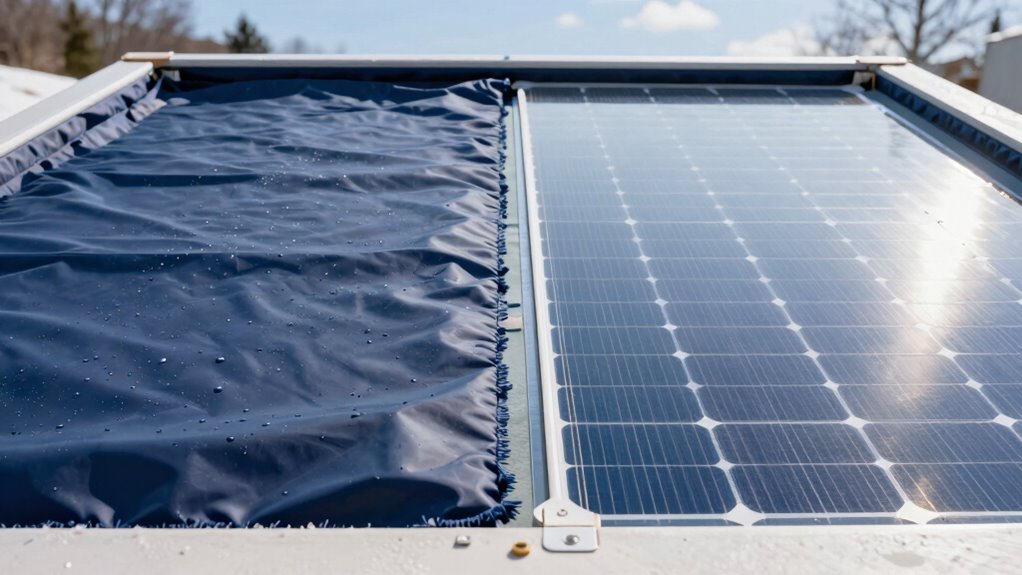

To avoid mixing up winter and solar covers, understand their distinct purposes. Winter covers protect your pool from debris, weather damage, and UV exposure during the off-season, while solar covers trap heat and reduce evaporation during warmer months. Winter covers are thicker and more durable, while solar covers are lightweight and designed to maximize sunlight. Knowing when to use each prevents costly mistakes. Keep exploring to discover how to optimize your pool’s protection and efficiency year-round.

Get pool and patio gear delivered free — and shop member deals
- Fast, free delivery on millions of items
- Access to Prime Big Deal Days deals on October 6–7
- Prime Video, Amazon Music and more included
Key Takeaways
- Winter covers are heavy-duty, durable, and designed for long-term outdoor protection, while solar covers are lightweight and focus on heat retention.
- Use winter covers mainly during cold months for insulation and debris prevention; solar covers are ideal in warm months for heating and evaporation control.
- Winter covers are made from thick, puncture-resistant materials like vinyl or woven polyethylene; solar covers use thin, UV-stabilized plastic with air pockets.
- Proper installation differs: winter covers require secure anchoring and tension; solar covers float directly on the water surface for easy removal.
- Using the correct cover seasonally ensures optimal pool protection, safety, and efficiency, preventing damage from misuse or improper installation.
winter pool cover heavy-duty vinyl
As an affiliate, we earn on qualifying purchases.
As an affiliate, we earn on qualifying purchases.
What Are the Main Purposes of Winter and Solar Pool Covers

Have you ever wondered why pool owners choose different covers for winter and summer? The main purpose of a winter cover is to protect your pool during the off-season, keeping out debris and reducing evaporation. It also helps maintain water chemistry by minimizing chemical treatment needs, which saves you time and money. Winter covers are designed to withstand harsh weather and prevent accidental falls into the pool, enhancing pool safety. On the other hand, a solar cover is mainly used during the warmer months to retain heat and speed up water warming through sunlight. It’s lightweight and easy to remove, making it perfect for summer use. Both covers serve specific functions, but their ultimate goal is to keep your pool protected, safe, and enjoyable year-round. Additionally, selecting the right cover can impact the contrast ratio of your pool area, influencing how effectively you can enjoy your space during different seasons. Understanding the functionality of pool covers can help you make better decisions about which cover suits your needs. Proper cover maintenance is essential to prolong the lifespan and effectiveness of both types of covers, and using high-quality covers can also prevent costly repairs, ensuring your investment remains valuable over time. Regularly inspecting your covers for damage and wear can significantly enhance their performance longevity.
How Do Winter Pool Covers Protect Your Pool in Off-Season Conditions

Winter pool covers play a pivotal role in protecting your pool during the off-season by shielding it from debris, such as leaves, dirt, and other unwanted particles that can accumulate when the pool is not in use. They also help maintain chemical balance and prevent algae growth by limiting sunlight and reducing contamination. This barrier minimizes algae prevention issues and keeps your pool cleaner, reducing maintenance when reopening. Properly covering your pool during winter ensures that water stays clearer and safer. It also reduces evaporation and prevents dirt from settling at the bottom. Use the table below to understand how winter covers contribute to pool protection:
| Benefit | Explanation |
|---|---|
| Debris Prevention | Keeps leaves and dirt out of the pool |
| Algae Control | Limits sunlight exposure to stop algae |
| Chemical Balance | Helps maintain proper chemical levels |
| Water Conservation | Reduces evaporation during cold months |
Additionally, a high-quality winter cover can prevent water contamination by acting as a physical barrier against pests and environmental pollutants, further safeguarding your pool’s condition. Using a durable cover material can also ensure better resistance to winter weather conditions. Regular inspection and maintenance of your cover can extend its lifespan and ensure continuous protection during the off-season. To maximize the effectiveness of your cover, it’s important to properly install and secure it to withstand winter weather conditions.
How Do Solar Pool Covers Help Warm Your Pool and Reduce Evaporation
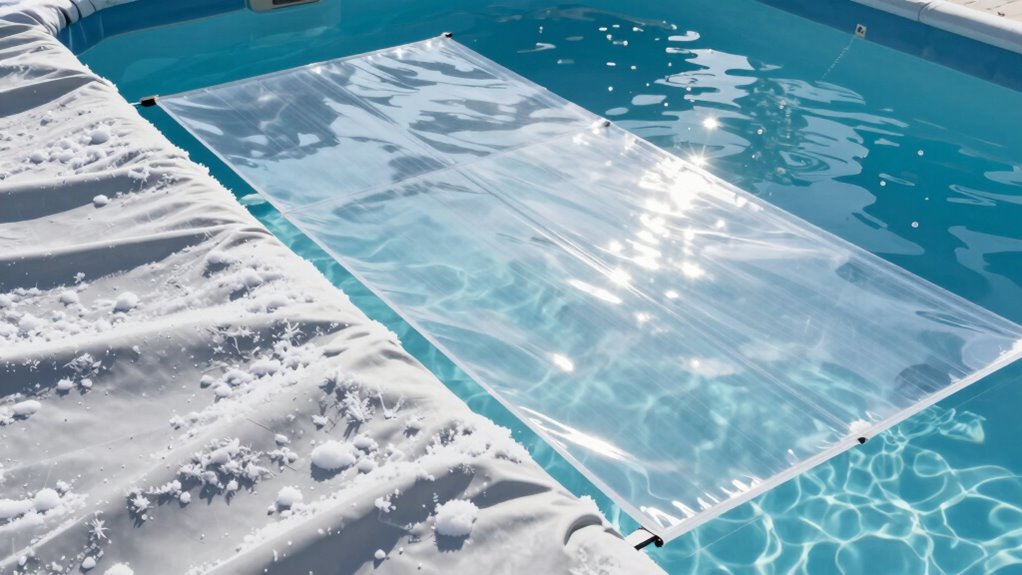
Solar pool covers work by trapping heat from the sun and transferring it directly to your pool water, effectively warming it even on cooler days. The key is in the pool cover materials, which are designed to absorb and retain solar energy. When you install a solar cover, it acts as a barrier that minimizes heat loss through evaporation. This not only keeps your water warmer but also considerably reduces water loss, saving you time and money on refilling. Cover installation is simple—you just place the cover directly on the pool’s surface, ensuring it fits snugly. By maintaining higher water temperatures and reducing evaporation, solar pool covers extend your swimming season and help you enjoy your pool longer. Additionally, understanding pinball machine technology can inspire innovative features in pool covers that improve efficiency and durability. Incorporating solar energy principles into cover design can further enhance heat retention and energy efficiency. Utilizing advanced insulating materials can also significantly improve the overall performance of your solar cover. Exploring material science advancements can lead to even more effective and long-lasting pool covers.
What Are the Material, Design, and Installation Differences Between Winter and Solar Covers

The materials, design, and installation steps for winter and solar covers differ markedly, affecting how you use them. Winter covers are typically heavier and made from durable, puncture-resistant fabrics, while solar covers are lightweight and made from UV-stabilized plastic. Understanding these differences helps you choose and install each cover effectively, ensuring your pool stays protected and efficient year-round. Additionally, proper kitchen gear care and eco-friendly disposal methods can extend the lifespan of your covers and reduce environmental impact. Selecting the right cover type also involves considering material durability to withstand seasonal conditions and prevent damage over time. When choosing between the two, it’s important to evaluate seasonal performance to maximize their benefits effectively. Recognizing these distinctions can also help you better maintenance practices, leading to longer-lasting covers and improved pool efficiency. Properly understanding these differences ensures optimal cover longevity and overall pool health.
Material Composition Differences
While both winter and solar covers are designed to protect and optimize your pool, their materials, construction, and installation methods differ substantially. Winter covers are typically made from heavy-duty, woven polyethylene or vinyl, emphasizing material durability to withstand harsh weather conditions. Their manufacturing processes focus on creating thick, puncture-resistant fabrics that resist tearing and UV damage over extended periods. Solar covers, on the other hand, are usually made from thinner, bubble-like polyethylene or resin materials, optimized for light transmission and heat retention. The manufacturing emphasizes creating lightweight, flexible sheets with air pockets that maximize solar absorption. These material differences directly impact each cover’s lifespan, with winter covers lasting several seasons and solar covers designed for seasonal use, making their material composition essential to their function. Additionally, the material properties play a crucial role in determining how each cover performs under different environmental conditions. Proper understanding of these differences helps in selecting the right cover for your pool’s needs. Moreover, the durability of materials influences maintenance and replacement frequency, which is vital for long-term pool care.
Design and Shape Variations
Winter and solar covers differ markedly in their design and shape, reflecting their specific functions. Winter covers are typically heavy-duty, thick, and reinforced to withstand harsh weather, prioritizing pool cover safety and durability. They often feature a rectangular shape with reinforced edges to prevent tearing. Solar covers, on the other hand, are lightweight and thinner, designed to maximize heat absorption. They usually have a bubble or tabbed design that floats easily on the water and can be cut to fit your pool shape.
- Winter covers use durable, puncture-resistant materials for long-term outdoor protection.
- Solar covers are made from flexible, UV-resistant plastic designed to absorb and transfer solar heat.
- Both types are shaped to fit different pool sizes but differ considerably in their weight and flexibility.
Installation Procedures and Tips
Installing winter and solar covers requires different approaches due to their distinct materials and designs. For winter covers, use a cover reel or anchoring system to secure the cover tightly, ensuring pool safety and preventing debris from entering. These covers are typically made from durable, puncture-resistant materials that withstand harsh weather, so proper tension is key to avoid sagging and tearing. Solar covers are lightweight and made from UV-resistant plastic, so they’re easy to place directly on the water’s surface. When installing a solar cover, smooth out wrinkles to maximize heat absorption and prevent damage. Always check for sharp edges or debris that could damage the cover material. Proper installation prolongs cover life, enhances safety, and maintains cover material durability throughout the season.
When Should You Use a Winter Cover Versus a Solar Cover?
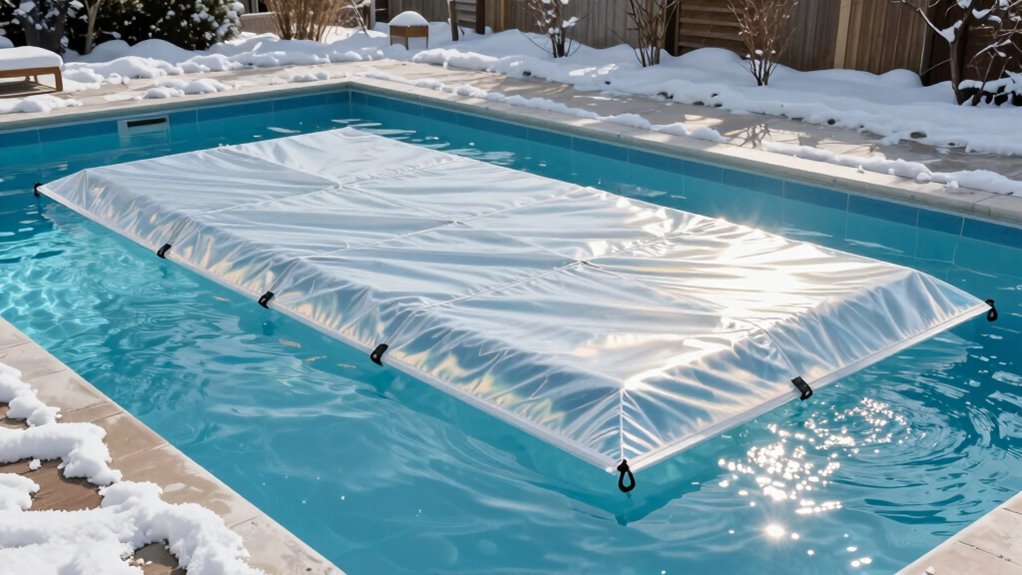
Choosing the right cover depends on your pool’s seasonal needs. You should use a winter cover when you’re closing your pool for the season to protect against debris, harsh weather, and to prevent algae growth. A solar cover, on the other hand, is ideal for sunny months, helping to retain heat and reduce evaporation. Consider these points:
- Use a winter cover with durable materials for long-term protection during cold months.
- Apply a solar cover during warmer months to boost water temperature and save energy.
- Follow cover installation tips to ensure proper fit—tight but not overly stretched—and maximize effectiveness.
Knowing when to switch covers ensures your pool stays clean and maintains excellent temperature. Choose the right cover based on your pool’s seasonal needs for maximum benefit.
Common Mistakes When Using the Wrong Cover and Their Consequences

Using the wrong pool cover can lead to costly problems and reduced pool performance. Choosing an incompatible cover material, like using a solar cover during winter, can cause damage to the cover and pool surface. Improper installation safety is another common mistake; an ill-fitted cover can blow away or allow debris to enter the pool, increasing maintenance costs. For example, using a winter cover without proper securement might result in tearing or safety hazards if it slips or collapses. Conversely, a solar cover used in cold weather won’t provide adequate insulation, risking freezing damage. Always select the right cover for the season and follow installation safety guidelines to protect your pool, extend cover lifespan, and avoid unnecessary repairs. Proper matching and secure installation are key.
How to Choose the Right Pool Cover for Your Climate and Needs

Choosing the right pool cover depends on your climate, so consider how weather conditions affect your pool year-round. Think about insulation and durability to protect your pool and suit your maintenance routine, all while fitting your budget. Balancing these factors helps you pick a cover that meets your needs and lasts over time.
Climate Compatibility Tips
Selecting the right pool cover depends heavily on your climate and specific needs. To make the best choice, consider these tips:
- For colder climates, opt for a winter cover that offers durability and helps retain heat, reducing your heating costs.
- If you rely on solar heating, a solar cover is ideal—it maximizes heat retention and extends your swimming season.
- Always prioritize pool safety; in areas with children or pets, choose covers with reliable locking mechanisms or safety features to prevent accidents.
Insulation and Durability
When evaluating pool covers for your climate, insulation and durability should be top priorities. Good thermal insulation helps retain heat, reducing your heating costs and preventing ice damage in colder months. For winter climates, opt for covers with high thermal insulation properties and strong cover durability to withstand harsh weather conditions like snow and wind. Solar covers typically offer excellent insulation due to their material, but may not be as durable over time. Conversely, winter covers are built to last through heavy snow and ice but may not provide as much heat retention. Consider your climate’s severity and your specific needs to choose a cover that offers the right balance of thermal insulation and durability, ensuring your pool remains protected and well-maintained year-round.
Budget and Maintenance
Budget considerations play a significant role in determining the right pool cover for your needs, especially when balancing long-term costs and upfront expenses. To make an informed choice, consider these factors:
- Pool cover materials: Durable materials like reinforced vinyl or polyethylene may cost more initially but reduce replacement frequency and maintenance expenses.
- Installation techniques: Easy-to-install covers, such as solar covers with simple roll-up systems, save time and labor costs.
- Maintenance needs: Some covers require regular cleaning or repairs, impacting ongoing costs. Winter covers often need more upkeep, while solar covers are low maintenance.
Tips for Maintaining and Storing Your Pool Covers Properly

Proper maintenance and storage are essential to extending the life of your pool covers. After the season ends, clean your cover thoroughly to remove debris, dirt, and pool chemicals. This helps prevent damage and mold growth, especially if you plan to store it for an extended period. When storing, confirm the cover is completely dry to avoid mold and mildew. Fold or roll it carefully, avoiding sharp creases that could weaken the material. Store the cover in a cool, dry place, away from direct sunlight, which can degrade the material over time. Incorporate your garden landscaping by keeping the cover off the ground to prevent dirt accumulation. Regular pool cleaning before covering up helps maintain the cover’s condition and keeps your pool ready for next season.
Can You Use Both Covers Together or Switch Between Them Effectively?

Using both a winter cover and a solar cover can be an effective way to maximize your pool’s protection and energy efficiency, but it’s important to understand how they work together. Since cover compatibility varies, you can’t always switch between them easily. To use both effectively:
- Make certain the winter cover stays on during colder months, providing protection, while the solar cover is added in warmer months to heat the water.
- Avoid cover switching during the season, as different covers serve distinct purposes.
- Check if your pool’s equipment supports using multiple covers or if you need specific accessories for cover compatibility.
Frequently Asked Questions
Can Winter and Solar Covers Be Used Simultaneously?
Yes, you can use winter and solar covers simultaneously, but it’s not recommended. The cover material and installation process differ for each, which can cause issues. Winter covers are thick and durable for insulation, while solar covers are lightweight to absorb sunlight. Using both together might complicate installation and reduce effectiveness. For best results, choose the cover suited to your needs and follow the proper installation process.
How Long Can Each Cover Typically Last?
You can expect your winter cover to last about 3 to 5 years with proper cover material and regular cover maintenance. Solar covers tend to last around 5 to 7 seasons. To maximize their lifespan, you should inspect your covers regularly, clean them gently, and store them properly during off-season. Using quality cover materials and performing routine maintenance helps make sure your covers stay effective and durable over time.
Are There Safety Concerns With Winter or Solar Covers?
Think of your pool cover as a shield, but it’s not invincible. Safety concerns mainly revolve around improper cover maintenance or worn-out material durability, which can cause slips or injuries. Always confirm your winter or solar cover is secure, free of tears, and properly installed. Regular inspections help prevent accidents and prolong the life of your cover, keeping your pool area safe and your investment protected from the elements.
Do Different Pool Types Require Specific Covers?
Yes, different pool types often require specific covers for proper pool maintenance and cover installation. For example, in-ground pools typically need sturdy winter covers to prevent debris buildup, while above-ground pools benefit from solar covers to maximize heat retention. Using the right cover guarantees safety, prolongs equipment life, and keeps your pool cleaner. Always check your pool’s specifications before selecting a cover to ensure it fits correctly and meets your needs.
What Are the Cost Differences Between Winter and Solar Covers?
Think of winter and solar covers as different tools in your pool kit. Winter covers are like heavy-duty blankets, often costing more due to durable cover material and higher installation costs. Solar covers are lightweight and cheaper, designed to save energy by heating your pool. Expect winter covers to be pricier upfront, while solar covers are more budget-friendly but offer less insulation. Your choice depends on your needs and budget.
Conclusion
Think of your pool covers as a trusty shield and a warm blanket—each has its own job to keep your pool safe and inviting. Using the right cover at the right time is like wielding the perfect tool for the task. When you choose wisely and switch when needed, you’re guiding your pool through seasons like a skilled captain steering a ship—protecting and preserving it for endless summer days ahead.
Halloween Picks
halloween
As an affiliate, we earn on qualifying purchases.