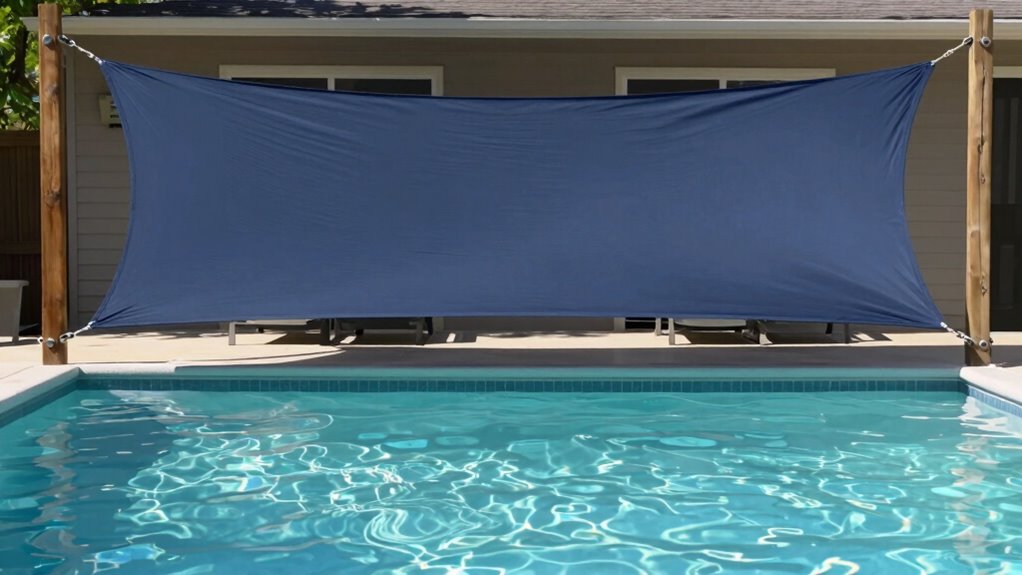
To choose the right shade sail for your pool, make certain it’s properly sized to cover your area with some overhang for extra shade. Secure it to sturdy, high anchor points like house eaves or posts using durable hardware resistant to weather. Look for high UV ratings—90%+ to block harmful rays effectively and keep your space cooler. Proper installation and careful selection of materials help maximize durability. Keep exploring to learn how to customize and maintain your pool shade sail for long-lasting comfort.
Key Takeaways
- Measure the pool’s widest points, including curves, and add extra space for overhang and clearance.
- Choose sturdy, fixed anchor points like house eaves or posts that can withstand tension and weather conditions.
- Select shade sails with high UV ratings (90%+) to effectively block harmful UV rays and reduce heat buildup.
- Opt for appropriate shapes (triangles, rectangles, custom) and sizes to ensure optimal coverage and aesthetic appeal.
- Regularly inspect and maintain the shade sail, ensuring proper tension and hardware integrity for durability and safety.
How Do Pool Shade Sails Protect Your Pool From the Sun?
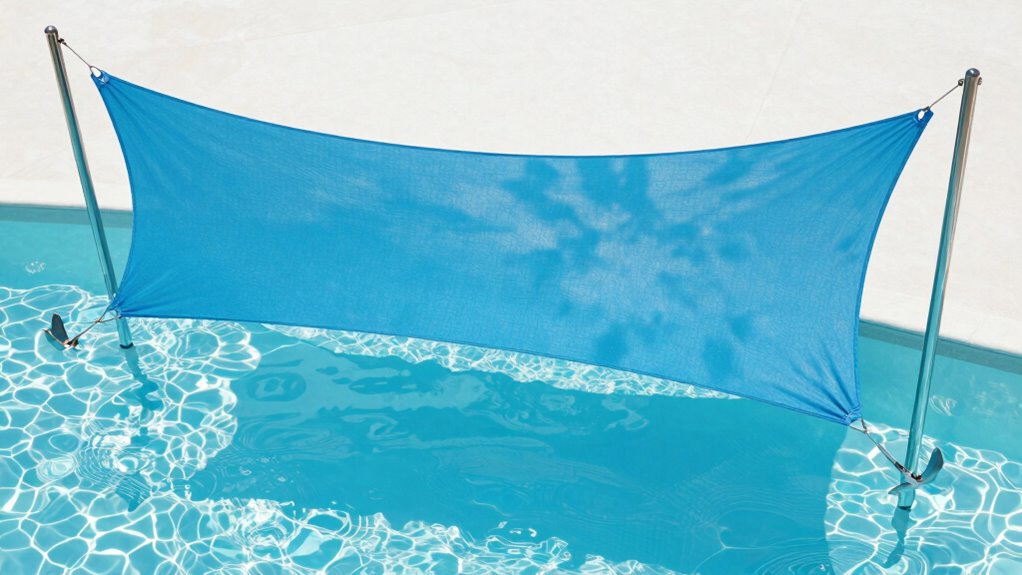
Pool shade sails protect your pool from the sun by blocking harmful UV rays and reducing heat buildup. They work as effective sun protection by creating a shaded area that prevents direct sunlight from reaching the surface of the water. The UV shielding property of shade sails helps keep your pool cooler and protects your skin from potential sun damage. By diffusing sunlight, these sails lower surface temperatures, which reduces evaporation and keeps the water comfortable for swimming. Their design allows for airflow while still providing coverage, ensuring your outdoor space remains pleasant. Properly selecting the UV ratings for your shade sails ensures optimal protection from the sun’s rays. Proper installation and anchor points are essential to ensure stability and safety during windy conditions. Ensuring the durability of your shade sails can extend their lifespan and maintain effectiveness over time. Additionally, choosing materials with high UV resistance can further enhance their longevity and protective qualities. Considering climate conditions when selecting your shade sails can help prevent damage from extreme weather. Overall, shade sails offer a practical solution for safeguarding your pool from the intense rays of the sun, making your swimming experience safer and more enjoyable.
How to Measure Your Pool for the Perfect Shade Sail Fit
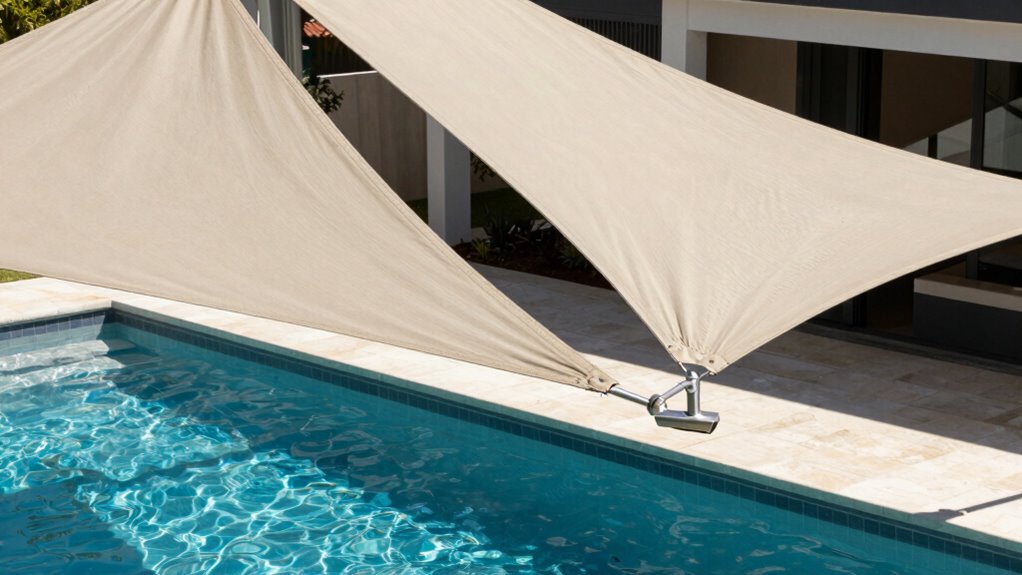
To get the perfect shade sail fit, you need to measure your pool accurately. Make sure to include extra space for overhang and clearance so the shade provides full coverage without obstruction. Taking precise measurements now will guarantee your sail fits perfectly and looks great. Ensuring proper measurement accuracy is essential for achieving an optimal fit and coverage. Additionally, understanding cabling solutions can help you plan secure anchor points for your shade sail. Remember that time management during installation can prevent scheduling delays and ensure everything is properly secured. Incorporating simple foam rolling tips can also help you recover quickly after installation or adjustments, maintaining your flexibility and preventing strain. Being aware of installation best practices can further streamline the process and help you achieve a professional finish.
Measure Pool Dimensions Carefully
Wondering how to guarantee your shade sail fits perfectly? Accurate measurements are key. Start by measuring the length and width of your pool at the widest points, including any curves. Don’t forget to account for nearby features like steps or loungers that could affect placement. Use a sturdy tape measure and double-check your readings to avoid mistakes. Precise measurements ensure the shade sail provides ideal coverage, enhancing poolside comfort and maintaining attractive shade sail aesthetics. Remember, even small inaccuracies can lead to sagging or insufficient coverage. Mark your measurements clearly, and consider the intended overhang and clearance for easy installation. Taking your time now will pay off with a perfect fit that looks great and functions well. Proper measurement techniques are essential for achieving a seamless fit that maximizes your shade sail’s effectiveness.
Account for Overhang and Clearance
Have you considered how much overhang and clearance you’ll need beyond your pool’s edges? Overhang provides extra shade coverage, especially useful if you want to include tree shading nearby, but it also exposes the sail to wind. To prevent damage, add extra clearance to account for wind considerations; sails need space to move safely without tugging on anchor points. Remember, overhanging the edges helps block afternoon sun and shields your pool from nearby trees, reducing debris. However, too much overhang can make the sail more vulnerable to wind gusts, so strike a balance based on your local wind conditions. Measure carefully, including space for tree shading, and consider how wind might influence the sail’s stability to ensure a perfect fit and long-lasting shade. Incorporating portable power solutions can also help you monitor and adjust your shade setup more effectively in variable weather conditions.
Choosing the Right Size and Shape for Your Pool Shade Sail
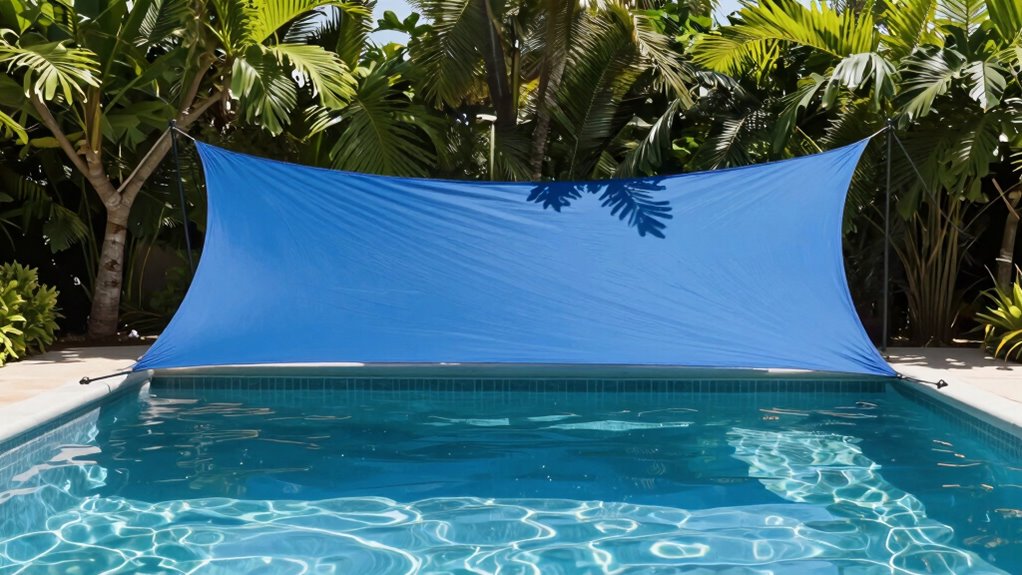
Choosing the right size and shape for your pool shade sail is crucial to guarantee effective sun protection and a balanced aesthetic. Start by evaluating your pool area and identifying the coverage you need. Consider fabric selection carefully; durable, UV-resistant fabrics ensure longevity and better sun blocking. When choosing a shape, think about how it complements your space—triangles, rectangles, or custom shapes can work differently depending on your pool’s layout. Color options also matter: lighter shades reflect heat, keeping the area cooler, while darker tones absorb heat. Confirm the shade sail’s size provides ample coverage without overwhelming the space, and shape it to fit your pool’s contours. Proper sizing and shape enhance both functionality and visual appeal, creating a comfortable, stylish retreat. Additionally, understanding how hydraulics and tension influence the installation can help ensure your shade sail remains secure and effective over time. Being aware of UV ratings can also guide you in selecting fabrics that offer optimal sun protection and durability. Furthermore, selecting the correct size and shape can make a significant difference in how well your shade sail performs and complements your outdoor space. Moreover, considering installation techniques can help you achieve a secure and long-lasting setup. Proper planning and measurement accuracy are essential to ensure your shade sail fits perfectly and provides the desired coverage.
Where Are the Best Anchor Points for Installing a Shade Sail Securely?

Finding secure anchor points is key to guaranteeing your shade sail stays in place and provides reliable sun protection. The best anchor points are sturdy, fixed, and capable of handling tension. Look for solid structures like house eaves, pergolas, or strong posts. When selecting anchor points, keep these installation tips in mind:
- Choose high, stable points to allow proper tension
- Avoid weak surfaces that can shift or collapse
- Use durable, weather-resistant hardware
- Ensure the anchor points are well spaced for ideal tension and shape
Proper placement of anchor points prevents sagging and maintains the sail’s shape. Always verify that your anchor points can withstand wind and weather conditions, ensuring your shade sail remains secure and effective. Incorporating Vetted – Aromatherapy Naturals can provide additional insights into durable and reliable materials for outdoor use. Additionally, understanding structural load is essential to ensure your anchor points can support the tension and weight of the shade sail safely. It’s also beneficial to consider outdoor hardware ratings to select hardware that can resist corrosion and environmental wear. Moreover, selecting high-quality hardware ensures longevity and safety in outdoor installations. Being aware of corrosion resistance helps in choosing hardware that endures outdoor exposure over time.
What Do UV Ratings Mean for Your Shade Sail’s Sun Protection?
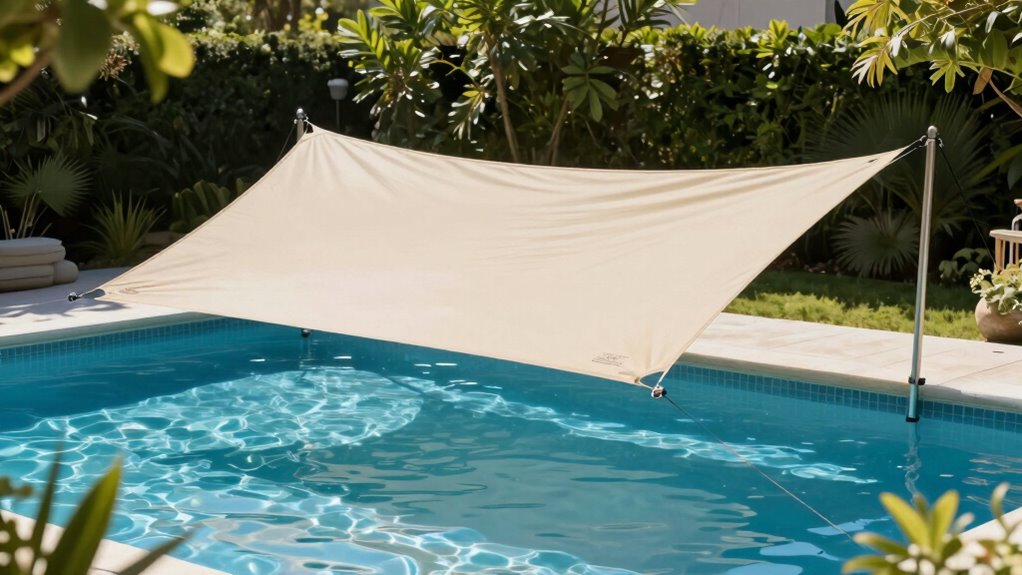
Understanding UV ratings on shade sails is essential because they indicate how effectively the fabric blocks harmful ultraviolet rays. Higher UV ratings mean your shade sail provides better sun protection, shielding you and your family from dangerous UV exposure. Look for sails with a UV protection factor of 90% or higher for ideal safety. These ratings help you choose the right fabric to reduce sunburns and long-term skin damage. Keep in mind that UV ratings are an important factor in your decision, but they don’t guarantee complete protection. Proper installation, shade sail positioning, and regular maintenance also influence how well your shade sail shields you from the sun. Ultimately, understanding UV ratings helps you select the best shade sail for a safer, more comfortable outdoor space.
What Factors Influence the Durability and Longevity of Your Shade Sail?

The durability of your shade sail depends largely on the quality of the material and how tightly it’s woven. Proper installation and regular maintenance also play key roles in extending its lifespan. By paying attention to these factors, you can guarantee your shade sail stays strong and effective over time.
Material Quality and Weave
Choosing high-quality materials and a strong weave is essential for ensuring your shade sail lasts through the seasons. Material durability depends on the type of fabric used, such as high-density polyethylene or polyester, which resist UV rays, mold, and tearing. The weave patterns also matter; tighter weaves offer better protection and longevity. When selecting your shade sail, consider these factors:
- UV-resistant fabrics to prevent sun damage
- Tightly woven fabrics for increased durability
- Stitching quality to avoid fraying
- Weather-resistant treatments for added protection
A well-made sail with durable material and a strong weave pattern will withstand harsh conditions and maintain its appearance longer, saving you money in replacements and repairs over time.
Proper Installation and Maintenance
Proper installation and regular maintenance are crucial for maximizing your shade sail’s durability and lifespan. Make sure your anchor points are secure and correctly positioned to prevent undue stress on the fabric. Regular cleaning tips involve rinsing the sail with water and mild soap to remove dirt and debris, preventing material degradation. When choosing material options, opt for high-quality, UV-resistant fabrics like HDPE or polyester, which withstand weather and sun exposure better over time. Inspect the sail periodically for tears, fraying, or loose fittings, and address issues promptly. Proper tensioning during installation reduces sagging and fabric wear. By maintaining your shade sail diligently, you extend its life and keep it looking fresh and functional for years.
How Can You Customize Your Pool Shade Sail With Colors and Designs?

- Select vibrant or subtle hues based on your outdoor decor
- Mix and match colors for a dynamic, layered look
- Add patterns or prints for visual interest
- Opt for bold shapes or custom-cut designs to reflect your style
How to Install Your Pool Shade Sail Safely and Effectively
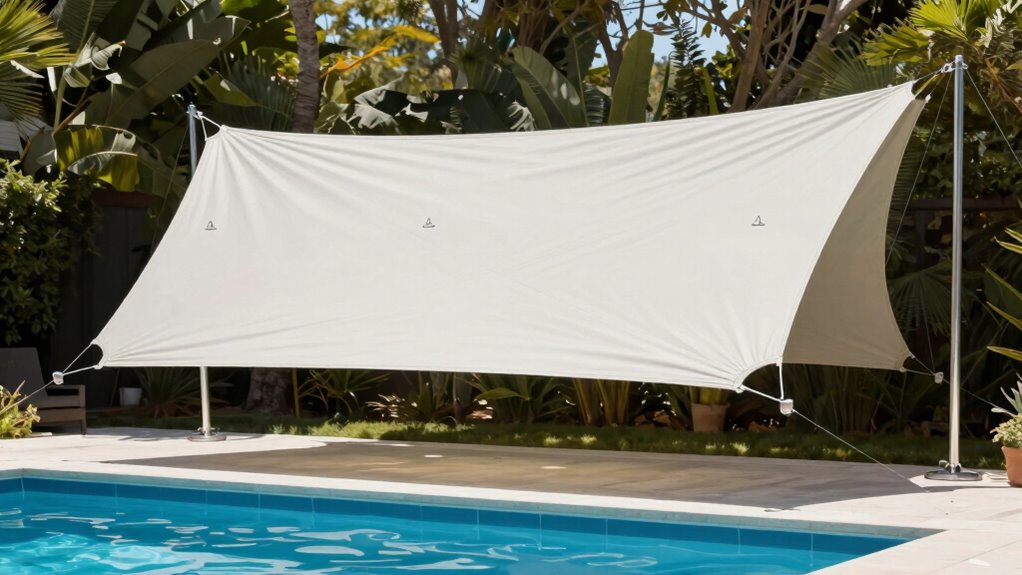
Installing your pool shade sail safely and effectively guarantees it provides reliable protection and enhances your outdoor space. Start by selecting sturdy anchor points, like strong posts or walls, ensuring they can handle the sail’s tension. Proper installation promotes sun safety by minimizing exposure to harmful UV rays while maintaining shade aesthetics. Use high-quality hardware and follow manufacturer instructions carefully. Keep the sail taut to prevent flapping and wear, and check the tension periodically. Consider wind conditions and adjust anchor points as needed. Avoid installing the sail in areas with low clearance or where it could pose a safety hazard. Well-installed shade sails not only improve the look of your pool area but also create a safe, shaded environment for relaxing and enjoying your outdoor space.
How to Maintain and Clean Your Pool Shade Sail for Long-Term Use
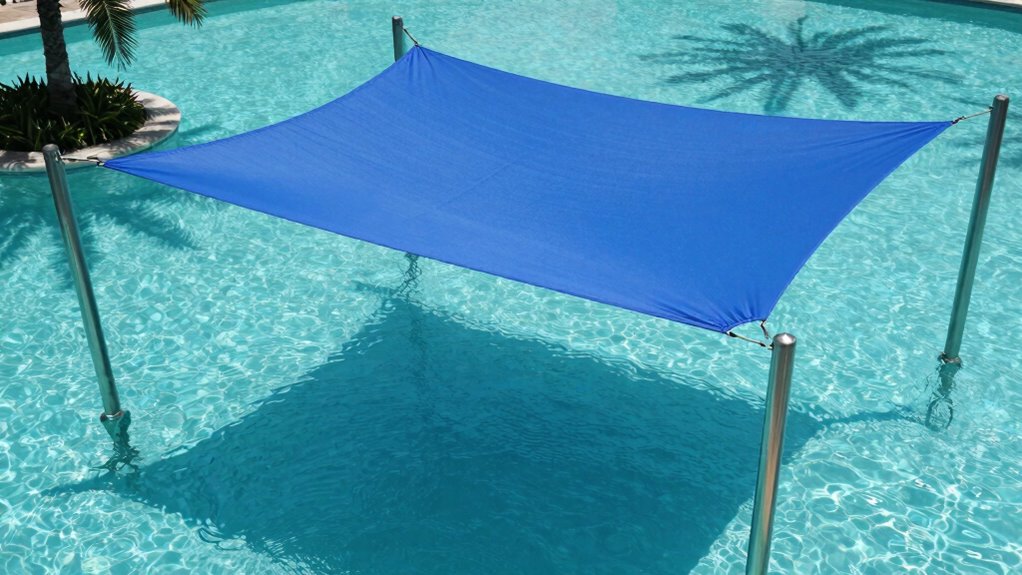
To keep your pool shade sail in top condition for years to come, regular maintenance and cleaning are essential. Proper care preserves fabric durability and keeps color options vibrant. Start by rinsing the sail with gentle water to remove dirt and debris. Avoid harsh chemicals that can damage the fabric. When cleaning stains, use a mild soap solution and a soft brush. To prolong the life of your shade sail, consider these tips:
- Check anchor points regularly for wear and tear
- Tighten any loose fittings
- Store the sail in a dry, shaded area during off-season
- Inspect for UV damage and signs of fabric deterioration
Maintaining your shade sail guarantees it remains functional and attractive, providing reliable UV protection while extending its lifespan.
Frequently Asked Questions
Can Shade Sails Be Installed on Uneven or Sloped Pool Areas?
Yes, you can install shade sails on uneven or sloped pool areas, but you’ll face some installation challenges. You need to carefully plan anchor points to guarantee stability, and adjustable fittings can help accommodate the slope. Choose durable materials designed for outdoor use, as uneven surfaces can put more strain on the sail. With proper planning and quality materials, your shade sail will provide reliable UV protection and last through the seasons.
How Do Shade Sails Perform in Heavy Wind or Storm Conditions?
In heavy wind or storm conditions, your shade sail’s wind resistance is vital. For example, a homeowner faced strong gusts; their well-installed sail held firm because of proper tension and strong anchor points, ensuring storm safety. To stay safe, always remove or temporarily lower shade sails during severe weather, and choose sails designed with high-quality materials that withstand high winds. Proper installation and regular checks help prevent damage.
Are There Specific Safety Codes for Installing Pool Shade Sails?
Yes, there are specific safety codes for installing pool shade sails. You should follow local building regulations and manufacturer guidelines to guarantee safe installation. Use high-quality shade sail materials that meet UV and wind resistance standards. Proper installation safety includes secure anchor points, correct tension, and regular inspections. Always hire professionals if you’re unsure, as adherence to safety codes helps prevent accidents and ensures your shade sail remains secure during storms or high winds.
Can Shade Sails Be Easily Removed and Stored Seasonally?
Think of your shade sail as a seasonal guardian of shade, easily removable and stored when not needed. Removing shade sails is straightforward; you just untie or detach the anchor points. For seasonal storage, fold or roll the sail carefully and keep it in a dry, cool place. This way, you preserve your investment and ensure quick setup next season, keeping your pool area fresh and ready for relaxation.
What Are the Best Practices for Preventing Mold and Mildew on Shade Sails?
To prevent mold and mildew on your shade sails, you should regularly clean them with a mild soap and water solution, making sure you remove dirt and organic debris. Allow them to dry completely before storage or reinstallation to avoid moisture buildup. Additionally, use mold prevention sprays designed for outdoor fabrics, and ensure proper tension and airflow to promote mildew control. These steps keep your shade sails clean and mildew-free year-round.
Conclusion
Think of your pool shade sail as a trusty guardian shielding your oasis from the harsh sun. When chosen, installed, and cared for properly, it becomes a loyal protector, extending your poolside paradise for years to come. Like a gentle canopy over your summer retreat, it transforms your space into a cool, inviting haven. With the right size, strong anchors, and good maintenance, your shade sail will stand tall, guarding your comfort just like a steadfast guardian.