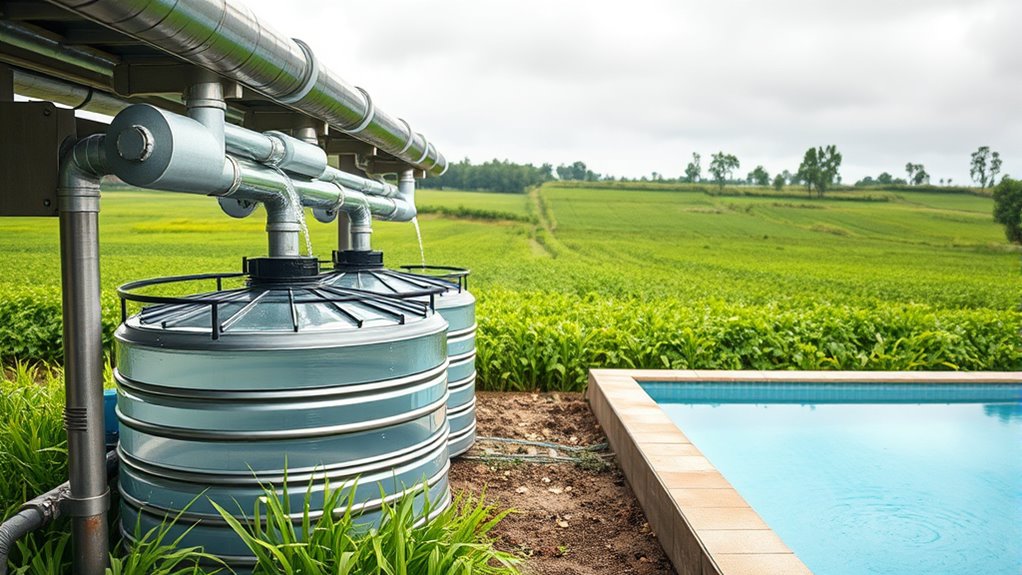

A rainwater harvesting system for irrigation and pools starts by capturing runoff water through gutters and downspouts. You’ll want to install filters and screens to remove debris and contaminants, ensuring clean water enters your storage tank. Proper tank placement in shaded, level areas helps prevent algae and damage, while easy access points simplify maintenance. Planning for future expansion and integrating plumbing with shut-off valves makes your system efficient. If you keep going, you’ll discover how to optimize your setup for lasting performance.
Key Takeaways
- Incorporate multi-stage filters to ensure clean water for irrigation and pools.
- Size storage tanks appropriately based on water demand and rainfall patterns.
- Place tanks in shaded, stable locations to prevent algae growth and damage.
- Use durable, UV-resistant materials with easy access points for maintenance.
- Design system with future expansion and integrated plumbing for efficient water flow.
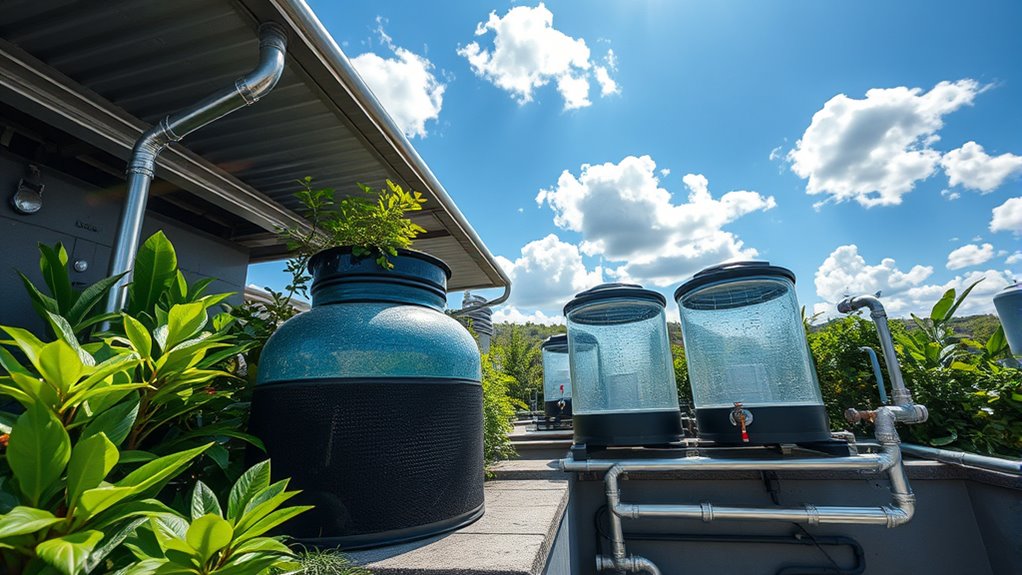
Rainwater harvesting systems offer an effective way to collect and use rainwater, helping you reduce your dependence on municipal water supplies. When setting up such a system for irrigation or pool use, the first step is ensuring proper rainwater filtration. This process removes debris, leaves, and dirt from the water as it flows from your roof or catchment area. A well-designed filtration system is crucial because it prevents contaminants from entering your storage tank and, ultimately, your irrigation or pool water. You’ll want to incorporate multiple levels of filtration, such as screens and fine filters, to ensure clean water. This not only protects your equipment but also extends the lifespan of your system.
Next, the storage tank design plays a vital role in the efficiency of your rainwater harvesting setup. Your tank should be appropriately sized based on your water needs and local rainfall patterns. It’s wise to select a tank made from durable, UV-resistant materials to withstand outdoor conditions. The design of the tank itself influences water quality and ease of use. For example, tanks with a smooth interior surface minimize algae growth and facilitate cleaning. Additionally, consider tanks with easy access points for maintenance, inspection, and water extraction. Proper placement is equally important—installing the tank on a stable, level foundation prevents shifting or damage over time. Positioning it in a shaded area can also reduce algae growth, keeping your stored water cleaner longer.
Connecting your filtration system to the storage tank requires careful planning. You want to ensure water flows smoothly from the catchment to the tank without stagnation or contamination risks. A first-flush diverter is a useful addition—it diverts the initial runoff that may carry dirt and pollutants away from your storage tank. This way, cleaner water enters your system, improving its overall quality. When designing your storage tank system, think about future expansion—adding extra tanks or integrating with existing irrigation or pool systems should be straightforward. Properly designed plumbing, with shut-off valves and filters at strategic points, makes maintenance simple and ensures water quality remains high.
Frequently Asked Questions
What Are the Initial Costs of Installing Rainwater Harvesting Systems?
The initial costs of installing rainwater harvesting systems vary based on size and complexity, typically ranging from $1,000 to $10,000. You should conduct a thorough cost analysis to understand expenses like tanks, filters, and pumps. Funding options, such as grants or low-interest loans, can help offset costs. Planning ahead guarantees you allocate enough budget and explore financial assistance, making the process more affordable and sustainable for your needs.
How Long Do Rainwater Harvesting Components Typically Last?
Rainwater harvesting components typically last 10 to 30 years, depending on their material and maintenance. You can extend your system’s longevity by choosing durable components like UV-resistant tanks and corrosion-proof pipes. Regular inspections and cleaning help prevent wear and tear, ensuring peak performance. Properly maintained, your system’s durability improves, maximizing system longevity and protecting your investment over time.
Are There Specific Regulations Governing Rainwater Harvesting in Certain Areas?
Yes, there are specific regulations governing rainwater harvesting in certain areas. You should check local laws for legal restrictions and permitting requirements before installing a system. Some regions may have restrictions on collection methods or storage capacities, and you might need permits to guarantee compliance. Contact your local government or water authority to understand the rules, so you can install your system legally and avoid potential penalties.
What Maintenance Is Required for Optimal System Performance?
Think of your system as a garden needing care. You should regularly clean filters to keep debris out, like pruning away dead branches. Inspect your pump to make sure it runs smoothly, much like checking a heartbeat. These simple acts prevent clogs and breakdowns, ensuring your rainwater harvesting system delivers clean water efficiently. Consistent maintenance keeps your system healthy, just like tending to a thriving garden.
Can Rainwater Harvesting Systems Be Integrated With Existing Irrigation Setups?
Yes, rainwater harvesting systems can be integrated with your existing irrigation setup. You need to check the rainwater system compatibility to guarantee smooth integration. Be aware of potential integration challenges, like differing water pressures or filtration needs. Usually, it involves installing a diverter, connecting pipes, and possibly adding a pump. Proper planning helps you avoid issues and ensures your system operates efficiently alongside your current irrigation infrastructure.
Conclusion
By installing a rainwater harvesting system, you can sustainably water your garden or fill your pool while reducing your reliance on municipal water. For example, a homeowner in Arizona set up a system that collected rainwater during monsoon season, saving hundreds of gallons each month for irrigation and pool maintenance. With proper design and maintenance, you’ll enjoy cost savings and environmental benefits—making your property more eco-friendly and resilient to droughts.