
TL;DR
A Gardening Know How report says October is a key time to prepare amaryllis for winter flowering, with care depending on whether bulbs were stored dormant or spent summer outdoors. It recommends timing dormant bulbs, protecting plants from frost, avoiding excess water and providing suitable light; blooms commonly take six to eight weeks after potting and watering.
A Gardening Know How report says October is a key month for preparing amaryllis for winter blooms, with different steps for dormant stored bulbs and plants that spent summer outdoors. The timing matters because bulbs typically flower about six to eight weeks after potting and watering, while frost and persistently wet potting mix can damage them.

Get pool and patio gear delivered free with Prime
- Fast, free delivery on millions of items
- Prime Video, Amazon Music and more included
- Member-only deals all year
For bulbs kept dry through a rest period, the report recommends checking whether they are ready to grow again. A cool, dry rest of roughly eight to 10 weeks is typical. A firm bulb is generally a better candidate for restarting than one with soft spots, mushiness or fuzzy mold. A green tip can indicate growth is returning, but the report says it is not necessary to wait for one before potting.
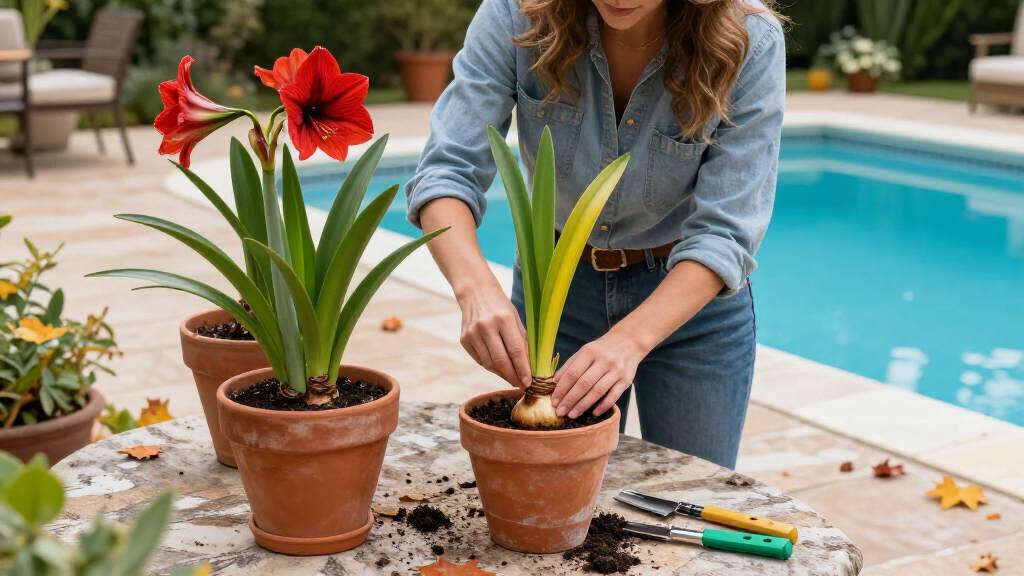
Bulbs intended for December flowers can be potted in mid-to-late October, based on the usual six-to-eight-week flowering period. Results vary, and the report says some bulbs bloom faster or take longer. Potting another bulb a week or two later may spread flowering into January, but a particular bloom date is not guaranteed.
Plants that were outdoors need a separate assessment. Amaryllis are tropical bulbs, and frost can injure or kill them; the report advises moving potted plants inside when frost is forecast. It cites temperatures below about 35°F (2°C) as a risk. For an outdoor plant whose foliage has died back naturally, a cool, dim rest around 50–55°F (10–13°C) for eight to 10 weeks may help prepare it to flower again. Healthy green leaves do not need to be forced into dormancy.
Timing Shapes Winter Flowering
October care affects both whether a bulb is protected from cold and when it may flower. Starting a rested bulb too early or too late can shift its bloom away from the holidays; even with careful timing, the six-to-eight-week estimate is not a promise of flowers on a specific date.
Water management is also central to the advice. A dormant or newly potted bulb uses little water before leaves develop, and waterlogged mix can cause rot. The report recommends watering after planting, letting the pot drain and waiting for the mix to begin drying before watering again. Once growth reaches 2–3 inches (5–8 cm), it says to water when the top inch of mix feels dry, without leaving the pot standing in water.
For readers planning holiday displays, the practical takeaway is to check each plant’s condition and history rather than apply one routine to every bulb. Outdoor plants may not be on a holiday flowering schedule, even if they are brought inside in October.
Products Worth Considering

Philips Hue Festavia 130-Foot Indoor/Outdoor Smart String Lights, 500 LEDs

eufy Security E30 4K Indoor Pan and Tilt Camera, 2-Pack

Philips Hue Play HDMI Sync Box 4K
As an affiliate, we earn on qualifying purchases.
Stored Bulbs and Outdoor Plants
The report distinguishes store-bought holiday amaryllis, which are Hippeastrum bulbs native to Central and South America, from bulbs that have spent summer outdoors. The former are commonly timed for seasonal indoor flowering; outdoor plants may need a rest after the growing season and may bloom later.
Repotting is not automatically required each October. Amaryllis generally flower well in a snug pot and may stay in the same one for three or four years. The report suggests repotting if the bulb presses against the pot, roots emerge from drainage holes, or old mix stays wet for days. A new pot should be only 1–2 inches (2.5–5 cm) wider than the bulb, have a drainage hole, and leave at least the top third of the bulb above the soil.
As leaves and stalks develop, the report recommends a bright, warm location—around 70–75°F (21–24°C)—with at least four hours of direct sun. Turning the pot periodically can help keep the stalk straight. It also advises beginning fertilizer only after growth starts; the supplied report excerpt ends during its explanation of feeding, so it does not provide the complete feeding schedule.
“From the day it’s potted and watered, a bulb usually needs six to eight weeks to flower.”
— Gardening Know How report
Bloom Dates Remain Variable
The report’s flowering window is an estimate: it says some bulbs bloom sooner and others later. A Christmas bloom cannot be assured, and the source does not provide a cultivar-by-cultivar schedule or a way to predict the exact flowering date from a bulb’s appearance alone.
It is also not clear from the supplied excerpt how long a plant with healthy green foliage should continue growing before a rest, or what precise fertilizer product and dosage to use. The article text provided stops partway through its feeding discussion. Local frost timing and conditions vary as well, so the temperature guidance should not be treated as a region-specific forecast.
Monitor Growth and Weather
Check stored bulbs for firmness and the length of their rest, then pot suitable bulbs according to the desired approximate flowering period. For plants outdoors, watch local forecasts and bring containers inside before frost. After potting, let excess water drain, check the mix before watering again, and move plants to a bright, warm spot as growth appears.
Over the following weeks, monitor stalk and leaf development, rotate the pot and support a top-heavy stalk if needed. The next milestone is visible growth and, later, bud development; the exact timing will depend on the bulb and its conditions.
Key Questions
When should I pot an amaryllis for December flowers?
The report says bulbs usually flower six to eight weeks after potting and watering, making mid-to-late October a possible window for December blooms. The timing is approximate, not a guarantee.
Should outdoor amaryllis be brought inside in October?
Bring potted plants indoors when frost is forecast. The report says amaryllis are frost-sensitive and cites temperatures below about 35°F (2°C) as potentially damaging.
How often should I water a newly potted bulb?
Water thoroughly once after potting and let the pot drain. Before leaves develop, the bulb uses little water; check that the mix is starting to dry before watering again, and do not leave the pot standing in water.
Does every amaryllis need repotting in October?
No. The report says bulbs can often remain in a snug pot for three or four years. Repot when the bulb presses against the pot, roots emerge through drainage holes, or the old mix remains wet for days.
Will an outdoor amaryllis bloom at Christmas after coming inside?
Not necessarily. The report says outdoor plants may need a rest before flowering again, and blooms may not appear until late winter. Their timing depends on foliage and summer conditions.
Source: rss