TL;DR

Get pool and patio gear delivered free with Prime
- Fast, free delivery on millions of items
- Prime Video, Amazon Music and more included
- Member-only deals all year
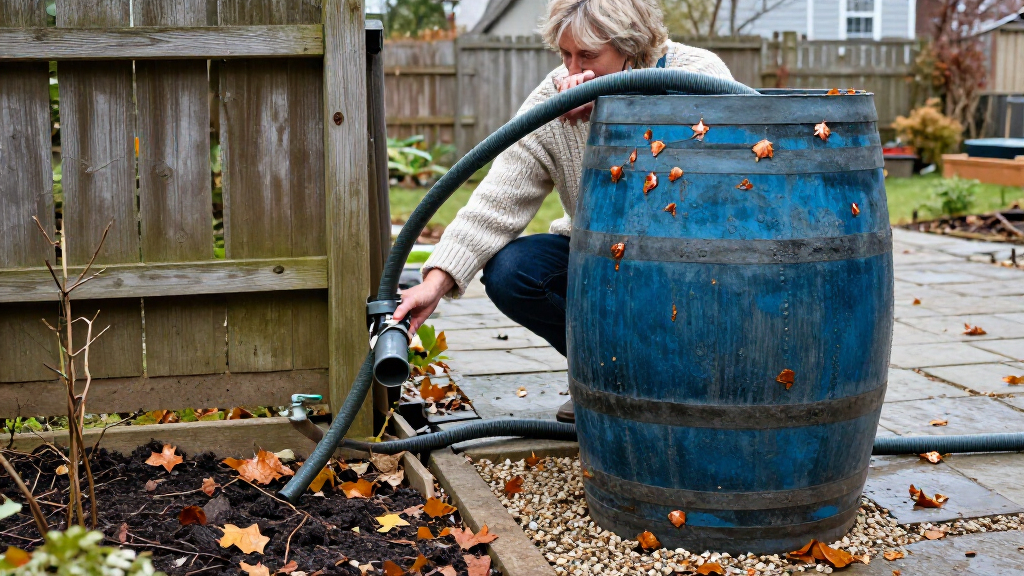
A seasonal rain barrel needs more than draining before winter: its downspout or diverter must be returned to a safe route for roof runoff. Extension guidance recommends completing the work before the first hard freeze, following the equipment instructions, and directing water away from the building and walking routes.
A seasonal rain barrel should be drained and stored before freezing weather, but winter preparation is not complete until the downspout or diverter is restored to a safe route for roof runoff. A Planet Natural report, drawing on guidance from Rutgers Cooperative Extension and the University of Minnesota, says the outlet should direct water away from the building and away from sidewalks or other walking routes where it could create ice.
After the barrel is disconnected, rain will still run off the roof. The homeowner needs to trace the system from the gutter to its winter discharge point and confirm which parts must be removed, switched or reconnected. Setups differ: some use a diverter, while others connect more directly to a downspout. The report advises consulting the manufacturer’s instructions or installer rather than assuming another property’s shutdown steps will apply.
Rutgers Cooperative Extension recommends winterizing a seasonal rain barrel before the first hard freeze. The work includes using or draining the remaining stored water, draining removable fittings and accessories as directed, and restoring the downspout’s winter arrangement. Rutgers describes replacing a ground elbow so water flows away from the house; Minnesota’s guidance also addresses the discharge location and the risk of ice on walking surfaces.
The University of Minnesota’s rain-barrel guidance includes removing the hose and screen, draining and cleaning the equipment, and storing the barrel for winter. A barrel left outdoors should be stored as its instructions specify—such as inverted or appropriately covered—so it cannot refill with rain or snow. The report recommends keeping small removable parts together and checking the restored outlet for a clear, secure route.
A Safe Route for Winter Runoff
The outlet matters because disconnecting a barrel changes where roof water goes. If the downspout is left ending beside a wall, runoff may collect near the building; if it crosses a walkway, freezing temperatures can create a slippery patch. The specific result depends on the property and weather, but the report identifies both locations as problems to avoid.
Planning the route before cold weather also gives homeowners time to find a missing elbow or check unfamiliar fittings without trying to do so in sleet or after a freeze. The practical takeaway is to treat drainage and storage as one job: putting the container away does not resolve what happens to the next rainfall.
Collected water should not be treated as drinking water. The report says an ordinary garden rain barrel is not a drinking-water system and suggests using suitable stored water for ornamental planting rather than assuming it is appropriate for household purposes.
Products Worth Considering

eufy Security 5-Piece Home Alarm Kit

Dyson V8 Cyclone Cordless Vacuum

Philips Hue Smart LED Candle Bulbs, B39, E12, 2-Pack
As an affiliate, we earn on qualifying purchases.
What Winterization Guidance Says
This report concerns a seasonal garden rain barrel in a climate where water may freeze. It is not a universal shutdown procedure for permanently installed cisterns, underground systems or equipment designed for winter operation; those systems need their own instructions.
The report combines practical recommendations with guidance attributed to two extension sources. Rutgers Cooperative Extension advises completing seasonal winterization before the first hard freeze. The University of Minnesota’s guidance covers draining, cleaning and storing the barrel and removable parts. Product designs and property drainage conditions differ, so these sources do not provide one sequence that fits every installation.
Property Drainage Varies
The report does not identify a single winter outlet that is suitable for every home. Site conditions, downspout designs and local requirements vary, and the source material does not assess individual properties. It advises choosing a controlled discharge route that suits the site and does not direct water toward the building or a walking surface.
Homeowners may also need product-specific instructions for draining taps and fittings, storing the barrel, or changing an unfamiliar diverter. Persistent ponding, water problems near the building or an unclear discharge route may require site-specific advice. The report does not prescribe a solution for buried pipes or more complex drainage work.
Check the Route Before Freezing
Before cold weather arrives, homeowners can trace the route from the gutter to the discharge point, consult the barrel and diverter instructions, and make sure the needed winter outlet parts are available. They can then drain and store the barrel and removable components as directed, reconnect the winter downspout arrangement, and confirm that the outlet is secure and clear.
If conditions allow, the report recommends checking the route during a later rainfall from a safe position to see where water actually travels. The job is complete only when both the barrel is stored so it cannot refill and roof runoff has a safe winter destination.
Key Questions
Is draining the rain barrel enough for winter?
No. The roof will continue to shed water after the barrel is disconnected. Restore the downspout or diverter’s winter route so runoff goes to a suitable place.
When should I winterize a seasonal rain barrel?
Rutgers Cooperative Extension recommends doing it before the first hard freeze. Allow time to drain the barrel, handle removable parts and reconnect the winter outlet.
Where should the downspout send water?
The report says to direct discharge away from the building and avoid sidewalks or other walking routes where water could freeze. The right route depends on the property; consult the equipment instructions or seek site-specific advice if it is unclear.
Can I leave an empty barrel outside?
Possibly, if the product instructions allow it. Store it as directed—such as inverted or appropriately covered—and prevent it from collecting rain or snow. Secure it against wind and keep the outlet accessible for inspection.
Is rain-barrel water safe to drink?
The report says an ordinary garden rain barrel is not a drinking-water system. Do not assume its collected water is suitable for drinking or household use.
Source: planetnatural.com