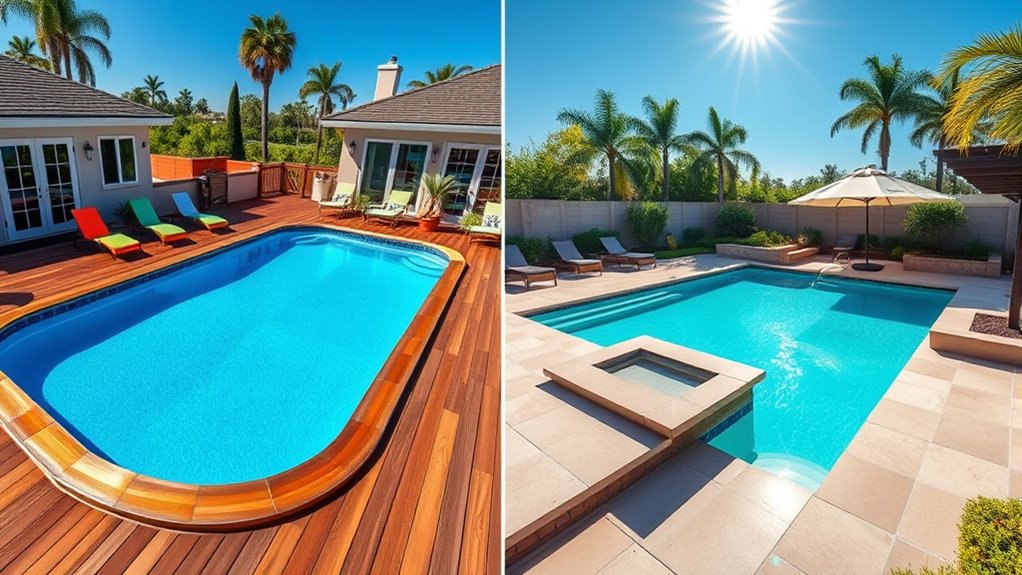

Choosing between above-ground and in-ground pools depends on your budget, desired look, and how much maintenance you’re willing to do. Above-ground pools are budget-friendly, quick to install, and flexible in placement, but they have limited design options and can require more upkeep. In-ground pools cost more, take longer to build, and offer endless customization to match your backyard style. To find out which option fits best, explore the benefits and considerations of each further.
Key Takeaways
- Budget and installation ease favor above-ground pools for quick, cost-effective setup; in-ground pools involve higher costs and longer installation times.
- In-ground pools offer more design flexibility, custom shapes, and aesthetic options compared to limited above-ground pool styles.
- Above-ground pools are portable and easier to relocate, while in-ground pools require careful planning and permanent installation.
- Maintenance for above-ground pools is simpler but may require more frequent cleaning; in-ground pools have complex systems needing regular upkeep.
- Choose based on lifestyle, long-term investment, and maintenance capacity—above-ground for affordability and convenience; in-ground for customization and luxury.
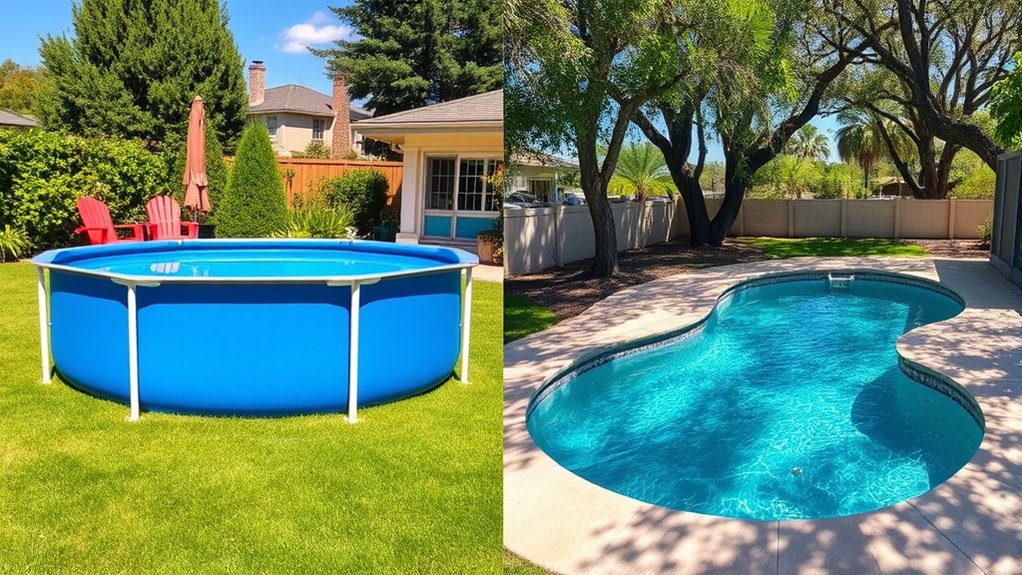
Selecting the right pool type is a essential step in creating your ideal backyard oasis. When choosing between above-ground and in-ground pools, you need to carefully consider design considerations and maintenance challenges to make an informed decision. Your backyard’s layout, your budget, and your long-term goals all influence which option fits best.
Above-ground pools are often praised for their affordability and ease of installation. They typically come in pre-made kits that you can set up with minimal professional help, saving you both time and money. Design considerations for these pools are somewhat limited; they come in standard shapes and sizes, which might restrict how you can customize your backyard aesthetic. However, they do offer flexibility in terms of location—since you can often move them if needed—and minimal construction work. On the flip side, maintenance challenges with above-ground pools can be significant. They tend to accumulate dirt and debris more easily because of their exposed structure, and their walls are more susceptible to algae growth if not properly chlorinated. The filters and pumps are usually less powerful, so you’ll need to stay vigilant about cleaning and chemical balancing to keep the water clear and safe.
Above-ground pools are budget-friendly, easy to install, but require frequent cleaning and maintenance.
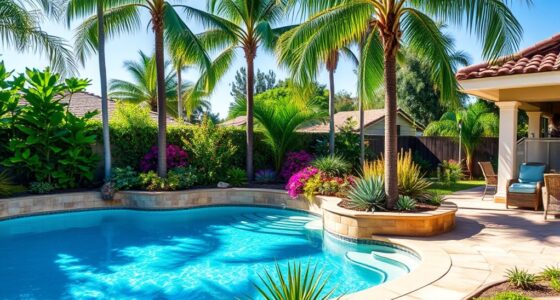
In contrast, in-ground pools provide a broader spectrum of design options. You can customize shapes, sizes, and even add features like waterfalls, lighting, or tanning ledges, making them a true centerpiece of your outdoor space. This flexibility allows you to craft a backyard that aligns perfectly with your personal style and landscape. But all these design considerations come with increased costs and longer installation times, often requiring professional excavation and construction. Maintenance challenges are also more involved; in-ground pools tend to have more complex plumbing and filtration systems, which can be harder to maintain but often result in better water quality. They may require more frequent cleaning, chemical balancing, and equipment inspections, especially if you choose features like waterfalls or extensive decking. Additionally, reliable backup power solutions can help ensure your filtration systems stay operational during power outages, maintaining water quality and safety.
Ultimately, your choice hinges on balancing these design considerations and maintenance challenges against your budget and lifestyle. If you want a quick, cost-effective solution and don’t mind a more straightforward maintenance routine, an above-ground pool could be perfect. If you’re aiming for a luxurious, customized backyard feature and are prepared for ongoing upkeep, an in-ground pool might be the better fit. Either way, understanding these factors helps you select a pool that enhances your outdoor space while aligning with your practical needs.
Frequently Asked Questions
Which Pool Type Is More Environmentally Friendly?
An above-ground pool is more environmentally friendly because it typically uses less pool materials and requires less energy to install and maintain. You can also focus on water conservation by covering your pool when not in use, regardless of type. In-ground pools often involve more materials and energy for construction, making them less eco-friendly. By choosing an above-ground pool and practicing water-saving habits, you minimize your environmental impact.
How Do Maintenance Costs Compare Between Above-Ground and In-Ground Pools?
Many believe in the myth that in-ground pools always cost more to maintain, but the truth is, maintenance costs vary based on size, materials, and usage. Generally, above-ground pools have lower initial setup and repair expenses, making their cost comparison more affordable over time. However, in-ground pools might incur higher repair expenses due to complex systems and structural issues, so factor these into your decision.
Can I Install a Pool Without Professional Help?
You can install a pool without professional help if you’re comfortable with DIY installation. You’ll need basic tool requirements like a shovel, level, and possibly a power drill. Follow the manufacturer’s instructions carefully, and consider watching online tutorials to guide you through the process. Keep in mind that some pools, especially in-ground types, might require permits or specialized skills, so assess your experience before starting a DIY project.
What Safety Features Are Available for Each Pool Type?
Like a knight’s armor, safety features protect your pool. Both pool types offer pool cover options to prevent debris and accidental falls. Fencing safety is essential, with regulations requiring secure barriers around in-ground pools and lockable fences for above-ground pools. Consider alarms and safety nets for added protection. These features help keep everyone safe, turning your backyard into a fortress of fun and security.
How Long Does It Take to Install Each Type of Pool?
The installation timeline varies: above-ground pools typically take a few days to a week, thanks to simpler construction duration. In-ground pools usually require several weeks, sometimes up to two or three, because of excavation, foundation work, and finishing touches. You should plan accordingly, as the construction duration for in-ground pools is longer, but it offers a more permanent, customizable swimming area.
Conclusion
Ultimately, choosing between above-ground and in-ground pools is like selecting the perfect piece of jewelry—each has its unique charm and appeal. Think about your lifestyle, budget, and space, then picture your ideal oasis. Whichever you pick, it’ll be the centerpiece of your backyard, transforming it into a sparkling treasure trove of relaxation and fun. Make your decision with confidence, and soon, you’ll be diving into your personal paradise, where every splash feels like a stroke of genius.