When choosing pool materials, consider your budget, maintenance preferences, and desired longevity. Concrete offers customization and durability but requires more upkeep, while fiberglass is quick to install, low-maintenance, and resistant to cracking. Vinyl pools are budget-friendly with easy installation, but liners need replacing over time. Steel provides a sturdy middle ground with manageable upkeep. Knowing the benefits and challenges of each helps you decide which fits your lifestyle best—explore further to find the perfect match.
Key Takeaways
- Consider your budget and long-term costs, as concrete is more expensive upfront but offers customization; fiberglass and vinyl are more affordable initially.
- Evaluate maintenance needs: concrete requires regular sealing, while fiberglass and vinyl pools need less upkeep and fewer chemical treatments.
- Decide on design flexibility: concrete pools allow bespoke shapes and features; fiberglass and vinyl have limited options.
- Assess durability: concrete is highly durable but prone to cracking; fiberglass resists cracking and is low-maintenance; vinyl liners need replacement every 7-15 years.
- Think about installation time: fiberglass pools are quick to install (about one week), while concrete pools are labor-intensive and take longer to complete.

Are you unsure which pool material best suits your needs? Choosing the right material is a major decision that impacts your pool’s durability, appearance, and long-term costs. When considering options, you’ll want to think about pool maintenance, installation costs, and how each material aligns with your lifestyle and budget. Concrete, fiberglass, vinyl, and steel each bring unique benefits and challenges, so understanding these differences will help you make an informed choice.
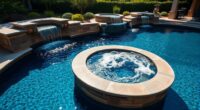
Concrete pools are incredibly durable and customizable, allowing you to design a pool that matches your exact specifications. They’re perfect if you want a luxurious, permanent feature that can be shaped into any size or style. However, their installation costs tend to be higher upfront due to the labor-intensive process of pouring and curing concrete. Plus, concrete pools require more ongoing maintenance, such as sealing and resurfacing every few years to prevent cracks and staining. If you’re prepared for the maintenance and want a pool built to last, concrete could be a solid investment. Additionally, concrete’s versatility in design makes it a popular option for custom features like waterfalls or spas.
Concrete pools are durable and customizable, ideal for a luxurious, long-lasting backyard feature.
Fiberglass pools come pre-molded and are quick to install, often within a week. They’re a popular choice if you’re concerned about installation costs and want a low-maintenance option. The smooth surface of fiberglass resists algae and reduces the need for chemicals, making pool maintenance simpler over time. Though they come in a limited range of shapes and sizes, fiberglass pools are highly durable and resistant to cracking. Their affordability and ease of installation make them attractive, especially if you want to get swimming sooner rather than later. Keep in mind, though, that fiberglass pools are generally more expensive than vinyl but less costly than concrete once installed.
Vinyl pools feature a flexible liner stretched over a frame, offering a budget-friendly option with a variety of shapes and sizes. Installation costs are typically lower compared to concrete, and maintenance is straightforward since the liner can be replaced if it becomes damaged. However, the liner can wear out over time, requiring replacements every 7-15 years, which adds to long-term pool maintenance costs. Vinyl pools are ideal if you want a quick installation and a customizable shape without a hefty price tag.
Steel pools use durable metal walls, often combined with liners for a finished look. They’re a good middle ground regarding installation costs and durability. Steel is resistant to damage and can be installed relatively quickly, making them a reliable choice for many homeowners. Maintenance is manageable, but you should be aware of potential corrosion issues over time, especially in harsher climates. If you’re seeking a sturdy, cost-effective solution with moderate maintenance needs, steel pools could be the right fit.
Ultimately, your choice depends on your budget, how much time you want to invest in pool maintenance, and your aesthetic preferences. Each material offers distinct advantages, so weigh these factors carefully to find the best pool type for your lifestyle.
Frequently Asked Questions
Which Pool Material Is Most Environmentally Friendly?
You’ll find that concrete pools are often the most eco-friendly options because they use sustainable materials and can be customized to reduce chemical use. They also last longer, meaning less frequent replacements. Fiberglass pools are also eco-conscious, thanks to their durability and lower maintenance needs. Vinyl and steel pools may have higher environmental impacts due to manufacturing processes and shorter lifespans. Overall, concrete and fiberglass stand out as the most sustainable choices for environmentally conscious pool owners.
How Do Maintenance Costs Compare Among Different Pool Types?
If you choose fiberglass, you’ll find maintenance costs tend to be lower, with less frequent upkeep needed. For example, a homeowner reported spending half as much on maintenance over five years compared to a concrete pool. The cost comparison shows vinyl pools require moderate maintenance with cleaning and liner checks, while steel pools might need occasional repainting. Your maintenance frequency and costs depend on the material you pick, impacting your overall budget.
Are There Specific Climate Considerations for Each Pool Material?
You should consider climate adaptability and seasonal durability when choosing pool materials. Concrete pools handle extreme weather well and are highly durable in cold climates, but they may crack in freeze-thaw cycles. Fiberglass pools resist temperature changes and are low-maintenance in most climates. Vinyl pools are sensitive to temperature fluctuations, especially in cold areas, while steel pools offer good seasonal durability but need proper corrosion protection in humid or salty environments.
What Is the Typical Lifespan of Each Pool Material?
You might worry about pool longevity, but each material offers solid durability. Concrete pools last 25-50 years, making them highly durable. Fiberglass pools typically endure 20-30 years with minimal maintenance. Vinyl pools usually last 10-15 years, and steel pools can reach 20-30 years if properly maintained. For the best lifespan comparison, choose based on your climate, budget, and desired maintenance level, knowing each material’s durability varies.
Can Pool Materials Be Customized in Design and Shape?
Yes, you can customize pool materials in design and shape. Pool design flexibility allows you to create unique shapes, sizes, and features tailored to your preferences. Structural customization is often possible with concrete, which offers the most flexibility, while fiberglass and vinyl pools have more limited options. Steel pools can also be customized, but they typically focus on structural strength. Overall, you have many options to achieve your ideal pool.
Conclusion
So, now that you’ve weighed your options—concrete, fiberglass, vinyl, or steel—just remember, whichever you choose, it’s still going to be a giant hole in your yard. But hey, at least you’ll have a sparkling oasis to brag about while dodging the inevitable cracks, tears, or rust. Because nothing says “perfect backyard” like spending your weekends patching up your pool, right? Happy swimming, brave pool owner!