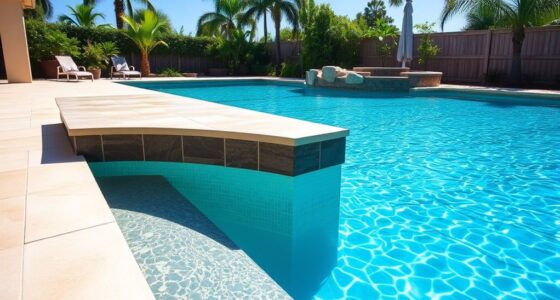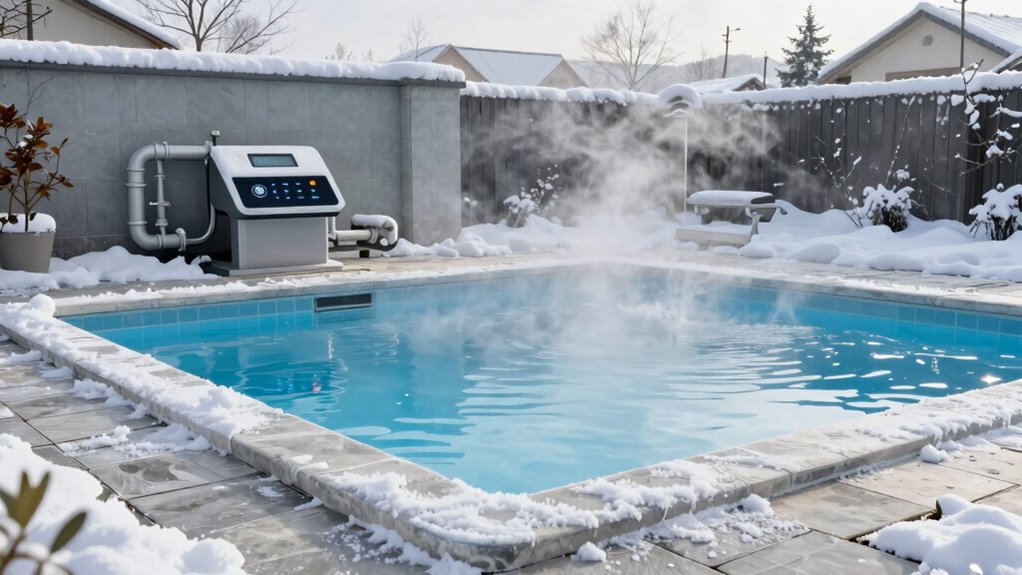

To guarantee effective pool heating in cold climates, you need to plan your entire system carefully. Relying on a single heater or quick fixes won’t cut it. You should incorporate solar collectors, insulation, and proper system integration to maximize heat retention and energy efficiency. When every component works together seamlessly, you’ll enjoy warmer water all year round. Stick around to discover how smart planning makes all the difference in cold-climate pool heating.

Get pool and patio gear delivered free — and shop member deals
- Fast, free delivery on millions of items
- Access to Prime Big Deal Days deals on October 6–7
- Prime Video, Amazon Music and more included
Key Takeaways
- Comprehensive system planning ensures all components work together to optimize heat retention and energy efficiency.
- Proper placement and seasonal adjustment of solar collectors maximize sunlight absorption in cold climates.
- Effective insulation of pool surfaces, covers, and pipes reduces heat loss and maintains warmth longer.
- Integrating eco-friendly technologies and smart controls enhances system performance and sustainability.
- A holistic approach prevents weak points and guarantees consistent, cost-effective heating throughout the year.
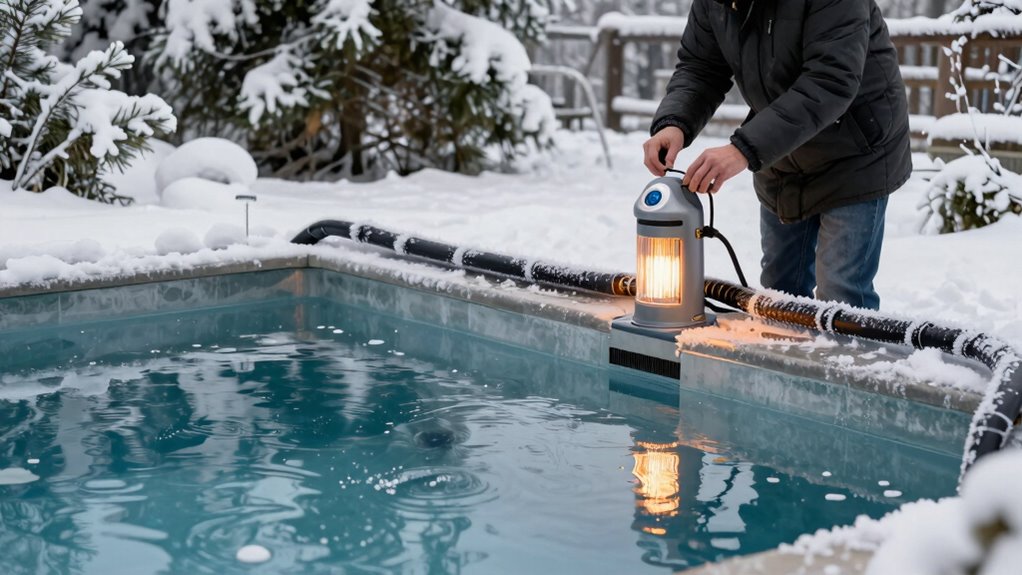
Have you ever wondered how to enjoy a warm pool even when the temperature drops? The secret lies in planning your entire heating system carefully, especially in cold climates. If you want your pool to stay comfortable year-round, you need to consider how your system’s components work together, rather than relying on a single heater or quick fix. This means paying close attention to how you optimize solar efficiency and implement insulation techniques, which are vital in reducing energy loss and maximizing heat retention.
Effective pool heating combines solar efficiency and insulation for year-round warmth, reducing energy costs.
When it comes to solar efficiency, your goal is to get the most out of the sun’s energy. You can do this by choosing high-quality solar collectors designed to absorb maximum sunlight, even on overcast days. Positioning these collectors correctly—ideally facing south and at an ideal tilt—will also enhance their efficiency. Keep in mind that in colder months, the sun’s angle is lower, so adjusting the angle of your collectors can make a big difference. Additionally, integrating a solar cover or blanket can trap the heat your system generates, preventing heat loss during the night or when the pool isn’t in use. These covers are simple but remarkably effective at reducing evaporation and energy waste, which is especially important in colder weather.
But solar efficiency alone isn’t enough. You need to implement solid insulation techniques to keep the heat in once it’s generated. Insulating your pool’s sides and bottom with foam or similar materials minimizes heat transfer to the surrounding ground. Installing a well-fitted, insulated cover over the entire pool can greatly cut down on heat loss, especially in winter. Also, consider insulating pipes and equipment pads to prevent heat from escaping through plumbing. The better your insulation, the less energy you’ll need to keep the water warm, making your system more efficient and cost-effective. Moreover, proper system integration ensures that all components work seamlessly, reducing unnecessary energy consumption and improving overall performance. Additionally, understanding the importance of biodiversity and sustainable practices in maintaining a resilient environment can help you choose eco-friendly solutions that support long-term efficiency. Incorporating innovative technologies such as smart thermostats and automated controls can further optimize your system’s performance and energy savings. Implementing comprehensive system planning from the outset will help identify weak points and create a cohesive approach for optimal heat retention.
In cold climates, your entire system needs to work in harmony. Relying solely on a heater or solar panels won’t cut it unless you’ve planned how they complement each other. Combining efficient solar collection with robust insulation techniques ensures your pool retains heat longer and requires less energy to maintain a comfortable temperature. Additionally, understanding the importance of system planning can help you identify potential weak points and improve your pool’s thermal performance. By approaching your pool heating system with this broad mindset, you’ll enjoy warm water even during the chilliest months, without breaking the bank. Proper planning and integration make all the difference in transforming a cold, unused pool into a cozy retreat all year round.
As an affiliate, we earn on qualifying purchases.
Frequently Asked Questions
How Long Does It Take to Heat a Pool in Cold Climates?
It typically takes 24 to 72 hours to heat a pool in cold climates, depending on factors like pool size, heater type, and outdoor temperatures. Using a pool cover helps retain heat and speeds up the process, while effective insulation strategies minimize heat loss. To achieve desired temperatures faster, plan your system carefully and combine these methods, ensuring your pool warms up efficiently even in chilly weather.
What Is the Most Energy-Efficient Pool Heating Method for Cold Climates?
The most energy-efficient pool heating method for cold climates is a high-quality heat pump combined with proper pool insulation. A well-insulated pool retains heat better, reducing energy use, while a heat pump offers excellent efficiency by extracting heat from the air. Make certain your pool is properly insulated around the sides and bottom, and choose a heat pump with high efficiency ratings to maximize energy savings and maintain comfortable water temperatures.
Can Solar Pool Heaters Work Effectively in Freezing Temperatures?
While solar pool heaters might seem promising, they aren’t the best choice in freezing temperatures. As wind chill drops, solar panel efficiency declines considerably, making heating less effective. You might find the warmth you seek isn’t as consistent or reliable as you’d hope. To truly keep your pool warm in cold climates, combining solar with other heating methods or planning a thorough system guarantees a cozy experience despite the chill.
How Often Should Pool Heating Systems Be Maintained in Winter?
You should perform regular pool equipment maintenance during winter, ideally every 4 to 6 weeks, to keep your system running smoothly. A proper maintenance schedule helps prevent freeze damage, ensures efficient heating, and prolongs equipment lifespan. Check filters, pumps, and valves frequently, and clear debris. Regular inspections allow you to spot issues early, making sure your pool stays warm and functional throughout the cold months.
What Are the Costs Associated With Heating a Pool in Cold Weather?
In the days of yore, heating your pool in cold weather costs vary widely. You’ll spend on energy bills, especially if you don’t use insulation techniques or a pool cover. Pool cover benefits include retaining heat and reducing evaporation, which cuts costs. Proper insulation and a good cover can markedly lower your energy expenses, making winter swimming more affordable. Expect to budget for equipment, installation, and ongoing energy consumption.
Conclusion
To keep your pool warm in cold climates, you need to plan your entire heating system carefully. Skipping this step can lead to significant energy waste and higher costs—up to 50% more in some cases. By designing a thorough system, you guarantee efficient heating and year-round enjoyment. Remember, a well-planned approach isn’t just smart; it’s essential. So, take the time now, and you’ll enjoy a cozy pool all season long.
Halloween Picks
halloween
As an affiliate, we earn on qualifying purchases.