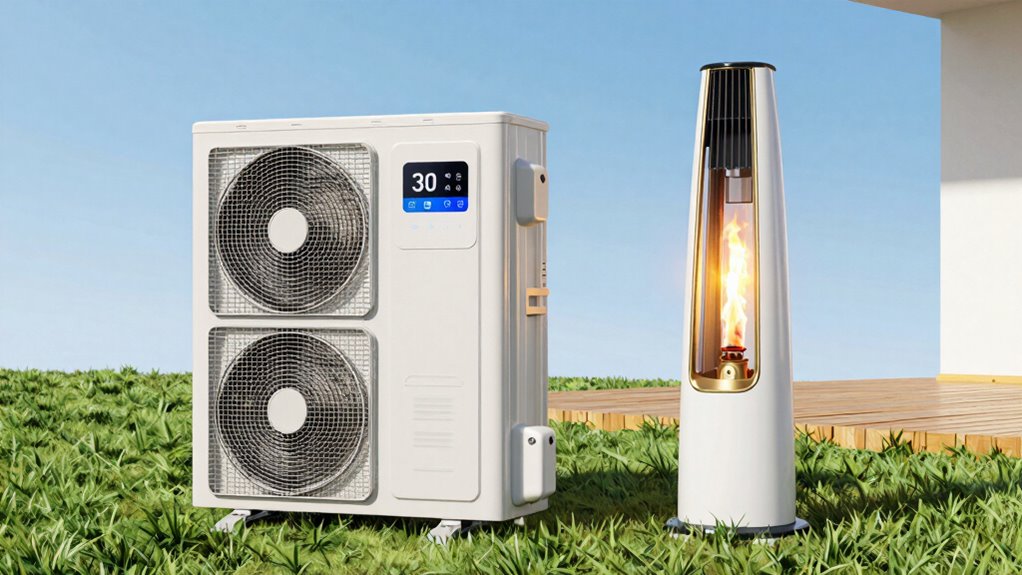
Heat pumps usually cost less to run than gas heaters because they’re more efficient at extracting heat from the environment, reducing your fuel bills and environmental impact. Gas heaters can be cheaper upfront but tend to have higher ongoing fuel and maintenance costs. Over time, the efficiency and lower energy use of heat pumps save you more money. To discover which option suits your budget best and how to maximize your savings, keep exploring these options further.
Key Takeaways
- Heat pumps typically have lower operational costs due to higher energy efficiency.
- Gas heaters usually incur higher ongoing fuel expenses, increasing overall running costs.
- Climate conditions and energy prices significantly influence which system is cheaper to operate.
- Proper insulation and smart controls can reduce the operational expenses of heat pumps.
- Although heat pumps have higher initial costs, they generally save money long-term through lower energy bills.
How Do Heat Pumps and Gas Heaters Work?
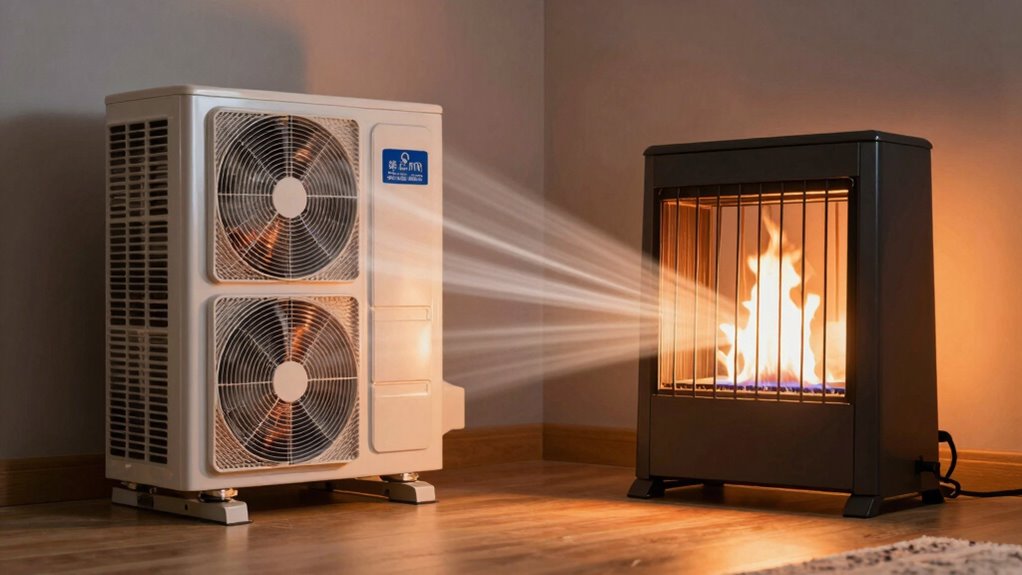
To understand how heat pumps and gas heaters work, it’s important to recognize their different methods of generating heat. Heat pumps operate through a thermal cycle that uses refrigerant flow to transfer heat from the outside air to your home. The refrigerant absorbs heat as it evaporates, then releases it indoors as it condenses. This process allows the system to efficiently move heat rather than generate it directly. Additionally, thermal efficiency plays a crucial role in determining their running costs and overall performance. Heat pumps generally have higher energy efficiency compared to gas heaters, especially in moderate climates. Gas heaters, on the other hand, burn natural gas or propane to produce heat quickly. The combustion heats a heat exchanger, which then warms the air or water circulated inside your home. While gas heaters generate heat directly through combustion, heat pumps rely on refrigerant flow within a thermal cycle to transfer heat, making their operation fundamentally different. Moreover, operating costs can vary significantly depending on local energy prices and climate conditions. A maintenance requirement also influences the overall running expenses of each system over time.
What Affects the Operating Costs of Heating Systems?
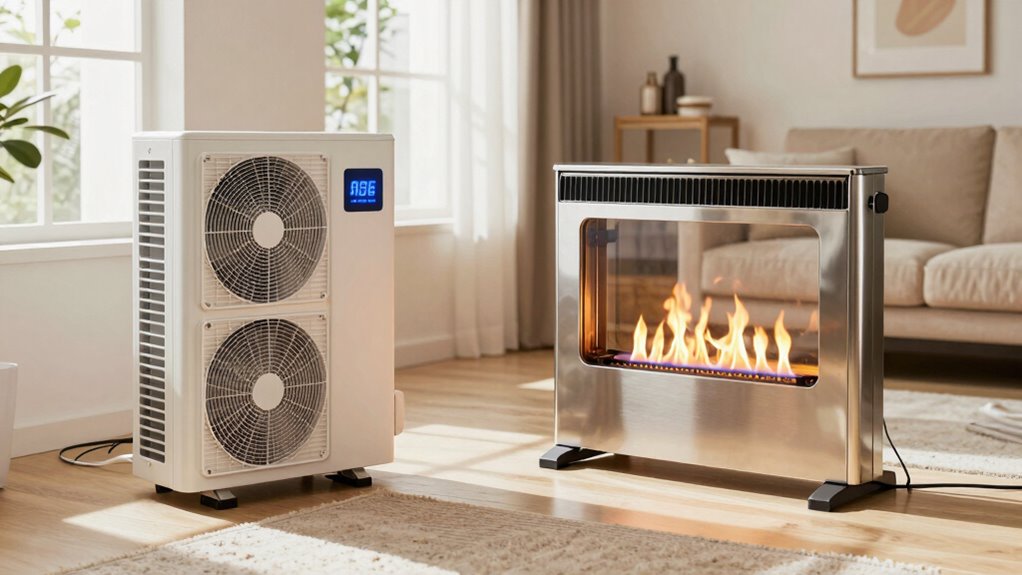
The operating costs of heating systems are influenced by several key factors, including energy prices, system efficiency, and climate conditions. Higher energy prices increase running costs, especially if your system consumes a lot of power. System efficiency also plays a vital role; more efficient units use less energy to produce the same heat, reducing expenses over time. Climate conditions matter too—colder weather means longer heating seasons and higher costs. Additionally, installation costs impact your overall investment, but they don’t directly affect ongoing expenses. Maintenance requirements are another factor to take into account; systems needing frequent repairs or part replacements can become more expensive to operate. Regular upkeep keeps systems running efficiently, helping you save money in the long run. Incorporating smart controls can further optimize energy use and reduce operational costs. Understanding energy consumption patterns can also help you identify ways to lower your heating expenses effectively. Analyzing usage habits can reveal opportunities for more targeted and cost-effective heating strategies, especially when combined with system diagnostics to detect inefficiencies early. Staying informed about technological advances can lead to adopting more cost-effective heating solutions over time.
Which Is More Energy-Efficient and Cheaper to Use?
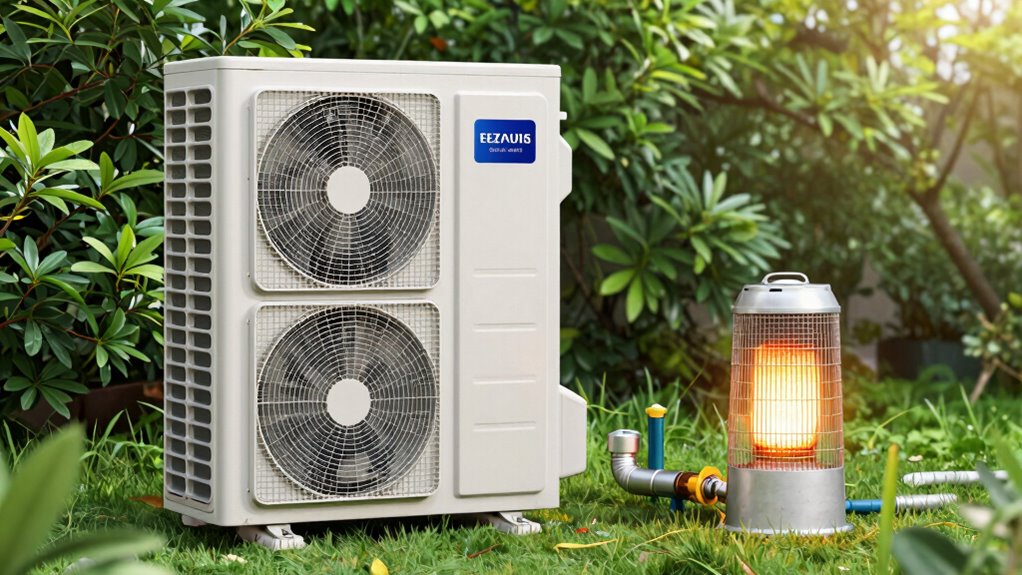
When comparing heat pumps and gas heaters, heat pumps generally prove to be more energy-efficient and cheaper to operate over time. They use electricity more effectively, especially when combined with solar power, reducing reliance on fossil fuels. Additionally, investing in insulation improvements can considerably lower your heating needs, making heat pumps even more cost-effective. Proper insulation is crucial in maximizing the efficiency of heat pumps by minimizing heat loss. Enhancing building airtightness can further improve energy efficiency by preventing heat escape. Gas heaters, while sometimes cheaper upfront, tend to have higher ongoing fuel costs and lower efficiency, especially in milder climates. Heat pumps also provide the benefit of heating and cooling, further enhancing their energy savings. Incorporating energy-efficient technologies can further reduce operational costs and improve overall performance. Moreover, choosing renewable energy sources like solar panels can significantly decrease the long-term costs of running heat pumps. Using smart thermostats can optimize heating schedules and reduce unnecessary energy consumption. Overall, if you aim for lower energy consumption and reduced operating costs, heat pumps are the smarter choice, especially when paired with renewable energy sources and better insulation.
What Are the Typical Running Costs of Heat Pumps and Gas Heaters?

Understanding the typical running costs of heat pumps and gas heaters helps you make informed decisions about your home heating. Heat pumps usually have lower operational expenses because they extract heat from the environment, making them more energy-efficient. Gas heaters, on the other hand, tend to cost more to run due to higher fuel consumption, especially during colder months. However, installation costs for heat pumps can be higher initially, which may influence your overall budget. When considering environmental impact, heat pumps produce fewer emissions compared to gas heaters, making them a greener choice. Additionally, template compatibility plays a role in selecting the right heating system, especially if integrating with other home automation features. Keep in mind that ongoing costs will depend on local energy prices and usage patterns. Evaluating these factors helps you choose the system that best aligns with your budget and environmental priorities.
Long-Term Savings: Which Heating System Is Best for Your Budget?
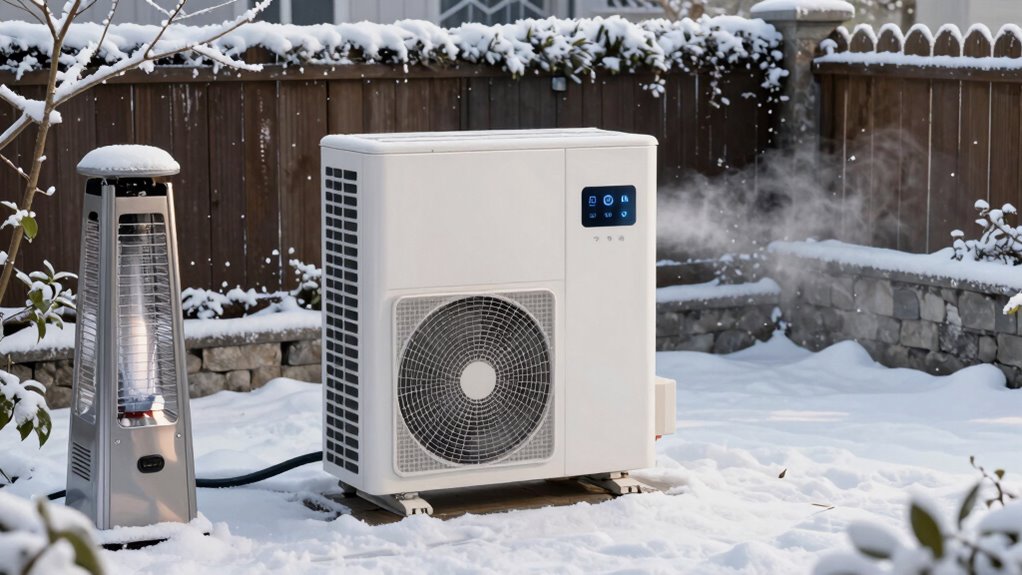
Considering the ongoing costs and initial investments, choosing the most cost-effective heating system depends on your long-term budget. Heat pumps often have higher installation costs but offer lower running expenses, especially if you explore renewable options like air or ground source heat pumps. Sound healing science Research indicates sound waves can influence brainwave patterns, which can contribute to overall well-being and stress reduction. Gas heaters typically have lower upfront costs but can become more expensive over time due to fuel prices and maintenance. If you’re aiming to save money in the long run, a heat pump’s efficiency and renewable energy compatibility may outweigh its initial expense. Additionally, eco-friendly disposal methods can help reduce the environmental impact of your heating system choices. Incorporating renewable energy sources into your heating plan can further enhance long-term savings and sustainability. Moreover, evaluating the maintenance requirements of each system can influence your overall costs and convenience. Proper battery care and regular system checks can extend the lifespan of your heating equipment, ultimately saving you money. Conversely, if upfront costs are your main concern, a gas heater could be more affordable initially, but keep in mind the rising fuel costs and ongoing maintenance. Assess your budget carefully to determine which system aligns best with your financial goals.
Frequently Asked Questions
How Do Climate Conditions Influence Heating Costs for Each System?
Climate conditions markedly impact your heating costs by affecting each system’s seasonal efficiency. In colder climates, gas heaters tend to be more cost-effective because heat pumps struggle with efficiency, requiring more energy. Conversely, in milder weather, heat pumps adapt better to seasonal changes, reducing your costs. You should consider climate adaptation when choosing a system, as it determines which option offers the lowest running expenses based on your local weather patterns.
Are There Maintenance Costs Associated With Heat Pumps and Gas Heaters?
You’ll find that both heat pumps and gas heaters have maintenance costs, but they differ in efficiency ratings and noise levels. Heat pumps typically require regular filter changes and occasional refrigerant checks, which keep their efficiency high and noise levels low. Gas heaters need annual inspections, vent cleaning, and parts replacement, which can be more costly. Staying on top of maintenance helps guarantee both systems run efficiently and quietly.
How Does Installation Complexity Affect Overall Expenses?
You’ll find installation complexity factors considerably impact overall expenses. Complex installations, like retrofitting existing systems or maneuvering tight spaces, increase installation costs due to specialized labor and equipment. Simpler setups tend to be more affordable and quicker. Visualize this as building a custom piece of furniture versus assembling a ready-made one—more customization equals higher costs. So, consider installation complexity factors carefully to understand the total expenses involved.
What Are the Environmental Impacts of Each Heating Option?
You’ll find that heat pumps generally have a lower environmental impact because they use renewable energy sources and emit fewer greenhouse gases, reducing your carbon footprint. Gas heaters, on the other hand, rely on fossil fuels, which produce higher emissions and contribute more to climate change. By choosing a heat pump, you support cleaner energy use and help protect the environment, making it a more sustainable heating option.
Do Government Incentives Affect the Total Cost Comparison?
Government incentives can markedly impact your total costs by reducing upfront expenses or ongoing energy bills, making heat pumps more affordable and appealing. These financial incentives, driven by policy impacts, encourage eco-friendly choices and can tip the cost balance in favor of heat pumps over gas heaters. Always check local programs, as they vary and can help you save money while supporting sustainable energy options.
Conclusion
Choosing between a heat pump and a gas heater depends on your budget and energy preferences. Did you know that heat pumps can be up to 50% more efficient than traditional gas heaters? Over time, this efficiency can save you hundreds of dollars annually. Consider your long-term savings and environmental impact to make the best choice. Ultimately, investing in a more efficient system could keep your heating costs lower for years to come.