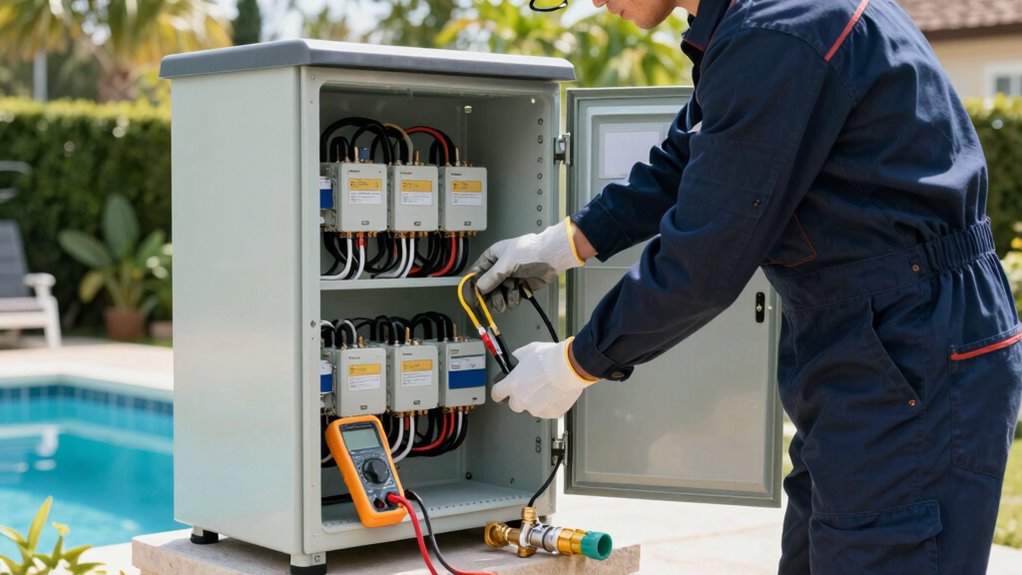
Before buying a pool heater, check your electrical panel capacity and verify wiring meets safety standards to support the heater’s load. Also, inspect your gas lines for leaks, proper BTU rating, and venting to prevent hazards. You might need permits for upgrades and repairs, so contact local authorities and consider professional help for installation. If you follow these steps, you’ll be prepared for a safe and efficient setup—there’s more to know to get it right.
Key Takeaways
- Verify your electrical panel supports the heater’s load and consider installing a dedicated circuit with proper wiring standards.
- Inspect existing gas lines for sufficient capacity, leaks, and compliance; upgrade and obtain necessary permits if needed.
- Contact local authorities to understand zoning, permit requirements, and ensure proper placement according to regulations.
- Maintain pool and equipment regularly, use appropriate wiring and gas upgrades, and ensure venting is correctly installed for safety.
- Choose a heater type based on climate, pool size, and energy efficiency, and consult professionals for electrical, gas, and permit requirements.
Why Assessing Your Electrical and Gas Setup Is the First Step

Before installing a pool heater, it is vital to evaluate your electrical and gas systems. Confirming your setup is compatible helps maintain pool safety and maximizes energy efficiency. If your electrical system isn’t up to code or has insufficient capacity, it could cause safety hazards or damage your equipment. Similarly, a gas system that isn’t properly rated or vented can pose serious risks. By assessing these systems beforehand, you prevent costly issues and ensure your heater functions correctly. Proper evaluation also helps you choose a heater that aligns with your existing infrastructure, saving energy and reducing operating costs. Conducting a comprehensive system assessment ensures a safer, more efficient installation, giving you peace of mind and a more enjoyable pool experience. Additionally, understanding your utility connections can influence your choice of heater and installation process, enhancing overall safety and performance. Performing a safety inspection of your electrical and gas lines is also recommended to identify potential hazards before installation. Moreover, verifying your system capacity can prevent overloads and ensure reliable operation. Conducting a thorough utility analysis can uncover any limitations or necessary upgrades to support your new pool heater effectively.
What Pool Heater Options Are Available and Which Is Right for You
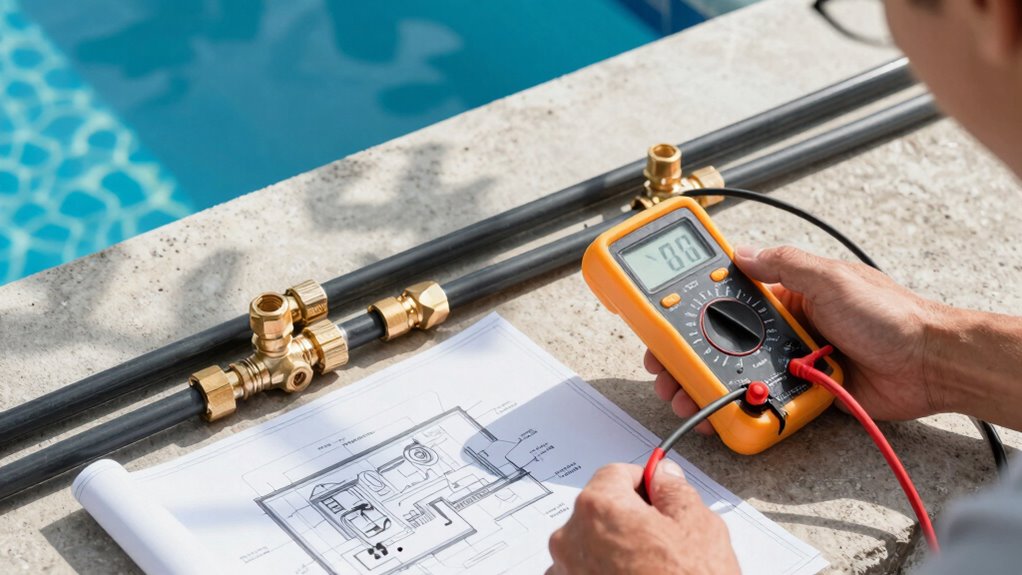
Choosing the right pool heater depends on your climate, pool size, and how often you swim. There are several pool heater types to contemplate, including gas, electric, and heat pump models. Gas heaters heat quickly and are great for occasional use, while electric heaters are more suited for smaller pools and frequent swimmers. Heat pumps, known for their energy efficiency, extract heat from the air to warm your pool and operate cost-effectively over time. Your choice should balance upfront costs, ongoing energy expenses, and how quickly you want your pool warm. Evaluating these options helps you pick a system that matches your needs, ensuring comfort and savings while maintaining your pool’s ideal temperature year-round. Additionally, understanding the installation requirements of each system can prevent unexpected complications and ensure safety. Considering the energy efficiency of different models can also lead to long-term savings on operating costs, making your choice more economical over time. Moreover, reviewing the performance characteristics of various heaters can help you select a unit that provides consistent heating suited to your usage patterns. Being aware of the maintenance needs associated with each type can help you choose a system that remains reliable and easy to care for over its lifespan. Proper system sizing is also crucial to ensure optimal performance and energy use.
Is Your Electrical System Ready for an Electric Pool Heater?
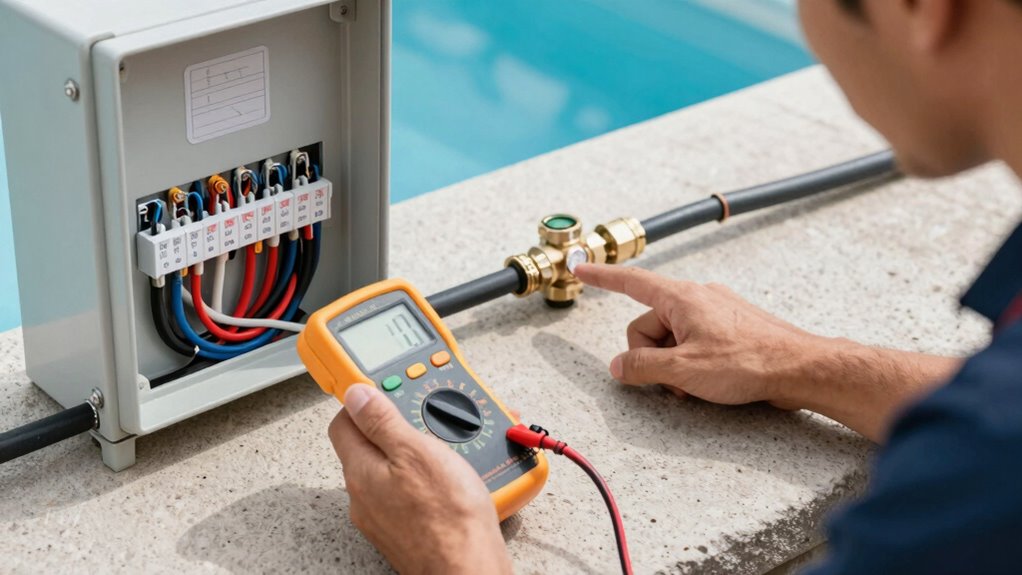
Ensuring your electrical system can handle an electric pool heater is crucial for safe and efficient operation. Start by inspecting your panel to confirm it has enough capacity, typically a dedicated circuit with a proper breaker. Next, verify that wiring meets electrical safety standards, using heavy-gauge wire for high power demands. Check for any signs of corrosion or damage that could compromise safety. Additionally, confirm your grounding system is solid to prevent electrical shocks. Proper electrical capacity plays a vital role in maintaining system safety and performance. Visualize these steps:
- A spacious breaker box with a clear, labeled breaker for the heater
- Thick, intact wiring connecting the panel to the heater
- Proper grounding rods with secure connections
- No corrosion or damage around the electrical components
Addressing these points ensures electrical safety and maintains gas line integrity, avoiding hazards before installation. Furthermore, understanding the electrical capacity of your system can help ensure system safety and optimal performance during installation.
Is Your Gas Line and Venting Set Up for a Gas Pool Heater?
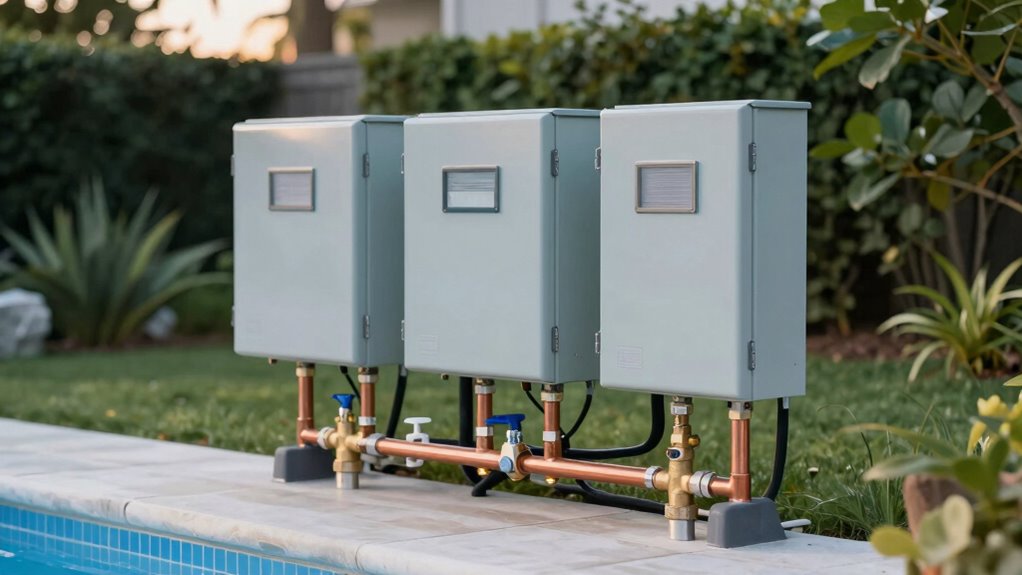
A properly installed gas line and venting system are vital for the safe and efficient operation of your gas pool heater. First, check that your gas line is rated for the heater’s BTU requirements and free of leaks. Guarantee it’s connected securely and complies with local codes. Proper gas line installation helps prevent dangerous leaks and ensures optimal performance. Next, inspect your venting system to confirm it’s correctly installed to vent fumes safely outdoors. The venting system should be free of blockages and designed to prevent backdrafts, which can be dangerous. Proper venting not only ensures safety but also improves heater efficiency. Additionally, verifying that your venting system is compatible with your heater model can prevent future problems. Before installation, confirm that your gas line and venting system meet all manufacturer specifications and local regulations. This setup is essential to avoid hazards and ensure your pool heater performs at its best. Proper installation plays a crucial role in maintaining safety and efficiency standards, and understanding fuel safety is key to a reliable setup. Proper system maintenance can also prolong the lifespan of your equipment and prevent costly repairs.
What Upgrades or Permits Might You Need Before Installing Your Pool Heater
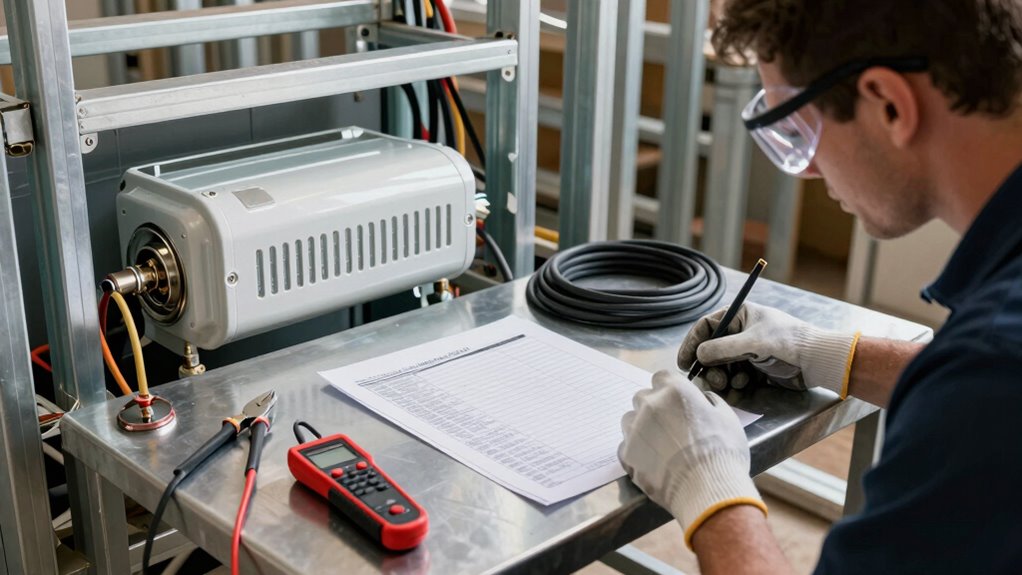
Before installing your pool heater, check if you need any permits or if local regulations require approval. You might also need to upgrade your electrical system or gas lines to meet safety standards. Ensuring these steps are completed can save you from costly issues later on. Additionally, considering eco-friendly gardening practices can help minimize environmental impact and promote sustainable outdoor living. Staying updated on tax law changes can also be beneficial for managing any potential incentives or rebates related to eco-friendly upgrades.
Permits and Local Regulations
Monitoring local regulations is essential before installing your pool heater, as many areas require permits to ensure safety and compliance. You’ll need to check zoning laws to see if there are restrictions on pool heater placement or size. The permit application process might involve submitting detailed plans and inspections. Here are four key steps:
- Contact your local building department for specific zoning laws.
- Submit a permit application, including your installation plans.
- Schedule inspections to verify compliance with safety standards.
- Obtain approval before proceeding with installation.
Failing to secure the necessary permits can lead to fines or needing to undo your work. Always verify local regulations to avoid surprises and ensure your pool heater installation is legal and safe.
Electrical and Gas Upgrades
Installing a pool heater often requires upgrades to your home’s electrical system or gas lines to handle the additional demand safely. Before installation, verify your electrical panel can support the added load, especially if you use a pool cover that might impact energy efficiency. Upgrading wiring or installing a dedicated circuit may be necessary. For gas-powered heaters, check if your existing gas lines need reinforcement or new permits. Proper gas line upgrades ensure safe operation and compliance with local codes. Additionally, regular pool cleaning and maintaining your pool cover can reduce strain on the heater and improve efficiency. Consult a professional to determine if upgrades or permits are needed before buying your heater. This preparation helps prevent costly issues and ensures safe, efficient operation.
When Should You Consult a Professional to Confirm Your Installation Plans

Even if you’re confident in your pool heater installation plans, it’s wise to consult a professional when you encounter complex wiring, unusual electrical requirements, or uncertain building codes. A qualified contractor can verify your setup meets local regulations and maintains pool safety. You should consider reaching out if:
- You’re unsure about the electrical panel capacity or wiring complexity.
- The gas line installation involves unfamiliar connections or permits.
- Building codes or safety standards seem ambiguous or restrictive.
- You’re selecting a contractor and want someone experienced in pool safety and proper installation.
Consulting a professional helps prevent costly mistakes, ensures safety, and simplifies the process of contractor selection. It’s a smart step to confirm your plans and guarantee your pool heater’s reliable, safe operation.
Frequently Asked Questions
How Long Does a Typical Pool Heater Installation Process Take?
A typical pool heater installation takes about 4 to 8 hours, depending on your pool size and heater capacity. Larger pools or higher-capacity heaters may require extra time for proper setup and electrical or gas connections. You might need more time if there are existing systems to modify. To guarantee a smooth process, plan for some extra hours, and consider hiring a professional for efficient installation.
What Safety Measures Should I Consider During Installation?
During installation, prioritize electrical safety by ensuring all power sources are disconnected and grounding is proper. Check for gas leak prevention by inspecting connections for tightness and using soapy water to detect leaks before turning on the gas supply. Wear protective gear, verify proper ventilation, and follow manufacturer instructions carefully. These safety measures protect you from electrical hazards and gas leaks, creating a safer environment during the installation process.
Can I Install a Pool Heater Myself or Should I Hire a Professional?
You can install a pool heater yourself if you have DIY safety experience and are confident with electrical and gas work. However, professional installation is highly recommended to make sure compliance with local codes, safety standards, and proper setup. Hiring a pro minimizes risks, guarantees safe operation, and often comes with warranties. If you’re unsure about your skills, it’s best to prioritize safety and hire a licensed professional for the job.
Are There Specific Local Codes That Affect Pool Heater Installation?
Think of your pool as a delicate garden that needs careful tending. Local codes and permit requirements are like the gardener’s rules, guiding how you install your heater safely. You must check with your city or county because these regulations can vary, affecting your installation process. Ignoring them risks fines or dangerous setups. So, always verify local codes before you start, ensuring your heater’s installation is compliant and worry-free.
What Is the Average Cost of Installing a Pool Heater?
The average cost of installing a pool heater ranges from $2,500 to $4,500, depending on cost factors like the type of equipment options you choose and your home’s electrical or gas setup. Factors such as heater size, brand, and installation complexity influence the final price. You’ll want to take these variables carefully to guarantee you select the best equipment options that fit your budget and heating needs.
Conclusion
Before installing your pool heater, taking the time to assess your electrical and gas setups is vital. Did you know that improper installation can increase energy costs by up to 30%? By following this checklist, you’ll guarantee a safe, efficient, and legal setup. When in doubt, consulting a professional can save you money and headaches down the line. Proper preparation guarantees your pool stays warm and ready for swimming season.