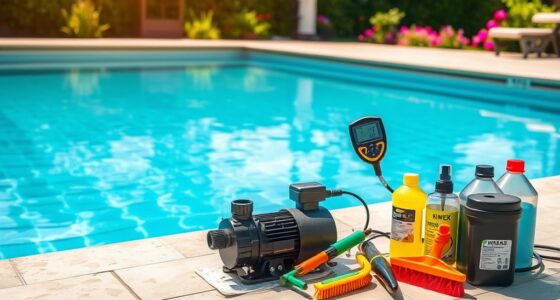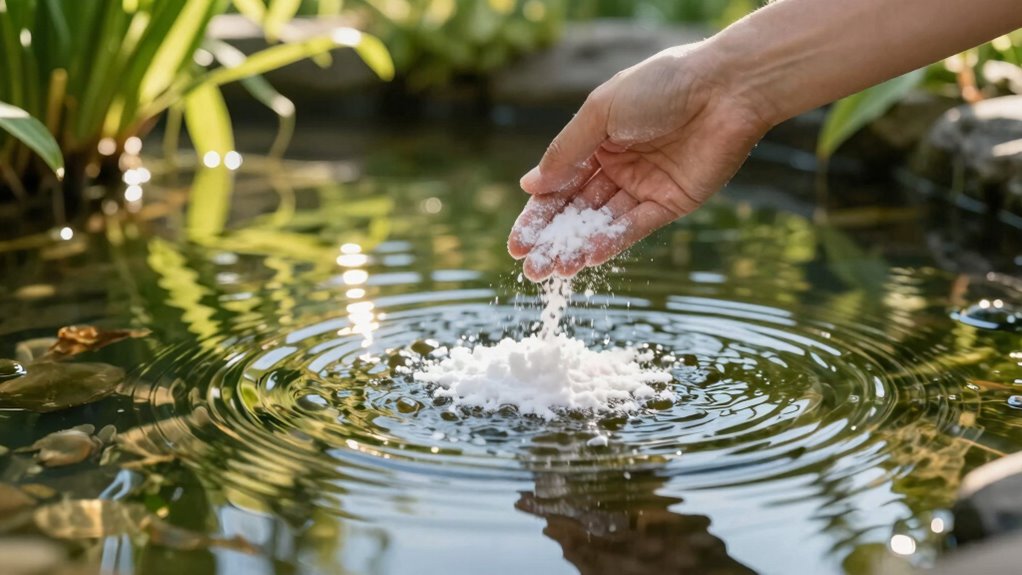

To prevent algae in just five minutes a day, check your water’s pH and sanitizer levels with test kits, adjusting chemicals as needed. Skim the pool surface to remove debris and promote circulation. Confirm your filtration system runs properly to avoid stagnant areas. Maintaining these simple steps helps reduce nutrients and sunlight exposure that cause algae growth. Keep these habits up, and you’ll uncover even more effective tips for a clear, algae-free pool.
Key Takeaways
- Check and adjust water chemistry daily to maintain proper pH, alkalinity, and sanitizer levels.
- Skim the pool surface regularly to remove debris and reduce nutrients that promote algae growth.
- Inspect and clean the filtration system to ensure optimal water circulation and filtration efficiency.
- Apply algaecides and maintain consistent chlorine levels to create a chemical barrier against algae.
- Monitor water clarity and surface for early signs of algae, acting quickly to prevent outbreaks.
Start Your Pool Off Right: A Quick 5-Minute Daily Algae Prevention Routine

Maintaining a healthy pool starts with a simple daily routine that takes just five minutes. Consistent pool maintenance begins with checking your water chemistry to keep pH, alkalinity, and sanitizer levels balanced. When you do this daily, you prevent the conditions algae love from forming. Use a test kit or strips to quickly assess your water’s chemistry, adjusting chemicals as needed. This simple step helps keep your sanitizer effective and limits algae growth. Additionally, skim the surface to remove debris that can introduce nutrients for algae. Regularly monitoring water chemistry and removing debris creates an environment that’s less inviting to algae, making your pool easier to maintain and swim-ready every day. Incorporating proper water chemistry management is essential for long-term algae prevention. Proper landscaping around your pool can also reduce organic debris and lessen nutrient runoff, further supporting algae control. To enhance your routine, consider inspecting and cleaning your filtration system regularly to ensure optimal water circulation and filtration. Maintaining filtration efficiency can help prevent algae spores from taking hold and proliferating. Regularly checking your circulation system can improve water movement, reducing stagnation that encourages algae growth. This quick routine sets a solid foundation for algae prevention.
Why Do Algae Grow in Pools? Causes and Simple Prevention Tips

Algae thrive in pools when the conditions are just right, especially if the water’s pH and sanitizer levels aren’t properly maintained. Poor pool chemical balance creates an ideal environment for algae to grow. Sunlight exposure accelerates algae development because it fuels photosynthesis. Typically, algae grow due to:
Algae flourish when pH and sanitizer levels are unbalanced, especially with ample sunlight exposure.
- Imbalanced pH or low sanitizer levels
- Lack of regular circulation
- Excessive sunlight hitting the pool surface
- Debris or dirt introducing nutrients
When these factors combine, algae can quickly take hold. Maintaining proper pool chemical balance disrupts algae growth, while reducing sunlight exposure—like using pool covers—limits their development. Consistent testing and adjusting of chemicals are essential for preventing algae from becoming a problem. Additionally, proper filtration helps remove nutrients and debris that support algae growth. Regular cleaning and maintenance routines also play a vital role in preventing algae buildup. Implementing preventive measures can further minimize the risk of algae growth before it starts. Keeping proper chemical levels monitored regularly ensures a healthier, clearer pool environment.
Choose the Best Chemicals to Keep Your Pool Clear and Algae-Free
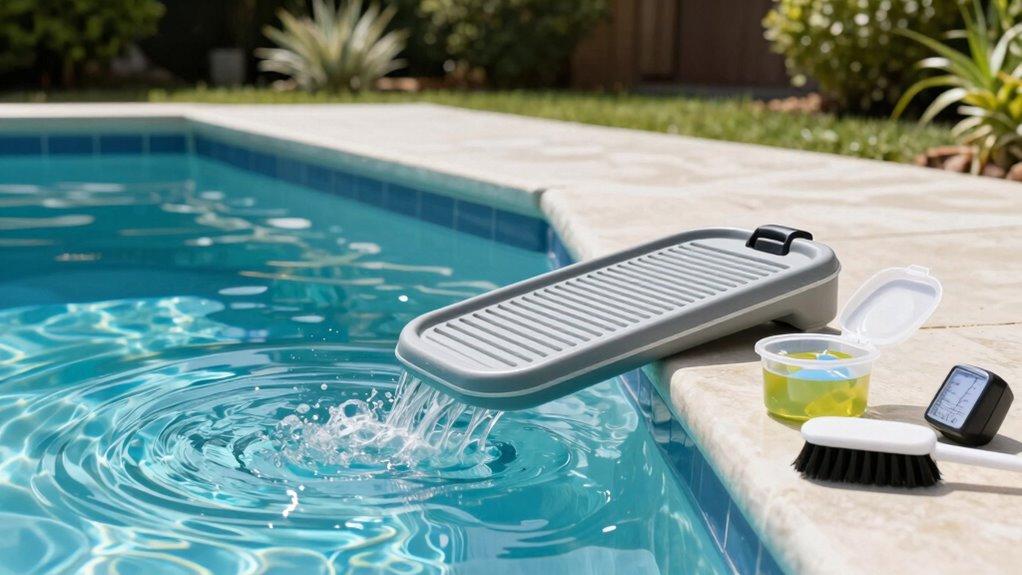
Choosing the right chemicals is essential for keeping your pool clear and algae-free. Proper chemical selection guarantees effective algae prevention and maintains water balance. Start with a high-quality chlorine or bromine sanitizer to kill bacteria and algae spores. Using algaecides as a supplement can boost your defense, especially if you notice early signs of algae. Always follow manufacturer instructions for proper dosage and application. Regular testing of your pool’s pH and chlorine levels helps maintain ideal conditions, making your chemicals more effective. Avoid mixing incompatible chemicals, which can reduce efficiency or create hazards. Consistent use of the right chemicals creates a protective barrier against algae growth and keeps your pool sparkling clean. Maintaining proper water chemistry is fundamental for long-term algae control. Remember, chemical management is a key part of a simple, effective algae prevention routine.
How to Monitor Your Pool and Catch Algae Problems Early
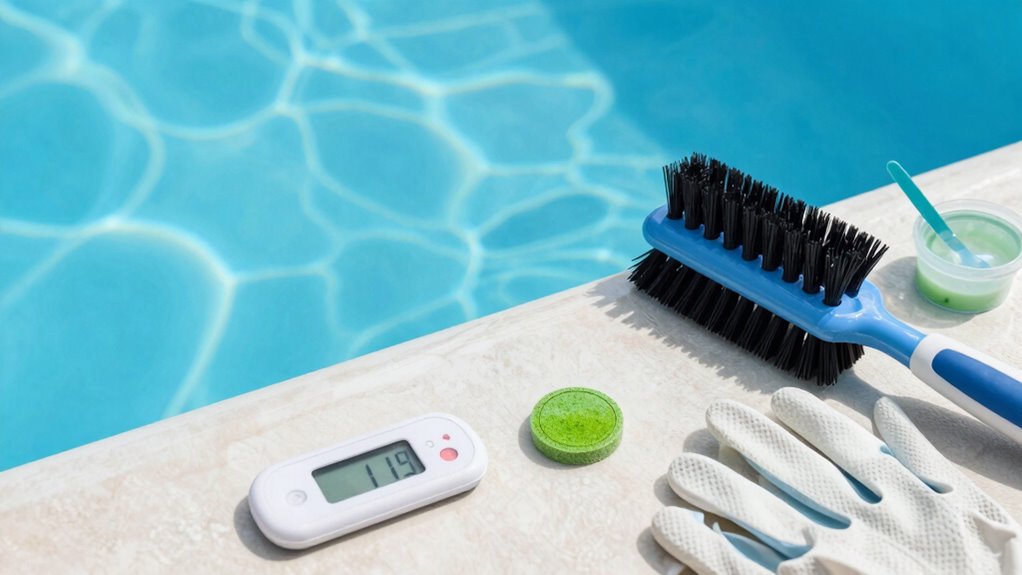
Since early detection is key to preventing widespread algae growth, regularly monitoring your pool’s water is essential. Check these four areas to catch problems early:
- pH balance: Keep it between 7.2 and 7.6 to prevent algae growth and ensure chemicals work effectively. Proper water chemistry management is crucial for maintaining a healthy pool.
- Water clarity: Look for cloudy water or unusual color changes, which can signal algae developing. Clear water helps you spot early signs of algae or other contaminants.
- Skimmer maintenance: Clear debris regularly to prevent algae spores from settling and multiplying. A clean skimmer ensures optimal circulation and filtration.
- Surface inspection: Skim the surface for algae blooms or slimy patches, indicating early issues. Maintaining proper filtration is fundamental for effective algae prevention.
Troubleshooting Algae Outbreaks and When to Call in a Pro

When you notice persistent cloudiness, slimy patches, or a sudden green tint despite regular monitoring, it’s a clear sign that your algae outbreak has worsened. At this point, simple routines may not suffice, and you should consider professional intervention. An algae outbreak that persists or spreads indicates underlying issues like inadequate filtration or chemical imbalance. Calling in a pool professional can help identify hidden causes, perform a thorough cleaning, and apply targeted treatments to eliminate algae completely. Proper filtration maintenance can prevent future outbreaks and is crucial in maintaining water clarity. Additionally, ensuring proper water chemistry balance helps inhibit algae growth and keeps your pool environment stable. Regular preventative measures and monitoring can significantly reduce the likelihood of recurring issues. Keep in mind that proper circulation is essential for even chemical distribution and preventing algae buildup. Enhancing your filtering system can further improve water quality and reduce algae risk. Don’t delay, as algae can quickly damage your pool’s surfaces and water quality. Timely expert help ensures a proper cleanup, prevents future outbreaks, and restores your pool’s clarity and safety efficiently. When DIY efforts fall short, professional intervention is your best bet.
Frequently Asked Questions
How Often Should I Perform the 5-Minute Algae Prevention Routine?
You should perform the 5-minute algae prevention routine weekly to maintain routine consistency and prevent algae buildup. Incorporating this maintenance schedule into your regular pool care guarantees algae doesn’t have a chance to grow. Consistent, short daily checks are helpful, but a dedicated weekly routine keeps your pool clear and healthy. Stick to this schedule, and you’ll enjoy cleaner water with minimal effort.
Can Natural or Organic Methods Prevent Algae Effectively?
Yes, natural remedies and organic solutions can effectively prevent algae when used consistently. You can try adding barley straw, which releases natural compounds that inhibit algae growth, or use copper-based solutions carefully to avoid harming aquatic life. Regularly maintaining your pond or pool with these organic solutions helps keep algae at bay without harsh chemicals, ensuring a healthier environment for plants and animals.
What Are Signs That Algae Is Starting to Grow Before Visible?
You can spot early warning signs of algae growth through subtle indicators like a slight change in water color, a faint film on the surface, or a reduction in water clarity. You might notice a musty smell or small patches of greenish film that aren’t yet fully visible. Paying close attention to these signs helps you catch algae early, so you can take quick action before it becomes a bigger problem.
Is It Safe to Swim Immediately After Applying Chemicals?
Think of chemical residue as a stubborn guest, lingering longer than expected. It’s not safe to swim immediately after applying chemicals because residue can cause skin contact irritation. You should wait until the chemicals fully disperse and the water clears, usually about 30 minutes to an hour. This pause guarantees your skin isn’t exposed to harmful residues, keeping your swim safe and enjoyable.
How Do Weather Changes Affect Algae Growth and Prevention?
Weather patterns and seasonal shifts directly impact algae growth and prevention. Warm, sunny weather encourages algae blooms, so you should increase your algae prevention routine during these times. Cooler or cloudy weather slows algae development, allowing you to reduce chemical use. Stay vigilant with regular testing and adjustments based on weather changes, ensuring your pool stays clean and algae-free year-round. Adapt your routine to seasonal shifts for ideal results.
Conclusion
By sticking to this quick 5-minute routine daily, you can prevent algae from taking over your pool. Did you know that regular maintenance reduces algae growth by up to 80%? Keeping a close eye on chemical levels and early signs makes all the difference. With just a few minutes each day, you’ll enjoy crystal-clear water all season long, saving time, money, and frustration. Start your routine today and swim confidently all summer!