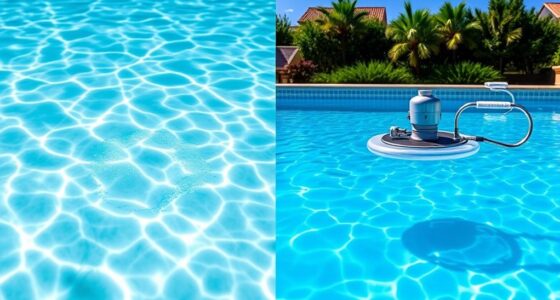
To keep your pool in top shape year-round, adjust your maintenance routines with the seasons. In warmer months, focus on regular cleaning, chemical balancing, and filter care. As temperatures drop, prioritize winterization by draining equipment properly and protecting it with covers to prevent freeze damage. In spring, reverse the process, clean thoroughly, and re-balance your water. By following these seasonal tips, you’ll simplify ongoing care and ensure your pool stays crystal clear and long-lasting. If you want to learn more about each step, keep exploring the details.
Key Takeaways
- Adjust water chemistry seasonally by testing and balancing pH, alkalinity, and sanitizer levels regularly.
- Increase filtration and sanitation during peak swimming months; reduce them in winter to prevent algae growth.
- Perform routine cleaning, including skimming, vacuuming, and brushing, to maintain water clarity throughout the year.
- Prepare your pool for off-season with proper winterization procedures to prevent freezing damage.
- Inspect and maintain equipment seasonally, ensuring filters, pumps, and heaters are functioning optimally for each period.

Are you ready to get your pool ready for the off-season? Preparing your pool for winter involves more than just shutting it down; it’s about setting the stage for an easy and successful winter opening when warmer weather arrives. As you approach the end of the swimming season, it’s important to follow a proper summer closing routine to protect your pool’s equipment and maintain water quality. This process ensures that when spring rolls around, you won’t have to deal with clogged filters, algae buildup, or equipment failures. Proper winter opening begins with cleaning and balancing the water, then draining and protecting equipment from the cold. Your goal is to prevent damage caused by freezing temperatures and to make the spring startup as smooth as possible.
Start by thoroughly cleaning your pool, removing debris, leaves, and dirt that can decompose over the winter. Skim the surface, vacuum the pool floor, and brush the walls to prevent algae growth. Once clean, test and adjust the water chemistry to ideal levels—pH, alkalinity, and calcium hardness should be balanced to keep the water stable during the off-season. This step is essential because it minimizes corrosion and scale buildup during winter. After balancing the water, consider adding a winterizing algaecide or sanitizer to inhibit algae growth over the cold months. Additionally, choosing the right projector technology can help you enjoy your outdoor space during the summer, making poolside movie nights even more enjoyable.
Thoroughly clean your pool and balance water chemistry to prevent winter damage and algae growth.
Next, focus on the equipment. Drain the pump, filter, and heater according to the manufacturer’s instructions to prevent freezing and cracking. If you’re in an area with harsh winters, use winter plugs or blow out the lines to ensure no residual water remains that could expand and cause damage. Cover the skimmer and return openings, and secure your pool cover tightly to keep out debris and critters. Properly closing your pool for winter helps safeguard the infrastructure and minimizes the workload for your spring opening.
When the time comes for winter opening, you’ll reverse this process, removing the cover, inspecting and cleaning equipment, and balancing the water again. The key to a successful winter opening is having prepared well during the summer closing and winterization phase. This proactive approach minimizes surprises and reduces the time and effort needed to get your pool ready for swimming once the weather warms up. By understanding how to properly close and open your pool seasonally, you’re ensuring its longevity and maintaining crystal-clear water for many seasons to come.
As an affiliate, we earn on qualifying purchases.
Frequently Asked Questions
How Often Should I Test My Pool Water During Each Season?
You should test your pool water at least once a week during peak swimming seasons to maintain proper chemical balance. In cooler months, testing every two weeks often suffices. Adjust your seasonal testing frequency based on usage, weather, and recent chemical treatments. Regular pool water testing helps prevent issues like algae growth and cloudy water, ensuring your pool stays clean and safe throughout the year.
What Are the Best Chemicals for Winterizing My Pool?
Did you know that improper winter chemical balance can cause up to 60% of pool damages? To winterize your pool, you should use winter chemicals like algaecides, pH balancers, and sanitizer tablets. Choose a sturdy pool cover to protect against debris and harsh weather. These chemicals help prevent algae growth and corrosion, ensuring your pool stays in great shape for spring. Always follow manufacturer instructions for safe, effective winterization.
How Can I Prevent Algae Growth in Summer?
To prevent algae growth during summer, you need to focus on algae prevention through proper summer pool maintenance. Keep your pool’s pH balanced between 7.2 and 7.6, and regularly shock the water to kill any algae spores. Use algaecides as a preventive measure, brush the pool walls frequently, and run the filter consistently. These steps guarantee clear, algae-free water all summer long, making your swimming experience enjoyable.
When Is the Ideal Time for Opening and Closing My Pool?
You should open your pool when spring’s warmth finally hits, usually after the last frost, to avoid turning your backyard into an icy tundra. Close it before winter’s chill, when temperatures drop consistently below 50°F. Choose a sturdy pool cover to safeguard it during the off-season, and consider seasonal pool heating to extend your swimming season. Timing it right ensures your pool stays pristine and ready for fun at just the right moments!
How Do Seasonal Changes Affect Pool Equipment Longevity?
Seasonal changes can impact your pool equipment’s longevity considerably. Cold winters may cause parts to crack or freeze, so regular pool cover maintenance helps protect your equipment. In warmer months, you might need seasonal equipment upgrades like energy-efficient pumps or filters to keep everything running smoothly. By staying proactive, you reduce wear and tear, extending your pool equipment’s lifespan and avoiding costly repairs.
Conclusion
By adjusting your pool maintenance with the seasons, you keep your water clean and inviting year-round. For example, in winter, reducing chemical use and covering the pool prevents debris buildup, saving time in spring. Imagine a homeowner who switches to a winter cover and lowers chlorine levels—come spring, their pool is prepared for quick opening, saving effort and costs. Proper seasonal care guarantees your pool stays beautiful, safe, and ready whenever you want to swim.