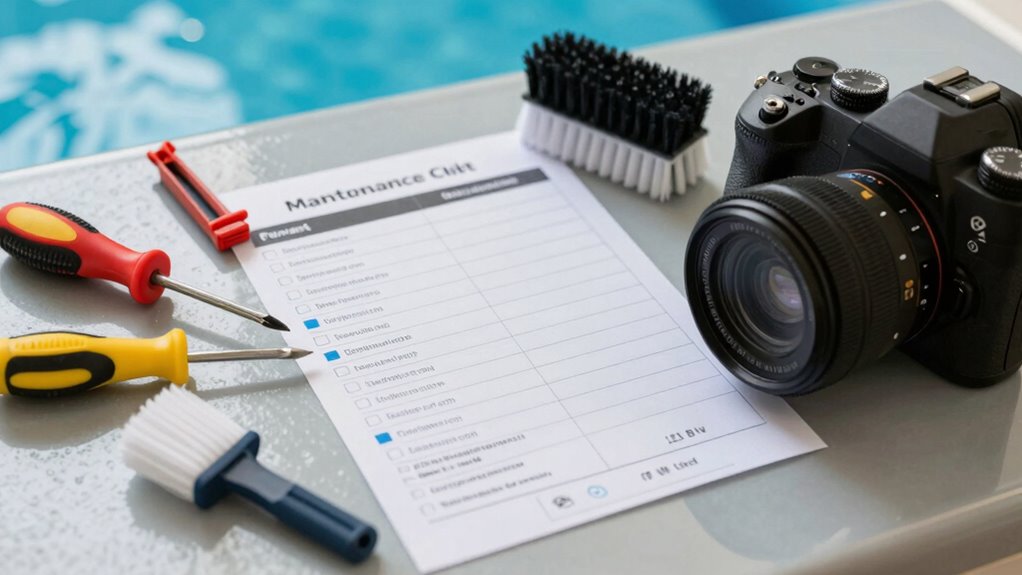
To make your pool robot last twice as long, regularly inspect and clean it, including filters, brushes, and cables. Keep the firmware and software updated, and check the battery or power system for wear. Properly store the robot in a cool, dry place during the off-season, and troubleshoot any issues promptly. Consistent maintenance, careful handling, and following manufacturer guidelines will help extend its lifespan—more tips await if you keep exploring.
Key Takeaways
- Perform regular inspections, cleaning, and firmware updates to prevent hardware failures and improve device longevity.
- Properly maintain and store the battery, avoiding overcharging and exposing it to extreme temperatures.
- Check and manage cables, moving parts, and filters frequently to ensure smooth operation and prevent damage.
- Follow manufacturer guidelines for routine maintenance, troubleshooting, and hardware adjustments to optimize performance.
- Thoroughly clean and store the robot correctly during the off-season, ensuring a cool, dry environment to extend lifespan.

5pcs Filter Sponge for WYBOT A1 Robotic Pool Cleaner, Cotton Foam Filtration Replacement Parts, Easy to Install and Clean
- Efficient Debris Filtration: Traps debris effectively for optimal cleaning
- Five Replacement Sponges: Includes five cotton sponge filters for convenience
- Easy to Install: No tools needed for quick replacement
As an affiliate, we earn on qualifying purchases.
As an affiliate, we earn on qualifying purchases.
Inspect and Clean Your Pool Robot Regularly

Regularly inspecting and cleaning your pool robot is essential to keep it running efficiently. Start by checking the water chemistry; balanced pH and chlorine levels prevent buildup and corrosion that can impair performance. Next, examine the robot’s surface for debris like leaves, dirt, or algae. Surface debris can clog sensors or hinder movement, so remove anything trapped on the robot’s body. Clean the brushes and wheels to ensure smooth operation, and wipe down the casing to prevent the accumulation of grime. Regular inspection helps you catch minor issues before they become major problems, extending your robot’s lifespan. Keeping the water chemistry in check and removing surface debris regularly ensures your pool robot performs at its best, saving you time and effort during cleaning sessions. Additionally, inspecting the filter system regularly helps maintain optimal suction and cleaning efficiency. Regular maintenance also includes checking for any wear and tear on moving parts to prevent unexpected breakdowns and costly repairs. Performing these steps frequently can also help identify potential malfunctions early, further prolonging your robot’s durability. Furthermore, understanding the contrast ratio of your pool robot’s camera system can aid in better operation under varying lighting conditions. Moreover, consulting the manufacturer’s maintenance guidelines can provide specific tips tailored to your model for optimal longevity.
Replace or Clean Filters and Brushes to Keep Cleaning Efficient

To maintain your pool robot’s cleaning efficiency, it’s crucial to replace or clean its filters and brushes regularly. Filter replacement ensures debris doesn’t clog the system, allowing your robot to operate smoothly. Check the filter periodically; if it’s dirty or damaged, replace it promptly. Brush maintenance is equally important—inspect the brushes for wear and tear, replacing them if they’re frayed or broken. Clean the brushes with a hose to remove dirt and algae buildup, which can hinder movement and scrubbing power. Keeping filters clean and brushes in good condition not only enhances cleaning performance but also extends your robot’s lifespan. Make this routine part of your pool maintenance to enjoy consistently sparkling water and minimize breakdowns.
Check and Recharge Batteries or Power Systems
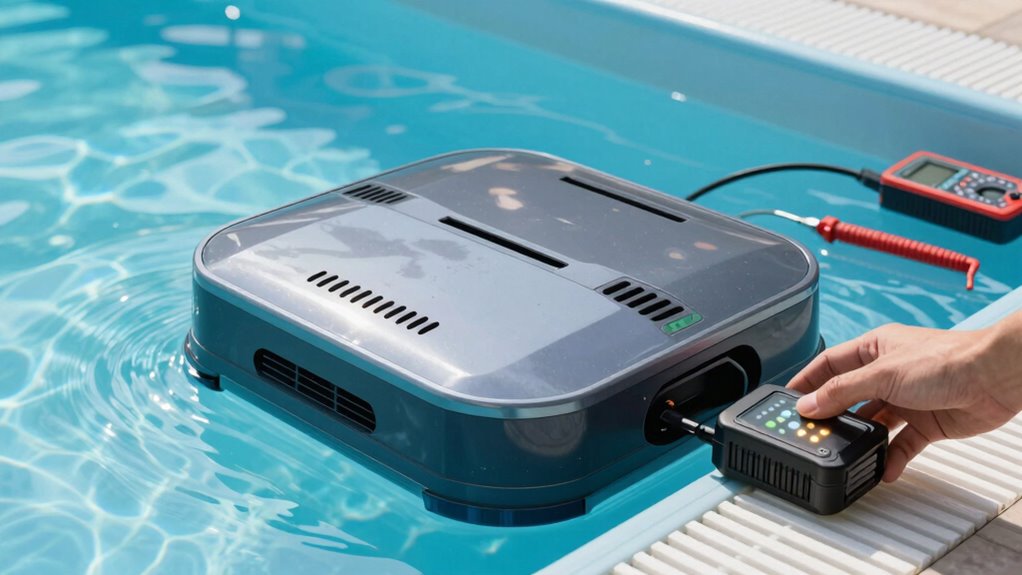
Make sure to regularly inspect your pool robot’s batteries and power systems to keep it running smoothly. Follow the battery care tips to extend their lifespan and prevent unexpected failures. Performing routine power system checks guarantees your robot stays operational when you need it most. Additionally, ensuring proper charger settings and monitoring voltage levels can significantly improve battery longevity. Incorporating Free Floating techniques in your maintenance routine can also help prevent issues caused by stagnation or improper handling. Regularly testing your solar charge controllers ensures they operate efficiently and protect your batteries from overcharging or damage. Understanding battery chemistry can help you select the best components for your pool robot’s energy needs.
Battery Care Tips
Ensuring your pool robot’s batteries are properly maintained is essential for peak performance. Good charging habits directly impact battery lifespan, preventing premature failure. Always charge batteries fully before storing and avoid leaving them partially charged for extended periods. Regularly check for corrosion or damage and keep terminals clean. To maximize battery health, follow these tips:
| Tip | Why it matters | Best practice |
|---|---|---|
| Avoid overcharging | Prevents overheating and reduces lifespan | Unplug once fully charged |
| Store in a cool place | Preserves battery capacity | Keep batteries in a dry, cool area |
| Use recommended chargers | Ensures proper voltage and current | Use manufacturer-approved chargers |
Additionally, proper storage of batteries when not in use can significantly extend their overall lifespan. Proper monitoring of battery health can help detect issues early and prevent unexpected failures. Regularly inspecting batteries for signs of corrosion or damage and addressing issues promptly contributes to longer-lasting batteries. Maintaining a consistent charging routine and avoiding extreme temperatures are also crucial for battery longevity, ensuring your robot operates reliably for years to come. Moreover, implementing regular maintenance checks can further prevent issues and extend the life of your batteries. Adhering to these practices will extend your robot’s battery life and ensure reliable operation.
Power System Checks
Regularly inspecting your pool robot’s power system is key to keeping it running smoothly. Check the batteries or power supply for signs of wear or damage, ensuring they’re properly charged. A healthy battery lifespan depends on avoiding frequent deep discharges and recharging at appropriate times. Be vigilant about power surges, which can damage the system or degrade batteries faster. Use surge protectors if necessary, and unplug the robot during thunderstorms or when not in use for extended periods. Regularly test the power connection to confirm it’s stable. Recharge batteries fully after each use, but avoid overcharging to prevent shortening their lifespan. Implementing proper recovery techniques can help improve your robot’s overall efficiency and lifespan. Additionally, selecting energy-efficient options can further extend the life of your power system. Performing routine diagnostics periodically can help identify potential issues early and prevent unexpected failures. Ensuring proper cleaning of electrical contacts can help maintain optimal conductivity and prevent corrosion. Maintaining a consistent maintenance routine ensures your robot remains in optimal condition and prevents unexpected failures. These simple checks help maintain consistent performance and extend your pool robot’s overall longevity.
Examine and Tighten Moving Parts and Cables

Since moving parts and cables are essential for your pool robot’s proper operation, you should carefully examine them for signs of wear or looseness. Look for cracks, corrosion, or frayed cables, and tighten any loose connections. Proper cable management helps prevent tangles and unnecessary strain, which can cause damage over time. Use appropriate lubrication techniques on moving parts to reduce friction and wear, ensuring smooth operation. Check for any rust or debris that could hinder movement, and clean or replace parts as needed. Tightening screws and bolts maintains stability, while organized cables reduce the risk of snagging or disconnection. Regular inspection and maintenance of these components help extend your robot’s lifespan and keep it functioning efficiently. Additionally, understanding regional flavors and coffee insights can inspire creative maintenance routines or flavor pairings for your coffee and tea accessories. Incorporating Glycolic Acid benefits into your skincare routine can also promote healthier, more radiant skin, complementing your overall wellness approach.
Update Your Pool Robot’s Firmware and Software

After inspecting and tightening moving parts and cables, it’s time to make sure your pool robot operates with the latest updates. Firmware updates are essential for fixing bugs, improving performance, and adding new features. Check your manufacturer’s website or app for available updates and follow their instructions to install them. Software optimization also ensures your robot runs smoothly, efficiently, and effectively cleans your pool. Regularly updating the software can improve navigation, enhance obstacle detection, and extend battery life. Don’t ignore these updates—they keep your device functioning at its best and help prevent malfunctions. Make it a routine to verify firmware and software versions periodically, especially after a thorough clean or inspection. Staying current with updates maximizes your pool robot’s lifespan and cleaning performance.
Store Your Pool Robot Properly During the Off-Season
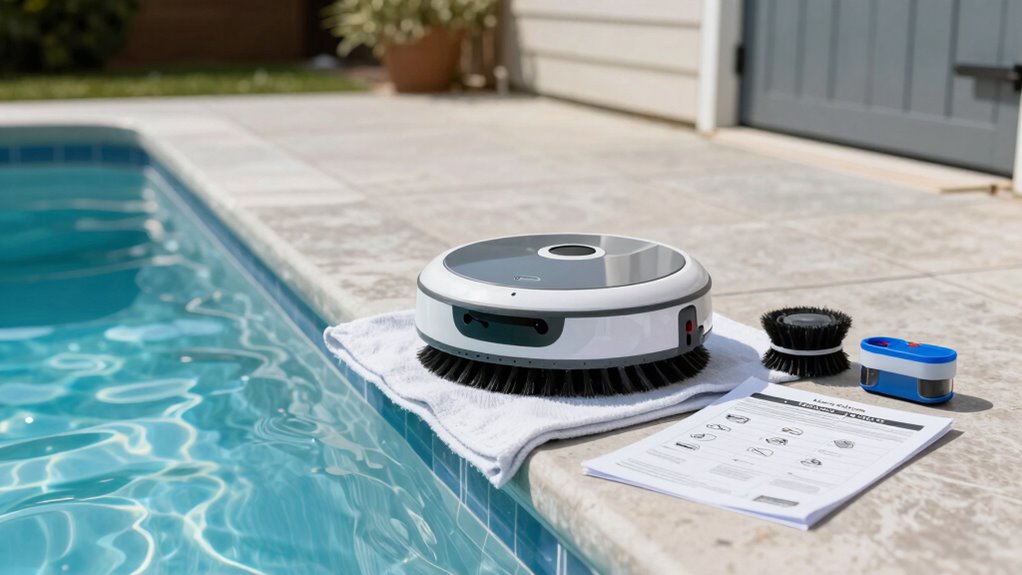
Properly storing your pool robot during the off-season helps prevent damage and makes sure it’s ready to perform when you need it again. Seasonal storage is essential for off season protection, ensuring exposure to elements like dirt, moisture, and sunlight doesn’t cause deterioration. Before storing, clean the robot thoroughly to remove debris and prevent mold or corrosion. Store it in a cool, dry area away from direct sunlight, preferably in its original storage bag or a protective cover. Disconnect the power supply and check for any remaining water in the brushes or filters to avoid mold or freezing damage. Proper off season protection prolongs the life of your pool robot and guarantees ideal performance when the swimming season resumes.
Troubleshoot Common Pool Robot Problems

Are you experiencing issues with your pool robot not cleaning as it should? First, check if your device has the latest software updates, as outdated firmware can cause performance problems. Updating the software often resolves bugs and improves efficiency. If your robot still isn’t functioning properly, review your warranty to see if repairs or replacements are covered, especially if you notice hardware failures. Make sure the brushes and filters are clean and free of debris, which can hinder cleaning. Also, inspect the power supply and connections to ensure everything is secure. If problems persist after these steps, contact customer support for further troubleshooting or warranty service. Regular maintenance combined with timely software updates can help your pool robot operate smoothly and last longer.
Frequently Asked Questions
How Often Should I Schedule Professional Maintenance for My Pool Robot?
You should schedule professional maintenance for your pool robot every six months to keep the robot battery in peak shape and extend your pool robot lifespan. Regular checkups help identify issues early, ensuring ideal performance. If you notice decreased cleaning efficiency or unusual noises, consider more frequent visits. Proper maintenance prevents battery failure and keeps your robot running smoothly, so you enjoy a clean pool all season long.
Are There Eco-Friendly Cleaning Options for Pool Robot Filters?
Are you curious about eco-friendly cleaning options for your pool robot filters? You can opt for biodegradable filters, which break down naturally, reducing environmental impact. Plus, try natural cleaning methods like vinegar or baking soda to keep filters fresh without harsh chemicals. These choices not only protect your pool but also contribute to a healthier planet. Discover how simple swaps can make your pool maintenance greener and more sustainable today!
What Safety Precautions Should I Take During Robot Maintenance?
During robot maintenance, you should always wear safety gear like gloves and eye protection to prevent injuries. Make sure to unplug the robot before opening it to avoid electrical safety hazards. Inspect power cords for damage, and keep the area dry to prevent shocks. Handling internal parts carefully and following manufacturer instructions helps guarantee safe, effective maintenance, extending your robot’s lifespan and keeping you safe throughout the process.
Can I Upgrade My Pool Robot’s Software Myself?
Yes, you can usually perform DIY upgrades for your pool robot’s software updates if your manufacturer provides instructions or firmware files. Before starting, make sure you understand the process and have the right tools. Follow the manufacturer’s guidelines carefully to avoid voiding your warranty. Keep your robot connected to a stable power source and avoid interruptions during the software upgrade. If unsure, consult the user manual or contact support for guidance.
How Do I Prevent Algae Buildup on My Pool Robot?
To prevent algae buildup on your pool robot, regularly clean its brushes and filters, ensuring they’re free from debris. Use algae prevention solutions compatible with your robot, and run it frequently to keep the pool clean. Follow robot cleaning tips like inspecting for mold and brushing off algae. These steps help maintain your robot’s efficiency and extend its lifespan, saving you time and money on extensive algae removal efforts.
Conclusion
Did you know that regular maintenance can double your pool robot’s lifespan? By following this checklist, you’ll keep your device running smoothly and save money in the long run. Staying consistent with cleaning, inspecting parts, and updating software reduces breakdowns and extends your robot’s life. Don’t overlook simple steps—they make a big difference. With just a little effort, you can enjoy a sparkling pool and a reliable robot that lasts twice as long!