A healthy pool filter cycle runs consistently, usually 8-12 hours daily, especially during peak use or after storms. You should check the filter pressure regularly and clean or backwash when the pressure rises 8-10 psi to prevent clogging. Maintaining proper chemical balance supports filtration, while inspecting and servicing your equipment guarantees it runs efficiently. Keeping these practices in mind helps your pool stay clear and inviting—more tips on optimizing your system await you.

Get pool and patio gear delivered free — and shop member deals
- Fast, free delivery on millions of items
- Access to Prime Big Deal Days deals on October 6–7
- Prime Video, Amazon Music and more included
Key Takeaways
- The pump runs 8-12 hours daily to ensure continuous water circulation and debris removal.
- Filter pressure remains stable, with minimal increases before cleaning or backwashing is needed.
- Water tests show balanced chemicals, supporting optimal filtration and preventing algae growth.
- Regular filter cleaning and media replacement maintain high filtration efficiency.
- System inspections and adjustments keep the pool’s hygiene and equipment longevity in check.
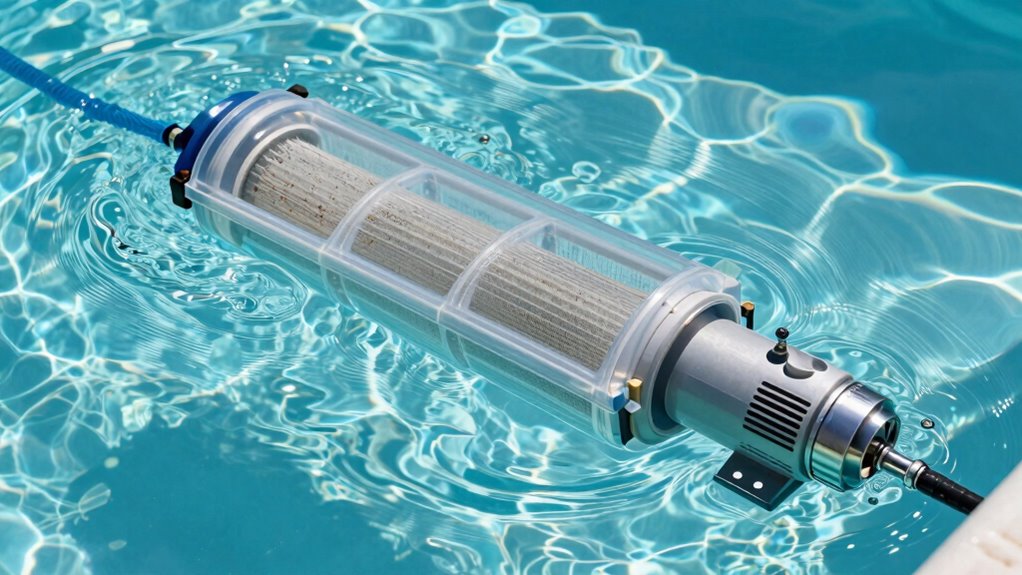
Maintaining a clean pool requires understanding the pool filter cycle, which is essential for keeping your water clear and healthy. A healthy filter cycle ensures your pool’s water stays free of debris, bacteria, and algae, while also maintaining proper chemical balance. When the cycle functions correctly, you’ll notice your water looks inviting and feels revitalizing. To achieve this, you need to pay attention to how your filter operates and make sure your pump runs efficiently. Regular pump maintenance is key because it keeps water circulating properly, preventing stagnation and ensuring the filter can do its job effectively. When your pump runs smoothly, it pushes water through the filter, trapping dirt and particles before returning clean water to the pool.
A well-maintained filter cycle begins with the right timing. Most pools benefit from running the pump for about 8 to 12 hours daily, especially during peak usage or after heavy debris storms. This consistent circulation helps distribute chemicals evenly, keeping the chemical balance in check. When chemicals like chlorine or algaecides are properly balanced, algae growth slows down, and the filter can work more efficiently. If the chemical levels are off, the filter has to work harder, and the water might look cloudy or develop an unpleasant odor. Checking and adjusting your chemical balance regularly is a simple way to support a healthy filter cycle. Additionally, understanding the filter cycle itself can help you optimize your pool’s maintenance routine. Keeping an eye on filter pressure readings can also indicate when cleaning or backwashing is needed, ensuring the system operates at peak efficiency. Regularly inspecting and maintaining your pool’s equipment can also prevent unexpected breakdowns, saving both time and money. Incorporating proper filtration practices can further improve water quality and reduce chemical dependency.
Monitoring your filter’s condition is equally important. You should clean or backwash your filter according to the manufacturer’s instructions—usually once a month or when the pressure gauge indicates a rise of 8-10 psi. A dirty or clogged filter reduces flow rate, forcing your pump to work harder, which increases energy costs and wears out equipment faster. Proper pump maintenance, such as lubricating o-rings, inspecting hoses, and replacing worn parts, keeps the entire system running smoothly. When your pump operates efficiently, it maintains the right flow rate, ensuring debris is captured and the water moves continuously through the filter. Regularly inspecting and cleaning your filter also supports biodiversity by reducing the need for excessive chemical treatments that can harm aquatic ecosystems. It’s also beneficial to periodically check the filter media for signs of wear or clogging to ensure optimal filtration performance.
A healthy pool filter cycle isn’t just about the hardware; it’s about the synergy between good pump maintenance and chemical balance. When these elements work together, your pool’s water remains clear, safe, and inviting. Regularly inspecting your equipment, adjusting chemical levels, and running the pump for the appropriate amount of time helps sustain this cycle. Over time, these practices minimize the need for intensive cleaning or chemical treatments and extend the lifespan of your pool’s filtration system. Ultimately, a well-managed filter cycle means less hassle and more enjoyment of your sparkling, invigorating pool.
automatic pool filter backwash valve
As an affiliate, we earn on qualifying purchases.
As an affiliate, we earn on qualifying purchases.
Frequently Asked Questions
How Often Should I Backwash My Pool Filter?
You should backwash your pool filter when the pressure gauge rises 8-10 psi above the normal operating level, typically every 4-6 weeks. Regular backwashing is essential for pool maintenance and prevents filter clogging. Keep an eye on the pressure gauge for any sudden increases, as this indicates a need for filter troubleshooting. Proper backwashing guarantees your pool stays clean and your filter remains efficient.
What Chemicals Are Best for Maintaining Filter Efficiency?
Think of your pool’s chemicals as a symphony conductor, keeping everything in harmony. For filter efficiency, use chlorine or bromine to sanitize, and algaecides to prevent buildup. Maintain proper pH and alkalinity to guarantee pool chemical balance, while choosing chemicals compatible with your filter to avoid damage. Regularly adjusting these elements keeps your water crystal clear and your filter working smoothly, like a well-tuned instrument.
Can I Swim Immediately After Backwashing?
You shouldn’t swim immediately after backwashing your pool. During backwashing, the filter releases debris and dirty water, which can affect water quality temporarily. It’s best to allow the pool’s water circulation to stabilize and the filter to fully resume normal operation before swimming. This guarantees your pool remains clean and safe, maintaining proper pool maintenance and water circulation standards for a healthy swimming environment.
How Do I Know if My Filter Needs Replacing?
You’ll know your pool filter needs replacing when it’s no longer effectively cleaning your water, even after cleaning or backwashing. Typically, a pool filter lifespan is around 5-7 years, but this varies with usage. For cartridge filters, consider regular cartridge replacement if you notice decreased flow or cloudy water. If cleaning doesn’t improve performance, it’s time to replace the filter or its cartridges to keep your pool pristine.
What’s the Ideal Water Temperature for Filter Performance?
Think of your pool filter as a diligent gardener, working best when the water temperature is just right. Ideally, keep it between 78-82°F, where the pool heater ensures smooth water circulation. Too cold, and the filter slows down, like a gardener in winter; too hot, and it risks inefficiency. Maintaining this temperature range helps your filter operate effectively, keeping your water clear and inviting all season long.
Conclusion
Now that you understand what a healthy pool filter cycle looks like, you’re almost ready to keep your pool pristine. But don’t get too comfortable just yet—what happens if your filter suddenly runs longer than it should? Stay vigilant and monitor your system closely. The next unexpected hiccup could turn your perfect pool into a murky mess. Keep your eyes open, and your pool will stay sparkling—just as it should be.
Fall Picks
fall essentials
As an affiliate, we earn on qualifying purchases.