Before buying an endless pool, consider ongoing costs like electricity, maintenance, and repairs. Look for energy-efficient models with features like insulated covers and reliable pumps to lower utility bills. Think about routine upkeep, such as filter replacements and chemical treatments, and whether spare parts and service options are accessible. Planning for unexpected repairs and understanding the long-term durability of components can help you manage expenses. Keep exploring to learn more about keeping those costs in check.
Key Takeaways
- Assess the energy efficiency of filtration, heating, and jets to estimate ongoing electricity costs.
- Consider maintenance expenses like filter replacements, chemical treatments, and potential repairs over time.
- Evaluate the availability and cost of replacement parts and local repair services.
- Calculate utility bills based on usage patterns, especially during colder months or peak times.
- Factor in warranty coverage and durability of components to avoid unexpected repair costs.
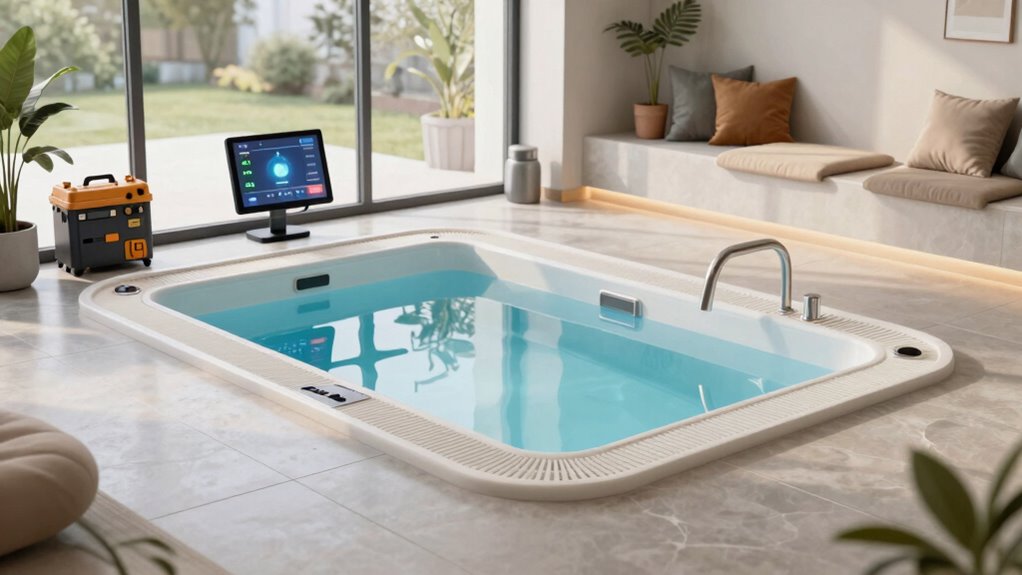
Are you contemplating purchasing an Endless Pool but unsure about the ongoing expenses? It’s smart to think about the long-term costs before making a substantial investment. While Endless Pools offer convenience and versatility, understanding the operating expenses helps you make a well-informed decision. The first aspect to evaluate is energy efficiency. These pools require electricity to power the filtration system, jets, and heating components. The more energy-efficient the model, the lower your utility bills will be over time. Look for features like insulated covers, energy-saving modes, and efficient pumps, which can considerably reduce your overall energy consumption. An energy-efficient model might cost more upfront, but it pays off by decreasing your monthly expenses, especially if you plan to use the pool frequently.
Prioritize energy-efficient features to reduce long-term pool expenses and save on utility bills.
Next, reflect on maintenance expenses. Like any home appliance or feature, an Endless Pool needs regular upkeep to stay in good shape. This includes cleaning filters, inspecting equipment, and occasionally replacing parts. Some pools have self-cleaning filters or easy-access panels that make maintenance simpler, saving you both time and money. Keep in mind that neglecting routine maintenance can lead to bigger, more costly repairs down the line. Budget for ongoing expenses such as filter replacements, chemical treatments to keep the water safe, and occasional service calls. These costs might seem minor at first, but they add up over the years. Understanding the frequency and cost of these maintenance tasks helps you gauge the true ownership expenses. Additionally, selecting a model with energy-efficient components can help reduce ongoing costs over the lifespan of your pool. Recognizing long-term financial implications is essential to avoid surprises later on. Being aware of the availability of replacement parts** and reliable service options in your area can also influence repair costs and timelines, helping you better plan for potential expenses. Moreover, considering the lifetime durability of the pool materials can contribute to better financial planning, as more durable models tend to require fewer repairs. Also, researching the reliability of the pool’s components** can help you choose a model that minimizes unexpected breakdowns and repairs.
It’s also wise to reflect on the potential for unexpected repairs. Even with a well-maintained unit, parts can wear out or malfunction. Check the manufacturer’s warranty and see what it covers—this can shield you from major expenses if something goes wrong. Additionally, think about the availability of replacement parts and service in your area, as this can influence repair costs and timelines.
Finally, don’t forget to factor in the cost of utility bills. Running the pool’s heater, filtration system, and jets will raise your electricity bill, especially during colder months. You can offset some of these costs by using the pool during off-peak hours or investing in a pool cover to retain heat. Overall, understanding energy efficiency and maintenance expenses before purchasing your Endless Pool helps you anticipate the ongoing costs and ensures it’s a financially sustainable choice for your lifestyle.
As an affiliate, we earn on qualifying purchases.
Frequently Asked Questions
Are There Any Hidden Fees With Operating an Endless Pool?
There are typically no hidden fees with operating an endless pool, but you should watch out for potential additional charges. These might include higher electricity costs, maintenance expenses, or replacement parts. Always read the warranty and service agreements carefully to understand what’s covered. Planning for these costs guarantees you won’t be caught off guard, helping you enjoy your pool without unexpected financial surprises.
How Do Seasonal Changes Affect Operating Costs?
Coincidentally, seasonal changes directly impact your endless pool’s operating costs. During colder months, climate impact means you might spend more on heating, increasing your energy bills. Conversely, in warmer seasons, costs may decrease as less heating is needed. To manage this, seasonal budgeting helps you anticipate these fluctuations, ensuring you’re prepared financially year-round. Adjusting your pool’s temperature settings and insulating it can also help control costs seasonally.
What Maintenance Costs Are Involved Over Time?
You’ll need to budget for maintenance costs like regularly checking the chemical balance to prevent algae and bacteria growth, and replacing or cleaning water filtration systems to keep water clear and safe. Over time, these tasks guarantee your pool operates efficiently and lasts longer. Expect occasional costs for chemicals, filters, and possibly water refills, but staying consistent with maintenance helps avoid more expensive repairs later.
Can Energy-Efficient Models Reduce Overall Expenses?
Imagine your pool shimmering under soft lights, quietly saving energy with every use. Energy-efficient models cut your electricity bills, leading to significant energy savings over time. When doing a cost comparison, these models often cost more upfront but reduce operating expenses long-term. You’ll enjoy lower monthly bills, making your investment more sustainable and affordable, while keeping your pool ready for relaxing swims whenever you want.
How Does Pool Size Influence Ongoing Costs?
A larger pool generally costs more to operate because it requires more water, energy for heating, and filtration. Proper pool insulation can help reduce heating expenses, while efficient water filtration minimizes ongoing maintenance costs. When choosing pool size, consider how insulation and filtration systems can keep operating costs manageable. Smaller pools typically have lower energy and water bills, but make sure your chosen size fits your usage needs to avoid unnecessary expenses.
Conclusion
Before you plunge in, remember that understanding the operating costs of an endless pool can save you from surprises down the line. Think of it as doing your homework—better to be safe than sorry. Consider electricity, maintenance, and other expenses to get the full picture. Doing your due diligence now guarantees you won’t be caught off guard later. After all, it’s better to be safe than sorry when making a splash investment.