Choosing an automatic pool vacuum is mainly a choice between spending more for a cleaner that works independently and spending less for one that relies on equipment you already own. Robotic pool vacuum cleaners have their own motor and filter, so they can clean without drawing on the pool’s circulation system. Suction-side pool vacuum cleaners connect to a skimmer or dedicated suction line and use the pool pump to move around and collect debris.

Get pool and patio gear delivered free with Prime
- Fast, free delivery on millions of items
- Prime Video, Amazon Music and more included
- Member-only deals all year

Zodiac G3 Suction-Side In-Ground Pool Cleaner
- ✔ Pool compatibility: In-ground pools
- ✔ Power source: Suction
- ✔ Pump compatibility: Single-speed, two-speed, and variable-speed pumps; described as suitable for low-flow pumps
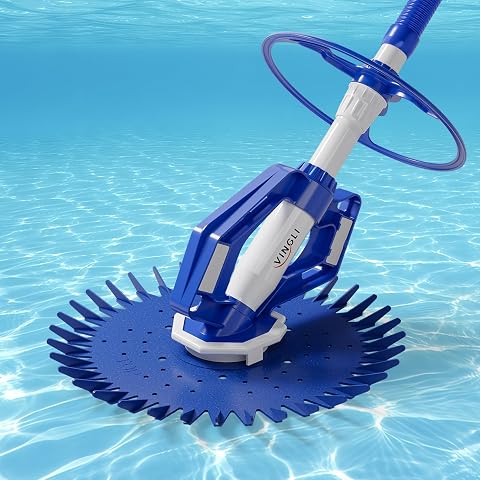
VINGLI Automatic Wall-Climbing Pool Cleaner with 33-Foot Hoses
- ✔ Brand and model: VINGLI Suction Pool Cleaner 277
- ✔ Pool type: In-ground
- ✔ Power source: Air-powered; connects to existing filtration system

XtremepowerUS Automatic Suction-Side Pool Cleaner with 30-Foot Hose Set
- ✔ Pool type: In-ground
- ✔ Cleaning type: Automatic suction-side
- ✔ Power source: Existing pool pump
The difference affects more than the purchase price: it changes how the cleaner handles fine dirt, how much it adds to pump use, and how much setup and filter maintenance it needs. A robotic model is usually the better fit for frequent cleaning, fine debris, and owners who want to run the pool pump less. A suction-side model makes more sense for a tighter budget, a compatible pool setup, and routine removal of larger debris. The right comparison is between the total cost and effort of each system for your pool, not just the price on the shelf.
At a Glance
| Criteria | Robotic pool vacuum cleaners | Suction-side pool vacuum cleaners | Winner |
|---|---|---|---|
| Upfront cost | Usually higher; features and capacity vary widely by model | Usually lower, though an existing dedicated suction line or compatible setup is needed | B |
| Energy use | Runs on its own low-voltage motor rather than requiring the pool pump to run for cleaning | Uses the pool pump, so cleaning depends on running the circulation system | A |
| Fine debris and filtration | Uses an onboard filter; some models capture fine particles more effectively | Debris goes to the pool’s filter basket or main filter; fine dirt may pass through or load the filter | A |
| Setup and compatibility | Needs a suitable power supply and safe cable placement; no suction connection required | Connects to a skimmer or dedicated suction line; performance depends on plumbing and flow | Depends |
| Cleaning coverage | Model-dependent; many clean the floor, and some also climb walls or clean the waterline | Often suited to floor cleaning; wall and waterline performance varies by design and pool | A |
| Routine maintenance | Empty and rinse the onboard filter after cleaning; check brushes and cable | Check and clear the cleaner, pump basket, and pool filter; backwashing or filter cleaning may be needed | A |
| Operating convenience | Can run independently of pool circulation, but needs placement and cable management | No electrical cable to manage, but it shares pump operation and requires suction setup | A |
Zodiac G3 Suction-Side In-Ground Pool Cleaner
The Zodiac G3 earns the top position because it gives buyers the clearest route to matching a suction cleaner with a range of in-ground pool systems. It is described as working with low-flow and variable-speed pumps, as well as single- and two-speed pumps, and it lists tile, vinyl, gunite, and fiberglass as compatible surfaces. That breadth makes it a stronger first choice for owners whose equipment or finish makes a narrower model a questionable fit. VINGLI, by comparison, spells out a minimum pump capacity; XtremepowerUS says it uses the existing pump but provides no equivalent pump compatibility detail in the supplied specifications.Its 39-foot push-fit hose is the longest included here, giving it more reach than the 33-foot VINGLI and 30-foot XtremepowerUS sets. The 36-fin disc is designed to maintain grip across surfaces, and the wheel deflector is intended to help it navigate tight corners. Those details make the G3 the most broadly specified option in this group, though they do not remove the need to confirm that your skimmer or dedicated suction line is suitable.The tradeoff is shared by the other two picks: the G3 is still a suction-side cleaner tied to your filtration system, not a self-contained cleaner. It is also limited to in-ground pools and requires a compatible suction connection. Buyers seeking a device that does not rely on pool plumbing should look beyond this lineup. Choose the G3 when compatibility across pump types and surfaces matters more than a simpler, less fully specified alternative.
Pros:
- Works with single-speed, two-speed, variable-speed, and low-flow pumps.
- Lists tile, vinyl, gunite, and fiberglass as compatible surfaces.
- Includes a 39-foot push-fit hose, longer than the other two options.
- Wheel deflector and 36-fin disc are designed to aid corner movement and surface grip.
Cons:
- Requires a skimmer or dedicated suction line.
- Limited to in-ground pools and depends on the existing pool system.
Best for: Owners of in-ground pools with variable-speed or low-flow pumps, or with tile, vinyl, gunite, or fiberglass surfaces, who want the broadest stated compatibility in this comparison.
Not ideal for: Owners without a skimmer or dedicated suction line, above-ground pool owners, or buyers seeking a cleaner independent of the pool pump and filtration system.
Bottom line: For buyers who need broad stated pump and surface compatibility, the Zodiac G3 is the most adaptable suction-side choice here, as long as their pool has a suitable suction connection.
“For buyers who need broad stated pump and surface compatibility, the Zodiac G3 is the most adaptable suction-side choice here, as long as their pool has a suitable suction connection.”
VINGLI Automatic Wall-Climbing Pool Cleaner with 33-Foot Hoses
VINGLI is the clearest fit when you want a suction cleaner specifically described as tackling both pool floors and walls and need a 33-foot hose set. Its ten 3.3-foot sections offer two more feet of reach than XtremepowerUS, while the Zodiac G3 still leads the group at 39 feet. That middle position can suit pools where the shortest set may be restrictive but the G3’s broader compatibility is not the deciding factor.The standout limitation is unusually clear: VINGLI calls for a pool pump rated at least 3/4 HP or 1600 GPH. This makes the fit easier to evaluate, but means owners should check their pump before buying. The Zodiac is described as compatible with low-flow and variable-speed pumps, so it is the safer option when pump output is a concern. VINGLI also connects to the existing filtration system; it does not add an independent power source or avoid dependence on pool plumbing.A wheel deflector is intended to help it move through tight corners, and the product description calls out quiet operation. The hose sections are described as durable and scuff-resistant. Those are useful design aims, but we would keep the decision grounded in the verified fit factors: pump capacity, suction connection, in-ground pool use, and desired wall coverage. Choose VINGLI when its stated pump threshold works for your equipment and its hose reach matches your pool; skip it if your pump falls below that threshold or you need broader pump guidance.
Pros:
- Designed to clean both pool floors and walls.
- Includes 33 feet of hose in ten 3.3-foot sections.
- Wheel deflector is intended to help with tight corners.
- Described as designed for quiet operation.
Cons:
- Requires a pump rated at least 3/4 HP or 1600 GPH.
- Connects to and depends on the existing filtration system.
- The included hose is shorter than the Zodiac G3’s 39-foot set.
Best for: In-ground pool owners with a pump rated at least 3/4 HP or 1600 GPH who want a cleaner described for floor and wall coverage and need 33 feet of hose.
Not ideal for: Owners with lower-capacity pumps, no compatible connection to the filtration system, or pools outside the in-ground category.
Bottom line: VINGLI makes sense when its pump threshold is a confirmed match and you want stated floor-and-wall coverage with more hose than XtremepowerUS provides.
“VINGLI makes sense when its pump threshold is a confirmed match and you want stated floor-and-wall coverage with more hose than XtremepowerUS provides.”
XtremepowerUS Automatic Suction-Side Pool Cleaner with 30-Foot Hose Set
XtremepowerUS is the most straightforwardly described option for buyers who want an automatic cleaner using the pool pump they already have. It needs no electrical connection and no separate booster pump, and the included ten-hose set totals 30 feet. That makes its basic setup easy to understand, though “uses the existing pump” does not by itself confirm that every pump or plumbing arrangement will be compatible. Owners still need a suitable skimmer or dedicated suction line.Like VINGLI and Zodiac, this cleaner is designed for in-ground pools and described as cleaning floors while climbing walls. Its hose set is the shortest in this group: five feet shorter than VINGLI’s and nine feet shorter than the Zodiac G3’s. If the pool is compact and the connection is conveniently placed, that may be enough; for a larger layout or a distant corner, the longer included reach of the other two picks deserves attention. VINGLI also specifies a minimum pump capacity, while Zodiac lists compatibility across several pump types, giving those alternatives a clearer fit story for pump-sensitive buyers.The supplied details describe a flexible cleaning disc intended to move over pool floors and climb walls, but they do not name compatible surface materials or pump types. That missing specificity makes XtremepowerUS harder to recommend for pools with specialized compatibility needs. We see it as a practical candidate when the pool’s suction setup is already known to work with this cleaner and buyers value a no-electricity, no-booster configuration. If pump compatibility or surface fit is uncertain, compare those details with the Zodiac’s broader stated compatibility before deciding.
Pros:
- Uses the existing pool pump without a separate booster pump.
- Requires no electrical connection.
- Includes a 30-foot hose set with ten hoses.
- Designed for floor cleaning and wall climbing.
Cons:
- Requires a compatible skimmer or dedicated suction line.
- Limited to in-ground pools.
- The supplied specifications do not name compatible pump types or surface materials.
Best for: Owners of in-ground pools with a compatible skimmer or dedicated suction line who want a suction-side setup without electrical connections or a separate booster pump.
Not ideal for: Buyers who need stated support for specific pump types or pool surfaces, or whose pool may need more than 30 feet of hose reach.
Bottom line: XtremepowerUS is a straightforward option when your suction connection is compatible and 30 feet of hose is sufficient, but its fit details are less complete than the Zodiac G3’s.
“XtremepowerUS is a straightforward option when your suction connection is compatible and 30 feet of hose is sufficient, but its fit details are less complete than the Zodiac G3’s.”
As an Amazon Associate we earn from qualifying purchases.
Key Differences
The biggest practical gap is independence. A robotic cleaner supplies its own movement and filtration, which lets it clean without relying on the pool pump’s suction. That can reduce the need to run the main circulation system solely to vacuum, and it keeps collected dirt in a removable basket or cartridge. The tradeoff is a larger initial purchase and another filter to empty. Suction-side cleaners avoid that separate motor and filter, but their performance and schedule are tied to the pump, plumbing, and main filter.
For everyday results, neither category is universally superior. Robotic models are often the stronger choice for fine debris, varied cleaning paths, and reducing load on the pool’s filter, but their coverage depends on the specific model and pool shape. Suction cleaners are straightforward for leaves and ordinary floor debris when the pool has adequate suction, though small particles may circulate into the main filter. In practice, the best value depends on how often you clean, what debris enters the pool, and whether your pump already runs long enough to support suction cleaning.
Detailed Comparison
Upfront cost (Suction-side pool vacuum cleaners wins — major)
Suction-side cleaners usually win on initial price, making them appealing when the pool already has a compatible skimmer or suction port. Robotic cleaners cost more because they include a separate drive system and filtration. The gap is major for buyers focused on purchase cost, but it does not settle long-term value: pump runtime, filter care, and cleaning frequency also matter.
Energy use (Robotic pool vacuum cleaners wins — moderate)
Robotic cleaners win because they use their own motor rather than requiring the pool pump to run for vacuuming. The savings depend on local electricity costs, pump efficiency, and whether the pump would be running anyway for circulation. The practical advantage is moderate: it matters most when cleaning would otherwise add substantial pump runtime.
Fine debris and filtration (Robotic pool vacuum cleaners wins — moderate)
Robotic cleaners generally have the advantage when fine dust or silt is a recurring problem, since many models filter debris in their own removable basket or cartridge. Suction-side cleaners send debris through the pool’s existing filter, which may capture fine particles but can load the filter more quickly or allow some particles to pass, depending on filter type. The gap is moderate and depends on the specific cleaner and filtration system.
Setup and compatibility (major difference)
This is a pool-specific decision. A suction-side cleaner is simple to connect if the pool has a compatible skimmer or suction line and enough pump flow; without that setup, it may be a poor fit or require plumbing changes. A robotic model avoids suction plumbing but needs an appropriate power source and thoughtful cable placement. Neither wins for every pool, so check equipment and manufacturer requirements before buying.
Cleaning coverage (Robotic pool vacuum cleaners wins — moderate)
Robotic cleaners have the edge across the category because many models are designed to cover more than the floor, with some offering wall or waterline cleaning. Suction-side models are commonly focused on the floor, although capabilities vary. The difference is moderate for a simple, flat-bottom pool and more consequential when walls or waterlines need regular attention. Check the exact model’s coverage claims against your pool.
Routine maintenance (Robotic pool vacuum cleaners wins — minor)
Robotic cleaners win slightly for a more contained cleaning routine: remove and rinse their own basket or cartridge, then check the brushes and cable. Suction-side cleaners have fewer dedicated components, but their debris enters the pump basket and pool filter, so cleaning can mean servicing those parts too. The gap is minor for pools with light debris and a low-maintenance filter; it grows when the filter needs frequent clearing.
Operating convenience (Robotic pool vacuum cleaners wins — moderate)
Robotic cleaners win for independent scheduling and cleaning without the pump, although owners still need to place the unit and manage its cable. Suction-side cleaners avoid a power cable and have a simple connection, but they operate through the pool’s circulation system. This is a moderate advantage for owners who value separate cleaning runs; it matters less when the pump already runs during the desired cleaning period.
Robotic pool vacuum cleaners: Pros and Cons
Pros:
- Operates without suction from the pool pump
- Keeps collected debris in its own removable filter
- Often offers broader coverage, depending on model
- Can reduce pump runtime devoted specifically to vacuuming
Cons:
- Higher initial purchase cost
- Requires a suitable power source and cable management
- Onboard filter needs regular emptying and rinsing
- Coverage and fine-particle performance vary between models
Suction-side pool vacuum cleaners: Pros and Cons
Pros:
- Usually costs less to buy
- Uses existing pool suction and filtration equipment
- No powered cable needs placement around the pool
- Can handle routine floor debris when pump flow is adequate
Cons:
- Cleaning depends on the pump and compatible plumbing
- Can add to pump runtime and load the pool filter
- May be less effective for fine particles, depending on the filter
- Wall and waterline cleaning are less common and model-dependent
Who Should Choose What
Choose Robotic pool vacuum cleaners if:
- You clean frequently and want vacuuming to run independently of pool circulation.
- Fine dust or silt is a recurring issue and you want debris held in a separate filter.
- Your pool needs floor and wall coverage, and the model you select supports it.
- You are willing to pay more upfront for a self-contained cleaning system.
Choose Suction-side pool vacuum cleaners if:
- Keeping the initial purchase price low is the priority.
- Your pool already has a compatible suction connection and adequate pump flow.
- Most debris is ordinary leaf or floor debris, and the pool filter handles it well.
- The pump is already scheduled to run while cleaning takes place.
Skip both if: Skip both if your pool’s shape, access, or equipment is incompatible with the models available; compare pressure-side or manual options suited to that setup.
Value for Money
Suction-side cleaners tend to offer better value when the pool already has the right plumbing, debris is mostly large, and the pump would run during cleaning regardless. In that situation, paying extra for an independent cleaner may not return much practical benefit.
Paying more for a robotic cleaner is worthwhile for owners who clean often, want to reduce pump-dependent vacuuming, or regularly deal with fine debris and broader coverage needs. Its higher price buys independent operation and onboard filtration, not a guarantee that every model will clean every pool better. Compare the specific model’s coverage, filter type, and maintenance needs against your pool before paying a premium.
Final Verdict
For most owners who want a more independent, capable automatic cleaner and can afford the higher initial cost, choose a robotic pool vacuum. It keeps vacuuming separate from pump suction, collects debris in its own filter, and commonly offers broader coverage. Choose a suction-side cleaner if your pool is already equipped for it, your budget is tight, and the pump schedule and main filter suit your cleaning routine. The deciding factor is whether independence and separate filtration are worth the added cost for your pool.
Frequently Asked Questions
Are robotic pool vacuums better than suction-side cleaners?
Robotic cleaners are generally better for independent operation and onboard debris collection. Suction-side cleaners can be the better buy when the pool has compatible plumbing, the pump already runs during cleaning, and the main need is routine floor debris removal.
Does a suction-side pool vacuum use more electricity?
It uses the pool pump to create suction, so vacuuming requires the pump to run. A robotic cleaner uses its own motor instead. The actual cost difference depends on pump efficiency, electricity rates, and whether circulation would run at the same time anyway.
Which type is better for fine dirt?
Robotic cleaners often have an advantage because they collect debris in their own filter, and some models are designed for fine particles. Results depend on the filter supplied and the dirt involved. A suction cleaner sends debris to the pool’s main filter, whose ability to capture fine material varies.
Can a suction-side cleaner climb walls?
Some models can climb parts of a pool wall, but many are intended mainly for floor cleaning. Check the specific model’s rated coverage and suitability for your pool surface rather than assuming all suction cleaners behave alike.
Is a robotic pool vacuum worth the higher price?
It can be worth paying more if you clean often, want a cleaner that does not rely on pump suction, or need onboard filtration and broader coverage. If the pump already runs during cleaning and your current filter handles debris well, a compatible suction-side cleaner may deliver better value.