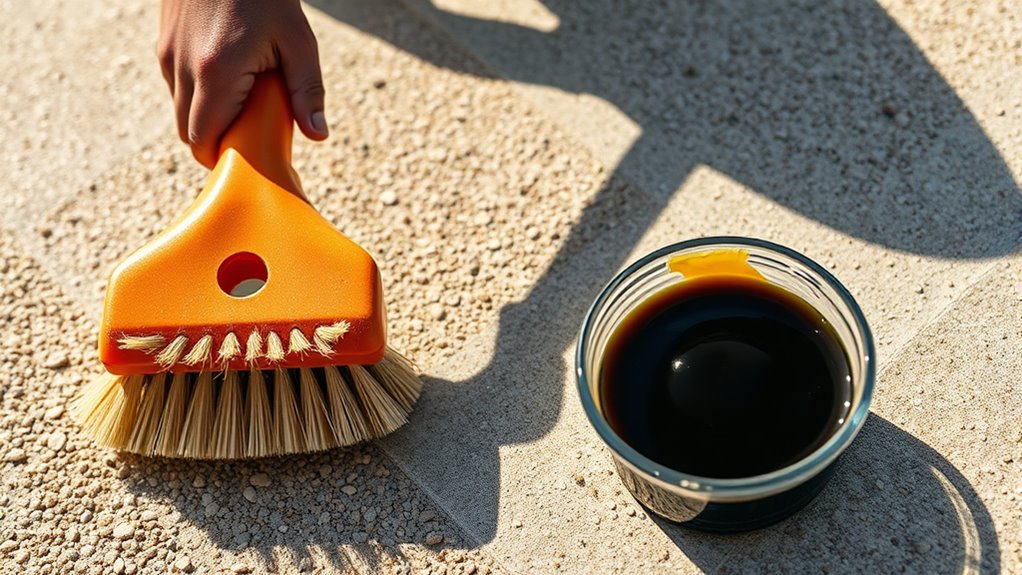

To keep your pool decking in top shape, you should regularly clean it with gentle, non-abrasive cleaners suited for your material, like mild soap and water or specialized deck cleaners for tougher stains. Sealing your deck with a high-quality, product-specific sealant protects against moisture, UV damage, and stains. Proper application involves cleaning and drying the surface first, then applying coats carefully following the manufacturer’s instructions. For more tips on choosing the right materials and techniques, keep exploring the details below.
Key Takeaways
- Use gentle, non-abrasive cleaners suitable for your deck material, such as mild soap and water, for routine cleaning.
- Select sealants designed for specific materials like concrete, wood, or stone to ensure effective protection.
- Ensure surfaces are clean, dry, and free of debris before applying sealants to maximize adhesion and effectiveness.
- Follow manufacturer instructions carefully, applying multiple coats if recommended, to achieve optimal sealing results.
- Regularly inspect and reseal your deck to prevent damage from moisture, UV rays, and wear, maintaining durability and appearance.

Maintaining your pool decking is vital to keep it safe, attractive, and durable throughout the seasons. Proper care begins with regular pool maintenance, which includes cleaning the deck to prevent the buildup of dirt, algae, and stains. When you’re diligent about sweeping or rinsing the surface, you help preserve its appearance and prevent slipping hazards. Over time, weather exposure and frequent use can cause your deck to look worn or faded, making deck restoration necessary to bring back its original beauty. Addressing minor damages early can save you money and effort later, guaranteeing your pool area remains inviting and safe.
Regular pool deck maintenance keeps it safe, attractive, and long-lasting.
Choosing the right cleaning and sealing materials plays an indispensable role in maintaining your deck’s integrity. For routine cleaning, use gentle, non-abrasive cleaners suited to your specific deck material—whether concrete, wood, stone, or pavers. A mixture of mild soap and water often works well, but for tougher stains or algae, specialized deck cleaners may be required. When you scrub the surface, avoid harsh chemicals that could damage the material or degrade the sealant over time. After cleaning, rinse thoroughly to remove any residue that might compromise the sealing process or cause slipping hazards.
Sealing your pool deck is one of the most effective ways to protect it from moisture, UV rays, and staining. When you apply a high-quality sealer, you create a barrier that extends the lifespan of your deck and keeps it looking fresh. Make sure the surface is clean and dry before sealing. Choose a sealant specifically designed for your deck material—whether it’s a penetrating sealer for concrete or a protective finish for wood. Follow the manufacturer’s instructions carefully for application, and consider applying multiple coats if recommended. Regular sealing helps prevent cracks, spalling, and weather-related deterioration, saving you from costly repairs down the line.
If your deck shows signs of wear, such as cracking, fading, or surface pitting, deck restoration becomes necessary. Restoring your deck involves more than just cleaning; it may require sanding, patching, or resealing to bring it back to life. For wood decks, sanding smooths out rough patches and prepares the surface for a fresh coat of stain or sealant. Concrete or stone decks might need patching or resurfacing to repair damage. When you invest time in proper restoration, you not only improve safety but also enhance the overall look of your outdoor space. Regular maintenance combined with timely restoration ensures your pool decking remains a beautiful, functional feature for years to come.
Frequently Asked Questions
How Often Should I Reseal My Pool Decking?
You should reseal your pool decking every 1 to 3 years, depending on the sealing frequency recommended by the manufacturer and your maintenance schedule. Regularly inspect the surface for signs of wear or fading, and reseal promptly to maintain protection and appearance. Proper sealing extends the deck’s lifespan, prevents water damage, and keeps it looking fresh. Adjust the resealing interval based on weather exposure and foot traffic for ideal results.
Can I Use Pressure Washers on My Pool Decking?
You can use a pressure washer on your pool decking, but be aware of pressure washer risks like damaging the surface or causing cracks. To avoid this, opt for alternative cleaning methods like gentle scrubbing with a deck brush and mild detergent. If you choose a pressure washer, use a low-pressure setting and keep the nozzle at a safe distance. Always test a small area first to prevent damage.
What Are Common Signs My Sealant Needs Reapplication?
You’ll notice your sealant needs reapplication when you see signs of deterioration, such as cracking, peeling, or flaking. Discoloration indicators, like fading or uneven patches, also signal it’s time to reseal. These signs suggest the protective layer is compromised, leaving your deck vulnerable to damage. Regularly inspect your pool decking and reseal when you spot these issues to maintain its appearance and durability.
Are There Eco-Friendly Cleaning Options for Pool Decking?
Yes, you can use eco-friendly cleaners for your pool decking, like vinegar and baking soda, which are natural options that effectively remove dirt and grime without harsh chemicals. For sealing, consider natural sealing options like beeswax or plant-based sealants that protect your deck while being environmentally friendly. These choices help maintain your decking’s appearance and longevity while reducing environmental impact.
How Do I Prevent Mold and Mildew on My Deck?
You might think mold prevention and mildew control are complicated, but they’re simple once you stay proactive. Regularly clean your deck with eco-friendly solutions, making sure to scrub away dirt and organic material. Keep the area dry by removing standing water and improving drainage. Seal your deck to create a barrier against moisture. These steps help prevent mold and mildew, keeping your pool deck safe, clean, and inviting all season long.
Conclusion
Now that you know how to clean and seal your pool decking, you’ll keep it looking pristine for years. Regular maintenance isn’t just smart—it’s essential. Think of it as your own personal Robin Hood, protecting your investment from the elements. With a little effort, your deck will stay inviting and safe, even if you’re tempted to channel your inner knight and take a swim in the year of 1492! Keep caring, and your pool area will remain a timeless oasis.