To keep your pool water sparkling, regularly clean and maintain your cartridge, sand, and DE filters. Rinse cartridge filters every 2 to 4 weeks, check for tears, and replace every 1 to 2 years. Backwash sand and DE filters every 4 to 6 weeks, then top off or replenish their media as needed. Proper care prevents clogs, extends filter life, and guarantees clear water. Continue with these tips to master your pool’s filtration system.
Key Takeaways
- Regularly inspect and clean cartridge filters every 2-4 weeks by rinsing with a garden hose.
- Perform backwashing of sand and DE filters every 4-6 weeks to remove debris and maintain flow.
- Replenish DE powder after each backwash to restore filter efficiency and prevent clogging.
- Replace cartridge filters every 1-2 years and sand every 3-5 years for optimal performance.
- Proper filter maintenance prevents water quality issues, reduces strain on the pump, and extends filter lifespan.
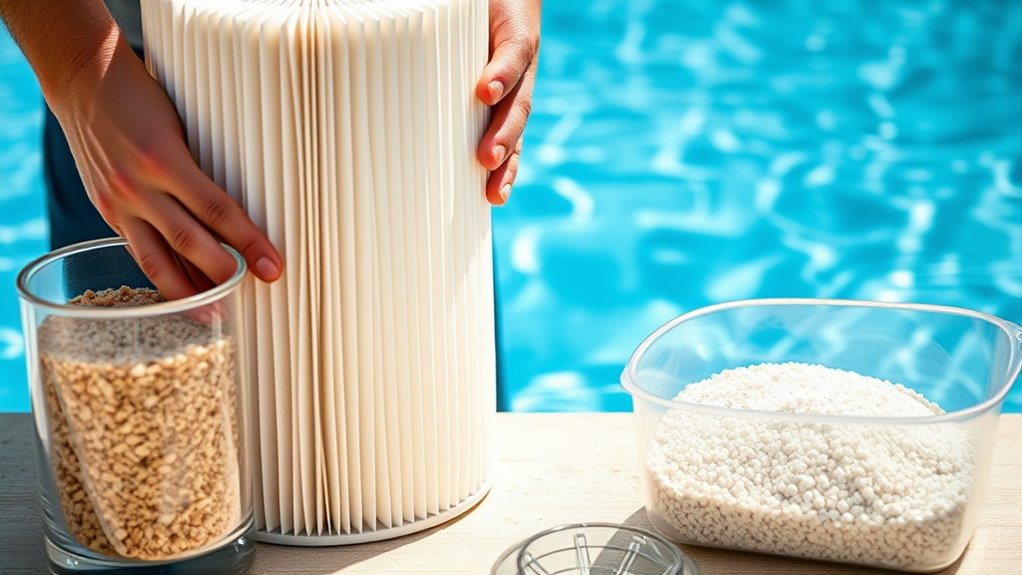
Have you ever wondered why your pool’s water isn’t as clear as it used to be? One common reason is that your pool filter isn’t working as efficiently as it should. Understanding the different pool filter types—cartridge, sand, and DE (diatomaceous earth)—can help you keep your water sparkling clean. Each filter type requires a specific maintenance schedule to ensure peak performance, so knowing how to care for each one is essential.
Keeping your pool water clear depends on proper maintenance of cartridge, sand, and DE filters.
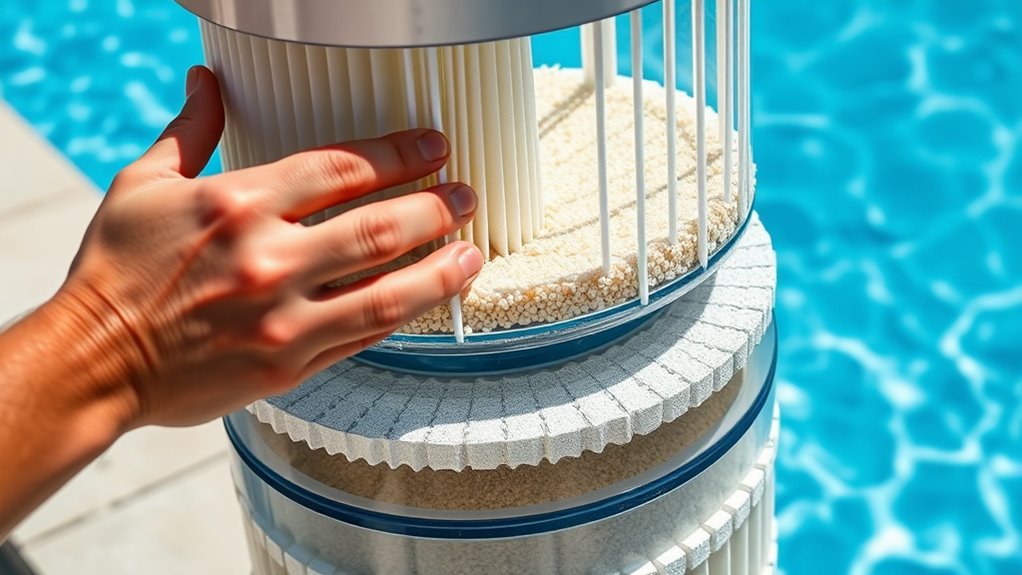
If you have a cartridge filter, you’re dealing with a system that uses replaceable or cleanable filter elements made of pleated paper or synthetic material. Cartridge filters are popular because they’re easy to maintain and don’t require backwashing. To keep your pool water clear, you should inspect and clean the cartridge every 2 to 4 weeks during peak swimming season. Regular cleaning involves removing the cartridge, rinsing it with a garden hose to eliminate dirt and debris, and checking for tears or damage. Replacing the cartridge every 1 to 2 years, depending on usage and manufacturer recommendations, ensures your filter continues to operate efficiently. Neglecting maintenance can lead to reduced water flow, cloudy water, and increased strain on your pool’s pump. Proper maintenance of your filter can also extend its lifespan and improve overall water quality.
Sand filters use a bed of specially graded sand to trap dirt and particles. They’re known for their durability and require a maintenance schedule that involves backwashing about once every 4 to 6 weeks or when you notice a drop in water flow. During backwashing, you run the system in reverse to flush out accumulated debris. After backwashing, it’s a good idea to check the sand level and top it off if it’s compacted or has settled. Generally, sand filters need a sand replacement every 3 to 5 years, depending on use. If you don’t maintain the sand filter properly, you risk cloudy water, poor filtration, and increased energy costs due to inefficiency.
DE filters are considered the most efficient, using a fine powder made from fossilized diatoms to trap microscopic particles. Maintaining a DE filter involves regular backwashing every 4 to 6 weeks, along with replenishing the DE powder—about a quarter to a third of the filter’s capacity—after each backwash. This process keeps the filter’s porosity intact and prevents clogging. DE filters require more attentive maintenance, but they also produce the clearest water. Failing to follow a proper maintenance schedule can lead to a decrease in filtration efficiency, cloudy water, and damage to the filter grid. Regularly checking and maintaining the filter’s performance ensures optimal operation and water clarity.
Frequently Asked Questions
How Often Should I Replace My Pool Filter Media?
You should replace your pool filter media based on its filter lifespan and media replacement frequency. Generally, cartridges need replacing every 1 to 2 years, sand every 4 to 8 years, and DE filters every 1 to 2 years. Regularly inspect your filter’s performance; if you notice reduced flow or increased debris, it’s time to replace the media. Staying on top of replacement ensures your pool stays clean and well-maintained.
Can I Clean My Filter Without Disturbing the System?
Yes, you can clean your filter without disturbing the system by using proper filter cleaning techniques. For cartridge filters, gently rinse with a garden hose to remove debris, avoiding harsh scrubbing that could damage the media. Sand and DE filters often require backwashing, which typically doesn’t disturb the system if done correctly. Always follow manufacturer instructions to ensure a thorough clean while maintaining system stability.
What Are Signs of a Failing Pool Filter?
If your pool filter isn’t working well, you’ll notice cloudy water, decreased flow, or pressure gauge spikes. These signs indicate a failing filter, often due to dirt buildup or worn parts affecting its lifespan. To troubleshoot, check for clogs, clean or replace filter media, and inspect for leaks. Regular maintenance helps extend your filter’s lifespan and keeps your pool crystal clear.
How Does Temperature Affect Filter Maintenance?
Temperature impacts your pool filter’s efficiency markedly. When it gets colder, debris and algae can accumulate more quickly, making your filter work harder and requiring more frequent cleaning. Conversely, high temperatures can cause organic material to break down faster, potentially clogging the filter. Maintaining proper chemical balance helps mitigate these effects, ensuring your filter operates efficiently regardless of temperature fluctuations. Regular maintenance keeps your pool clean and clear year-round.
Are There Eco-Friendly Cleaning Options for Pool Filters?
Think of eco-friendly cleaning options as a gentle rain nourishing your pool’s health. You can use biodegradable solutions that break down naturally, minimizing environmental impact. These eco-friendly cleaning methods are safe for your pool and the planet, ensuring your filter stays clean without harsh chemicals. Embrace biodegradable solutions to keep your pool sparkling while protecting nature’s delicate balance, making your maintenance routine both effective and environmentally conscious.
Conclusion
Just like tending to a garden guarantees vibrant blooms, cleaning your pool filters nourishes your oasis, keeping it clear and inviting. Each cartridge, sand, or DE filter is a vessel holding the promise of pristine water—symbolizing your effort and care. When you maintain them regularly, you preserve the flow of life and refreshment in your backyard sanctuary. Your dedication transforms routine chores into a silent guardian of tranquility, allowing your pool’s true beauty to shine through.