To prevent mold around your indoor pool, controlling humidity is vital. A pool dehumidifier removes excess moisture from the air, helping to keep humidity levels between 50-60%. Proper installation, regular maintenance, and choosing energy-efficient models guarantee effective operation. Placing the unit correctly and monitoring humidity with a hygrometer help avoid mold growth and damage. Keep conditions in check, and you’ll effectively protect your pool area—stay with us to learn more about ideal dehumidifier use.
Key Takeaways
- Proper humidity levels (50-60%) prevent mold growth and protect pool structures from moisture damage.
- Pool dehumidifiers remove excess moisture, maintaining air quality and reducing mold risk.
- Correct placement ensures even airflow, targeting high humidity zones without obstruction.
- Regular maintenance of filters and components keeps dehumidifiers effective in mold prevention.
- Choosing energy-efficient, appropriately sized units enhances performance and supports mold control efforts.
Why Humidity Control Is Key to Prevent Mold in Indoor Pools
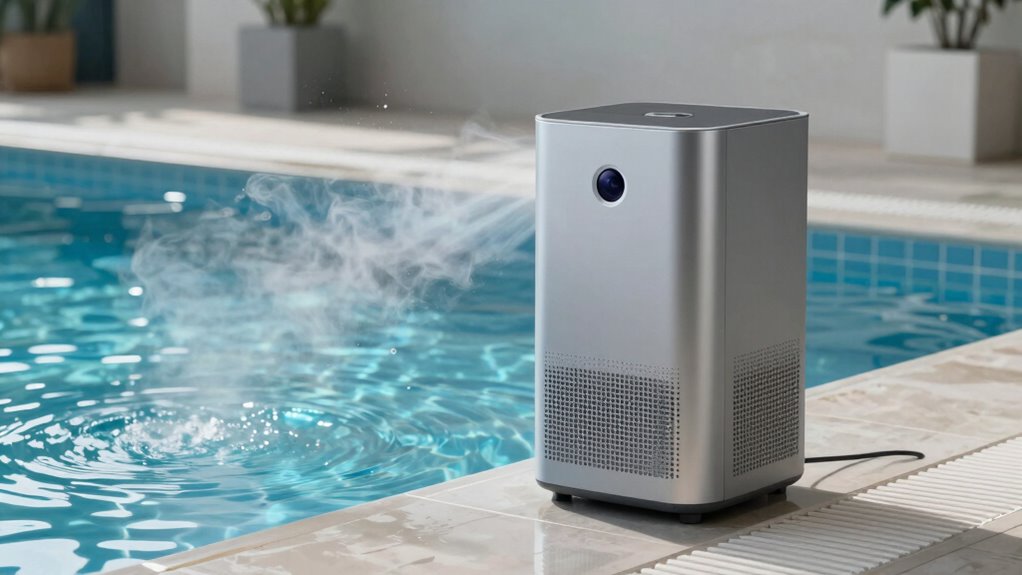
Since excess humidity creates the perfect environment for mold growth, controlling moisture levels in your indoor pool area is essential. Good air circulation helps distribute humidity evenly, preventing pockets of dampness where mold can thrive. By ensuring proper airflow, you reduce stagnant areas that trap moisture. Additionally, moisture barriers like vapor barriers or waterproof coatings act as a first line of defense, stopping moisture from seeping into walls and ceilings. These barriers work alongside ventilation to maintain a balanced humidity level. Proper humidity levels are vital because they directly influence mold development and overall air quality. Without proper control, high moisture promotes mold spores to settle and grow on surfaces, which can cause health issues and damage your property. Implementing humidity control measures is crucial for maintaining a safe indoor environment. Keeping humidity in check with effective air circulation and moisture barriers is the key to creating a safe, mold-free indoor pool environment.
How Do Pool Dehumidifiers Keep Mold and Damage Away?
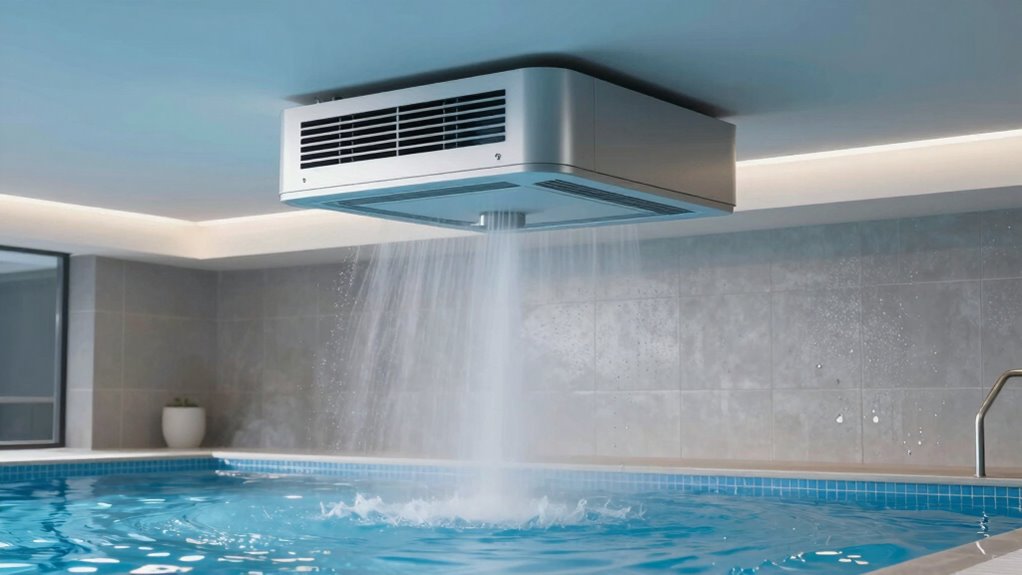
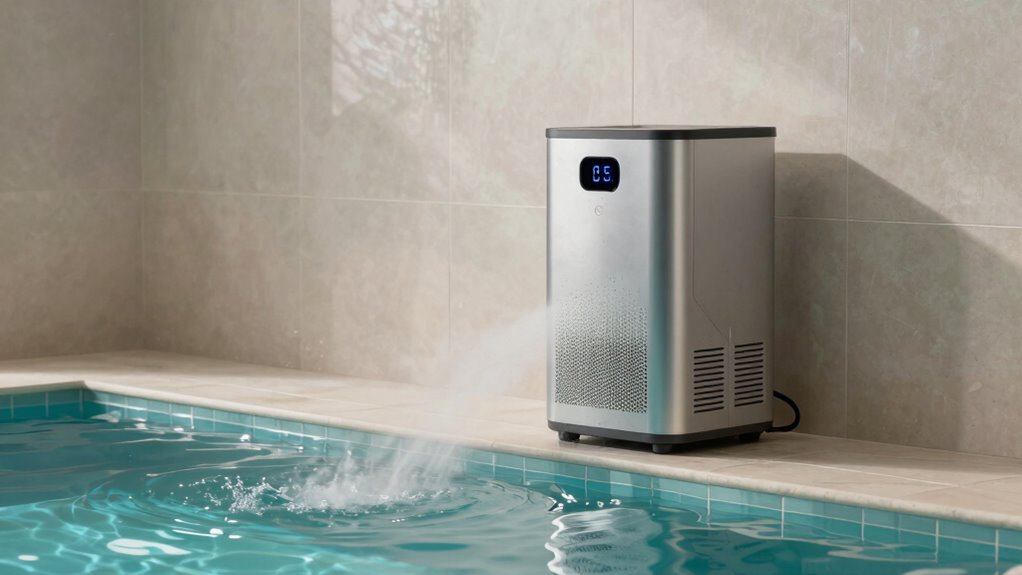
Pool dehumidifiers actively remove excess moisture from the air, preventing humidity levels from reaching the point where mold can develop. They do this by continuously monitoring humidity levels with sensitive sensors, ensuring ideal conditions for mold prevention. When humidity sensors detect high moisture, the dehumidifier kicks in to extract excess water vapor, maintaining a healthy environment. Proper humidity regulation is critical to avoiding mold growth and ensuring a safe indoor atmosphere. This process not only keeps mold at bay but also protects your pool’s structure and finishes from damage. To enhance effectiveness, modern dehumidifiers often feature precise humidity sensors for accurate measurements, automatic shut-off when perfect humidity is reached, continuous monitoring to prevent fluctuations, and Effective moisture control strategies to maintain optimal indoor air quality, which is essential for mold prevention. Additionally, maintaining proper ventilation practices supports consistent humidity levels and enhances overall indoor air health.
What Features Matter Most When Choosing a Pool Dehumidifier?
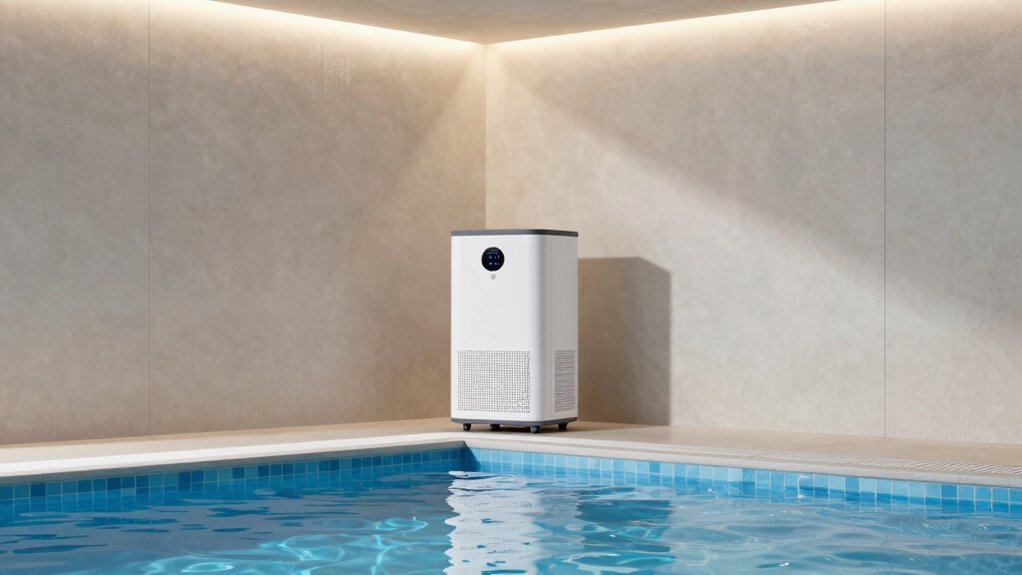
Choosing the right pool dehumidifier involves prioritizing key features that guarantee effective moisture control and long-term reliability. First, look for energy efficiency, as a unit with good energy ratings will save you money and reduce environmental impact. An energy-efficient dehumidifier can operate effectively without high power consumption, making it a smart investment. Noise levels are also essential—since your pool area is often used for relaxation, select a model that operates quietly to avoid disruptions. Additionally, consider features like adjustable humidity controls, automatic shut-off, and easy maintenance. A well-designed dehumidifier with these features ensures consistent performance, keeps mold at bay, and creates a comfortable, safe environment in your indoor pool area. Furthermore, understanding the horsepower of electric dirt bikes can help you appreciate the importance of choosing equipment with adequate power, similar to selecting a dehumidifier with sufficient capacity to handle the moisture levels effectively. To maximize efficiency, look for units with advanced moisture sensors that can automatically adjust operation based on real-time humidity levels. Incorporating smart technology into your dehumidifier can also enhance convenience and allow for remote monitoring and control. Additionally, selecting a unit with durable construction ensures it withstands the humid environment over time. Moreover, paying attention to energy efficiency ratings can significantly impact your operational costs and environmental footprint in the long run.
How to Install and Set Up Your Indoor Pool Dehumidifier
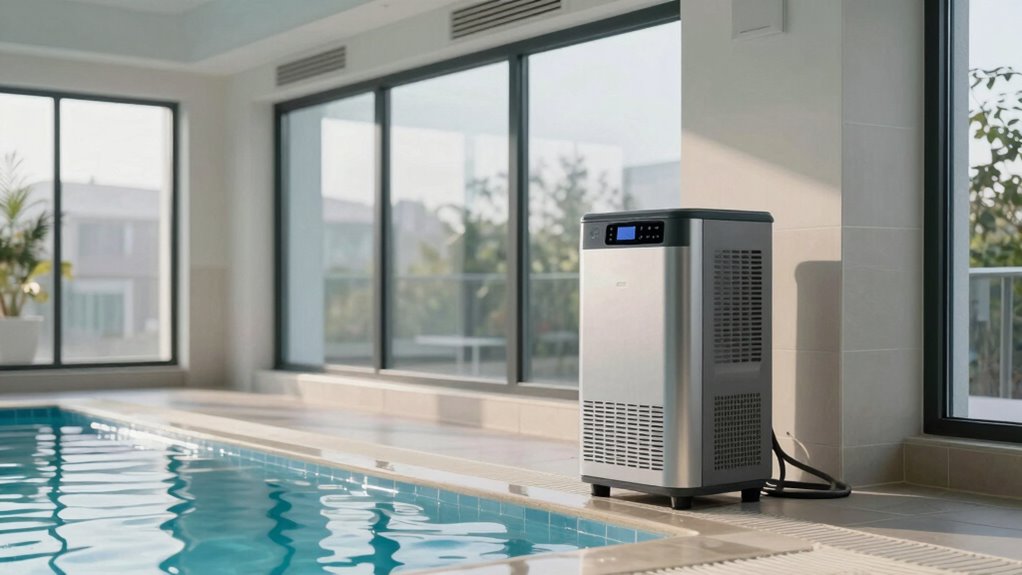
To guarantee your dehumidifier works efficiently, start by choosing the right location where it can operate freely and access ventilation. Next, make sure the electrical connections are properly installed to handle the unit’s power needs safely. Proper air circulation is essential for even humidity control throughout your indoor pool area, preventing mold hotspots. Additionally, ensuring adequate ventilation pathways can help disperse humidity more effectively. Finally, set your desired humidity levels to maintain a comfortable and balanced indoor environment. Understanding seasonal changes in humidity can help you adjust your dehumidifier settings more effectively throughout the year, especially as humidity levels tend to vary with outdoor weather patterns. Being aware of proper maintenance routines can further ensure your dehumidifier functions reliably and extends its lifespan.
Choosing the Right Location
Selecting the most suitable location for your indoor pool dehumidifier is crucial to guarantee it operates efficiently and effectively. Proper pool placement ensures it targets moisture zones where humidity levels are highest, preventing mold growth. Position the dehumidifier where it can maximize airflow and dehumidify the air evenly. Keep these factors in mind:
- Avoid placing the unit directly next to the pool’s edge to prevent water splashes from affecting its performance
- Place it in an accessible area for maintenance and filter changes
- Ensure it’s positioned away from obstructions that could hinder airflow or cause uneven humidity control
- Proper placement is essential to optimize dehumidifier performance and prevent mold development.
- Additionally, understanding the humidity control capabilities of your dehumidifier can help you set appropriate levels for consistent indoor air quality.
- To enhance efficiency, consider airflow management techniques that ensure even moisture removal throughout the space.
- Regularly monitoring humidity levels can help maintain optimal conditions and prevent excess moisture buildup.
- Incorporating security zone info practices, such as proper placement away from high-traffic areas, can further protect your equipment from accidental damage.
Proper Electrical Connections
Before installing your indoor pool dehumidifier, make certain to verify proper electrical connections for safe and reliable operation. Ensuring electrical safety is essential to prevent hazards like fires or electric shocks. Start by checking that the power connection matches the dehumidifier’s voltage and amperage requirements. Use a dedicated circuit to avoid overloading, and ensure all wiring is grounded correctly. If you’re unsure about electrical standards, consult a licensed electrician to handle the installation. Proper electrical connections not only protect you but also guarantee the dehumidifier runs efficiently. Never attempt to bypass safety features or modify wiring yourself—professional installation is always recommended. Taking these steps ensures your dehumidifier operates safely and effectively, helping you maintain a mold-free indoor pool environment.
Setting Optimal Humidity Levels
Setting the right humidity levels is crucial for maintaining a comfortable and mold-free indoor pool environment. Properly calibrated humidity prevents excess moisture, which can lead to mold growth and damage. To achieve this, focus on optimizing air circulation and ventilation systems. Confirm your dehumidifier is set to maintain humidity between 50-60%, the ideal range for indoor pools. Adjust settings based on factors like pool size, room ventilation, and external climate. Regularly monitor humidity levels with a reliable hygrometer. Proper air circulation helps distribute dehumidified air evenly, avoiding damp spots. Consider these key points:
- Use ventilation systems to improve airflow and reduce moisture buildup.
- Regularly check and adjust your dehumidifier’s settings.
- Maintain consistent humidity levels to prevent mold and mildew growth.
How to Maintain Your Pool Dehumidifier for Best Performance
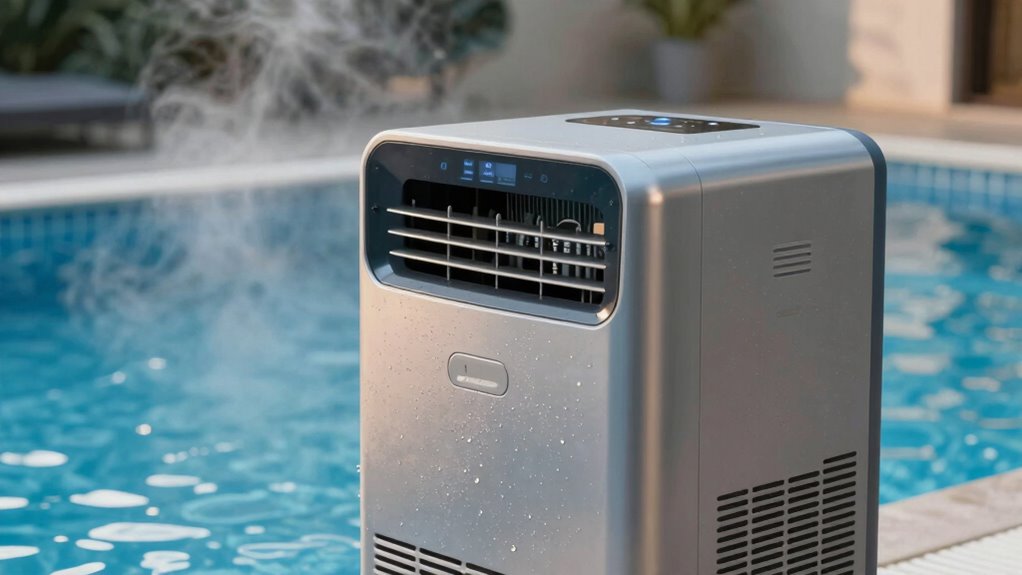
Regular maintenance is essential to keep your pool dehumidifier running at its best. Start by following a consistent maintenance schedule, checking the unit regularly. Clean or replace dehumidifier filters as recommended—usually every 1-3 months—to guarantee ideal airflow and efficiency. Dirty filters can cause the unit to work harder, increasing energy use and reducing lifespan. Keep vents and coils free of dust and debris, and inspect hoses for leaks or blockages. Make sure the drainage system functions properly to prevent water buildup. Regularly monitor the humidity levels and listen for unusual noises, which may indicate issues. Staying on top of these tasks helps your dehumidifier operate smoothly, prevents mold growth, and extends its lifespan.
Signs You Need a More Powerful Pool Dehumidification System

If you notice your dehumidifier struggling to keep up despite proper maintenance, it might be time to contemplate upgrading to a more powerful system. Signs include persistent humidity levels, which can lead to mold growth, or your pool area feeling damp even after running the unit. Additionally, fluctuations in pool temperature and imbalanced chemical levels can indicate inadequate moisture control. If you observe:
When your dehumidifier can’t keep up, it’s time to upgrade for better moisture control and a mold-free pool area.
- Excess moisture accumulation around the pool
- Persistent fog or condensation on windows
- Difficulty maintaining ideal chemical balance
these are clear signals that your current system isn’t enough. A more robust dehumidifier will better handle the humidity load, especially in environments with high pool temperature variations, ensuring your space stays mold-free and comfortable.
Which Type of Pool Dehumidifier Is Right for You? (Comparison of Options)

Choosing the right pool dehumidifier depends on your specific needs and the size of your space. For larger areas, you’ll want a dehumidifier with higher dehumidifier capacity to effectively manage moisture levels without constantly running. Consider energy efficiency to keep operational costs low—look for models with energy-saving features or ENERGY STAR ratings. Portable dehumidifiers are suitable for smaller spaces and offer flexibility, while whole-house or ducted systems provide consistent performance for larger pools. If energy efficiency is a priority, select a unit designed to use less power while maintaining ideal moisture control. Matching the dehumidifier capacity to your pool size ensures effective mold prevention and a comfortable environment, saving you money and hassle in the long run.
Simple Tips to Keep Your Indoor Pool Area Safe and Mold-Free

To keep your indoor pool area safe and mold-free, focus on proper ventilation strategies that circulate fresh air and reduce humidity. Managing humidity levels with effective dehumidification helps prevent mold growth and maintains a healthy environment. Implementing these simple tips ensures your pool space stays safe, clean, and enjoyable.
Proper Ventilation Strategies
Proper ventilation is essential for maintaining a safe and mold-free indoor pool environment. Good air circulation prevents excess humidity buildup, reducing mold risk and improving air quality. To optimize venting techniques, focus on proper placement of exhaust fans and air inlets. Regularly operating both ensures continuous airflow and prevents stagnant air pockets. You can also enhance ventilation by:
- Using high-quality exhaust fans with adjustable speed settings
- Ensuring vents are unobstructed and properly sealed
- Incorporating ceiling or wall vents for even air distribution
These strategies promote effective air exchange, removing moist, stale air and replacing it with dry, fresh air. By prioritizing proper venting techniques, you keep humidity levels in check and create a healthier, mold-resistant indoor pool space.
Effective Humidity Control
Maintaining ideal humidity levels is essential for preventing mold growth and ensuring a safe indoor pool environment. Use accurate humidity sensors to monitor moisture levels constantly, so you can adjust your dehumidifier accordingly. Keeping humidity between 50-60% minimizes mold risk and maintains comfort. Installing moisture barriers on walls and floors helps block ground moisture from seeping into the space, reducing excess humidity. Regularly check your sensors for calibration and accuracy, and respond promptly to any readings that indicate high moisture. Combining these tools with proper ventilation and dehumidification creates a balanced environment, preventing mold before it starts. Consistent humidity control not only protects your pool and equipment but also ensures a healthier, safer space for everyone.
Common Mistakes to Avoid When Using Pool Dehumidifiers

One common mistake is neglecting the room’s ventilation needs, which can cause moisture to linger even if your dehumidifier works properly. Overusing dehumidifiers without considering airflow can lead to unnecessary energy consumption and equipment wear. Additionally, neglecting maintenance—such as cleaning filters and checking sensors—reduces efficiency and may cause malfunctions. To avoid these pitfalls, keep these points in mind:
- Don’t rely solely on the dehumidifier; guarantee proper room ventilation.
- Use the device only as needed, avoiding overuse.
- Regularly maintain your equipment to keep it functioning at its best.
Frequently Asked Questions
How Often Should I Run My Pool Dehumidifier?
You should run your pool dehumidifier daily, especially during and after use, to maintain ideal humidity levels. Regular dehumidifier maintenance, like cleaning filters and checking for leaks, ensures it runs efficiently. To maximize energy efficiency, set it to a target humidity of around 50-60%. Adjust the runtime based on your indoor conditions—more humid days may require longer operation, while dry days need less.
Can a Dehumidifier Eliminate All Indoor Pool Odors?
A dehumidifier acts like a sponge, soaking up excess moisture and odors, but it can’t eliminate all indoor pool smells on its own. For effective odor control, good air circulation is essential, allowing fresh air in and stale air out. Use your dehumidifier consistently, maintain proper ventilation, and consider air purifiers to keep the space smelling fresh. Remember, a combination of strategies works best for odor elimination.
Is It Necessary to Use a Separate Air Purifier With a Dehumidifier?
You don’t always need a separate air purifier when using a dehumidifier, but it depends on your odor control strategies. If odors persist despite dehumidification, adding an air purifier can help remove airborne particles and improve air quality. For most indoor pools, a good dehumidifier reduces moisture and mold risk, while an air purifier targets odors and airborne contaminants, providing a thorough approach to maintaining a fresh, healthy environment.
What Is the Typical Lifespan of a Pool Dehumidifier?
Think of your pool dehumidifier as a trusty guardian that lasts about 5 to 10 years with proper care. To extend its life, follow maintenance tips like cleaning filters and checking ducts regularly. Keep it energy efficient by setting the right humidity levels and ensuring proper insulation. With attentive upkeep, you’ll enjoy smooth operation and mold prevention, making your indoor pool a safe, inviting oasis for years to come.
How Do I Troubleshoot if My Dehumidifier Stops Working?
If your dehumidifier stops working, first check for any dehumidifier error codes displayed. Then, troubleshoot by inspecting the power source and ensuring it’s plugged in properly. Next, clean or replace the air filters and check the condensate drain for clogs. If these steps don’t resolve the issue, consult the user manual or contact a professional technician. Regular troubleshooting helps keep your indoor pool area mold-free and comfortable.
Conclusion
By controlling humidity, maintaining your dehumidifier, and monitoring your indoor pool area, you prevent mold before it starts. Stay vigilant, choose the right system, and follow proper installation and maintenance steps. Keep the air dry, the space safe, and the environment healthy. Ultimately, consistent care, informed choices, and proactive measures guarantee your indoor pool remains a clean, mold-free oasis for everyone to enjoy.