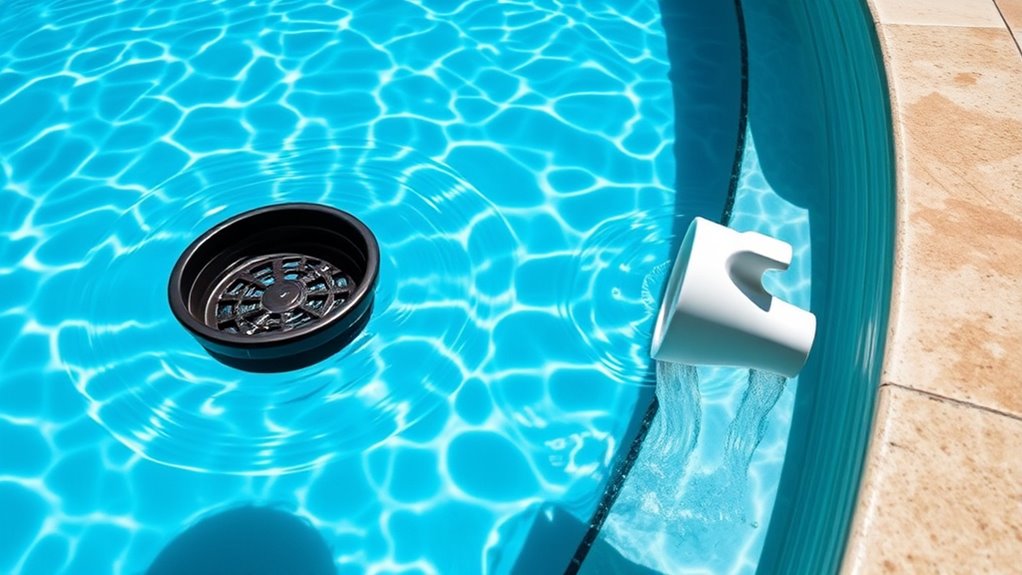

To guarantee efficient water flow, regularly inspect and clean your skimmers and baskets to prevent debris buildup. Check that return jets are clear, properly aligned, and directing water evenly across the pool. Keep your pump well-maintained by lubricating o-rings and checking hoses for leaks. Consistent maintenance promotes smooth circulation, helping your pool stay clean, safe, and inviting. To learn more about maintaining ideal flow, keep exploring expert tips and techniques.
Key Takeaways
- Regularly inspect and clean skimmer baskets to prevent debris buildup and ensure proper water flow.
- Check skimmers and return jets for cracks or leaks, repairing damage promptly to maintain efficiency.
- Ensure return jets are unobstructed, properly aligned, and directing water evenly throughout the pool.
- Maintain the pool pump by lubricating o-rings and inspecting hoses to support consistent circulation.
- Monitor and balance water chemistry regularly to promote optimal flow and prevent issues like algae or scaling.
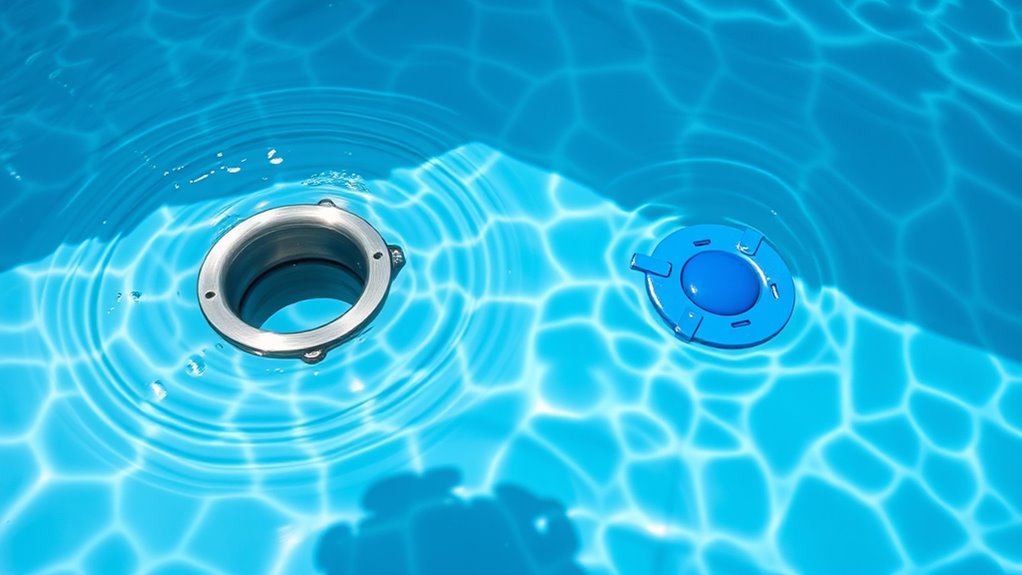
Pool skimmers and returns are essential components that keep your swimming pool clean and functioning properly. They work together to ensure water circulates efficiently, debris is removed, and your pool remains inviting and safe. To maintain this system, you need to pay close attention to both the skimmers and the return jets, especially concerning chemical balance and pump maintenance. When these elements are properly maintained, your pool’s water stays clear, balanced, and healthy.
Start by inspecting your skimmers regularly. Skimmers are designed to trap leaves, bugs, and other debris before they sink to the bottom. If debris clogs the skimmer basket, water flow becomes restricted, which can lead to poor circulation and dirty water. Always empty the basket when you notice it’s full, and check for any cracks or damage that could cause leaks or reduce efficiency. Proper cleaning prevents debris buildup that could interfere with the pump’s operation. When the pump isn’t functioning correctly, water flow drops, and circulation slows, making it harder to maintain chemical balance. This imbalance can cause algae growth, cloudy water, and scaling. Regular pump maintenance, including lubricating o-rings and inspecting hoses, ensures your pump runs smoothly and maintains consistent water flow through the skimmers and returns.
The return jets are equally important because they circulate water back into the pool after filtration. Make sure they are unobstructed and properly aligned to promote even water distribution. If the returns are clogged or misaligned, water may flow unevenly, creating stagnant areas where debris can settle and chemicals may not disperse evenly. Adjusting the return jets or cleaning them ensures ideal water movement, which supports proper chemical balance. When chemicals are evenly distributed, the water remains sanitized and free of algae or bacteria. Consistent circulation also minimizes the risk of pH levels fluctuating, which could otherwise lead to corrosion or scaling. This is why pump maintenance is critical—an efficient pump keeps water moving steadily, preventing stagnation and ensuring your pool remains crystal clear.
Finally, remember that maintaining a proper chemical balance is a continuous process linked directly to how well your skimmers, returns, and pump are functioning. Regularly test your water and adjust chemicals as needed to keep pH, alkalinity, and sanitizer levels within recommended ranges. When your pump runs efficiently and your skimmers and returns are clear and well-maintained, the water stays balanced longer with less chemical intervention. Staying on top of these maintenance tasks ensures your pool stays clean, safe, and inviting, all while extending the lifespan of your equipment. Proper upkeep of your skimmers, returns, and pump is the key to effortless, effective pool care.
Frequently Asked Questions
How Often Should I Replace My Pool Skimmer Basket?
You should replace your skimmer basket when it becomes cracked, broken, or overly dirty, typically every 1 to 2 seasons. Regularly check the basket for debris buildup and damage, as this affects water flow. The replacement frequency depends on how often you clean it and the debris level in your pool. Keeping an eye on it ensures ideal water circulation and prevents strain on your pool’s filtration system.
Can Pool Returns Be Adjusted for Better Water Circulation?
Yes, you can adjust your pool returns to improve water circulation. Use the return flow adjustments to direct water more effectively across your pool, promoting circulation optimization. Turn the eyeball fittings or adjustable fittings to aim water flow toward areas needing better circulation. Regularly testing and tweaking these adjustments helps maintain even water distribution, reduces stagnation, and keeps your pool cleaner and clearer.
What Are Signs of a Clogged Pool Skimmer?
You’ll notice a clogged pool skimmer if it makes unusual noise or if debris buildup blocks water flow. The skimmer may produce a gurgling sound or vibrate more than usual. Also, if you see leaves, dirt, or other debris accumulating around the skimmer basket or in the water near the skimmer opening, it indicates a clog. Regularly inspecting and cleaning the skimmer helps prevent these issues.
Is It Necessary to Winterize Pool Skimmers and Returns?
Yes, it’s necessary to winterize your pool skimmers and returns to prevent freeze damage. Follow winterization tips like removing and storing skimmer baskets, adding antifreeze if needed, and covering your pool. Seasonal maintenance ensures water stays clear and equipment stays protected during colder months. Proper winterization helps avoid costly repairs come spring, so take the time now to prepare your pool for winter’s chill.
How Do I Troubleshoot Uneven Water Flow From Returns?
Think of your pool’s water flow like a traffic jam; uneven flow signals a problem. Check for pressure imbalance by observing the flow from each return. If some are weak, try adjusting the valves to redirect flow. Often, a simple valve adjustment can clear the blockage and restore balance. If that doesn’t work, inspect for debris or clogs that might be causing the issue.
Conclusion
So, remember, neglecting your pool skimmers and returns is like ignoring your houseplants—sure, it might seem harmless at first, until your water turns into a murky swamp. Regular maintenance guarantees your pool stays crystal clear and inviting, not a breeding ground for algae and chaos. So go ahead, give those skimmers a little love; after all, who wouldn’t want their backyard oasis to resemble a pristine resort, not a swampy disaster?