
During heat waves, you should test your pool water daily and adjust pH and chlorine levels to prevent algae and bacteria growth. Keep your equipment running smoothly and backwash filters regularly. Run filters during peak sunlight and remove debris daily to maintain water clarity. Cover your pool when not in use to reduce evaporation. Understanding how heat speeds up chemical reactions will help you stay ahead of water quality issues—more helpful tips await you as you continue.

Get pool and patio gear delivered free — and shop member deals
- Fast, free delivery on millions of items
- Access to Prime Big Deal Days deals on October 6–7
- Prime Video, Amazon Music and more included
Key Takeaways
- Test and adjust water chemistry daily, especially pH and chlorine levels, to prevent algae and bacteria growth.
- Run the filtration system during peak sunlight to enhance water circulation and debris removal.
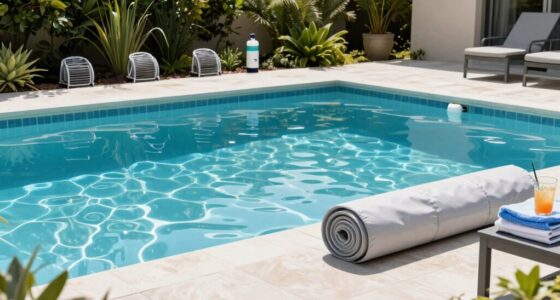
- Cover the pool when not in use to reduce evaporation, debris entry, and temperature fluctuations.
- Regularly inspect and maintain equipment to ensure efficient operation and water safety.
- Increase monitoring frequency and chemical adjustments due to faster reaction rates caused by heat.
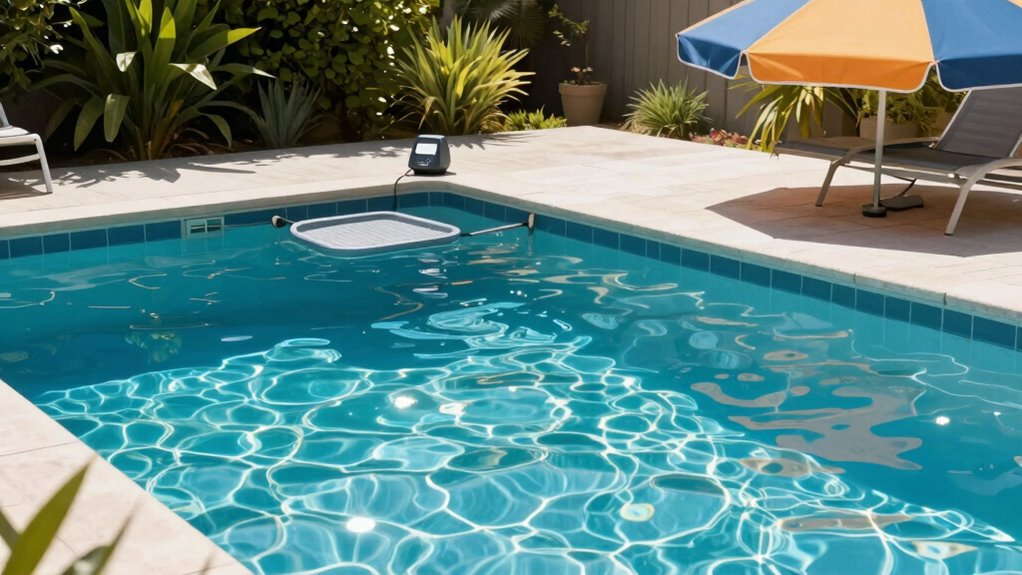
When a heat wave hits, keeping your pool clean and safe becomes even more important. High temperatures can cause rapid changes in the water’s chemical balance, making it essential to monitor and adjust your pool’s chemicals regularly. Heat accelerates chemical reactions, which can lead to increased algae growth, cloudiness, and bacteria proliferation if not managed properly. To maintain proper chemical balance, test your water frequently—at least once a day during a heat wave—and adjust the pH, chlorine, and alkalinity levels accordingly. Keeping the pH in the ideal range of 7.2 to 7.6 ensures the sanitizer works effectively and prevents skin or eye irritation. Chlorine levels should also be maintained within recommended levels to prevent algae blooms and bacteria buildup, especially when sunlight and heat provide perfect conditions for growth. Using a stabilizer like cyanuric acid can help protect chlorine from UV degradation, extending its effectiveness during prolonged sunny days.
Equipment maintenance becomes even more critical during a heat wave. Your pump, filter, and skimmer need to operate efficiently to keep the water circulating and aerated. Check your equipment daily to ensure everything’s functioning properly. Clogged filters can cause poor circulation, leading to water stagnation and increased algae growth. Backwash or clean your filter regularly, especially if you notice cloudy water or reduced flow. Keep an eye on the pump’s operation—any unusual noises or overheating could indicate a problem that needs immediate attention. Properly maintained equipment not only keeps your pool safe and clean but also prolongs its lifespan, saving you money in repairs or replacements. Additionally, understanding the impact of heat on chemical reactions can help you better anticipate and respond to water chemistry changes during hot days. Staying informed about chemical behavior under high temperatures can further optimize your pool’s maintenance routine. Regular testing and adjustments are crucial because the speed of chemical reactions increases with temperature, requiring more vigilant management. Being aware of water chemistry changes can help prevent problems before they develop, ensuring a safe swimming environment. Furthermore, adding appropriate water treatment can combat the accelerated growth of algae and bacteria under these conditions.
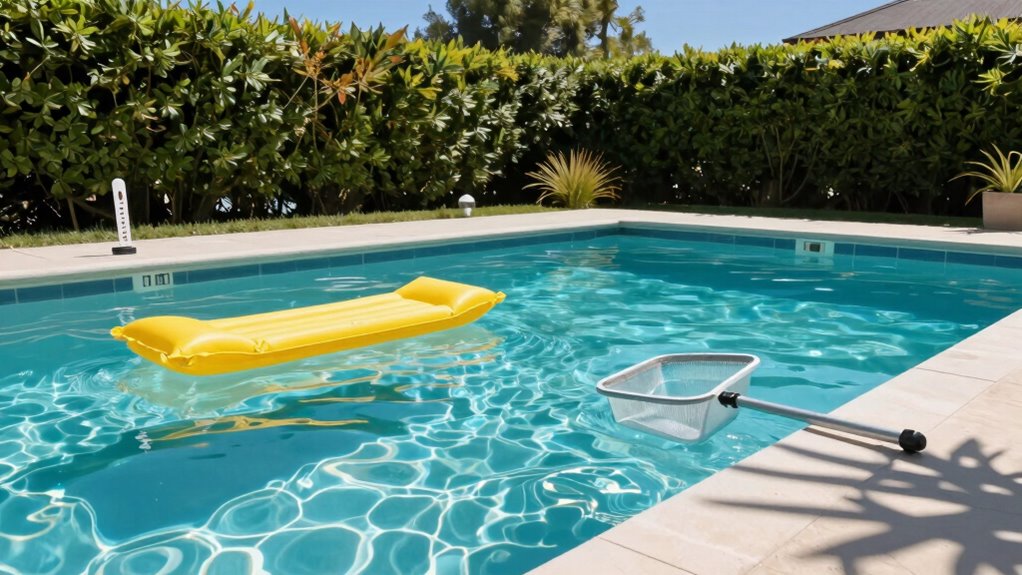
Additionally, consider running your filtration system during peak sunlight hours to maximize water circulation and chemical dispersal. This helps prevent algae and bacteria from taking hold. Remember to remove debris daily, as leaves and dirt can decompose quickly in hot conditions, further polluting the water. Covering your pool when not in use can reduce evaporation rates and keep debris out, maintaining water quality and temperature. Regularly brushing the walls and floor helps prevent algae buildup and keeps the water sparkling clean. Staying vigilant about chemical balance and equipment maintenance during a heat wave isn’t just about aesthetics; it’s about ensuring your pool remains a safe, enjoyable oasis despite the scorching weather outside.
As an affiliate, we earn on qualifying purchases.
Frequently Asked Questions
How Often Should I Test My Pool Water During a Heat Wave?
During a heat wave, you should test your pool water at least twice a day. Regular pool water testing helps you monitor the chemical balance, especially pH and chlorine levels, which can fluctuate quickly in hot weather. Maintaining proper chemical balance prevents algae growth and keeps the water safe. Adjust chemicals as needed, and consider using a pool cover to reduce evaporation and temperature swings.
Are There Specific Chemicals Recommended for Hot Weather Pool Maintenance?
Think of your pool as a delicate garden needing just the right nutrients. For hot weather, use chemicals like pH adjusters and chlorine to keep the water balanced. Focus on chemical balancing to prevent algae and bacteria growth, and regularly check pH levels to avoid corrosion or cloudiness. These specific chemicals help maintain clarity and safety, ensuring your pool remains inviting even during the hottest days.
Can Pool Covers Help Reduce Water Evaporation During Heat Waves?
Yes, pool covers help reduce water evaporation during heat waves. Their benefits include maintaining water temperature and preventing debris from entering the pool. By covering your pool, you minimize evaporation loss, which is especially important in hot weather when water can evaporate quickly. A good pool cover not only conserves water but also saves you energy and chemicals, making pool maintenance more efficient during intense heat.
How Do I Prevent Algae Growth in Extreme Heat?
Imagine your pool as a calm oasis, but in extreme heat, algae lurks like unwelcome weeds. To prevent it, you need proper algae prevention strategies and diligent chemical balancing. Keep your chlorine levels steady and pH balanced, like a well-tuned symphony. Regular brushing and filter cleaning also help. By maintaining these steps, you create a hostile environment for algae, ensuring your pool stays clear and inviting despite the scorching heat.
What Are the Signs of Equipment Failure Caused by Heat?
You’ll notice signs of equipment failure caused by heat, like equipment overheating and pump malfunctions. If your pump makes unusual noises, runs intermittently, or shuts off unexpectedly, it’s a sign that heat is affecting it. Overheating can cause parts to warp or fail, so regularly check for overheating smells or excessive vibrations. Address these issues promptly to prevent further damage and guarantee your pool equipment runs smoothly during the heat wave.
Conclusion
Stay vigilant, stay consistent, and stay cool. Regularly check your chemical levels, monitor your water temperature, and guarantee proper filtration. Keep your pool shaded when possible, add necessary treatments promptly, and maintain your equipment. By staying attentive to these tasks, you’ll prevent algae growth, bacteria buildup, and equipment damage. Embrace these habits during heat waves, and your pool will stay inviting, safe, and invigorating—ready for you to enjoy whenever you need a cool escape.
Halloween Picks
halloween
As an affiliate, we earn on qualifying purchases.