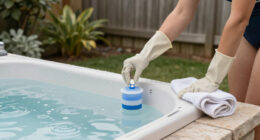
Skipping regular brushing, chemical checks, and proper filtration might seem like quick fixes, but they often cause bigger problems, such as algae growth and water clarity issues. Relying only on quick doses of algaecide or ignoring equipment maintenance reduces your pool’s health and requires more extensive effort later. Consistent routine care keeps your pool clean and clear. If you want to avoid costly surprises, keep going to discover how to prevent these common mistakes.

Get pool and patio gear delivered free — and shop member deals
- Fast, free delivery on millions of items
- Access to Prime Big Deal Days deals on October 6–7
- Prime Video, Amazon Music and more included
Key Takeaways
- Relying solely on quick algaecide doses without routine maintenance allows algae spores to settle and multiply.
- Skipping regular brushing of pool walls and floors creates ideal conditions for algae growth.
- Neglecting consistent chemical balance and filtration increases the risk of algae buildup and water issues.
- Ignoring equipment maintenance and water circulation reduces filtration efficiency and promotes algae development.
- Avoiding proactive, routine pool care leads to bigger problems and higher long-term repair and treatment costs.

Many pool owners believe that adding a quick dose of algaecide is enough to prevent algae growth. While algaecide is helpful, it shouldn’t replace consistent algae prevention practices. Skipping routine brushing, filtering, and chemical checks allows algae spores to settle and multiply. A shortcut like waiting too long between pool cleanings or neglecting to run your filter adequately can create a breeding ground for algae. This leads to a much bigger headache than just spending a little extra time on regular maintenance. Preventing algae requires a proactive approach—regular brushing of the walls and floor, maintaining proper chemical levels, and ensuring your filter runs long enough each day. Proper chemical balance is essential for overall pool health and can prevent many common issues caused by shortcuts. Additionally, understanding effective filtration techniques can significantly improve your pool’s cleanliness and reduce algae risks over time. Using monitoring tools to keep an eye on chemical levels and filter performance can help catch problems early before they escalate. Regularly inspecting and cleaning your pool’s equipment can also prevent equipment failures, saving you time and money in the long run. Incorporating routine checks of the pool’s water circulation can further enhance overall water clarity and prevent algae buildup.
As an affiliate, we earn on qualifying purchases.
Frequently Asked Questions
How Often Should I Test My Pool Water Chemistry?
You should test your pool water chemistry at least twice a week during peak swimming season to guarantee proper pool maintenance. Regular chemical testing helps you maintain balanced pH, chlorine levels, and alkalinity, preventing issues like algae growth or cloudy water. If your pool gets heavy use or after rainstorms, test more often. Consistent chemical testing keeps your pool safe, clean, and inviting for swimmers.
Can I Skip Regular Pool Filter Cleaning?
Skipping regular pool filter cleaning isn’t a good idea. A dirty filter can hinder your pool cover’s effectiveness and strain your pump maintenance, leading to cloudy water and algae growth. You should clean your filter at least once a month, especially after heavy use or storms. Regular cleaning guarantees efficient filtration, keeps your water clear, and prolongs the life of your equipment. Don’t neglect this essential step for a sparkling, healthy pool.
What’s the Best Way to Balance pH Levels Quickly?
To balance pH levels quickly, test your water first, then add pH increasers or decreasers as needed. Use proper water balancing techniques to maintain pool chemical stability and prevent issues like cloudy water or algae growth. Always follow manufacturer instructions, add chemicals gradually, and retest after each adjustment. This approach guarantees your pool stays safe, clear, and comfortable, avoiding shortcuts that could cause long-term problems.
Are DIY Pool Treatments Effective Long-Term?
DIY pool treatments can seem effective short-term, but they often don’t provide consistent or long-term results. Relying solely on homemade solutions may disrupt pool chemistry and lead to problems like algae growth or cloudy water. For long-term success, you should regularly test your water and use proper chemicals designed for pools. This way, you maintain balanced pool chemistry and keep your pool clean and safe for swimming.
When Should I Replace Pool Chemicals Instead of Refilling?
You should replace pool chemicals when they’ve expired or become contaminated, not just when refilling. If your pool chemical storage shows signs of clumping or strange odors, it’s time for disposal—always follow chemical disposal regulations. Using outdated chemicals can damage your pool and harm swimmers. Regularly check expiration dates and avoid mixing old chemicals with new ones to keep your pool safe and clean.
Conclusion
Don’t plunge into dangerous shortcuts that seem easier but end up eroding your pool’s health. Skipping steps or settling for shortcuts might save time today, but they’ll sabotage your serenity tomorrow. Instead, stick with simple, steady, and smart strategies that safeguard your sparkling sanctuary. Remember, proper pool care isn’t a shortcut — it’s a steady, secure, and satisfying process. Keep patience in mind, and your pool will reward you with pristine, pristine perfection.
Evergreen bestsellers Picks
bestsellers
As an affiliate, we earn on qualifying purchases.